“Hotshot” closes with the realization that sometimes a fire gets too hot and high for anything else to stop it. These final lines can also serve as a metaphor for addiction—sometimes the fire of it can only be put out with more fire…
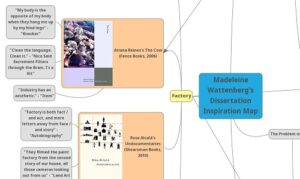
One way to make inspiration visible outside the poems written for a particular project is to visually map connections between sources–how does what you’re reading form an ecosystem?
An interview with Diamond Forde about Mother Body, her debut collection of poems. From reviewer Marianne Chan: “These poems—with brilliant images and startling musicality—resist erasure and destruction…”
Drama Editor Brant Russell interviews Beth Hyland about genre considerations in her play All-One! The Dr. Bronner Play and about the future of theater.
I could go on and on about Kirschenbaum’s striking (ha) images, characterization, and humor, but what really made this story stand out to me was its powerful use of second person point-of-view.