Assistant Editor Molly Reid: In Mahreen Sohail’s hybrid piece, “Iddat,” a definition evolves. What seems initially to be prohibitive—a list of men a widow is required to avoid during the prescribed Islamic period of mourning—becomes celebratory, a reclamation of self. With incantatory grace, Sohail takes us into a pleasantly shaded corner of what might …
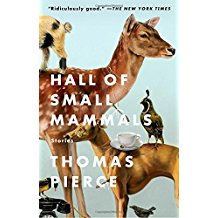
Editorial Assistant Alex Evans: The realities of being a graduate student in creative writing are such that I have very little time to read outside of my coursework. However, for the past few months, I’ve been using whatever spare moments I can find to revisit some of my favorite novels and collections of the past few …
It’s that time of year again, when across North America leaves fall from deciduous trees, people gather together indoors to eat more food than they should, and literary journals compile nominations for the Pushcart Press and other important anthologies. We find this to be a tough season: less light, expanding waistlines, and having to …
Assistant Editor Caitlin Doyle: In “Iraq Good,” poet and veteran Hugh Martin presents a scene that bristles with tension. As an American soldier stationed in Iraq, the poem’s speaker paces with his fellow servicemen outside of the Sadiyah police compound while several small Iraqi boys linger nearby. The children engage in pretend fights (they “chop …
Assistant Editor Molly Reid: In Kristine Ong Muslim’s devastating piece, she doesn’t allow the reader to look away, and what she shows us—a timeline of human “advancement,” from early hominids to our eminent extinction—is part-history lesson, part-prophesy, and all gut-punch stunning. In her own words, “Holocene: Microfilm Reel 82” is “a conceptual piece, a …
(Editors’ note: Every year, the Mercantile Library, a local membership library, sponsors the Niehoff Lecture, a black-tie fundraiser that brings a literary star to Cincinnati for a dinner and lecture. For this year’s event, novelist Zadie Smith was interviewed by Jim Schiff, a professor of English at the University of Cincinnati and a great friend …
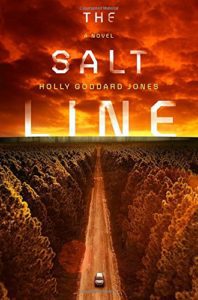
Editorial Assistant Sakinah Hofler: When I first saw my reading list for my Forms class, I noted the usual suspects—Woolf, Austen, Elliot, Zadie Smith—then I paused at one title, The Salt Line by Holly Goddard Jones. Knowing Jones from her collection of realistic stories (Girl Trouble), I was surprised by the first line of description …
We are pleased to share this review by Brian Trapp of Stanley Elkin’s The Magic Kingdom (Dalkey Archive Press, 2000 edition), which appeared in Issue 18.2 as part of a special multigenre review feature on joy, hope, and delight (read the entire feature here). Nobody reads Stanley Elkin anymore. He’s too perverse, too ironic, too …
We are pleased to share this review by Sonja Livingston of Judith Kitchen’s The Circus Train (Ovenbird Books, 2014), which appeared in Issue 18.2 as part of a special multigenre review feature on joy, hope, and delight (read the entire feature here). Twenty years ago I sat with a dying friend in his hospital room. …
Assistant Editor Caitlin Doyle: Exploring the intersection between nation and citizen is never an easy undertaking for an artist, and poet Lynne Potts braves the task with startling skill in “Family Photo of America” (in our most recent issue, mailed to subscribers just last week!). From the very beginning, via the piece’s title, she invites us …
Search
You don't have credit card details available. You will be redirected to update payment method page. Click OK to continue.