Like a Star
Robert and Adele Schiff Award winner in fiction
32 Minutes Read Time
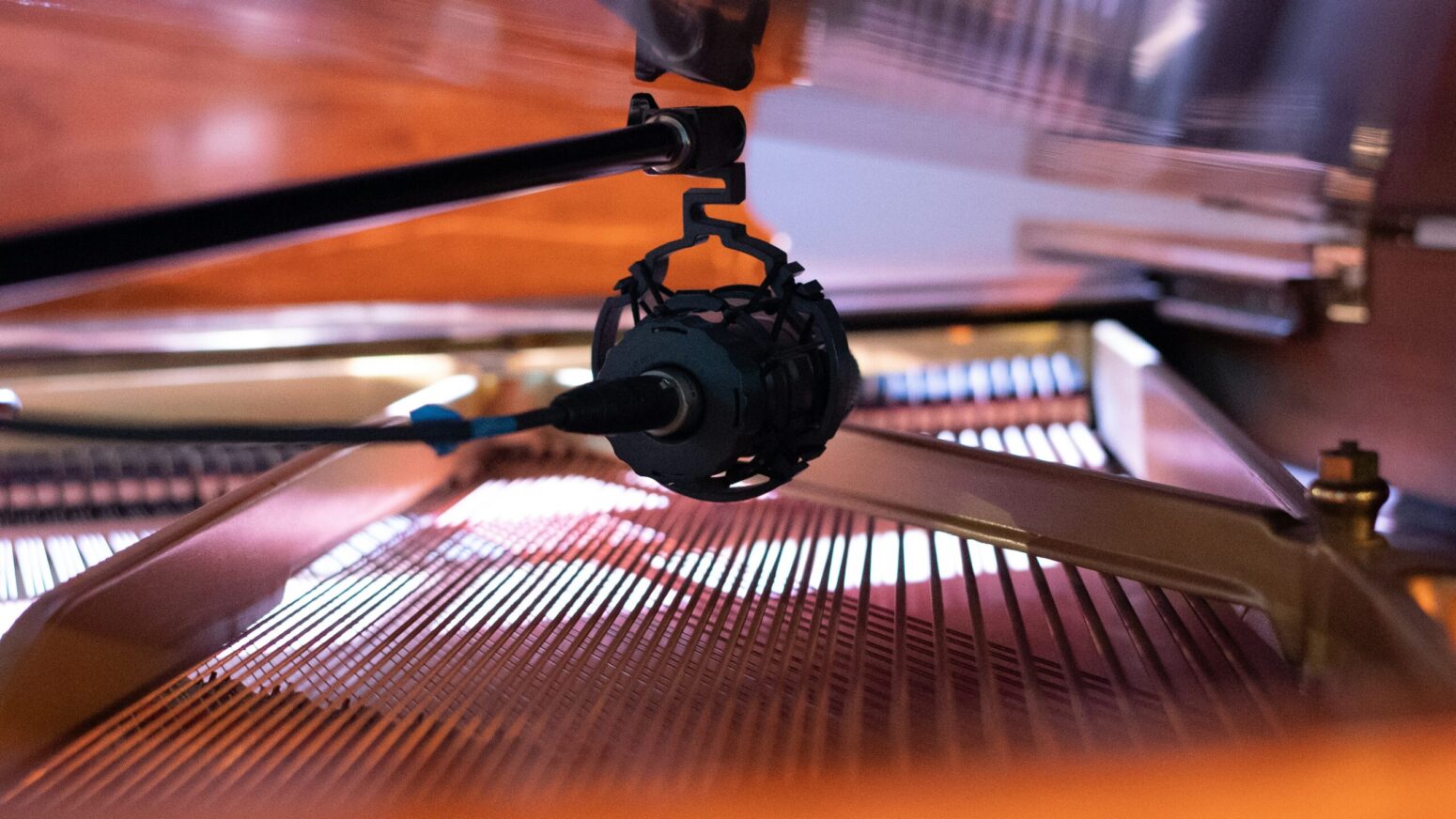
Yvette told Lora about the job at the symphony’s end-of-season party at the lake. There were burgers and beers, and the sun was bright, catching sharp flashes off the water. But nothing could stop the day from feeling like a funeral: Twelve cellists cut down to eight, eight bassists to six, four bassoonists to two. Lora was on the unlucky side.
“It couldn’t be simpler,” Yvette had said in her Quebecois accent. “You’d be a studio musician for a pop star. You’ll probably just have to play a few dramatic notes, and then you’ll walk out with a big check. The sessions start next week. Do you want the number?”
Lora handed over her phone for Yvette to type it in, and noticed that Yvette was wearing practically the same outfit she’d worn as a production assistant at concerts. Black jeans, black T-shirt, minimal jewelry, stacks of silver rings on a few fingers of each hand. Next to the violinist dads in cargo shorts, she looked achingly cool.
When Lora called the number, a man answered and said he was The Musician’s assistant. He told her to bring her cello and gave her an address in the far north of the city. He gave her a code to get inside and instructed her to climb the stairs and go into Unit 2B. The key should be in the door, he said. “Everything you need will be there.”
The address was a large brick building, five or six stories with wide plate-glass windows, moored at the corner like a great ship. She followed the assistant’s directions to Unit 2B. Pushing the heavy steel door open, she found a small room, with a large dirty window that took up most of one wall. A grand piano sat with its lid open, microphones angled inside, cords spilling out, twisted tidily before they met the floor. Two music stands, two hard yellow plastic chairs, a microphone stand for recording her cello, a small studio mixing board.
It was a recording studio, she guessed, but a strange one. It felt more like an office, or a forgotten storage space. In one corner there was a tiny kitchenette: a small stainless-steel sink, a microwave, a hot plate with one dented pot, a single set of dishes with a blue-and-white pattern around the rim of the plate and the top of the mug.
“Hello?” she said, even though she knew no one was there.
She walked into the room, let the door close behind her, and unstrapped her cello from her back. There was hardly enough space to lay it on the industrial-carpeted floor. On the piano bench was a piece of paper, folded over once. She unfolded it and found four letters written in pencil. Notes? They were not written on a staff. There were no key signatures or tempo markings, not even symbols to tell her how long to hold the note. There were simply the letters themselves, floating freely on the page.
She called the assistant, the sound of his phone ringing seeming too loud in the quiet, still room.
“Just play what’s on the paper,” he told her. “Once you’ve turned on the equipment, of course. There’s a checklist.”
Lora saw a clipboard hanging on the wall by the door, along with a dry-erase marker. She went over to look at it. The checklist was meticulously detailed. “Turn on the dark-gray power strip under the mixing console,” it started. Lora did this. “Turn on the three microphones for the piano,” it said next. She did this, and continued through the whole checklist. She didn’t know where the sound would go or who, if anyone, would hear it. She guessed the assistant.
When she was done, she sat down at the piano and looked at the piece of paper, the four notes. She played the notes individually, plunking them out near middle C. She felt silly, like a child just learning to play. She tried again, allowing each note to have its own space, holding a note for five seconds and then waiting another five before playing the next. Then faster, in tight, ever-increasing cycles, from whole notes down to sixteenths.
When she couldn’t think of anything else to do on the piano, she picked up her cello. She played each note clearly, individually, and then faster and faster until they blurred together. She felt ridiculous, but it was a job and she wanted to take it seriously. After an hour she stopped playing. She used to have eleven of the most talented cellists in the world to discuss the way she’d played a movement, a bar, even a single note. But the room was empty. She called the assistant.
“I think I’m done,” she said. “Unless there’s anything else you’d like me to do.”
“No, no,” the assistant said. “That’s perfect. Someone will listen to the recordings, and we’ll let you know if we have any notes. Before you leave, just make sure to do the back of the checklist. And take the key with you. See you tomorrow morning.”
Lora asked if he would be there, but the assistant specified that it was just a figure of speech. He lived in a different city. And really, it didn’t matter if she came in at 8 a.m. or 2 p.m. All that mattered was that she came in every day and recorded the four notes on the slip of paper, in whatever way she interpreted them.
Lora went over and looked at the back of the checklist, which was the same as the front of the checklist but in reverse. She completed each task, turned off the lights, put the key securely in her backpack, and walked out with her cello. The day was empty in an unexpected way. She’d anticipated spending all of it in session, meeting the producer or at least a few studio techs. While she’d been anxious about the first day, she’d also looked forward to that buoyant feeling that she got after finishing something she’d been nervous about: a concert, an audition, a meeting. But the strangeness of the day had punctured that feeling.
On the ride home, Lora googled The Musician. She wasn’t surprised that she hadn’t heard of them. They were the kind of artist who was near fame, credited as a producer or writer or beatmaker on famous albums and songs, but whose name was known mainly by critics and superfans. Their albums were well regarded and popular, but only in certain contexts: at clubs and loud restaurants, or snippets used in commercials, the kind of songs people recognized but didn’t know why. The other thing about The Musician, Lora realized, was that no one knew who they were. The Musician wore masks and elaborate costumes, and when they appeared onstage or at award ceremonies, they never offered personal information and never spoke in their natural voice. She had assumed earlier that this was a gimmick, that producers and agents and stage techs and a few fans knew who The Musician was. But no one even knew what country The Musician lived in or what language they spoke. The closest thing to a profile she could find was an article about how difficult it was to get information about them: Their rare live performances were kept secret until the last moment, and their general existence was hidden behind NDAs and an obfuscating paper trail set up for the purpose of creating an impenetrable shell.
Once Lora got home, she listened to The Musician’s most popular tracks while she cooked. Her husband, Ian, used to cook dinner so Lora would have time to practice; he’d hum to her piece and keep time with his spatula on the edge of a pot. And while they ate, they’d listen to recordings of the piece she was working on. They’d talk about the performer’s interpretive style, a brilliance built out of thousands of tiny choices, things that couldn’t be written down in musical notation, not really, but which lived in the ear, the fingers, the brain, perceivable in the body but not always legible. Like the fissures in their relationship. Over the past few months, they’d both started finding reasons to stay out of the apartment. Once Lora had officially learned that her contract wasn’t being renewed, she’d started to realize how fragile her music was. Ian didn’t seem to understand. He was easygoing, always looking for a way to adapt, to make everything okay. He was one of those strange musical talents who could pick up any instrument and learn to play it quickly. When he’d turned thirty and realized he was never going to have the life he wanted on a musician’s income, he studied coding and got a job in tech, leaving behind the jazz group where he played drums, the punk band where he played guitar, the wedding group where he played brass and string instruments. He got new clothes and commuted, started telling stories about his coworkers instead of his bandmates or drunken guests. He didn’t seem sad or even to notice that his life was changing. But Lora couldn’t accept her change so easily. It manifested in strange anxieties. She worried about injuring her hands in a heavy door or slicing off a fingertip with a kitchen knife. She worried about her ears when she sat in a loud bar. It seemed her music could so easily be taken away from her, and Ian didn’t seem to care. The potential loss made her always on the edge of snapping, skin so thin you could nearly see through it.
The Musician’s songs were dark, full of crunching electronic sounds and whomping bass. Each song was textural and elaborate, with long looping sections and escalations rather than a series of verses and choruses. When the songs featured lyrics, they were always sung by a guest artist and were so obtuse and jagged they almost lost all contact with meaning. The music, even through her laptop speakers, was industrial and apocalyptic, yet it somehow made her want to dance. All The Musician’s songs got inside her. They had the dark joy, euphoria almost, that she was familiar with as a runner and a professional musician: when she pushed right up to the limit of her body’s capability, only to break that limit and keep going, nearly laughing, thinking Fuck yes, fuck you, fuck all of you. It had happened with the last mile of her first marathon, and in the times when she first cracked a difficult passage on the cello, her fingers finally obeying what her head had heard the whole time, except going even further, making it even better than she’d imagined, even richer in real life. Now she danced through The Musician’s top tracks and then their most recent album, and pulsed to the music while she ate her burned dinner.
Ian came home around eleven. When Lora heard his key in the door, she paused the music.
“Hey,” he said once he was inside. “You don’t have to turn off the music. Ah, that song—I like that song. What’s it called?”
He danced slowly across the room. Lora could tell he’d been out at a bar. When he’d been drinking a bit, he got smiley and loose.
“Turn it back on,” he said. “Come on? We can dance or at least talk.”
Just being in the same room with him put Lora on edge, like he was a reminder of something she didn’t want to do. If she’d been a different person, she might’ve been able to enjoy dancing with Ian, she might’ve even hosted a party to celebrate her new job. She imagined Yvette in their living room, dancing to The Musician with a beer in her hand. Lora bet that Yvette was one of those people who sang loudly while they danced. But Ian and Lora had never thrown a party. Earlier in their relationship, what Lora had liked about the two of them together was the feeling of privacy, having their own little country with its unique language and culture. Her parents had thought she was a prodigy from early on. They’d taken her to lessons, rehearsals, performances, workshops, competitions. Lora grew up publicly, in auditoriums and crowded backstages, school hallways, classrooms. Lora and her parents were slow in realizing how miserable it had made them all, how isolated. With Ian she had a home life, a place that felt almost secret, except she shared it with him.
“No,” she said. “It’s easier this way.” She gestured at the distance and the large cluttered kitchen island between them.
“All right then.” He went to the fridge and looked inside. Lora went into the extra room where she’d been sleeping and shut the door.
She texted Yvette to say thanks. “First day went well, I think. Although it was very weird.”
“Yes!” Yvette responded. “Glad to hear it. We should get drinks to celebrate.
Friday?”
“Please!” she replied.
The next day Lora took the train to the building, went through the checklist, and found a new sheet of paper on the piano bench. Again, it listed four notes in pencil. No staff, no symbols, no scribbled suggestion or note about the tempo. There wasn’t even encouragement for or critique of her work from the day before. So she approached the notes the same way, playing them each individually on the cello and the piano. At midday she took a break and heated up some leftovers in the dented pot and ate them off the plate with the blue rim. It looked like something that had been stolen from a diner. She took a few pictures and thought about sending them to Yvette, but the items looked so nondescript without their context.
Every day for the rest of the week, Lora took the curving neighborhood train line to that red-brick building up north, unlocked the door, did the checklist, and sat down with her four new notes. Every day she expected to get a call from the assistant saying she was done. On Friday, when she’d started to think There’s no way this is a real job, maybe I should just leave, she got her first check and bought herself a new set of cello strings and an ice cream cone to celebrate. She walked all the way to meet Yvette, licking ice cream drips off her wrist until she’d chewed and swallowed the final nub of cone.
They’d decided on a bar not far from the lakeshore. Lora was excited, ready to share her new story. Yvette showed up a few minutes late in her black jeans and T-shirt, silver rings. Lemon-yellow glass balls dangled from her ears. They ordered beers and sat at a table outside, discussing a date Yvette had been on the night before. When she got a chance, Lora brought up her new job. She tried to describe to Yvette the strange room, the assistant, the checklist, the four notes.
“I don’t feel like I’m explaining it very well,” Lora ended. It was hot, sitting in direct sun on the patio, and the beer was making her thirstier.
“No, no, I can picture it clearly.” Yvette smiled, glass earrings swaying as she spoke. The heat didn’t seem to bother her at all.
“It’s so strange,” Lora said. “It feels weird to even call it work. I can’t imagine how it’s going to turn into anything.”
“Maybe it’s a project,” Yvette said. “You know, like a conceptual-art thing.”
“Maybe,” Lora said and took a sip of beer.
They parted an hour later, after making plans to meet for dinner in a few weeks.
The next day, she and Ian sat through their first meeting with a couples therapist. After she and Ian gave a basic overview of their history and what the therapist called “the texture of their conflict,” she had trouble paying attention. All she could think about was what she had and hadn’t said to Yvette, how she would explain the room and its four notes to someone else. She felt a little guilty that she hadn’t told Ian. He just thought it was a job. But it felt good to have her own secret. At the end of the session, they were given an assignment to write down five questions they had for the other. Questions that they had to promise to answer truthfully, no matter how painful.
During the week, she was glad to be back in the recording room. Each moment in there was like an opportunity to reinvent who she was as a musician. She played in ways that would have gotten her kicked out of the symphony. Well, kicked out much earlier, she thought. She slapped the strings, played fuzzy, out-of-tune notes. She sang and screamed and held notes for so long that she almost stopped hearing the sound of each and noticed only the space between them.
She was determined to reach the limit of what four notes could be. She played them at opposite ends of the piano, one all bass and the next treble. She played the notes on her cello and repeated each with her mouth. Hunnnnhhh, her cello would ring out, hunnnnnhhh, she would sing evenly. She moved over by the piano so that she could play one note on the cello and then repeat it on the piano, or quickly play the next note and let them overlap in the small room. By the end of each day, she had played the notes in every way she could imagine. Individually, and in arpeggios, back and forth like scales or exercises. She started playing around them too. Sneaking up to the note in wide, comic glissandos, adding in grace notes. With the cello, the piano, her voice. By the time she left the room, after completing the end-of-day checklist, she was exhausted but pleased, like after taking the last steps of a long run.
When their next session with the therapist came, Lora told Ian she’d meet him there but instead took the curving train line north to the red-brick building. She’d been frustrated by the therapist’s assignment all week, trying to come up with something to ask Ian. The only time she could forget about the task was when she was playing, or listening to albums by The Musician, imagining she heard, in some of the quieter moments, an exhalation of strings, a repetition of four notes. As she walked up the stairs to the room, she wondered if there would be new notes even though it was a Saturday. She opened the sheet of paper on the piano bench and found them lying there like a gift. She got to work.
When she arrived home, Ian was out, but he’d left a note on the kitchen island that said, “Same time and place next week, if you’re ready.”
That week, and the next, she brought clothes and a sleeping bag to the room. She brought slippers, a robe, her toiletries, boxes of instant oatmeal, and cans of soup. She spent most nights there, sleeping on the floor in the middle of the room after playing since she’d woken up. Each morning, her assignment was slipped under the door now. The same folded piece of computer paper with its four notes in pencil. It was the first thing she looked for when she woke up—it was like water, necessary for life.
Lora never saw the person who delivered the notes, but there were clues that someone else had been in the room. Sometimes she would go on a walk or down the hall to the bathroom to splash herself in the sink, and someone would have cleaned the dishes and put them in the drying rack. Or she’d go out for groceries and return to find, on top of the piano, a new box of rosin that she was fairly sure she hadn’t left there. One day she came back from a walk and noticed a piece of glass art hanging on the wall. It was flattish and round, like a thick pancake, and about the size of her palm. It consisted of blue, green, and yellow threads that swirled together and met in the middle, where there was a little hole to pass the string through. It looked like the kind of thing you might buy at a neighborhood art fair. Not particularly exciting or unique, but still comforting and pleasant. She looked at the piece, its colors curling like threads of smoke, as she tried to get to the bottom of the notes. What was the best way to articulate and express an A? An F#? Was it better heard in the context of other notes? Or on its own? Singular and isolated, like a star?
As she played the notes, Lora started to slip in stretches of pieces she’d been working on with the symphony. Mahler and Sibelius. The Beethoven symphony and Tchaikovsky overture they played every year at their summer residency outside the city. Lora imagined her colleagues there now, going on hikes and picnics with their families during the day and rushing back for the performances, sitting on the hot stage, sweating through their thin white dress shirts. When Lora left the building, she almost expected the city to feel empty without the other musicians. But the city felt busier than ever, people drawn out by the sun and warmth. She liked being able to slide among them. She liked being alone again after ten years of feeling like she’d had a shadow, ten years of saying we and never saying I. She texted Ian and told him she’d sign any divorce papers he put in front of her, no questions asked. She didn’t have anything. No money, no car, no kids. Just her instruments, her fingers, her ear.
On a Friday after Lora had been recording for The Musician for over a month, Lora and Yvette met for Spanish food in a part of the city full of music venues and bars. At the restaurant Lora told Yvette that she was missing the summer residency.
“That reminds me,” Lora said. “How come you’re here—don’t you usually go out?”
“No,” Yvette said. “I’ve never gone. I always take the summers off.”
“Oh,” she said. “I’m sorry, I guess I forgot.”
“Or you never noticed who was adjusting your music light,” Yvette said, her mouth in a grin as she spit out an olive pit, “and taping down the extension cords.” She laughed.
“I guess I’m just awful that way,” Lora said, drawing out awful and rolling her eyes. “I hope we can still be friends.”
Yvette laughed. “I think so.”
“Would you want to go? Out to see the symphony. Like normal people, pay for the tickets—I mean I’d pay, of course—bring some food and wine and a blanket. Talk during the music, eat ice cream, get drunk, scream at the fireworks, that sort of thing.”
“Yeah, maybe,” Yvette said, playing with her silver rings.
Lora immediately felt silly for asking Yvette, Yvette in black with the tip of a geometric-line tattoo showing from under the sleeve of her shirt and her face free of makeup except around her eyes. Triangular glass earrings that faded from light green to a deep blue framed her face. Yvette who belonged in the city, this one, or one even bigger.
“I’m sorry,” Lora said. “I don’t know why I even brought it up.”
“No, no. It sounds fun, but I’m not sure. It might seem funny, but the summers are kind of special to me. Sacred, I guess. I work on projects, go to the beach. It’s my time.”
After they ate, Yvette took Lora to a few of her favorite places. They drank watery bourbon on the rocks and got beer spilled down their backs at a dive where a local metal band was playing. They left and walked toward the center of the city, stopping at another bar and another until they ended up, late in the night, at a club. Lora was exhausted, but the music and the crowds kept her body going. She’d forgotten this, but Yvette had always tried to get the symphony musicians to come out to bars and clubs and experience music in a different way. Lora wouldn’t have expected it, but she was enjoying herself. They danced through the crowds into the middle of the floor, bodies churning around them, the music so loud it shook their bones and blurred all the boundaries: between skin and air and sound and human. Then a song by The Musician came on, and Lora and Yvette screamed. They recognized the beat, but it was being toyed with, mixed with another song and let out in small loops by the DJ, escalating into longer and longer fragments. It was like the song was being put on a leash, held back to keep everyone on the edge for as long as possible. When the song was finally unleashed, it was like Lora’s brain turned off. In that moment, she couldn’t see herself, she didn’t know what her arms or legs or head were doing, and she didn’t care, she didn’t care, she didn’t care.
When the club closed, Yvette insisted on getting a cab with Lora, and she didn’t say anything when Lora gave the driver the address of the red-brick studio building. When they arrived, Yvette paid and started to get out.
“Thanks, but I think I’ll be okay,” Lora said.
“Nonsense,” Yvette said. “I’m getting out here. I want to see this room I’ve heard so much about.”
They walked into the building and up to Lora’s room. She showed Yvette the thick, clumsy diner plate and mug with their blue rims; the dented pot; the grand piano with its arc of microphone cords spilling out from under the lid. The glass art with its swirling blues and yellows, curling tendrils that seemed arrested by the clear portions, motion captured, like a photograph of waves or of a horse running. Yvette nodded at everything, picking some things up and turning them over in her hands. She sat down at the piano and played “Heart and Soul.” When she finished, she stood up and bowed. Lora clapped.
“I didn’t know you could play,” she said.
“Oh, you know,” Yvette said, brushing strands of hair out of her face, “the basics.” She played a G-major chord just below middle C. “I don’t know why, but I think of all the triad chords as having different personalities,” she said. “And G is a very solid one, almost boring.”
Lora laughed. “I’ve never thought about it.” She was tired, and she wondered what this was, the two of them in this room.
“I think about it all the time,” Yvette said. “About the way a few notes can combine, the different personalities they have.” She took a step toward Lora. “Two notes, three notes. Four.”
Lora looked at Yvette, at her black clothes, her jewelry and slightly proud, upturned mouth. She thought about how Yvette had looked on the dance floor, not like the self-conscious classical musicians she knew but like someone who belonged there, in a dark club with fake fog, confetti falling from the ceiling, and glitter and bare skin everywhere, her lips in a permanent, soft smile. She looked like someone at home. Lora took a step toward Yvette, and in the moment when their heads were closest together, when Lora could feel Yvette’s breath on her cheek, and her chest seemed to constrict in expectation, Lora said, “Yvette, are you The Musician?”
Yvette laughed. “Do you want to hear it, Lora?” she asked. “The album?”
“It’s done?” Lora asked.
Instead of answering, Yvette opened the door. Lora gave a tiny nod.
In the elevator, Yvette typed in a code on a small keypad. Instead of going down, the elevator moved upward, and the doors opened on the top floor to a single apartment. It was huge and warm, like a loft but full of hardwood flooring and raw wood beams instead of metal and concrete. There was a bank of windows, and as the sun was beginning to rise, Lora could see the dark outline of the lake. As Lora walked farther into the apartment, she took in the glass art, the plates and bowls and mugs with blue around the rim. In her little room they had looked clumsy and cheap, industrial, but here the thick, grayish ceramic looked expensive and chic. She took in the piano with its own tangled braid of cords and, through a pane of soundproof glass, a recording studio with synthesizers and drum machines and four computer monitors. And just sitting down behind the monitors, Yvette. She motioned for Lora to come in. Lora opened the door, and just when she was most overwhelmed, when it felt like the floor was tilting and she might pass out, Yvette slipped a pair of studio headphones over Lora’s ears and pressed play on the new album.
In a way Lora was disappointed with the first few songs. Her notes set a harmony, a leitmotif that recurred every now and then to give structure to what were otherwise long, tense sections of bass and beat that escalated and escalated past what seemed possible, until they were nearly enough to jump-start the human heart. But they felt like scaffolding, background support to what The Musician had done. Lora’s work seemed minimized, cut into and overlaid. But as she got further into the album, Lora began to see another side of the music. It was exquisitely layered, and in the quieter moments, she thought she could hear her own breathing, her muttered asides, the clatter of her dishes in the sink, the soft thunk and click sound the hot plate made when you turned it on and heated it up. The full album included a song that lasted over half an hour, the four notes spilling across the surface of the song in flourishes.
When it was over, Lora went out onto the balcony and looked at the lake. Yvette had made coffee, and the sun was now fully up. Lora felt tired and confused and in pain. And at the same time, the album had somehow calmed her.
“So,” Lora said. “You’re The Musician.”
“Well,” Yvette said. “Yes. But I don’t want to be.”
“What do you mean?”
“I didn’t think that it would happen this way. That anyone would even listen. But once it had started, I didn’t want to stop. It doesn’t change anything, really. I’m still me.” She paused and took a sip of coffee, pushed her hair behind her ears with her fingers. “But it would change how people see me, act toward me. I don’t like that. I don’t want that. It’s been very difficult to keep it all secret. I like being able to go to the grocery store, a bar, dance in a club, and just be me. I need that for my creativity, Lora. You get that, don’t you?”
Lora laughed. She wanted to say something but she didn’t know what. She looked at Yvette now. Her wavy hair, which she’d recently dyed a light purple, her black T-shirt, which looked in the careless sun like it might be expensively distressed rather than just worn in. Her stack of silver rings. Platinum? Lora realized that she was still wearing her wedding ring. She tried to work it off, but it was stuck behind her knuckle. She pulled and worried at it, spinning the ring but not able to slide it any farther off her finger. Yvette put her hand on Lora’s to stop her.
“It’s been getting more difficult, though,” Yvette said. “Once this album drops, there will be enough interest that someone will look hard enough to find me. I hate the internet, but there’s no avoiding it, I guess.” In the silence after she spoke, Yvette spit on her fingers and rubbed the saliva over Lora’s knuckle, slipped off Lora’s ring.
“Can I ask you for one thing?” Yvette said, holding the ring up to the sun, watching the tiny diamond break the light apart. “If they call and ask you if you’re The Musician, just don’t say no.”
After breakfast, Lora and Yvette took a cab to a lawyer’s office downtown. In exchange for her cooperation, agreeing to Yvette’s terms, which involved more than just not saying no, she would receive royalties on the new album. Lora signed what felt like hundreds of documents. NDAs, contracts, licensing agreements. She gave them her social security number, date of birth, address. She told them about Ian, and they said that they would, if necessary, get him to sign an NDA also.
When the album was released, Lora’s name was listed along with a few other studio musicians in fine print on the liner notes. She was called by a few journalists and, after receiving extensive advice from the lawyers, briefly profiled in a magazine. She never said she was The Musician, but she didn’t outright deny it either. The outlet ran the story alongside a photo shoot of her and her cello around the city. Under elevated train tracks, in front of a hot-dog cart, sitting in sand at the beach. A few more stories ran in local media, and she started to notice people’s eyes on her. Not often, but now and then. Usually younger people, usually at bars, while she was on a date and uncomfortable and paying too much for cocktails. Occasionally someone would ask to take a picture with her.
At first it felt right, in a way, to get credit for her work. As the album came out, positive reviews accumulated, and public excitement rose about this strange, beautiful thing that The Musician, that genius, had created. Then she began to feel that she deserved more than just a few checks. Her work, her very existence in that room, was the DNA of the album, even though she realized that she never could have made it herself. She was the raw material, the block of marble out of which the statue was carved. Yvette might have been the sculptor, but still, the stone was important. There was nothing without the stone.
Yvette kept her job at the symphony and Lora took on more recording jobs. They’d meet for drinks and dinner occasionally. Lora asked Yvette if being seen together was worth the risk.
“I’m just Yvette, the symphony PA, Yvette who no one cares about,” she said with her thin smile. “Besides, I think I will move soon. I want to work on a new project.”
Lora felt nervous for her, maybe more nervous than Yvette felt herself.
A part of Lora hoped that Yvette would ask her to come, invite her to play on the new album. But she could tell from the tone of Yvette’s voice, that wasn’t a possibility. Yvette did leave for a while, and she let Lora live in her apartment until she returned. Lora got used to being among Yvette’s glass art and chunky ceramics. The apartment was beautiful, but it never felt like hers. Lora tried to write her own music, but she missed the room, the constraint, the focus of the four notes. She wasn’t able to create that feeling for herself. She needed an engine, a momentum.
When this feeling was at its worst, she’d put on her shoes and go for a run along the lake. She’d listen to her favorite song from the album, a 45-minute track that built to a climax more than half an hour in. The song messed with her pacing because by the 37-minute mark she’d be sprinting, her lungs and legs burning, but not caring, not caring at all, because nothing could feel this good. The texture of the song was composed of her voice, notes clipped and chopped in such a way that they became almost inhuman, like someone blowing across the top of an empty bottle. But it also had the architecture of a fugue. It had a drama that felt classical, almost medieval. She’d listen to that song and run until she thought she might collapse. Out there, the music louder than the blood rushing through her ears, she could almost believe that she was The Musician. Almost believe that she had created something unique, something rare, something beautiful.
Read more from Issue 23.1.