
Memphis
20 Minutes Read Time
“Tom fell from the sky,” Cecilia says when someone asks how they met. “At our age, when so much was settled, imagine that,” she adds. Both of them long divorced, their lives filled with visits and weekly phone calls with children and grandchildren, with daily, weekly, monthly routines. The refrigerators at both their houses papered with drawings of leaning houses and smiling stick figures under a smiling sun. Then, the great unsettling.
Tom was a local genius retirement planner, she says; that’s what brought her to the door of his small beige office next to a nail salon in a strip mall, as though the unlikely setting confirms the truth of what happened there. “We dawned on each other,” she says, and that comes close to capturing the moment when a big man with a broad Irish face and warm brown eyes opened the door, and they stood there, speechless, which was, they told each other later, tucked into their warm bed on a cold, rainy night, the moment they’d both realized that they’d arrived at a place they hadn’t known they were trying to find. “We couldn’t stop smiling,” she says. The appointment ran overtime, and when he walked Cecilia to her car, he took her hand and said, “I’d like to see you again.”
“How about tonight?” she heard herself say.
Within six months they’d both retired, sold their houses, and moved to a sweet old hilltop house shaded by two ancient oaks, and a deck overlooking a meadow that slopes down to a fence and a creek. In the distance, the Great Smokies rise, draped in a fine blue haze. The Great Blue Hills of God, the Cherokee called those mountains, and the two of them did too. They married in the meadow before they’d finished unpacking, and after that, they loved one another and fought and made up and worked to tolerate or ignore each other’s annoying habits, like Tom’s constant punning, her casual approach to money.
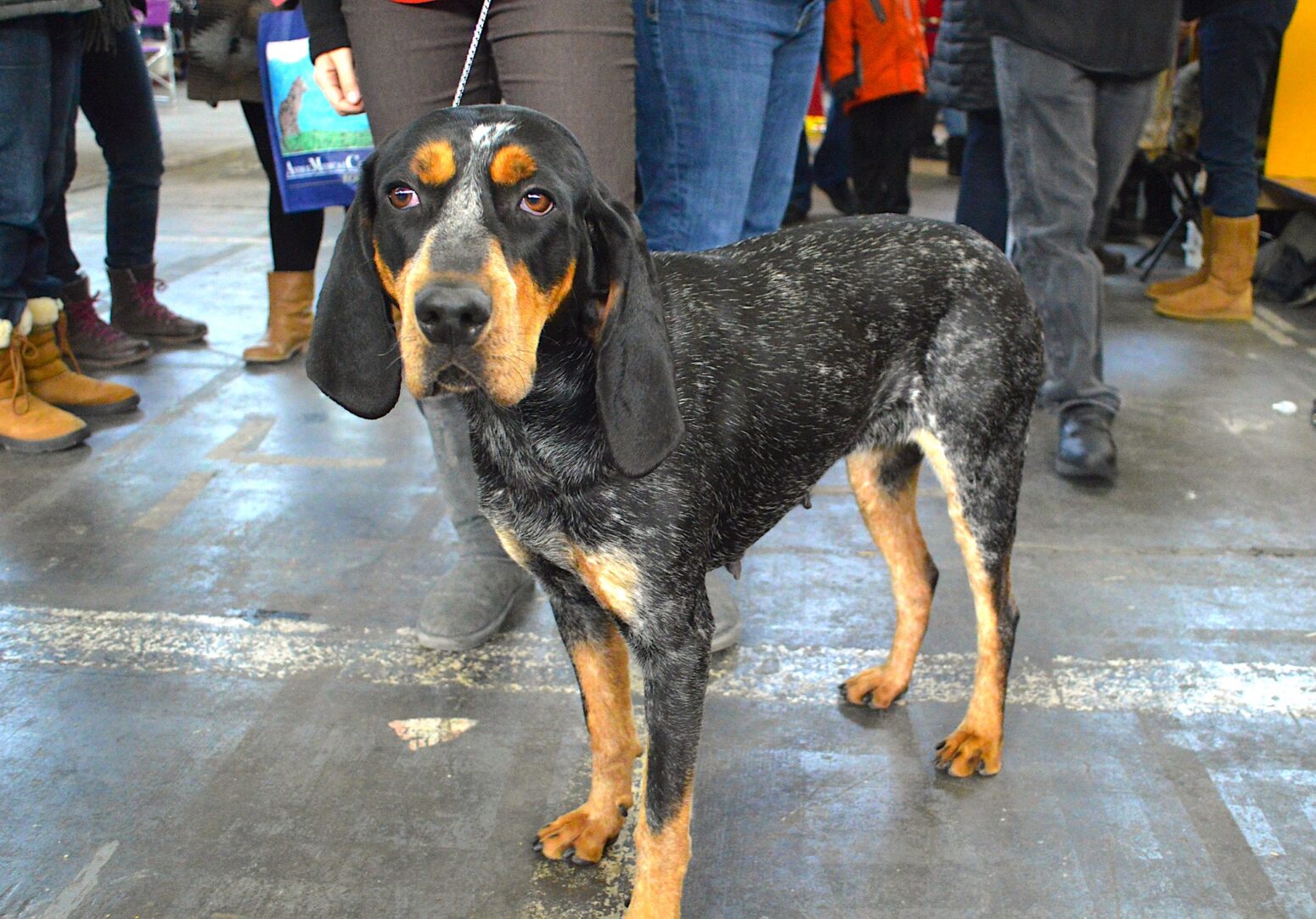
The deck overlooking the meadow is where she sits now, just after dawn on this soft April morning, five years past the wedding in the meadow. It’s foggy this morning, and the world is gauzy. She drinks her coffee and watches their dog, Memphis, follow his nose around the meadow and bay out the news of what he finds there. Sweet Memphis, their bluetick coonhound, rescued from a shelter one day before his date with oblivion, a week after the wedding, when they had so much love to spare. Memphis with his white coat flecked with black, his solemn hound face and chestnut eyebrows and his long, silky black ears that she sometimes holds out like airplane wings. “Cleared for landing,” she says, and on his good days Tom still laughs at that.
It steadies her to be here, wrapped in her shawl, eyes closed, safely back in the place she calls what was, the place that what is can’t change or take away. She’s content to be there until she realizes that Memphis has stopped baying and the noisy crows have stopped scolding him from the tops of the oak trees, and she knows before she opens her eyes that he’s gone. Gone again, is what she means. For the sixth time since they rescued him, he’s jumped, climbed, or slipped under the fence and followed his hound’s nose off to who knows where. They used to joke that they should have named him Carpe Diem, for his uncanny sense of when no one’s watching and he can escape.
“Memphis, you come back here right now,” she calls to the empty meadow and the fence and the creek and the cloud shadows crossing the mountains, and the urgency of that need steadily tightens like a cord in her chest. Doesn’t he understand that the world feels precarious enough with the three of them here together; with one of them missing, it’s imperiled, and they all have their parts to play to keep it stable? Every day, Thomas disappears a little more, and her job is to find him, follow him, keep him safe, to love him and remember his grandkids’ birthdays and straighten his thinking the way you straighten a jacket on a child’s shoulders. All Memphis has to do is rest his head on Tom’s knee and look into his eyes and offer his wordless creature love. Is that too much to ask? “Memphis, please,” she says to herself. “Come back before I forget how to love what keeps disappearing.”
“Tom,” she calls into the house, “come here, my love, I need you.”
Two years ago, three years into their unexpected gift of a marriage, Tom got sick with pneumonia that turned into sepsis, and when he came home after a week in the ICU, he was confused, forgetful, and anxious. Give it time, the doctors said. Let’s hope this will pass. Which proves, Cecilia thinks, that even doctors, knowing what they know, don’t give up hope. But it didn’t pass. Two months later, the coffee maker and the vacuum cleaner still confounded Tom. In any room he went into, he turned on all the lights, pulled out drawers, and left them open. What was he looking for? She stopped asking because he didn’t know, and that scared both of them.
An insult to the brain is how the neurologist described what had happened to Tom during his harrowing week in the ICU. We’ll need more testing to nail this down, she said, and after the testing was done, the insult became a list of cognitive deficits, written in the impersonal language of tests and scans. Still, even now, when someone asks about Tom, Cecilia speaks the language of insult, because that is the language that carries her closer to the daily lived truth of what happened, and keeps happening, to Tom, to the two of them.
Major deficits in executive functioning and short-term memory means he can no longer log on to the computer, follow a recipe, pay the bills, or order seeds for the garden that he’d managed so lovingly and so well. It means that his car keys, his wallet, and any matches she finds are locked in the small safe in their bedroom closet. It means that what she tells him pours through his mind like water through a sieve and that the weave of their life—the inside jokes, the talks that carried them deep into the night, the sweetness of touching and being touched—is steadily fraying. It means that she found a note on his bedside table one morning not long ago: Make an effort, it read, but his handwriting wasn’t promising.
Slow processing speed means that their talks now are mostly about her trying to help him understand what she’s saying. “I love you,” she says, but more and more often now he looks puzzled by that. “And you love me, remember?” she wants to say, but she’s been told not to ask him to remember, because he can’t, and that makes him anxious.
Normal left and right hippocampal volume and low left and right hippocampal occupancy. No one home is what that means. It means the blankness that empties his eyes, and the way his hands sometimes hang at his sides as though he’s forgotten what hands are for.
“Tom,” she calls again, trying to keep the impatience out of her voice—he’s easily wounded—and then the screen door creaks open and Tom steps out onto the deck, ducking his head and smiling shyly.
“Hi,” he says. Even now, when she first sees him, she looks for the big man who opened his office door. Then she lets her eyes adjust to the thinner, more tentative man he is today, with his bare feet and his messy gray hair and beard that he won’t let her cut or trim and the belt of his green flannel bathrobe tied in three bulky knots, the man who looks as though he came here through a storm.
She touches Tom’s arm, and stepping carefully from word to word, she says, “Listen, Tom, Memphis is gone again.”
She watches the words cross the space between them, she sees him understand, and she braces herself for tears or panic. Instead, he turns into himself again. “Now, Cecilia, you’re not to worry,” he says, and he pulls her close and holds her. He strokes her hair, and she wraps her arms around his waist; she closes her eyes and gives in to being held the way she’s always loved for him to hold her. That man hugs like he means it, she still tells her friends. “Someone always calls,” he says into her hair, and so far, he’s been right. Memphis carries a microchip; he wears a bright red collar with his name and their phone number sewn into it. So far he’s come back to them: exhausted, dirty, stinking of the dead things he rolled in, but alive. So far he’s come back.
Sometimes she wishes that Tom wouldn’t be himself because when he is, she can’t stop herself from feeling hopeful. In fact, the spasm of hope happens so often she’s started to believe that hope is a reflex after all, an involuntary optimism that facts and reason can’t stifle. The refusal of life to surrender to decline and death. She remembers standing with her father in the hall outside her mother’s bedroom a month before she died. “I think we’ve turned the corner,” he whispered. “I think she’s getting better.” Poor Pop, she thought then, but now she’s starting to understand. Hope is a pause, a place to rest where the truth can’t find you. It’s a kind of faith that persists despite all the evidence.
Now the day takes on shape and purpose. She sits down at the computer and changes the date on the Missing Dog poster they made the first time Memphis took off, then prints up a batch. They walk up the road and staple and tape the posters to trees and fenceposts and stop signs, and Tom cries at every site, and sometimes he wails. “Blow the whistle, Tom,” she says. “He’ll come if he’s still close enough to hear it.”
Tom wears his bathrobe and his hiking boots. He strides along the road like some kind of Pied Piper, blowing and blowing that shrill, piercing whistle. As they drive by, neighbors wave, and she waves back. They’re used to seeing Tom out on the road in his bathrobe and boots, exuberant or weeping, blowing the whistle; he’s part of the landscape now; they only stop if he’s alone, and then, if he’ll get in the car, they bring him home, and if he won’t, they call her.
Tom sets the pace; he leads the way. He holds a finger to his lips as they approach a curve, and they walk around it quietly, because Memphis might be there, the way it happened after another escape, when they walked around a curve two miles from home, and there he was, larking along the road with a torn ear and a coat full of burrs.
They walk and call and hope, while Tom cries and laughs and blows his whistle. Cecilia carries a box turtle to the other side of the road, she moves a snail, she moves a writhing earthworm from the rough pavement to the shoulder, and it dawns on her then, as they dawned on each other on the day they met, that since Tom was struck down, she knows how small we are, how easily crushed or swept away, all of us creatures, just trying to make it across one road or another.
Next morning, as she’s slipping out of bed to watch the sunrise, the phone rings. “Got your dog,” a man’s voice says. “Need you to come get him quick as you can.”
“Is he hurt?” she asks as she scrolls through her contacts for the vet’s number, and when the man says no, she enters his address into Google Maps. It’s ten miles from their place. “That hound can cover some ground,” she says to Tom as he stands beside the bed, frowning at a sock in his hand. “Okay, then,” she says. “Can you put on your socks? Let me help you with your pants. Let’s button your shirt. It’s warm today, Tom, do you need a down jacket? Do you have your handkerchief, your comb? Let’s tie your shoes.”
The man who called lives in a small brick ranch house on top of a low hill. He stands at the top of the driveway, holding their dog by the collar, and when Memphis sees them, the dog bays and rears and paws the air. “Cecilia, look who’s here,” Tom says, and his face shines with happiness. He squats down and opens his arms; Memphis barrels into him, and they both fall over. She sees the man—Albert Knowles is his name—watch this grown man in a puffer coat roll around on the driveway with his dog, and there’s nothing she can say or do to help him understand or to protect Tom from Albert’s imaginings.
Finally, Memphis disentangles himself, trots over, and leans against her legs; that’s their love language. She scratches his ears and bends down to whisper: “You’re a very bad dog for running away, but I get it.” He leans against her harder then, as if to say I’ll never tell.
Two sheds stand behind the house, with a rusty tractor parked in one and a dusty hay baler in the other. A swing set and a slide sit in the side yard. Near the front steps, a faded red, white, and blue pinwheel turns slowly next to a deflated snowman. A dried-out Christmas wreath hangs on the front door. What a long, good life’s been lived here, she thinks: Farming and the end of farming, kids and years that still tumble by from celebration to celebration, what a good place to come home to, and she feels the earth pulling her down, she wants nothing more than to curl up on the warm ground in this good place and sleep. She deserves at least that much of a break, doesn’t she?
What are you doing? her inner mother says. Self-pity is so unbecoming on you.
I know, she says, and she gets up from the inner ground and brushes herself off.
Albert Knowles is tall and rangy, a little bowlegged, with a kind, creased face and faded blue eyes. He wears jeans and a white cowboy shirt, a big oval silver belt buckle. He shakes hands with Tom, nods to her. “Some dog you got there,” he says. “He scratched on the back door around midnight, and I started to run him off, but he was just about done in, and it was pouring rain. I could have let him in the house, and my wife would have been none the wiser. She’s off visiting our daughter and the grands, but she’s coming back today, and she won’t abide a stranger, man nor beast, so I tied him in the shed like she would have done. Just a habit, I guess.” He touches Memphis on the head, and the dog leans against him, as though they’re good friends now too.
“Well, I’ll tell you a secret,” Tom says, stepping so close that the man steps back. “He’s run off fifty times now,” he says from behind his hand in a loud stage whisper. “So we’ve decided he’s our dog until he runs off, and after that, he belongs to himself, so maybe he should spend more nights in a shed. Right, Cecilia?”
Albert Knowles studies the three of them warily. “Well, now, isn’t that the truth?” he says, and she can see him start to understand that something is very wrong here. People do that a lot now when Tom almost makes sense, until he doesn’t.
“I think what he means is,” she says, and then she stops because she doesn’t know either. She slips her arm through Tom’s arm, holds Memphis’s leash in the other hand, and pulls them toward the car. “Thank you for taking care of our dog,” she says. Albert Knowles pats her on the back with a big, warm, fatherly hand, and it takes everything she’s got to keep from crying.
If I can just get us home, she thinks, home to the place where Tom won’t scare or bewilder anybody. Where he can tear pages out of the seed catalogs and insist that they’re pictures of their garden, or read her a letter from his mother, ten years dead, and swear it came yesterday, and none of that will seem strange because home is the place where the people for whom love is a long habit of kindness and loyalty have folded your strangeness into their lives so completely that sometimes it almost feels ordinary.
At home, while Memphis laps up all the water from his bowl in the kitchen, Tom leans against a counter across the room, looking suspicious. She dreads that darting, narrow-eyed look. “What’s this, Cecilia?” he says, and he points to Memphis and trembles. “You know we can’t afford another dog,” he says, and something gives way in her then, she feels it fall, as though someone has pulled the crucial piece out of their Jenga tower of a life. She’s gotten the three of them safely home, and Tom is still out in the wilderness.
“It’s Memphis, Tom,” she says. “It’s our dog, Memphis.” Her voice sounds weak and unconvincing. She holds out his ears. “Cleared for landing,” she says.
Tom shakes his head and straightens his shoulders, runs a hand through his hair. “Of course it is,” he says. “Who else would it be?” He walks over to Memphis and holds out his hand. Memphis offers his paw, and they shake on it. “Sorry, buddy,” he says. “Sorry, Cecilia,” he adds, and she pulls him close; she holds him until he stops trembling.
Later, she brings two glasses of red wine out onto the deck, where they like to sit and watch the sun go down behind the mountains. Some days the setting sun sends out long spokes of light that set every cloud on fire. Tonight’s sunset is more subdued. The clouds over the mountains are gray on top and red below, then the red fades, and they’re entirely gray. The screen door creaks open, and Tom comes out, dressed for work in a long-sleeved blue shirt, khaki pants, and bedroom slippers, his hair pulled back into a thin gray ponytail. He hands her the monogrammed gold cuff links that she gave him for Christmas one year—he’d been a sharp dresser, in an endearing, old-fashioned way—and she slips them through the cuffs of his shirt and clips them shut. This has become a daily routine, and it doesn’t bother her anymore to help him dress at sunset for work that he stopped doing five years ago. They’re long past the point where she believes that if she corrects enough errors, he’ll stop making them, and the truth is that sometimes it’s easier to live in his world than to try and coax or drag him back into this one, where he never stays for long.
“How are we fixed for time?” he asks, brushing back his cuff to look for his watch.
“We’re good,” she says. “Let’s sit and enjoy the sunset.”
“It happens every day,” he says.
“It does.”
“That’s good,” he says.
“It is.”
He sits gripping his knees. He sits that way a lot now, braced for impact, and he frowns at the mountains, as though he’s waiting to hear the answer to some hard question.
Memphis flops down next to Tom’s chair and instantly falls asleep, and Tom strokes his head and closes his own eyes and begins to sing the opening lines of “Memphis, Tennessee,” doing his best Chuck Berry imitation. At the sound of his name, Memphis thumps his tail once, and Tom sings the two lines again, and then he sings them a third time. He used to sing all the verses in that pitch-perfect Chuck Berry voice. Now the voice is still there, but the words are gone, and he sings that scrap of song three times, as though repetition will make it whole again, and when he’s done, she applauds.
By the time he’s finished singing, the sun has gone down behind the mountains, and the day’s last radiance is softening the world. Memphis runs and yips in his sleep, no doubt dreaming of his next escape. “Oh, look, Cecilia, we’re in the gloaming,” Tom says, and she takes his glass of wine as he reaches out toward that beautiful blue light as if he were catching fireflies, then he opens his arms toward the mountains. “Hills,” he says, and she lets herself hope that he’ll find the words too—great and blue and God; his face is bright as he reaches for them.
“Hills,” he says again, louder this time, as if he’s calling Memphis, and he clenches his fists. “Hills, hills, HILLS,” he says, and he pounds both arms of his chair. Memphis opens one eye and closes it again. Don’t go, Tom, she almost says, but she knows as clearly as she’s known anything lately that he was, he is, he will. Love won’t keep him here; there’s no story left to tell in which he stays for long, and right then, that story is the truest one she knows. So she reaches across the space between their chairs and unclenches Tom’s fist and holds his hand while Tom stares at the mountains, and then as though they’ve answered him at last, he says, “I miss you.” His eyes are soft again; his voice sounds the way it used to sound when he said, “I love you,” and since missing her must be what he means by love now, she says, “I’m here.” And since “I’m here” must be what she means by love now, she says it again, and that feels like the other true thing she knows. Here with you, she means, here in this wilderness between two truths, the land where the three of them wander and live.
Read more from Issue 23.1.