Interview with Jeric Smith: On Interests and Poetics
7 Minutes Read Time
Assistant Editor Prince Bush: I am always thinking about how my interests appear and do not appear in my poetry—whether it is through figurative language, subject matter, tone, or rhythm. I thought it would be illuminating to learn and share how poets see the intersections of their interests and poetics.
PB: Hi! Thank you for doing an interview with me about interests and poetics! I am curious about an interest you have that shows up in your poems, especially one that feels like a fixation—anything from a reality tv show, a song, a video game, another genre, a random fact that leads to a rabbit hole, an aspect of craft that has a hold on you, etc.?
JS: Right now, I’m really interested in the U.S. Department of Defense’s Formerly Used Defense Sites (FUDS) program. It’s a program and classification given to properties formerly owned, leased, or possessed by the DOD and transferred out of military control before October 17, 1986.
PB: When, where, and if applicable, from whom did you discover this interest? Does anything stand out in that memory of discovering this interest?
JS: A part of the FUDS program is to identify, investigate, and clean up contaminations or munitions. Before I knew anything about FUDS, one of my earliest childhood memories living on Guahan is being in lockdown at my school because an explosive or mine was found somewhere on campus. As a kid, I thought it was exciting and scary but the adults around me seemed unaffected. I think they were trying not to make a big deal out of it, to keep cool, so that us kids wouldn’t worry too much or get rowdy. As a young person I thought that was an eerily odd reaction. Now, as an adult, I know that the normalization of war and colonialism persists in utterly terrible ways. I was in graduate school at Pacific Lutheran University when my mentor, Oliver de la Paz, encouraged me to read Solmaz Sharif’s collection, Look. Among other things, she indicts the official language used by the US military with such precision and devastation that the book itself felt like a hurling of stones back at US imperialism. So I went looking for various documentations related to the US military and its roles/effects in Oceania. What stood out to me was that in every single place I’ve lived so far there was a formerly used defense site nearby.
PB: What emotions do you have about it, and what do you think causes these emotions—does it recall something ancestral, cultural, or personal?
JS: I think I’m anxious, angry, and confused. Generally, I’m dumbfounded and sad that war and the United States touches all that is ancestral, cultural, and personal. I hate it. Capital H, Hate. As for the FUDS program, I distrust it. It offers a reconciliation of sorts without those most impacted in mind. Or they involve the public but with minutely shriveled, emaciated ideas of participation that only happen within DOD’s framework.
PB: How would you say this interest affects the rhythms, figurative language, tone, lines, stanzas, titles, punctuation, etc. in your poetry; how does it affect your poetics?
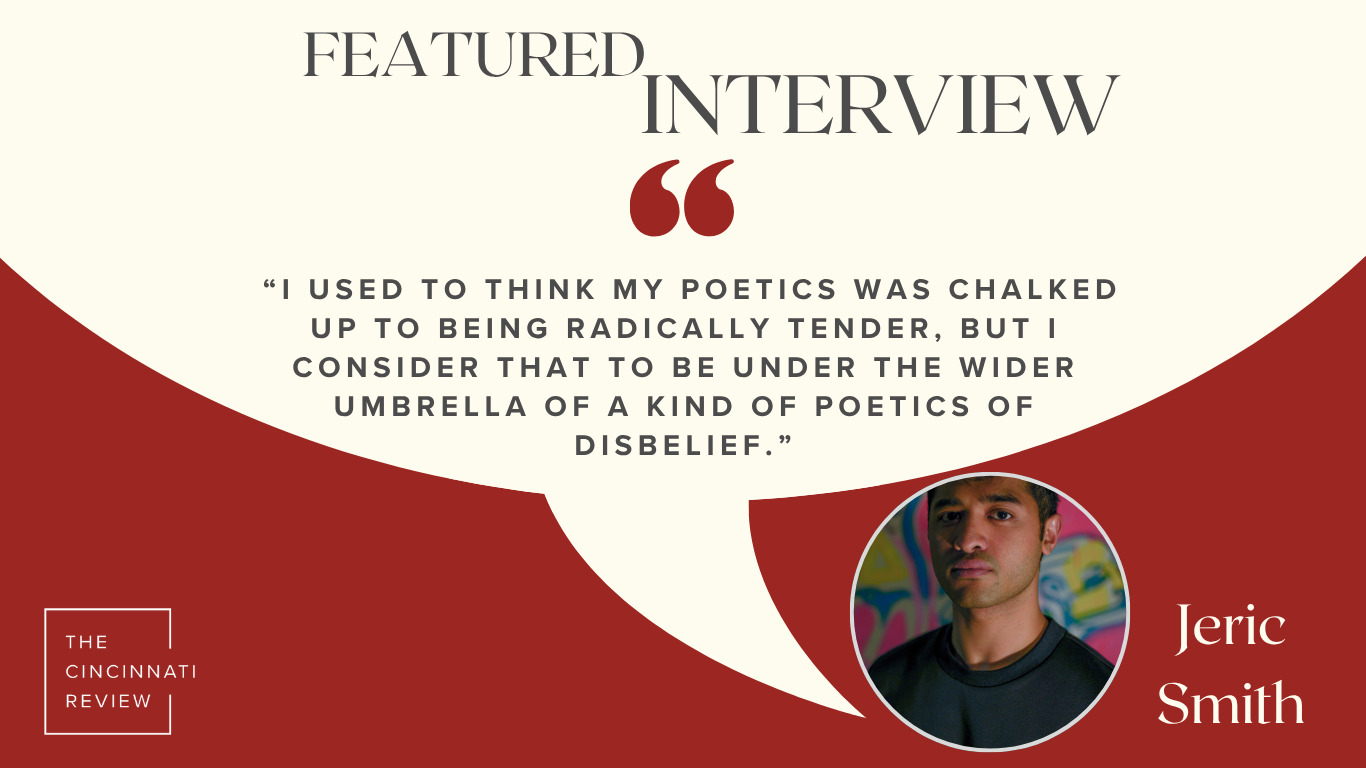
JS: In reading anything FUDS related, the language is so stunted and devoid of imagination. For instance, the telling about these places or “properties” as formerly owned, and in what phase of the cleanup or reconciliation process they’re in, it’s one report after another, a literal accounting of monies allocated to get whatever job done, or not. That boring and lifeless language forces me into the sonically rich, the emotionally rich, the sexual even. It guides me deeper into the personal, the soft, the tender, the attuned. Because there’s never truly been a complete cleanup of a land or property, it is in my own interest that I use language as a response to that. I mean, even the notion of a cleanup job, right? That’s very different from, say, recuperation or regeneration. For instance, the munitions and explosives may have been removed from a site, but the U.S. military still exists, the memory of a child taking refuge under a desk or in the corner of a classroom while these munitions are removed is still there. The FUDS program refuses the capacity to heal a human experience. I used to think my poetics was chalked up to being radically tender, but I consider that to be under the wider umbrella of a kind of poetics of disbelief.
PB: What verb would you use for how this interest functions in your poetry? Do you use it to mythologize, interrogate, subvert, experiment, defamiliarize, chime, resist, etc.? Why does this verb seem right?
JS: I would use the verb bake. Professionally, I’m a pastry chef and bread baker. And so much of poetry is heat and timing––so much of baking is heat and timing and cooling and eating. It’s really how poems form for me.
PB: Which aspect of your poetics seems the most resistant to your interests, or seems to be the most independent of them, if any? Which aspect is the most accommodating? How?
JS: Queerness. Like as a queer person, I hate watching war movies but then I want to watch war movies and consume military-related things because I want to dissect them and turn them around and look at them. But when I do, I just hate looking at them! For one, I mean battle dress uniforms, or BDUs, are meant for camouflage, to mimic a kind of nature so that an enemy can’t see you, and this cloth, these garments on these extensively exercised bodies literally become bastardizations of various kinds of actual, real-life, nature! There’s a question of aesthetics and ugliness to it that is at odds with how I encounter the land and ocean. The most accommodating part of my poetics is my propensity to listen to people. I very much care about the person and families behind the soldier. I’m also very interested in the alternate world and alternate experiences of the soldier.
PB: What about this interest is still unknown or mysterious to you? How does your poetry relate to what is unknown about it?
JS: I don’t know how to move away from land as being owned or possessed or whatever, for the broader or general nation-state. Whether that’s the United States or freakin’ France or Spain or whoever. Poems try to invoke the land and the spirits and the animals and the waterways.
PB: I know I told you to pick one interest, but what interest do you have that seems to have nothing to do with, or seems to have no effect on, your poetry?
Right now, I’m very interested in the business of running a bakery. It does influence my poetry to the extent that it’s been taking me away from poetry. I go in and out of want to run a business and then fleeing away to my little corner of the writing world. That and money. I feel like I have an interest in money and I haven’t honestly written about it or with it in mind much, in poetic terms.
And with that, I say: Knead fearlessly, write tenderly, and never serve empire!