Interview with Uche Okonkwo
4 Minutes Read Time
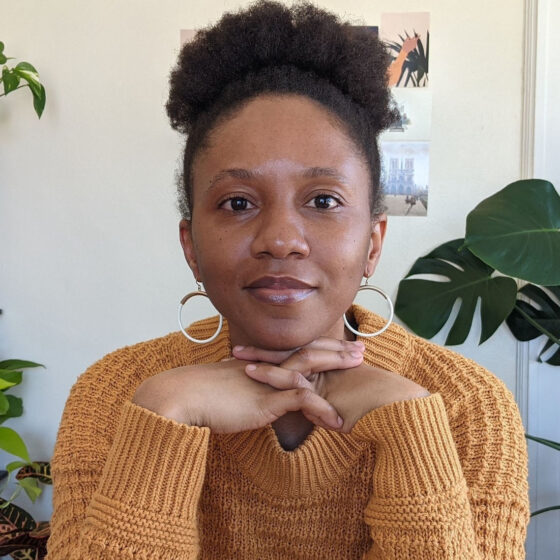
Associate Editor Blessing Christopher: Uche Okonkwo’s reading at the University of Cincinnati will be held on October 1, 2026. Before her visit, I reached out to the author to discuss her debut short story collection, A Kind of Madness, published by Tin House Books in 2024.
BC: Thanks for the opportunity to chat with you about your short story collection! While reading your work, I was drawn to the characters and their irrepressible (and often unreachable) desires. What was it like to put the collection together, and how long did it take?
UO: I wrote the stories over a long span of time, but as individual pieces. The oldest story in the collection is about ten years old, and the most recent was written perhaps a year or two before the book came out. When I first started writing, I was not thinking of a book. But when I had enough stories for a collection, that began a process of starting to see these pieces differently, to think about how they echoed each other, what threads were recurring, how to arrange the stories in a formation that felt impactful. The process also made me think about the ways in which I had and hadn’t changed as a writer and a person over the years. In revising and editing, I became more aware of my obsessions, certain verbal tics and turns of phrase that reappeared in multiple stories, etc. It was an eye-opening experience.
BC: The status quo is a well-oiled machine that runs itself in the collection. The characters can attempt to plot their way out of their socioeconomic, spiritual, and physical realities, yet they are always recaptured in the end. The collection seems to suggest that “madness” can be defined in multiple ways, with envisioning a different future for oneself being the worst kind of madness. I’m interested in the various definitions of the word in your collection. In “Nwunye Belgium,” the word is used in a literal sense, but the meaning continues to shift the deeper we get into the work. Can big dreams, then, be classified as a form of madness? What about patience? Hard work?
UO: In choosing a title for the collection, I spent a lot of time thinking about what ties the stories together, besides some of the more obvious aspects such as all the stories being set in Nigeria. I tried to find themes, concepts, moments that held threads that I could see throughout, and for me something that emerged was the idea of madness—in some stories there’s a more literal tilt, but in most, it was more figurative. I was thinking of “madness” more in the sense of some kind of warped thinking or perspective—whether it be brought on by actual mental health matters, or by circumstance, or by the primal desire to survive—that casts a shadow over the lives of the characters.
BC: The child characters are not spared from this malady, which leads me to wonder how you worked to adequately explore the theme through their juvenile troubles.
UO: Children are rarely spared from the messes we create, and so it was not hard to imagine child characters imperiled by their circumstances, or by the people who are supposed to care for them. I find that child characters are often an evocative avenue for exploring the hypocrisies and contradictions of the adults around them, and the wider society.
BC: The collection sets up a system that calls for the reader to suspend any fancy ideas about a satisfactory ending for anyone. Story after story, we are primed for victory, but all we get are their unfulfilled/aborted dreams. Still, the stories feel fresh, and the collection highlights some unique complexities in each one. What was it like to create a system where stories that seem to follow the same structure still turn out delightfully layered?
The stories in this collection came together very slowly over a period of about ten years. In the process of bringing these stories together into a collection, I discovered for myself what themes and motifs and obsessions were recurring, aborted dreams perhaps being one of them. I suppose all of this is to say that with these stories I was not really trying to create any kind of unified system of anything, at least not consciously. Seeing these stories as individual standalone pieces versus seeing them together in a book creates a different kind of resonance, I think.
BC: Congratulations on your successful debut! What’s next for Uche?
UO: Thank you! I cannot say exactly what’s next, but I have a few projects in the works that I am excited about.