The Family Portraits Behind “I Inherited No Photographs”
3 Minutes Read Time
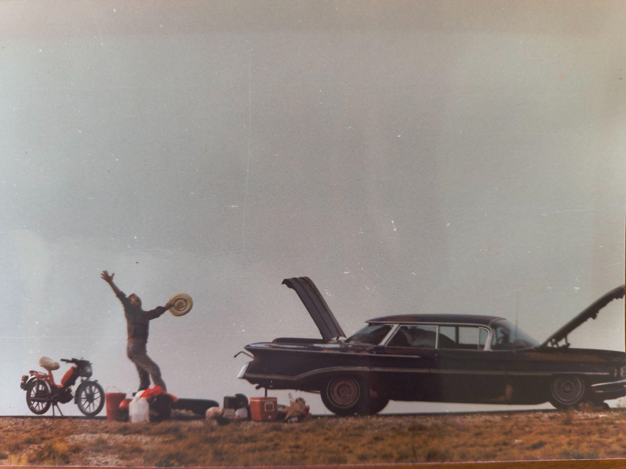
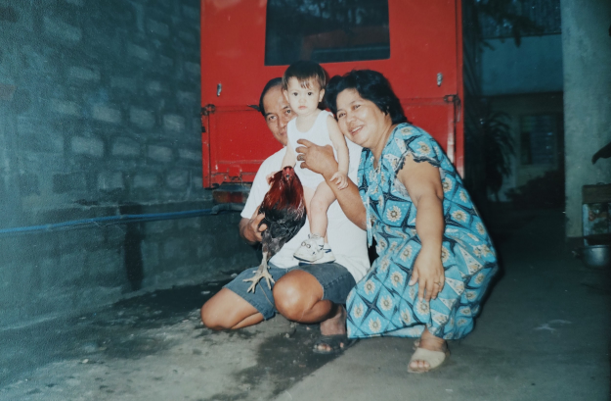
The Cincinnati Review: Asa Drake’s “I Inherited No Photographs” appears in issue 23.1. Today, she shares some intimate and beautifully observed family photographs taken by her mother.
The Family Portraits Behind “I Inherited No Photographs”
When I first decided to add images to Beauty Talk, my forthcoming poetry collection with Noemi Press, I was thinking about what I could gain from making public the family photographs from my childhood. Nearly everything about how I grew up in South Carolina is gone. The house collapsed under the weight of wisteria. The ancient woodstove was taken by a cousin. The fruit trees–even the huge black walnut–all died in the thirty years since we left.
The “we” I want to point to is fragile. I’ve sought out public records about the vibrant Filipino community I grew up in during the 90s, centered around Kingtree’s Saint Anne’s Church. There’s no census record of any of us from that decade, but I have newspaper clippings from the Santo Niño festival. We all believed in our future America. And we could all feel the limits to our safety.
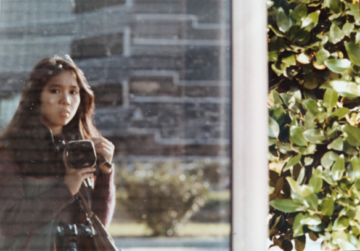
The photograph is evidence that links a person to a place. And yet, the aperture which supports one’s argument also shapes the narrative. My poem in issue 23.1 of the Cincinnati Review, “I Inherited No Photographs,” is about the photos I chose to condense into language–photos I didn’t share with readers of this forthcoming collection. In this poem, I index the photographs I have framed on my mantel. These are the photographs I return to as touchstones in my daily life. In the process of gathering photos for Beauty Talk I started to distinguish between two kinds of relationships within my family archive: those linked to a version of my identity others easily accepted, and those that reflected an identity I frequently had to prove.
I have always been the daughter of immigrants. The family I grew up with is undoubtedly Filipino. But to claim being white, to illustrate that proximity, I require evidence. For me, the photograph becomes a confrontation, a demand for credibility. And maybe because of the stakes I describe, the identity of the photographer and their intent becomes part of the story I want to tell. After his modeling career, my father moved behind the camera. His gaze, documented and cataloged by business flyers as well as family albums, became a shortcut for recognizing what aspects of my life might be attractive to others. Beauty Talk is about images and bodies shaped by the white gaze, yet in this villanelle my mother is holding the camera and, at times, my parents share the lens. In contrast to my father’s white gaze, my mother’s camera captures each of us within the family unit. These are the photographs that make us “familiar” rather than “exotic.” Her gaze isn’t gentler. And yet, it isn’t synonymous with an extractive audience.
These aren’t glamor shots but portraits of relationality. These are the family portraits I put to memory. And even if I felt the desire to withhold them from this collection, I needed a poem to point to their existence.