What Does the Horse Mean?
16 Minutes Read Time
For six hours a day, he watched the couple spin.
At first, he despised them. It was emptiness for emptiness’s sake. A piece that exemplified all the worst impulses of contemporary art, the things that made people snicker and roll their eyes while they passed through the museum. Now, after so many hours alone with them, he wasn’t sure. The repetition had become mesmerizing. Perhaps it was only Stockholm syndrome. His cathode-tube captors.
Whatever the answer, he couldn’t stop watching.
His job title was Security Guard. He found this funny—he wasn’t sure he could stop a large child if they were determined to vandalize the art. Thankfully, his presence was all that was required, a gaze enough to quiet intrusive thoughts. He wasn’t allowed to read or use his phone. These were the only rules, aside from Don’t Let People Touch the Art. “Back up, please,” were the only words he needed, the catchphrase he’d emit if you pulled his string.
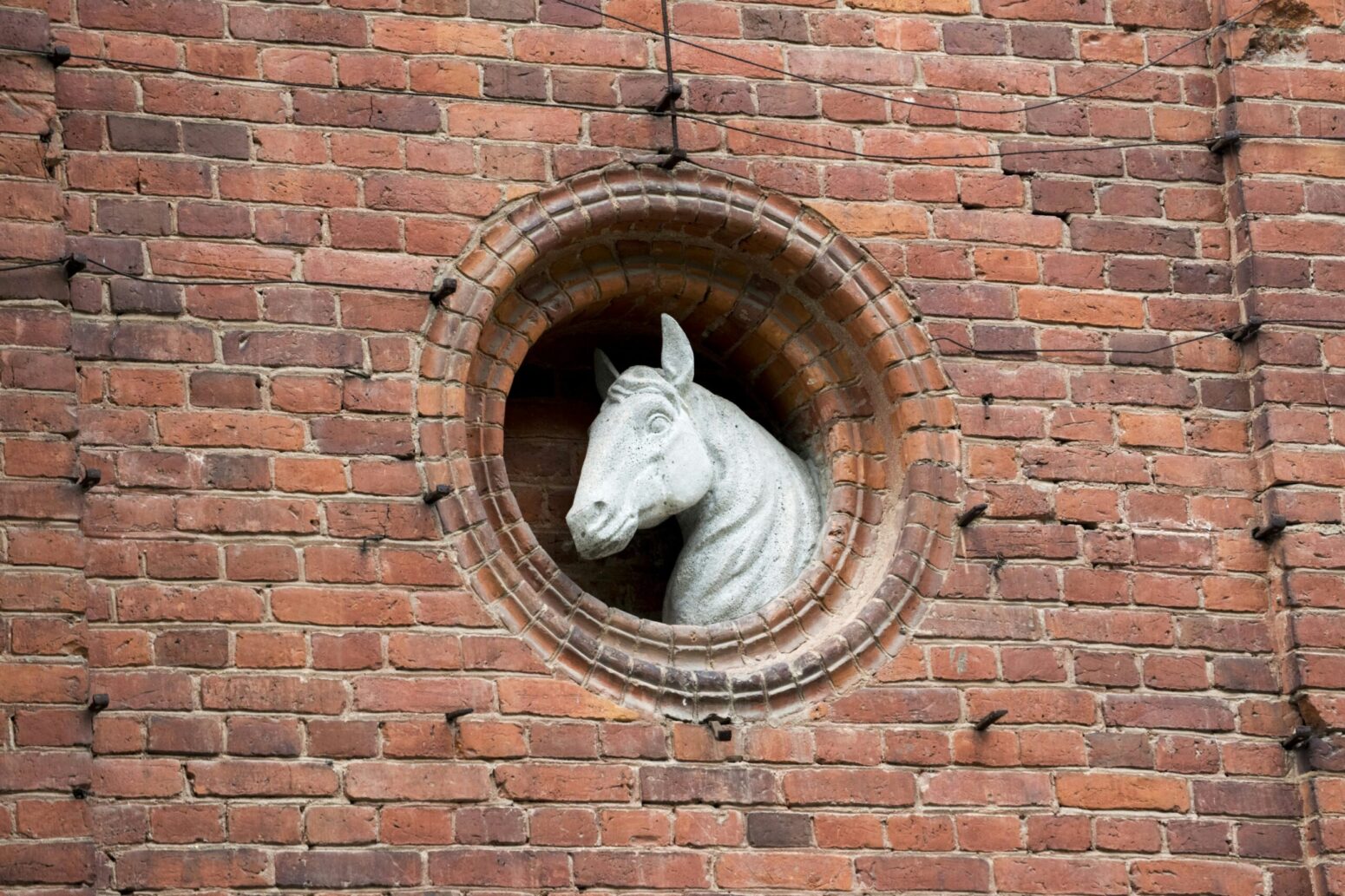
Every now and then, adults would ask him a question about the art. What’s the point of that one? What does the horse mean? Why are those two paintings beside each other? These questions, which in the normal world would have sounded more natural in the mouths of children, were asked without self-consciousness. He could have guessed at an answer, but every time he said, “I’m just security.”
The other guards rotated, only with an exhibit for a few hours at a time. This was for their sanity. One gallery, containing a glossy sculpture of a dollar bill that emitted a loud Cha-ching sound every ten seconds, was dreaded by the entire staff.
He remained in one location, however. His knees were rubbery, his body in constant ache. He couldn’t stand and pace through the more popular galleries for an entire shift. His boss, a man half his age, let the guard remain posted in the farthest, least populated wing of the museum in a folding chair. It was a kindness. Perhaps he reminded the man of his own parents, his relationship with them transformed from receiving care to giving care.
The guard’s chair was positioned in the arched doorway between two galleries, allowing him to watch both at once. This was both a gift and a curse. The gift: He would have quit years ago if he was forced to be on his feet all day. The curse: It trapped him with them. The couple.
Gallery A, the room closer to the main gallery, was harmless. Benign, a word that probably would have offended the artists hanging there. There was an abstract, which looked like a Rothko that had been melted in the microwave. A black-and-white self-portrait, the photographer reflected in a car’s chrome bumper. A painting of trees. The guard encouraged himself to shift his weight left and keep his attention on Gallery A, where at least the lights stayed on.
The other gallery, Gallery B, was accessible only through Gallery A. It was a dead end. There was a single piece within Gallery B, lonely in the center of the room. A television on a raised stand. A boxy 32′′ Sony Trinitron from 1999. This exact year and model were requirements for display, as directed by the artists. The cords of the yellow, red, and white AV cables vanished into the hollow stand, where an HDMI converter connected to a digital media player, which housed a memory card. The piece lived on the card. The rest was mere framing. The television had twice been replaced after the tubes behind the screen burned out. This specific Sony, years past obsolete, cost $350 on eBay.
In the video that played on the television, a nude man and woman slowly rotated on a pedestal, the world around them completely white. The man would be facing forward, then both man and woman would be visible in profile, then the woman would be facing forward. It took three minutes and thirty seconds for a single rotation to be completed. The only sound was the quiet whir of the pedestal’s motor.
The plaque on the wall said the piece was from 2005. Digital film. In parentheses, the length was listed: 600 minutes. Ten hours on the dot.
Two twentysomethings had stood for ten hours, the details of their Brooklyn apartment hidden by hanging bedsheets. No food, no pee breaks, no bouncing knees or rolling necks, no drummed fingers or too-deep breaths. Their only movements were blinks and the steady rise and fall of their breath. They were already on the pedestal when the video started, and there was no scramble to turn the camera off in the final moments—the video was edited as a seamless loop.
The longest anyone had stayed and watched was seven minutes. Two rotations. Him to her to him to her to him. Seven minutes of a ten-hour video. The occasional teenage boy, having escaped his parents’ gaze, would raise his eyebrows and look to see if anyone was watching him, drawn in by the unhidden flesh. These boys moved on quickly, however, the nudity sexless and the whole thing boring.
The guard had watched the couple spin for too many hours to count. Days of his life. Yet he’d never seen the video from start to finish. His shift was shorter than its runtime. He wondered if there was some secret he’d managed to miss, one furtive movement hidden in its stretch of empty minutes. He spent most of his shift watching them, squinting at the analog TV in the dimmed room, as if the moment his eyes strayed, she’d thumb her nose or he’d windmill his dick.
To add to his frustrations, the piece was untitled.
The guard received promotional emails from the museum. They’d signed him up when he was hired, which he found ridiculous, but he never bothered to unsubscribe. Every week, he learned about special events and new installations, jazz in the courtyard or a guest lecturer.
In this week’s email, he’d learned two artists would be at the museum Friday night for the debut of their latest piece. A married couple. Their photo was in the email, the pair neither smiling nor scowling while making eye contact with the lens. It was his couple. Clothed and older, but unmistakable. The moment recognition struck, he knew he would go and meet them.
His anticipation had grown all week. Tomorrow. Tomorrow, he would speak to them. Tomorrow, he might have an answer. But first, he needed to come up with a question.
He should be retired. That’s what he imagined the daughter he did not have saying. You should have retired by now, Dad. The imagined sympathy of someone who cared.
He could afford to retire. But what would he do with his days?
He remembered waiting a very long time for his life to begin. And now, as if all of a sudden, it seemed to be over. Another decade or two of diminishing returns. Not that he bemoaned his life. Usually, he was content to rotate between home and the museum and the occasional movie matinee.
His memories of his younger self were mostly of Nos. The date canceled. The trip postponed. The new hobby considered, then forgotten. Now, looking back, he couldn’t remember if this was due to fear or an overabundance of patience. Had he waited so long for the right moment that he’d allowed every moment to pass? There had been a lot of reading, a lot of long walks, a slew of unmemorable jobs. Not a single Super Bowl win for his home city. The same cast of friends for decades, who only changed physically, their flesh drooping while their interests remained static. They were mostly gone now. Some had moved, some had died, some had drifted into married life or hermitage.
He had been born and raised in the city, never living more than two miles from the house where he was raised. He’d waited and waited, spun and spun, and ended up in the exact same place.
The guard could describe every part of their bodies. His eyebrows were uncommonly bushy. She had a mole on her left shoulder. The gap between his big toe and the toe beside it was unnaturally large. Her pixie cut was gelled, and across ten hours no hair strayed from her scalp. His balls hung lower than his penis. Her left breast was smaller and flatter than her right.
They stood so still, he sometimes needed to lean in to confirm they were breathing.
Their boredom was a craft. It was art, worthy of a name-brand museum in a midsize city. His boredom was work, worthy of $28 an hour.
Was pointlessness the point? Or was it meaningful merely because it existed?
Even if their art was ridiculous—something he was less and less sure of—they’d gotten into a museum. They’d made it. Whether it was genius or luck or a scam, their spinning naked bodies were on display. The more he thought about it, the deeper his awe became.
The spinning couple didn’t just haunt his time at the museum. When grabbing milk from the fridge, he’d suddenly question their motives, then spend the entirety of his cereal-eating wondering what ideas had been abandoned on the way to the final concept. Internet shopping led to a deep dive into the cost of a motorized pedestal that could bear the weight of two adults. A nude scene in a film flashed him to the woman’s breast. Or, lying in bed, he’d try to stay perfectly still. The fact that he couldn’t move made it impossible not to. His every flinch and twitch would have stood out on camera.
He’d once watched a ’90s remake of a ’60s movie called The Thomas Crown Affair. In it, Pierce Brosnan steals a Monet from the Met. Technically, theft was one of the things the guard was protecting the museum from, not just sneezes and sticky fingers. But there was no value to the television he was guarding, aside from the absurd price of the thing itself. The video was just a video. There was nothing to steal. He imagined it playing in the art thief ’s home, the naked man and woman rotating in the background while Brosnan sipped a celebratory sherry.
If the piece was stolen, whisked away by some debonair man in a suit, would the guard celebrate? Or would he miss them?
On Thursday night, he dreamed he was on the pedestal. Two copies of his aged body twirling, faces impassive. In the moments when dream and waking melded, he felt exposed. The nudity wasn’t the issue (although he didn’t love the idea). It was the claiming of the art, the idea that he could create something like that and then declare, “I made this, and this is good.”
If his own life was on display, his existence distilled into ten hours of footage on a thick TV, could he claim the work as good, or even his own? Perhaps it was more like the beauty of a canyon, something formed by the accumulation of time.
Even though the bedside clock read 4:30 a.m., the guard got out of bed to start his day.
The guard didn’t work on Fridays. He spent the day jumpy and impatient, waiting for the night’s event. He laid his outfit on the bed hours before he needed to change. It looked like someone had been raptured away, leaving an empty suit behind.
When it was time to go, he dressed quickly, not questioning the outfit he’d chosen that morning. He took a final look at his appearance in the mirror. A sport coat over a dark button-up. Blue jeans. He couldn’t remember the last time he’d worn the coat, although its musty smell suggested a long hibernation. While he pulled on his shoes, the guard realized this would be his first visit to the museum as a guest.
The event was already underway when he arrived, drinks and hors d’oeuvres in the gallery where the new piece was displayed. He expected another video, another endurance test. A bed of needles poking their pale butts, or both hanging side by side on a pull-up bar. Instead, on a four-by-four canvas was a splash of colorful acrylics. An abstract composed of thick swirls of color. He heard a curator explain to a rapt crowd that the artists had painted in tandem, never looking at the canvas, only reading the other’s expression to decide where to place their next stroke. Staring at the painting, the guard’s only thought was, That’s it?
The crowd was mostly well-dressed men and women his age or older. In fact, he felt almost spry in this room of geriatrics. Spry and underdressed. He couldn’t believe how many of the men were wearing ties.
Then he spotted them. The artists.
It had been twenty years since they’d captured their bodies on video. Now in their forties, they were weighed down by middle age. They weren’t mysterious or exuding some brilliance, not as far as he could see. Clothed and speaking, they seemed folksy. Midwestern.
He knew they were not major artists, would never have retrospectives or inspire copycats. They still sold work, still made the occasional headline, but they never reached any true level of fame. On the day they filmed his art piece, had they dreamed of the impact they would someday make? Or, naked and bored and spinning, had they thought only about how badly they needed to pee, how soon rent was due, how their genitals might look on camera.
They both held stemless wine glasses and were waving goodbye to a gesticulating old woman. The guard took a steadying breath and stepped toward them. He’d done enough waiting in his life.
“Hello. I’m a fan,” the guard said.
They both smiled pleasantly. “That’s very sweet,” she said.
“Of one piece in particular.”
“Which one is that?” he said.
“It’s untitled.”
“They’re all untitled,” he said.
“Titles are hard,” she said.
“It’s here in the museum.”
They waited, politely blank. Did they have multiple pieces here? Or did they not know where their own art hung?
“You’re spinning. And naked.”
“Can you be more specific?” he said.
“He’s kidding,” she said.
“That one was a doozy,” he said. “Hell of a day.”
“I always wonder what we would have done if one of us sneezed?” she said.
“That one was definitely her idea,” he said. “She wanted to get me naked.”
She slapped his arm, so lightly it didn’t make a sound.
“We don’t do stunty stuff so much anymore,” she said.
“Too old now,” he said.
“Too smart now,” she said.
They both laughed. The guard didn’t.
If they asked him why he liked it, what would he say? How could he explain in his layman’s terms? Did he like it for its stillness? For the puzzle of its meaning? Or merely because, in some way, it belonged to him? He wondered, suddenly, if he liked the piece at all. If he couldn’t verbalize what made it meaningful, how could he claim it to be?
But the couple didn’t ask.
A caterer walked by, and the man grabbed a piece of cheese wrapped in meat. He put it in his mouth immediately, yanking it off its toothpick. “Are you an artist?” he asked, chewing.
“No. I work here.”
“Curator?” she said.
“Security.”
“That’s wonderful,” she said.
“I don’t know how you do it,” he said. “Just stand around all day.”
“Rick!” she said.
“I only meant . . . I’m impressed, is all. You’ve probably spent more time thinking about that piece than we ever did.”
“I doubt he’s just staring at our naked bodies all day,” she said.
“You allowed to read or anything? Music?” he said.
“No.”
He whistled. Brutal.
There was silence, both waiting for the guard to end the conversation, to walk away so someone else could step up and compliment them.
Greeting the couple, he’d felt like the befuddled guests who approached him with a question on their lips. Why does it exist? What does it mean? Why can’t I look away? This urge to question them, to see if they could muster a reason for their self-imposed suffering, had faded. There were no answers here.
“It was nice to meet you.”
“You too,” they said in tandem.
The guard exited the gallery and went straight to his car.
Back at home, he put leftovers in the microwave. He watched the Chinese takeout carton spin under the microwave’s yellow light. He felt like a street artist had made his dollar disappear without offering to bring it back. His initial impulse had been correct. The art was pointless. And his interest had bordered on obsession. Better to remain neutral. Better not to care.
The next day, he returned to work.
As he made the slow walk across the museum, the guard felt like a spouse who knows there’s a conflict waiting at home, whether it be icy silence or smashed dishes. He unfolded his chair and placed it in the doorway between rooms. He sat, trying to enjoy the early silence in the museum. But it was never truly silent. Because to his right was the unending whir of the pedestal’s motor, sending the couple around and around.
He looked.
They were the same.
He tried to reconcile the duo on the television screen with the couple he’d met last night. To weigh her toothy smile and his jokey answers against their younger selves’ blank expressions and hallowed stillness.
It was pointless. The couple he’d met was no longer the couple on the screen. The man and woman from last night had lived their lives. They’d found success, although there was no telling if it matched their self-estimations. The couple on the screen, however, was pure potential energy, willing to endure pain, to expose themselves, to leave their work untitled, because they thought they were artists. They were young and stupid and bold. Despite being captured on film, the young couple was not trapped. The grooves of their lives were not yet deep enough to force them to stay locked on the track.
The guard settled into his chair, his usual calm returning, and watched the couple spin and spin and spin and spin and spin.
Read more from Issue 23.1.