
To the Chief Musician
33 Minutes Read Time
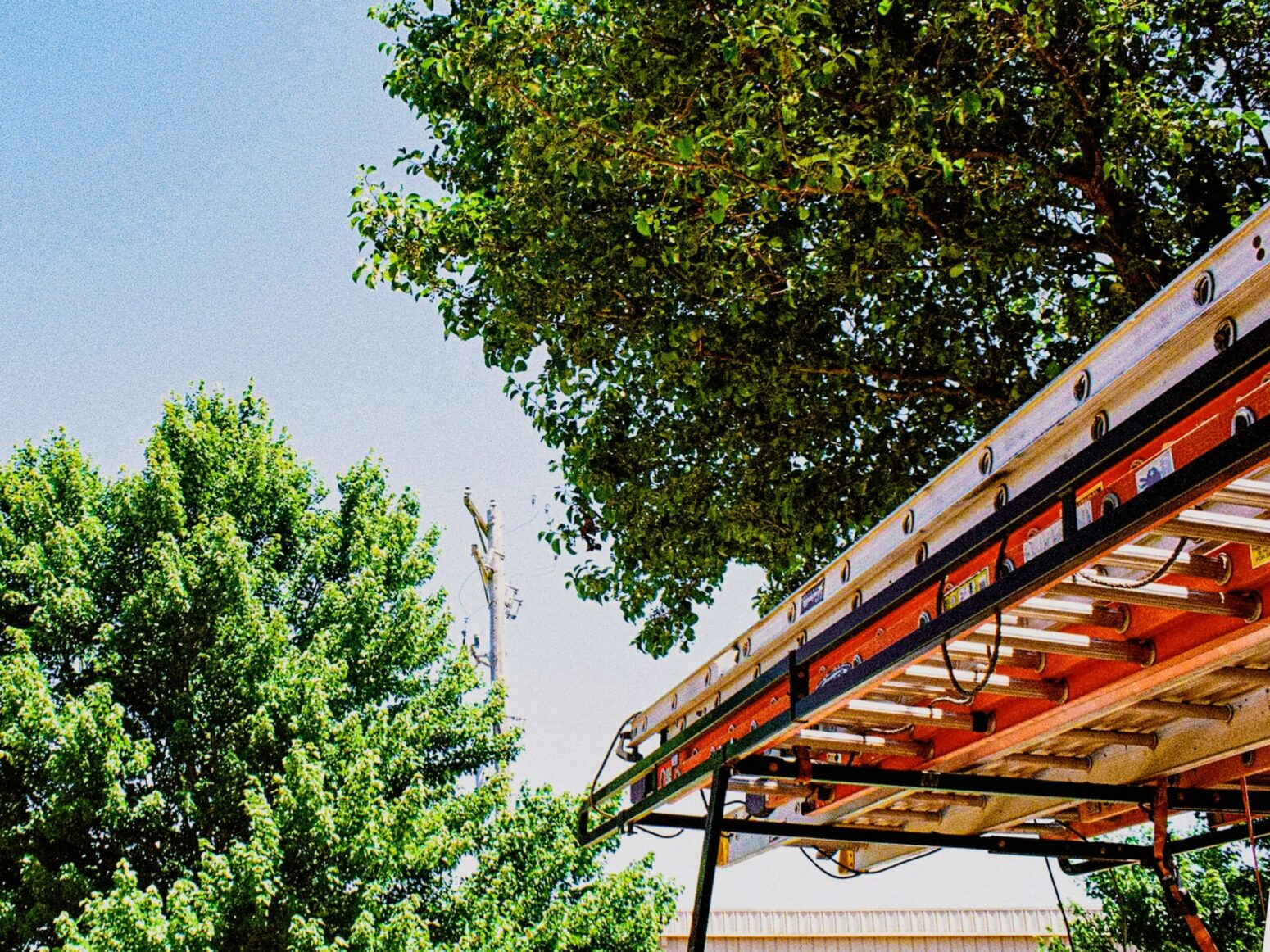
Merk Greco most of the year was a one-man operation. As Mercury’s Extermination he drove his cranberry Ford F-250 up and down St. Louis, scheduling termite jobs north and south (not west where the snobs lived, not east where it was Illinois). But when the weather got hot, the calendar full, he’d recruit an assistant to drive the rusted orange van and to pump chlordane into the ground. Usually some misfit or future felon, somebody who needed a boost.
I was done with high school and I’d been drifting that summer, getting into trouble. Then suddenly I fell into a hole. It doesn’t matter what hole, but it was public, the whole neighborhood knew about it, and there I was. By the end of the week I got a phone call. “You need to get up and off your butt, Tommy. Let’s get you on your feet again.” So that’s how I started killing termites for Lexi’s uncle, i.e., my girlfriend’s uncle. Uncle Merk.
He was mid-thirties, but he looked ten years younger. Unmarried. Maybe 155 pounds. Hair like straw, a nose broken from playing hockey. Infatuated by people. “I met this insane dude at White Castle!” Curious as hell about everything. For a month he’d be a yo-yo fiend, learn all the tricks; then it would be chess; then telekinesis, sitting on the couch literally trying to move shit with his mind; then he’d get the latest kitchen appliance and run it through its paces, make a hundred different recipes. “Live it” was his mantra. When he giggled, he got tears in his eyes. No mustache to hide his cleft-lip scar, he just let you stare at it until you were satisfied. He claimed it was a hockey wound, a cross-check that split his mouth open, and maybe so, because he’d been a relentless forward, a little darter who got slammed into the boards and over the boards. His teeth were crooked in front, with flashes of extra white on them. Women loved him. For his soul, I supposed, not his looks. His glow, his aura. Saturday night at the bowling alley he’d say, “Ladies, ladies, ladies!” and turn it into a party. He got away with things I’d never dream of. Jokes and hugs and squeezes. A woman he’d met twenty minutes before would be squirming on his knee between frames, laughing, spilling her beer.
I knew he’d been engaged to Paula Bommarito years before. The love of his life, but he cheated on her before the wedding. He told me in detail about being my age, in Paula’s basement, on a battered couch with green-and-peach pastel stripes, watching TV. “The happiest I’ve ever been,” he told me ruefully. “On that skeezy couch.” It was also said that he’d broken up his brother Don’s marriage, messing with Yolanda. I didn’t know. Sometimes I sensed a coolness toward him from other people, a ripple of contempt. He’d make them laugh so hard snot came out of their nose. But after the laughter you’d see a sneer. Barely. Maybe. To me he was a bighearted, people-loving force.
But to the bartender at Dick Weber Lanes who ID’d me sourly, he was just a user. “Tell Mister Personality to retrieve his own drinks,” she said. So I was confused, being young and stupid.
It was the Eastern termite we hunted. A soil dweller. It commuted back and forth between the house it was eating and its nest in the dirt, so Merk’s free inspection was all about discovering its mud tunnels in the basement, its crumbly subway system. “Hell, you can’t hide from me,” he’d mutter, peering left and right as we descended the steps. A long screwdriver scraping at the tunnels in the joists overhead, a flashlight in the other hand. Dirt raining on his faded blue cap that read Mercury’s Extermination—Dead Means Dead. “He looks like a piss-ant, Tommy, but gray, like a ghost.”
In pencil on a sheet of graph paper Merk would draw up floor plans of each house. He was left-handed, an artist, and the drawings were like cartoon panels. Soft lead, no erasures, with Back Patio or Basement Steps written in architect fashion. The drawings made him happy—he did them at his kitchen table—his pencil hovering and then swooshing. A row of X’s around the inside of the basement meant “drill here.” X’s around the perimeter of the house meant “stick the wand in the dirt.”
A forty-gallon tank weighed down the back of the van. Attached to the tank was a two-hundred-foot yellow hose. At the end of the hose was the long steel wand for poking into the earth, whacking through the shrubbery or whatever else was in the way. For the basement I screwed on the spigot and inserted it into the holes we’d drilled in the concrete floor.
A gallon of chlordane to thirty-nine gallons of water was the ratio. The chlordane was thick amber like pancake syrup. Poured into the water it turned to skim milk, white and thin, and the water unleashed an odor, sharply sweet, like nightshade in a fairy tale. Very chemical, very Monsanto. Death’s-head labels on the jug. A red diamond pictogram of a skull for Toxic. A dead tree and dead fish for Environmental Hazard. A prone afflicted person for Health Hazard. Also the word Danger in a dozen places. Then the serious warnings in long, microscopic paragraphs.
On a job day we’d arrive at 7 a.m.—me in the rusted van, Merk in the pickup. Already sweating in the swampy St. Louis heat. The owner would come outside, some middle-aged loner, blinking in the driveway. Scratching himself in a bathrobe or a Def Leppard T-shirt. Plaid pajama bottoms, hair askew. I’d introduce myself and explain the routine—the drilling, the poison, the noise and stink. Condescending nods from the homeowner. “Merk there told me all about it.” Into the house where leftover pepperoni pizza lay on the kitchen counter, the box lid open, flies trudging over the dry tomato sauce. Empty beer cans. The owner stretching—arms like chicken wings, back arched, toes squeezed, an indecent spasm at the end. And right in the middle of that spasm Merk would say something hilarious and the homeowner’s lungs would explode. Because customer relations was 90 percent of it.
But there was a lack of respect. I didn’t doubt it anymore. Like a two-degree difference in room temperature—you felt it. After a while I didn’t see the charisma in Merk, only the restlessness. An illness, almost, like he was a bed-sick person who couldn’t get comfortable. Once in an unguarded moment, in the white hot Missouri sun, both of us drenched and reeking, I saw it so clearly in his face. Merk looked at me then; he understood what had registered in my mind. After that we could talk about it. So in the morning when I said, “Why so sad, Merk?” he could say, “All the shit I’ve done,” and no further explanation was necessary.
Lexi and I were co-owners of a cat that summer, Zephyr. We were cat know-nothings, partial to dogs, but I’d had to put Bonzo down, and then Spud, Lexi’s mutt, got run over by a copper Corolla on Dunn Road. No swerve, no slowdown. Just straight over him. Cold as ice. So we’d gone to the shelter together, and Zephyr stole our hearts. We brought her home to Lexi’s place and she was a marvel—her attitude, how she sat on the roof at dusk looking like a weather vane against the purple sky. How she crossed the alley slowly like a queen. She went up on her toes and rumbled when she rubbed Lexi’s legs. Then she’d scrape her whiskers against the nubby sides of Lexi’s running shoes. Her teeth were sharp like needles. She had a sparkly blue collar, rubber-plastic like the strap of a little girl’s purse. Her fur was white like a summer cumulus cloud, except for her cinnamon tail and ears. A calico, they told us at the shelter, or a “strutty little harlequin,” one guy said. In the mornings she’d crouch beneath a parked car with the dew dripping down like rain. Peering out from behind one of the tires, watching the neighborhood.
Lexi’d gotten on the mystic way that summer—or found it, or entered it; I wasn’t sure of the phraseology—and it was a big deal. She was hitting it hard, Lexi-style. Pissing people off with her accelerated program. You have to wait for the blessing, some of the local sages had told her. No shoving your way to the front of the line. “Be humble, be led,” was the actual sentence she got from a Vedic or Shakti place over on Lindbergh Boulevard. But she’d said later to the gurus. She’d found her own side door and in she went. I was very proud.
We were “ex” that summer, but there wasn’t a ton of difference between our off and on stages. I still saw her all the time. I saw her self-initiation. For equipment she had two volumes from the used bookstore—the Bhagavad Gita and The Cloud of Unknowing. Worn paperbacks, soft like old shoes. Beautiful illustrations on both covers, which helped tremendously, she said. If the reading got heavy, she could pause and inspect the artwork, get her second wind, sniff the pages. She studied the books at breakfast over her plain yogurt, penciling notes in the margins; then late at night, after dinner, Jack in the Box tacos or whatever, when I was dead tired from termite slaughters and her mom was playing her two piano chords, Lexi would stand alone before the Absolute. Usually on the cracked concrete patio under the willow tree behind the lichen-green house, with the moths and June bugs banging the lamp by the screen door. But she could stand anyplace. In the carport, in the alley. One hundred and thirty pounds of scrappiness in bare feet and sweatpants and a Cardinals jersey. A statue. A June bug could be gnawing her forehead, it didn’t matter. She had the focus. She was like a pole sitter from back in the day. So that was Lexi’s morning and evening. In the meantime she stayed busy with the charity run by her other uncle, Don.
I didn’t like Uncle Don. He got no sympathy from me, even though his wife had cheated on him with Merk. He owned the other half of the bug business. Don’s Exterminators. He did all the spraying jobs—cockroaches and spiders—walking around in snug coveralls carrying a silver can like a giant coffeepot with a braided metal hose. Squirt, squirt, spritz, spritz. Flirting with the office personnel while Merk was worming into crawl spaces, filthy and sweating.
Don was short, with narrow shoulders, thick waist, and fat legs. The kind of guy exercise is never going to help. A bear dressed in clothes. So he combed his hair perfectly to make up for it, like a TV anchor. He also never called his brother Mercury. That alone made me hate him. Merk had been born Richard, but on his driver’s license it was “Mercury.” He’d made it legal, in other words. But Don was always, “Yo, Richard,” or “S’up, Ricardo.” He’d call him Ricky. Or Slick Rick. Rickety Rick, Rick Ross, Slick Town. He was a shithead, obviously. I said that. But he wasn’t the adulterer, he was the aggrieved, so he sat in the driver’s seat. I was gradually understanding how things worked.
At 6 a.m. Don would show up at the Hazelwood house and lean against the tailgate of Merk’s cranberry pickup, smoking a cigarette, yelling into his phone, waking up the neighbors. “Your check is your receipt. . . . The IRS? They won’t mess with you. Your check is your receipt. . . . That’s why we don’t take donations over a hundred bucks, right? . . . Absolutely we’re in compliance. State and federal . . . no, we file a postcard return . . . a postcard return . . . that is what it’s called. . . . It’s this little . . . no, it’s actually the size of a postcard. . . . I’m not kidding you. I follow the law, I’m a tight-ass, whereas I could name you five charities off the top of my head that got hit with the death penalty last year alone. . . . Missouri revoked their exemption. . . . There you go . . . that’s why we register in Illinois, because in Missouri people sue each other, with malice. You add beauty in this city, somebody takes you to court . . . that’s right . . . you’re right . . . you see what I’m saying. You’re a wise individual.” Prolonged laughter. “All right, sir. We understand each other.”
The family name was Greco, and Don’s charity was Good Greco. (“Believe it,” I said, when people didn’t believe it.) Used sports equipment for underprivileged kids. Collection and distribution. The collection was real. It piled up at Merk’s two-bedroom house in Hazelwood, in the shed, in the garage, in pale blue Rubbermaid tubs. As for distribution, I never really saw that part.
But at a house in Bridgeton or Kinloch we’d be grimy and tangled up in work, and Merk’s phone would buzz and it would be Don yelling: “You need to pick something up on Poinsettia over where you’re at.” Sports equipment waiting in somebody’s driveway. “Swing by. Sometime today.” He’d shout the address. “And tell Tommy to put the squeeze on his friends. Soccer shin guards. All sizes, and hopefully they don’t reek. We need some hustle on your end.”
So we’d do it all.
And the next morning Don would be at Merk’s house, bright and early, dragging a rubber trash can full of lacrosse sticks or scuffed, faded pigskins over the driveway, headed for the garage or the shed.
On Wednesday of my fifth or sixth week, after I’d burned up the motor on one of the big Makita drills and also backed the van into a flower bed, we got some food at the Taco Bell on New Halls Ferry Road, and then I sat in the truck with my eyes closed, weary and free, while Merk went into a Walgreens. He came out five minutes later with a four-pack of toilet paper and a kid’s box of animal crackers. We ate the crackers for dessert while he drove a mile down the road. “I want to hit my sister’s house on the way home,” he said. It was dark by this time, dusky. He parked at the curb across from 2822 Wintergreen. Lexi’s house. I knew it well, of course.
“Give me two shakes,” said Merk. He was digging in the center console for a pen.
We’d been at Vic Bommarito’s house that day, and Merk had been tense, waiting for the hammer to drop, because of course it was Vic’s daughter, Paula Bommarito, he’d been engaged to years ago. She was The One, the future he destroyed cheating on her a month before the wedding. Why? “Because his pecker rules his life,” said Lexi. “His weenie sits on the throne.” Paula Bommarito had ended up marrying some older guy, a financial wizard, certainly not a termite killer. Some silver fox who made money without wrinkling his brow. She lived in a big house in Ladue now, with two kids and five cars.
I considered how it might turn out for me and Lexi. Our first kiss—in eighth grade, in the dark, standing close together in the garage of her house—had occurred fifty yards from where Merk and I sat parked in the F-250. Lexi was busy being the Christmas elf, pulling presents out of the family van and hiding them behind boxes and tools and camping equipment. I’d been walking by on the street, so I stopped to give her some helpful hints. She was wearing her forest-green coat, woolen and long. We bantered about something, moving closer. We’d known each other since the beginning of time. Her skin smelled like Palmolive soap, a scent that’s distinct, not just soap, and became delicious to me from that time forward. When we kissed, she gripped my jacket in two fists, holding me five seconds longer than I expected. Then she hurried into the house, and I walked home beneath the stars, but above the earth, hovering—yes, I don’t care if you think it’s idiotic. I drifted like a cloud, like you do in a dream.
Then I thought about how to tell my mom, who was very Nazarene, whereas Lexi was Catholic. Everyone knew Lexi was kind. I thought of what else I could say in her favor: Her hair was unruly, for example, but she didn’t let it go. She tried to tame it. She failed, but she did try. She was modest. Decent grades, but not enough to draw attention. Impeccable social interactions. She knew the good-girl verbal judo. When the druggies on the school bus asked if she smoked, she’d say, “Only when I’m on fire.” The problem was her last name, Gish. If my mother happened to blunder into a filthy bathroom, “gish” was her shock word. “Gisshh!” with a hand to her throat.
A few days after the kiss, Lexi came to the house for the first time and I said, “Mom, it’s Lexi who I told you about. Lexi Gish.” Up sprung the hand. Mom tottered against the fridge. So we’d briefly soared, but it was over that quick. Our eighth-grade epoch, anyway. But then came ninth grade, its own season. And then another spell in eleventh grade. And then this summer things were revving up again. So we were looking at our fourth iteration or recapitulation or attempt. Better each time, in my hopeful opinion.
Under the dome light, on the back of an invoice from a wholesale hardware supply, Merk was writing a letter to his sister, Lexi’s mom. “Dear Jeanne . . .” I saw that much, then looked away.
Jeanne was a pianist who was supposed to go to Juilliard or the New England Conservatory, but she got cold feet and went to a local college in Clayton instead. Now she was forty-four, twice divorced and an alcoholic, with bottles hidden all around the house. She had burnt-orange hair cut close, and she was tiny. You could pick her up like a yoga mat and carry her under your arm. She got no nutrition. Her legs in shorts were matchsticks; you saw the femur, you saw the tibia. She took short, cautious steps, hands clasped, looking around nervously for the meteor that was about to strike. Her hands shook too much to play piano anymore, but sometimes she would hit a chord, a C-major 7th, then F-major 7th, arpeggio, arpeggio. She’d pace the house, “getting ready to practice,” but actually just visiting her hidey-holes. The drinking was an open secret. Lexi knew and Jeanne knew she knew, but they never mentioned it. Sometimes instead of the piano chords you’d hear glass chiming—a clinking, clinking—and it was Jeanne lugging a huge black trash bag full of empties out to the curb. Stealthy on her skinny legs.
Merk was finishing his letter, scrawling like lefties do, his hand twisted like a cobra. He folded the paper and stuffed it inside the Barnum’s animal crackers box. Then he crossed the street with a roll of toilet paper, put the little package inside the mailbox, and swathed the whole thing with TP until it looked buried by a snowstorm.
As a kid he would fall asleep under Jeanne’s piano with his blanket, eating animal crackers, watching her slippered feet on the pedals. He delivered a letter two or three times a month to remind her she was still his big sister. That’s all he was trying to do, he said. The snowy mailbox was no strange phenomenon to anybody who lived on Wintergreen.
We drove out of the neighborhood. On the dashboard of Merk’s F-250 were work orders, chlordane invoices, a city atlas from 1998, price catalogs, trade magazines. Loose receipts blowing everywhere, pink and yellow and blue. I closed my eyes and thought about how I’d leaned too much weight on the Makita drill and ruined it. The motor stinking like a brush fire. Merk saying, “See, I told you about that, Tommy. Let the drill do the work.” Then telling three jokes in a row to make me laugh.
In my short life who had ever been kinder to me? After just a few weeks I was already wondering that. But he was two people at once, apparently. So I was supposed to be on my guard. I was supposed to like him less. Or disapprove, or scowl. Or something.
After arriving early at Merk’s house the next morning I looked out the front window and saw Lexi finishing her five-mile run on Dunn Road. She hit her watch, then bent over for a second, hands on her knees. Then she stood and checked her time. Then she walked fifty yards down the street, hands on her hips, breathing hard. Then she came back, doing torso twists, gazing at her uncle’s house, staring right through the picture window where I stood staring back.
After a minute I realized she planned to walk right in, as niece, not as girlfriend, since we were technically still “ex,” so I tried to loosen up. I tried to get the blood moving, tried to ramp up energy because I was feeling early-morning-donut belly, whereas she had a runner’s high. You could see it all over her. She looked fantastic. Athletic like a soccer center back.
At the door she said, “Hey, Tommy.”
“It’s great to see you, Lexi.” My Thrasher T-shirt was wrinkled like it had been wadded up under a rock.
“Is Merk around? Is he in back?”
“He’s organizing the tubs.”
“What’s this?” She picked up a sketch pad. “Is that my uncle?”
“Yeah, I’ve been drawing some.”
“Hmm.” She made a doubtful face. “Come here. Let me show you.” From the kitchen we could see through the sliding glass into the backyard. Merk was emptying the shed in order to reorganize it, carrying pale blue tubs to the patio, which was littered with leaves, bugs, and flakes of white paint from the patio awning.
Lexi tore out two pieces of paper. She got us a pencil each.
“Here, look.” She explained the rule of seven and a half heads. My drawing of Merk had no proportion, a huge head with cramped legs and feet, because I didn’t leave myself enough room on the paper. “Watch.” She was a born teacher. “Here’s your midline.” She put a pencil mark in the center of the page. “You want four spaces above and four below. We’ll make him eight, like a fashion magazine does, instead of seven and a half. There’s the head, right? The top space. Crown to chin. The next space goes chin to nipples; nips to gut; gut to belt buckle. Belt buckle is your midpoint. Same thing below. Space it out.” She made pencil marks about two inches apart, moving down the page.
“Make him heroic,” I said.
“You do it,” she said. “It’s your picture.”
“Do him justice.”
“Thick lines, then. Look.”
I was getting the hang of it. A zone was being entered. I was trying not to overthink it, but there were good vibrations. Then a bear in blue jeans and T-shirt waddled by the window outside. Uncle Don. He ogled Lexi. “I see you punks,” his mouth said through the glass. Then he made airplane wings with his arms and soared in a circle because he’d been saying things like, “We’ve got to fundraise and get Lexi an Air India ticket to Nepal.” Or he’d say Kathmandu or Tibet or Bhutan or Kashmir. Mocking her mysticism. “A crate for Zephyr too,” he’d say. Which made me uncomfortable because with those holy places, people go there and never come back. No one has ever returned from Kathmandu that I know of, and with Kashmir you don’t even get there, you just disappear on the way. But of course Don was full of it and didn’t listen to his own voice half the time.
“C’mon.” Lexi took me through the house and we sat outside on the front stoop watching the traffic go by.
She rubbed a place on her calf. Then without warning she plunged into a little sutra, or sermon, cutting close to the metaphysical bone, very intense actually, and I had to fight to keep up. She said that Merk—although I felt she also meant me—was like a good son who’d gone running to obey what his father asked him to do and while running to do that thing had fallen into a ditch and broken his bones and couldn’t climb out. And she said there was no shame in Merk (or me) being broken in that ditch, but honor instead, by the fact that he (we) wanted so badly to climb out. “No shame. Honor,” she said. And she slapped a book down onto the warm concrete step. I couldn’t figure out where the book had come from. Had she come running five miles with it? I read the cover. Revelations of Divine Love. Julian of Norwich.
“Not NorWitch,” she said, correcting my pronunciation. “Nore-ich.”
I tried it.
“Softer,” she said.
I tried it again.
“Almost. Picture the double-u in your head, but don’t say it.”
I tried again. I would try a hundred times, I didn’t care. I’d always been very patient with other people’s passions, even if she could be a bit pedantic.
“So, you’re really rolling down the highway now, with a third mystic book.” That was me as she was standing to go.
“That book is for you, though.”
“Oh, okay. Repeat what you said, then.”
“You heard it.”
“But repeat it so I can understand it. I didn’t realize what was happening there the first time.”
“Nope. Read the book.”
“But is Julian talking about my past life? Or my now life.”
I believed that in a past life I’d been some kind of murderer—an entire family in cold blood, for no reason, out in the woods with an axe. Not my most recent life. I thought in my most recent life I had taught high school gym. But two lives ago I had been an axe murderer. Because something was very, very dark inside.
“Now. This life.”
“Got it.”
“Forget the axe murderer thing, Tommy.” She’d been shaking out her hair, but then she stopped. “So you’re back at Vic Bommarito’s house today? How’s he been?”
“Vic?”
“Is he hating?”
“Because his daughter married a rich guy instead of Merk?”
“Yeah.”
“Ten years ago?”
“Eleven years this month.”
“And you were going to be the flower girl?”
“I was. But think about what’s happening, Tommy. Vic, when he needed an exterminator, chose to call Merk. Because he still has beef with my uncle and it’s a chance to torment him. But Merk didn’t have to call him back. He could have made an excuse. He could have been too busy. He could have said, ‘Sorry, find another outfit.’ So, what’s Merk’s motivation?”
I thought about that for a minute, holding Julian of Norwich against my rib cage. “I’ll think about it. Thank you.”
She thumped the book with her finger. “Chapter Fifty-One. Read that first, about the ditch,” she said. “Then browse. Then start from the beginning.”
I nodded. I’d try. A brown UPS truck barreled noisily down Dunn Road.
Two dogs barked from somewhere, one a yapper, one a yodeler.
Then Merk appeared in the driveway, his blue cap lifted, the same hand scratching his straw hair. “Let’s hit it, Tommy.”
It was ninety-eight degrees at Vic Bommarito’s house according to his outdoor thermometer. He lived off Shackelford. A dark brick house with a lot of glossy shrubbery, purple and yellow flowers everywhere. I was sure he was getting the Italian discount—Bommarito, after all—but he looked Finnish or Norwegian to me, gaunt, like a half-starved fish-eater. He was one of those customers constantly in the way because he didn’t want you out of his sight. His demeanor was over-the-top conciliatory, tiptoeing around his own yard, but it was just a ruse to hide his paranoia and suspicion. He’d bring you a glass of iced tea, polite as could be, but if you crossed him, if you offended his sense of fairness, you knew he’d lock his jaws on your throat like a pit bull.
He had a corner lot at Weithaupt and Cherry Street, and kids would cut across his lawn in their Honda Civics, drunk and rowdy at 1 a.m., running over his garden gnomes. He bought only happy gnomes, mouths open with laughter, but they would end up forlorn in the middle of the street with tire marks on their faces. So Vic had dug a hole in the yard, filled it with wet cement, and set an iron post in it about fifteen inches high, with sharp edges to rip through a car’s oil pan, drive shaft, and muffler. Then he impaled an injured gnome on the post. To hide the post, but also as bait. Like a worm on a hook. He stood at my side and told me that whole story, earnest, pleading, touching my elbow, like I was the judge of the Earth. I was mixing the chlordane, using his garden hose to top off the tank, and his whole concern was that I knew he was righteous. He even had me test the firmness of the post. He removed the gnome and made me kick the iron. “What kind of car do you drive?” was his last question.
He was the permanent referee at the charity soccer game organized by Good Greco. He had a connection at Saint Norbert’s, so we could use the parish field, but in exchange he wanted to come trotting out in his black shorts and yellow shirt, whistle in his mouth. Ten minutes of instructions before the kickoff, all about fair play and respect for the game. Then, in the middle of the match, he’d call time and jog to the sideline to talk to the mom or dad with the offside flag. They were supposed to be running up and down with the players, but they’d mostly be chatting with the other parents. Vic would show them how to run; he would actually high-step down the line. Then he’d demonstrate how to whip the flag so the ref could hear it. He’d take it and lash the air. It did sound magnificent, like pomp and fanfare. “It’s a snap of the wrist. Try it.” So the parent would pop the flag skyward a couple of times. The players would be groaning, so Vic would stuff his whistle in his mouth and charge back to the center of the field.
Anyway, that day everything for Merk slid down into disaster. That’s what I’m trying to avoid talking about. Drilling through the front patio, we hit a tie-rod; the drill bit snuggled up tight against the rod and got stuck, so we had to release the bit from the drill and use the channel locks to wrestle it out; we drilled again; then we got stuck again. And again. Then we broke the bit. Vic’s contribution was to stand two feet away, calling the tie-rod “rebarb” instead of rebar. “Damn, you hit the rebarb again.”
Then a swarm of termites filled the house, their delicate wings moving silently. It just meant the chlordane was moving them out—but the customers always panicked and asked twenty questions; Vic had forty.
Then eighty-five feet of the two-hundred-foot yellow hose went slithering through a pile of dog doo. We couldn’t take the hose into the house and down the basement steps, so I had to wind it up again while Merc held a huge clump of damp paper towels in a wad like a bouquet of carnations, the hose snaking through the towels and Merk collecting it all.
Then in the basement Merk got a poison milkshake in the face with the chlordane. A rookie error—I’d done it on my very first day—but it could happen to anybody, really, when the ground beneath the subfloor was hard and compacted and there was no place for the chlordane to go. He jammed the spigot into the first of the holes I’d drilled, twisted the valve, started his count to ten, got to “one,” and the chlordane erupted into his face like a geyser, into his eyes, into his mouth. I grabbed the mop and started swabbing, but still it meant face cancer thirty years down the line.
This was a half-finished basement, so on one side it was all smooth gray floor and rough concrete walls, with the washer and dryer and shelves and boxes. But on the other side Vic had wood paneling and acoustic ceiling tiles. Some kind of linoleum on the floor, with a fawn-colored rug, a TV, books on a coffee table, a floor lamp, and a ratty old couch: pastel colors, green-and-peach stripes. After rinsing and splashing and gargling in the bathroom, Merk took a towel and plopped on the couch, just to think and dry off. He was wearing his ripped jeans and scuffed Red Wings with the worn soles, but he sat with his legs crossed, elbow on the arm of the couch, like he was in a doctor’s office, his face hidden in the towel. He seemed so hopeless. And then it dawned on me (finally) what I was looking at—Merk and Paula Bommarito’s love nest, preserved like an exhibit at the Museum of Natural History.
There was a shoebox-size window just above my eye level. It looked out at blades of grass. After a minute I saw Vic’s gardening shoes through the pane, then he put a knee on the ground, then his face dropped into view. His eyelashes looked frozen, like he’d been chewing whale blubber on an ice floe, his face barren of pity.
Then I think Merk fired me. He spoke very softly, from exhaustion, and we pretended the next day that nothing had happened, but what I heard was, “I can’t do it anymore, Tommy. You’re just too fucking stupid. You’re too dumb to even be a termite man. You’re fired. You’re done.” It was barely above a whisper, and he was rubbing the huge beach towel over his face so I was never sure. But he did wave me up the steps. So I went up and outside, where Vic stood by the window, and then I saw Merk from that angle, soaking in his misery, using the towel to massage his cleft-lip scar, down in his pit. He hadn’t quit trying to climb out, he’d keep struggling, but he was taking a rest. Soon he’d get up and finish pumping the chlordane. Then would come the quiet time—scooting on the castered stool. A trowel in his hand and an old Prairie Farms cottage-cheese container. Some mixed-up cement to refill the holes. The floor still damp from mopping.
Meanwhile, in the yard the winged termites were fluttering everywhere like little pixies. We’d destroyed tens of thousands, but these were the remnant.
In his garage, Vic made me move a wheelbarrow and then his lawn mower. He reached under a shelf and hauled out a mesh net bursting with eleven worn-out soccer balls, some of them with peeling hexagons, one of them dog-fanged. A donation for Good Greco. He’d been hoarding the balls, he said, “in case I needed them,” but then his brother had had a stroke from a tumor on the carotid artery. The tumor started in the ear canal and traveled like a glacier through his neck. Ate his thyroid. Blocked the artery. The docs cut open the skull to relieve the swelling. Vic ran a finger over the top of his head from one temple to the other. “Fixed nothing. His left side is paralyzed. He has a little bit of hip flexor. He can raise his foot off the floor. He can weight-bear with his forearm crutches, so that’s something. But when he talks, he’s not there, man.” Vic watched to see if I was tracking the life lesson. “All his conversation is about a ping-pong trophy he won when he was eight years old.”
I reached for the net. Vic fended me off. He’d thawed, moved by his own generosity. But he wanted to finish.
“So I thought, ‘You know what? We’re like the flower of the field, the wind passes over us and we’re gone. I should give away these soccer balls.’”
His eye was moist, so I thanked him. He nodded and punched me gently on the arm.
That evening when I stopped by her chalky-green house, Lexi was already standing on the patio, hammering the cloud with her one-word prayers. And while she was standing in the twilight, in the golden hour, with the June bugs, I suddenly got a foretaste, a split-second premonition. I didn’t fly up into the third heaven—that happened a couple of years later on our bicycle ride across the country. We started in Oregon, and in Nebraska we left the Platte River and cut south on US-183 through cornfields. We stopped at a tiny gas station for a Hostess apple pie because we were starving for a minute. And out of nowhere, while Lexi was checking the air in her tire and I was eating a pie manufactured in a New Jersey factory, watching the clouds gather into thunderheads, out of nowhere, Fire. The doors flung open.
That was in the future—but on the patio, while Lexi stood under the willow tree, I got a tiny shiver, my first awareness. Zephyr knew. She was crouched in the juniper bushes, motionless, her yellow eyes watching me. “Zephyr,” I breathed. Yes, she knew. She stared, straight at me, from her hiding place. She was there for the beginning of my beginning. She saw that it was good.
Read more from Issue 23.1.