Stickle Tarn
2 Minutes Read Time
Which from some farther peak must look
              primordial in its blue.

Down here, white streaks of summer gulls
              circle the tarn, though this tarn

is not the sea. Seeped up from the fells,
              trickle and spill, a glacial catchall,

a pockmark, a gully, depression digging
             down. If a man shulde clymbe

upon a stikil hil, some world-weary bishop
             wrote, and if he fil from Þe hil

he shulde fall into water and be dreynt.
             So the stickle middle

of the fifteenth century parted, too,
             made room for thorn

and ornament, the cool of mountain pools.
            Stickle also the hair of an animal,

rough, bristly, and I have seen the fallen
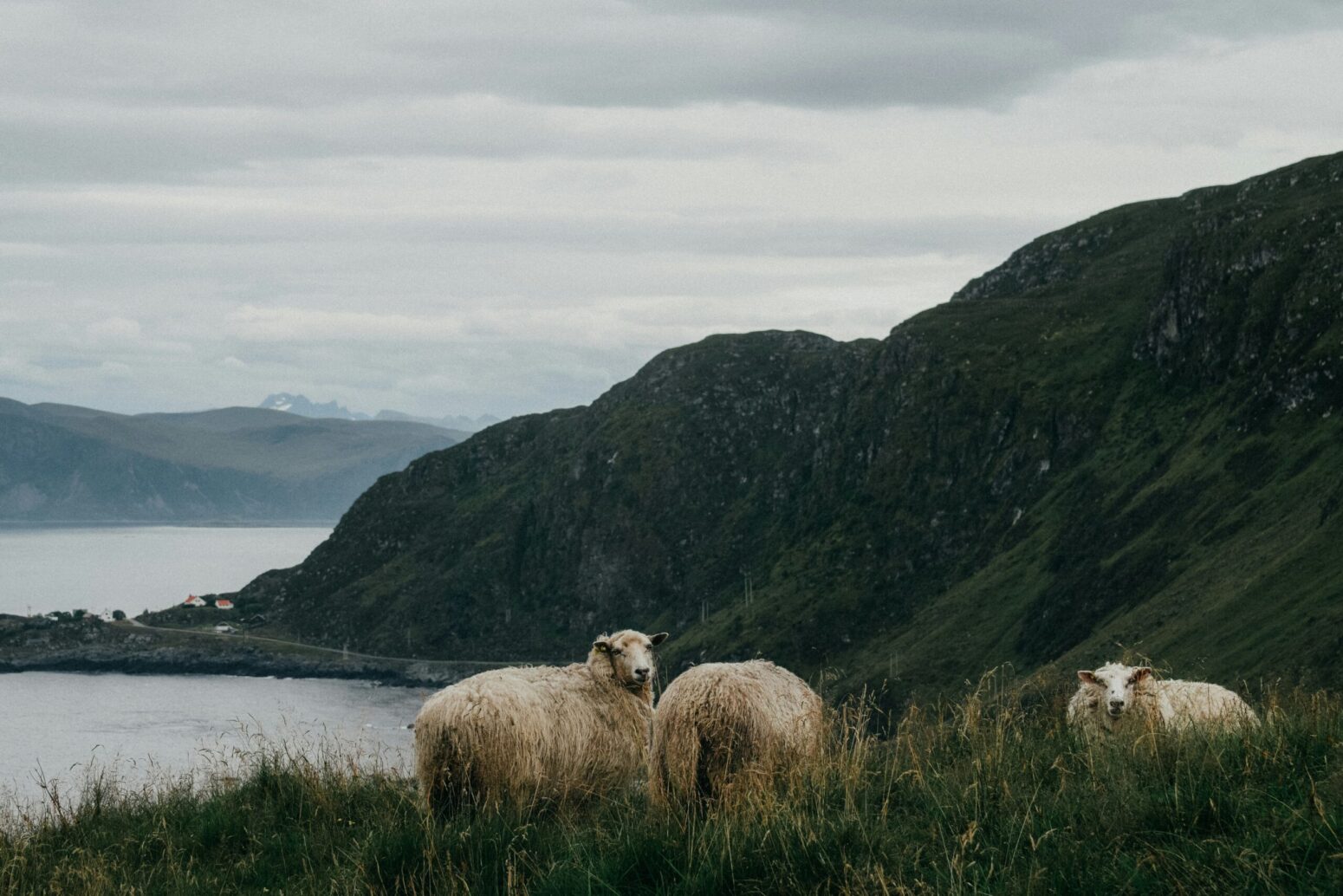
             stickles of the sheep, white and

black and mottled fistfuls, as if clipped,
            clinging to rock face or

splintered trees, where with their hoof-
            holds they scraped their sides

up and down the rakes and raises, knowledge
           deep in their genetic bone.

From the footbed of the tarn, I watch
           the mothers lead their lambs

born black up and up the stony clefts and
           crags, the best grass

tracing maps on their brains, the young tups’
           horns just sprouting.

The tarn this side is shallow and stuffed
          with tarn-weed; the lambs’ complaints

echo off the stickle walls. All up the steep
         stony steps to get here I passed

schoolchildren in adventure camps, sodden
         in wet suits and scrambling the fall’s

slippery ascents, rigged and roped in safety
          cords, their heads protected by bright

blue helmets, which, from certain heights,
          looked like bluebells getting smaller

in a field. Whose season I’d just missed—blooms
          that are a sure sign of ancient

woodland, which at one point I walked through
          not knowing what it was.
Read more from Issue 23.2.