Mother
22 Minutes Read Time
He said all parents love their children, said it with radiant certainty. We weren’t married then, though at that moment I decided I would, if he asked, even if what he had just said was blindingly untrue. We spent the next two hours in the pub arguing our positions, neither of us managing to budge the other. His position was almost indefensible as a generalization, yet he could not be dissuaded that parental love was not some sort of natural order—barring mental illness or ecological pressure, like animals devouring their young.
If human beings are like fireflies passing in the dark, I was attracted by the difference in his light. At that moment I thought I could spend a lifetime studying this man, his worldview so utterly alien to mine.
Mother—female, personification of genesis, nourishment, protection, love. The dregs, modder, of a stringy, mucilaginous substance, brooding on the surface of a fermenting liquid. A swampy land, moder, of symbolism, concepts, notions; mud.
From a young age, I found these constructs of maternity problematic. When I try to identify my mother with these, I find myself in a ferment of contradictions. I think back to one time as a child when I slipped her lipstick, full of sparkles the way she preferred, out of its shiny gold case to admire it. My aunt had brought it from America, a brilliant pink bullet, the shade she said suited my mother best. The lipstick pirouetted out of the tube when I rotated the base. I took my time, turning it all angles, watching it catch the light. It never once occurred to me I wasn’t allowed to touch it. I’d opened that cabinet many times, taken things out, put them back in. Nor was I afraid of interruption; my mother was always in the bathroom. I rolled the lipstick back when I was done, placed it back in its case, and closed the cabinet door.
I forgot all about it until a week later, when my mother held the blunted stick in my face. Someone had taken its gleaming form and smashed it—a shattered crayon.
“Was it you?”
By now, my younger sister was sobbing, “Not me. Not me.”
I looked at my sister, at her tiny, pudgy fingers, and I saw as though it had happened in front of me, those fingers capping the lipstick without rewinding the tube.
“It has to be one of you. Tell me, who did it?”
I shook my head, no. It wasn’t me, either.
A cry tore from my mother’s throat. “It must be you. It must be you. Why won’t you admit it?”
Over and over, she screamed. I watched, frozen, as she dropped to her knees and rolled on the floor. I’ve seen younger children doing this—I don’t remember having done it myself. For hours she howled, cradling the lipstick in her hands like a broken living thing, rotating in circles. She would subside for a few minutes, then start up again. My sister and I left. Once in a while, my sister would get up to peek into the room.
“Mom looks like an overturned beetle,” she whispered.
“And whose fault is this?” I glared at her.
“It wasn’t me!” my sister insisted, wide-eyed.
A similar thing happened in my husband’s life: His mother got on her knees and wailed when her eldest son was going to drag her to the hospital for mental health treatment. My husband was sixteen at that time; his brother a year older. From that day on, their mother ceased to seem like an adult.
Yes, our mothers have the same disorder. His hoards. Mine cleans. When I met my husband, his passwords were different permutations of OCD!!@@, ObsessiveCD, Obsessivecompulsive123.
By the time I was nine, I had ceased asking my mother for advice. That year, I was having problems with a girl in my class—we had been friends, then suddenly we were not. My mother had been wholly supportive, composing little ditties around the girl’s surname, which happened to be a homophone of vegetable. I would giggle whenever she sang:
蔡妙仪,她姓蔡。
爸爸在巴刹买菜!

Cai Miaoyi, her surname is Cai.
Her father is just a vegetable seller at the market!
The songs made me feel good, but only at first. After that, I felt my delight turning to mud, sticking to me.
I seldom understood how the adults thought. Whenever my mother disappeared into the washroom and the sounds of splashing started, my father would reach over to ruffle my hair or caress my head while I remained motionless. Once, he even gathered my rigid frame into a full-body hug. My child self couldn’t understand why he had to do this when my mother forbade him to touch us. My ears were trained for the slightest ebb in the rush of water. When the sounds subsided, we would both turn to look at the television. I always thought my father lingered too long, as if he wanted to be discovered. I would shrink back, but he would tighten his grip on me. Are you afraid? Why are you afraid? I was certain my mother would know the moment she emerged, from the way my hair had been rearranged, the way my skin was surely flashing signals, like a beacon, wherever my father had touched.
The first time, my sister ran to tell my mother what had happened. I was made to bathe for three hours. My father smacked her for that, and she had to bathe as well, although her sentence was shortened to an hour because it was very late by the time my parents were done shouting, and my mother finally decided I was clean enough. We had school in the morning, and my mother had not finished cleaning the house.
With my sister silenced, my mother took to interrogating me herself. I was endlessly questioned about whether my father had touched me, judged on how I said no. If I cried, which I often did, my tears were subjected for evaluation, to see if they constituted guilt.
Once, my mother walked in on him hugging me even though the tap was still gushing. She had left it on for this purpose. From then on, we could no longer rely on sound. It was also then, in a rare show of authority, that my father forced my mother to see the psychiatrist.
I would come home from school to find my mother slumped against a wall or passed out on the floor. Apparently, this was the effect of the psychoactive drugs: to shut her down so her world would not be so filled with contaminants.
Her tranquilized state did not last. She said she would keep herself under control. The private consultant’s fees were exorbitant. According to my mother, he said there was no cure for her condition. Much depended on her willpower.
My mother permitted my father skin contact, but doing homework in the house was still not permitted. We used to throw away the groceries we’d bought if we happened to run into a person in mourning—indicated by a square of colored cloth pinned on their sleeve. Now, we could avoid disposing certain items if we could consume them without coming them into contact with any household appliance. However, crossing the void deck when a wake was taking place was still not allowed. The laundry no longer had to be redone if a hearse drove by, but we still could not dine at an establishment if a person in mourning had been spotted there—not until at least three months had passed. Only then would my mother’s heart stop thumping when she was on the premises.
Peace depended on the parsing of the minutiae of such rules. What was permitted today might not be permitted tomorrow.
Failure was a daily occurrence.
Years later, I met my parents and sister, who lived with them, on my mother’s birthday. I saw them around five times a year, on Lunar New Year and birthdays, in restaurants and in cafés, since I was no longer allowed inside my parents’ house after I married and moved out. My husband made an effort to accompany me to these meetings. This particular time, we were at a dessert shop for coffee and cake; my mother is fond of sweets. My father had been convalescing ever since he suffered a heart attack and stroke earlier that year. Returning to work seemed unlikely, with his declining faculties. His income had allowed her to indulge in her compulsions, but I was not ready to shoulder her considerable expenses. Her utility bill alone was twenty times mine. She had rules that she had to dine out due to her compulsive cleaning, and she had to be driven to these places; she had to live in a private condominium, at the very least, due to her fear of wakes at the void deck.
Over the years I had maintained a civil, if distant, relationship with them. In secondary school I spent long hours at school or with my friends, coming home only to sleep. My grades and the prestige of the school I went to meant my activities were seldom questioned, nor did I behave in any way that would make my parents think I required more supervision. If my parents suspected the real reason for my absences, they did not express it. I lived on campus when I entered university, spent long hours at the office when I entered the workforce. Because my mother did the laundry in the master bathroom at night, though, I could not evade every storm. Only after the clothes had been hand-scrubbed could they be placed in the washing machine. The screeching pipes, the raucous noise of the clothes brush that I could hear even from the next room, disturbed my father’s sleep. When he could endure no longer, they would fight until he left at six in the morning to avoid the burning sun at the construction site. I fear having to live that life all over again.
By that birthday gathering at the dessert shop, my mother still had not grasped the financial precariousness of their situation. We needed to make some major decisions, but it had been difficult to speak with my father. Your father is not free today, my mother would say. Today is not a good day. Perhaps she perceived a threat that could puncture the hermetic life she strove to maintain.
I was careful to appeal, not to advise. Family dinners provided the perfect stage with sufficient distractions, such as cake, to hold my mother’s attention. Each gathering, I attempted to deliver financial plans I had spent hours researching, then hours more rehearsing so they could be conveyed in ten minutes, redirecting her focus to cake if she appeared frustrated.
Nevertheless, reaching a consensus on plans such as putting up their condominium for rent and moving into a smaller place proved difficult. To exacerbate the problem, the next time I saw them a few months later, all that had been said was forgotten, and we were back where we started.
But really, the main trouble was that we were scattered sand. I could feel my already tenuous connection with these three individuals fraying.
Some nights, I would reach over in the dark and hold my husband’s hand.
“Let’s run away,” I whispered. “To Bali. To Phuket. Where no one will ever find us.”
My father chose an unusual character—庭, family—for our names instead of the conventional character 婷, graceful, often given to girls. He thought family most important, and he hoped his daughters would have good families in the future. Because of this, my name was often misspelled. I even had a Chinese tutor who said my father had made a mistake.
Ironically, we would grow up almost completely isolated from our relatives. We never had any visitors, not even the repairman. Over the years, things wore out, broke down, and got damaged in fights. We tugged a string to flush the toilet and refilled it with a hose through a hole in the broken tank. We papered the windows with The Straits Times. One time, my aunt came with gifts for my sister and me. She was told to leave them at the door.
We were absent from family funerals. Our relationship with one neighbor soured because my mother refused to attend his father’s wake downstairs. I didn’t attend my first family funeral until my aunt’s father-in-law passed away, after I was married. I had missed saying goodbye to my only surviving grandparent, my maternal grandmother—not that we were ever close. By the time of the funeral I could attend, I was no longer the little stubby-legged girl my aunt brought gifts for. Looking at faces—smooth, lined, wizened—around me, I realized time had passed. I had turned into an adult without their influence, had gotten used to the autonomy that came as a result.
Two years before his stroke, my father was in a relationship with a single mother. He had been supporting her and her eight-year-old daughter for about a year when my mother recorded his conversations with his girlfriend in the car. I never thought my parents’ relationship could get any worse, but it did. I realized then that there was a difference between fights arising from daily friction and fights started with the intention to torment.
With each meeting at the mall, I had witnessed my father’s rapid decline. In a span of two years, he aged ten; he looked much frailer than his sixty years. He took the food orders of my mother and sister, offered no resistance when my sister reached for his wallet. That Lunar New Year before his stroke, I could see he was pretty much at his limit. Friends and family advised him to take it easier, but the hefty mortgage was always on his lips. My mother had given him no rest post-affair until he bought a condominium and put half of it in her name. I warned my mother it would not be to her benefit should the sole breadwinner collapse. She brushed me off as usual. My sister laughed at me. The stroke happened shortly after.
At that time, I was afraid of my father leaving, the responsibility of my mother falling on me. It would be like taking care of a child. I am deathly allergic to children and have none of my own. To be in her presence is to be embroiled in perpetual crisis—she needs the toilet, her cash card is missing, she needs to be driven somewhere, right now. I had grown up watching my father scramble. Now, I almost wish he had left. If he had, perhaps he would still be lucid today. He could still provide for my mother from a distance.
I do not know why he chose to stay, just like he stayed when my mother threw a fit on the eve of their wedding over some lost photographs they had taken together. My father had misplaced them. Her hysterical response was his first warning sign. He was close to calling it off, but his sister dissuaded him. On the wedding night, my mother had coaxed my aunt to bunk with her to avoid sexual intimacy, ceasing all sexual relations with my father the moment my sister was born.
I have always been reserved expressing my views about my parents’ arguments, maintaining my neutrality. I wish I had known my mother would never forgive. Perhaps I could have persuaded him to leave, just as he had been persuaded by his sister to stay.
I do not know why he stayed instead of leaving with his girlfriend. Perhaps out of some private notion of family, he would christen his daughters.
I recall his approval when my teenage self said, “No matter what, she’s still my mother.”
“That’s what I want to hear.”
I do not know why he stayed.
I am glad he did.
My birthday was next after my mother’s. She called a few days before to set the time and place, as she always did. Because of this, I’ve never had a date with my husband on my actual birthday. I suppose I could start a new precedent, but the effort required hasn’t seemed worth it—what I want is to be altogether free.
That night, we waited outside the dim sum shop, my husband working on his laptop while I read a book. An hour later, my mother arrived, winded, with my sister in tow, my father glowering at the back.
My mother’s lateness was a constant source of conflict. Before the doctor had forbidden him to drive, my father used to wait up to two hours in the car or at the void deck as soon as he got off work, to take her to lunch. The process would be repeated at dinner. On family holidays, I usually shared a room with my father, sitting with him in the lobby or on the tour bus as he seethed, the rest of the group shooting us dirty looks, the tour conductor repeatedly asking where my mother and sister were.
As a child, I had feared his temper. Now, I was almost glad of it. Since the stroke, he’d seemed to be stuck in a time loop, always scowling in the direction of my mother and sister, as if still trapped in whatever quarrel they had been embroiled in the day he was hospitalized. This fiery personality I knew, not the defeated man I had interfaced with for two years.
I pushed my food around the plate as my mother announced her plans to sell the condominium and use the proceeds to buy a house of her own. She no longer wanted to live with my ailing father, who was staring into space as this was discussed, seeming not to have heard her. Years at the construction site had made him almost deaf in one ear.
“If you do that, where will Dad go? There’s not enough money to buy a second house for him and still pay for three decades of living expenses for you both.”
“He can work for his nephew in Malaysia.”
The nephew in question was someone my father had given start-up capital to and was now doing quite well for himself and his family.
I grasped for a response. But my mind was sluggish.
“I’m full,” my mother said, putting down her spoon. “It’s time to try the cake.”
She opened the box she’d brought, revealing a splendid mirror-glazed confection of mango and Chantilly cream.
Under the restaurant lights, the cake pulsed an almost radioactive yellow. I cut her a quarter-circle of the cake, regular triangles for my husband and sister, thin slivers for my diabetic father and myself—I don’t have a sweet tooth.
My friend, a new parent, told me that motherhood had altered her vantage point on life. Before, she had assumed the perspective of a film or book’s main character—usually a young person. Now, she found herself identifying with the parental figure rebelled against.
Me, my sympathies have always been with the doomed child, like Emperor Hui of Han, who burst into tears and was bedridden for a year after being invited by his mother to view the “human swine” (人彘) in the latrine. Upon realizing it was his father’s favorite concubine, her limbs broken, eyes gouged, ears cut, and rendered mute by force-fed medicine, he gave himself over to hedonism, saying,「此非人所为。臣为太后子,终不能治天下。」“For this inhuman act, I am unable to rule as the son of the Empress Dowager.”
With my mother, it was essential to speak to her fantasy self—the matriarch. Before I understood this, I tried to impress her with my logic and intellect, and I went unheeded. She hit me much more than my sister, with the harshest beatings reserved for when Mother felt her authority undermined. I had an epiphany only when I heard the way she spoke about the authority figures in her life, that my grand-aunt had dumped water on her husband while he was smoking in the bathroom, for instance. Unfortunately, my mother had only recognized the force, not the intent, behind these actions.
My sympathies are always with those doomed children in the news, lying in pools of their own vomit or blood, bullets through their heads. I recognize the desire to return everything that had been given—and if that still could not be the case, to no longer have to owe anything.
Except.
I recall the way my mother spoke on my birthday about my father—almost like a dog, to be foisted on someone else—as if nothing he had done, every day, for forty years, had made any impression at all.
I can just imagine her saying, “Parents can’t be responsible for the actions of their children.”
I once asked if she remembered a time when we did our homework on our knees outside the door. Only when we’d finished could we be let into the house, our backpacks plastic-bagged before they could be brought in.
“You’d push the furniture out of the way, and if the hem of our uniform brushed against anything on the way to the shower, you’d spend two hours wiping it down.”
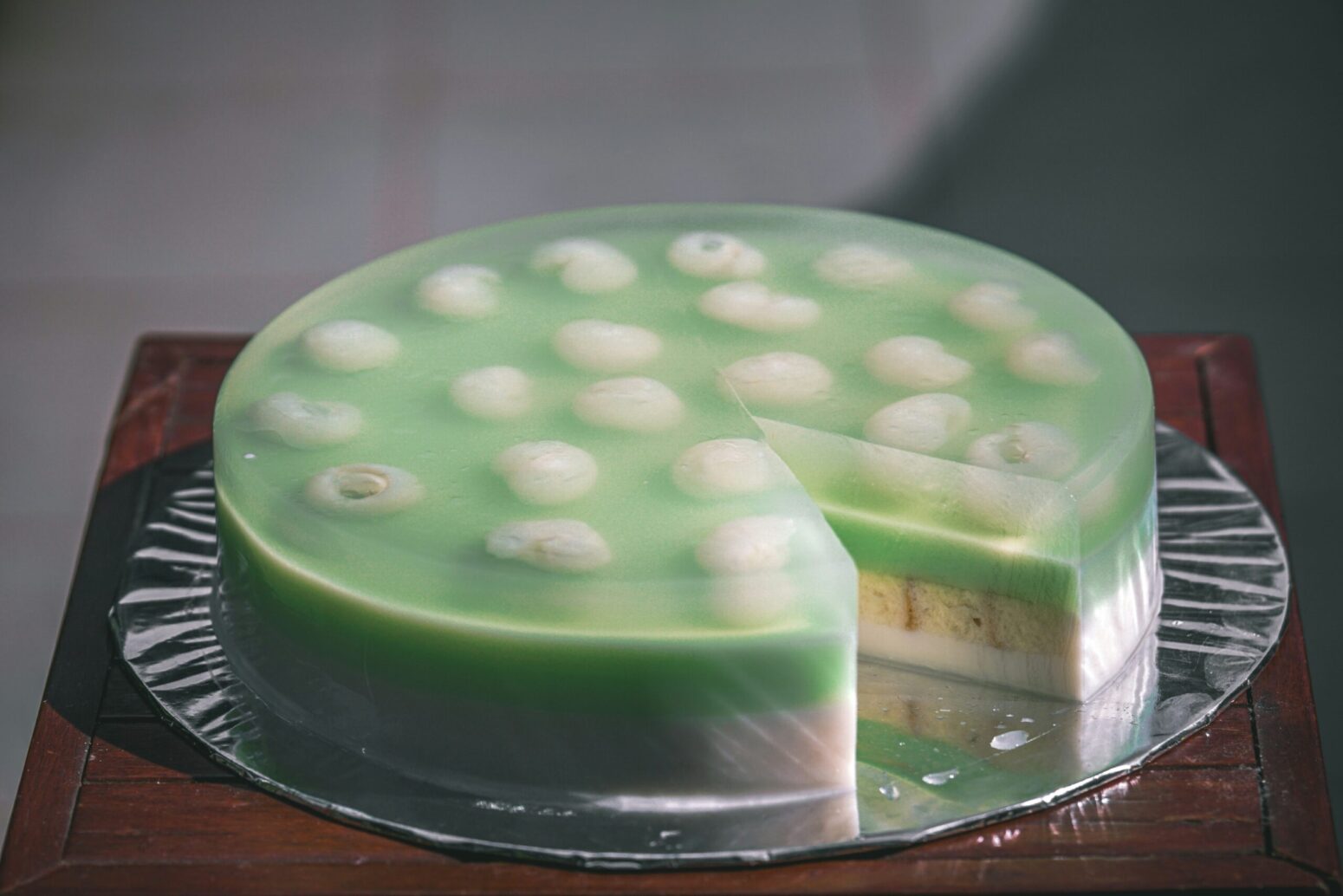
I remember the cake she’d selected the day I mentioned this, pandan-flavored chiffon with gula melaka buttercream, topped with grated coconut.
I remember how she looked up with an expression of genuine perplexity.
“Did something like that happen? I can’t remember anymore.”
On one of those afternoons when I was doing my homework on my hands and knees out in the corridor, I needed the bathroom. I called out to my mother, and she emerged from the house with a stack of newspapers.
We lived on the tenth floor. The town council kept the lifts well maintained, so the stairs were seldom used. Beside my shoe, a gray lady on the paper, samfoo-clad, with black holes for eyes, watched me. My mother had passed me the obituaries, so it felt like I was being observed by faces of all ages and ethnicities. I looked up at the white sky beyond the parapet, sunlight flickering with the swift shadows of passing birds. The sounds of a distant ball game taking place on a multipurpose court made me nervous. I pushed hard, trying to accelerate the process.
Somewhere, a gate swung. Suddenly the stairwell echoed with the clatter of footsteps. A pair of sneakers came into view, laces bouncing. The feet came to a halt when the young man saw me on the landing in my secondary school uniform, squatting with my skirt bunched around my knees. I wanted to stand, but I was conscious of what was under me. I had no choice but to stay crouched, lowering my skirt, angling my face away. There was a prolonged pause before the man finally moved past me and walked away.
I spent the days following that birthday at the dim sum shop in the throes of a sense of calamity. I have never been a sound sleeper, but now, after learning of my mother’s plans, I would jerk awake, gasping.
Rather than my cousin in Malaysia—whom we meet once a year during Lunar New Year—it was more likely that my father would come live with me.
The truth was, I felt I’d only just begun to live. The first three quarters of my life had been suffocating, to say the least—I’d been forced to fit into a completely arbitrary set of constraints, without the agency even to use the kitchen to make a drink. I was alone because my father was utterly consumed seeing to my mother’s demands. I tried my best not to add to my family’s problems, dealing with difficulties myself and having as few needs of my own as possible—in short, my father was a virtual stranger to me. He had always been more of my mother’s father.
It had only been ten years since I moved into my marital home. Yet now I was faced with the prospect of caregiving for quite possibly the next three decades.
Once, walking through the forests of Bukit Timah Hill, I thought I saw a trilobite beetle. The armored insects are distinctive, but I couldn’t be sure if it was the elusive insect or something similar to it. In 2016 a local ecologist uploaded a video of the beetle that went viral on National Geographic’s Facebook page. Since the beetle’s discovery in the 1800s, a mating pair has only been spotted twice—in 1925 by a Swedish zoologist and in 1993 by Alvin Wong from the Department of Zoology at the National University of Singapore.
The unusual thing about these beetles is that females retain their larval form throughout life. It is speculated that the retention of the mother’s juvenile form enables the offspring to thrive.
I am standing on the cusp.
I’ve always envied friends with supportive families, but perhaps I now possess the strength to transform this narrative into something other than a continual familial tragedy. If I can overcome my fear, this may be a chance for me to have a relationship with my father—no matter what’s left of him—in his twilight years.
We may be latecomers to the banquet, but perhaps we’re still in time for dessert.
Read more from Issue 23.2.