Several Londons, 1977
20 Minutes Read Time
"I want to see some history."
          -The Sex Pistols, "Holiday in the Sun" (1977)
In January 1977, I move from Los Angeles to a fancy, old-fashioned London hotel suite, where I live with my mother and little brother for two months, long enough that we run out of money. We leave the city in March, then return in September with my father, to live for six months in a posh furnished flat overlooking Kensington Square—a private garden a few blocks south of the larger, public Kensington Gardens. My family is given an iron key to the gate.
In between these two stints in London I live in Saudi Arabia.
I am seven. None of this makes much sense to me. If anyone had asked me why I was in London, I would have answered, “Because of my dad’s job.” He works in the international engineering and construction industry, and for one reason or other, he’s often not around.
All year, London appears and disappears and reappears to me, like the world’s most ambitious theater production. It turns inward, a network of tunnels always leading us deeper, backward or forward in time, color-coded streams of location in the Underground. London forms a subfloor of meanings and their breakages, my first stabs at cultural philosophy, which transpire as simple noticing.
But London starts out as thoughts voiced by my mother. My mother loves history. Like a famously cast mystery narrative, the past is alive to her, often much more so than the present—a trait I have largely absorbed.
London in 1977 is celebrating the Queen’s Silver Jubilee. It’s as if the city is on fire with her crowned head. Her grinning face flashes from the sides of buses, on billboards, Wedgwood dishes, platters, crown- shaped erasers, teapots and teacups, giant novelty pencils, silver lockets, tea towels, T-shirts, and key chains, and from posters in window after shopwindow.
My mother is not a Queen person. She’s not enamored of the current royal family. “Ceremonial,” sniffs my mother. I too am skeptical of Buckingham Palace as we stroll past it, bundled up to our eyes against London’s version of January. The palace is very big, yes, and the bear-fur-hatted guards resemble enormous toys. But what’s the point of royalty with no power? The Queen owns so much—the world’s richest woman!—yet does so little. What kind of people would put up with this? I am echo to my mother.
In London that year, 60 percent of adults under twenty-five are unemployed. Across town, a cultural revolution against the Queen and all she stands for is being mounted on King’s Road. But we don’t know this then.
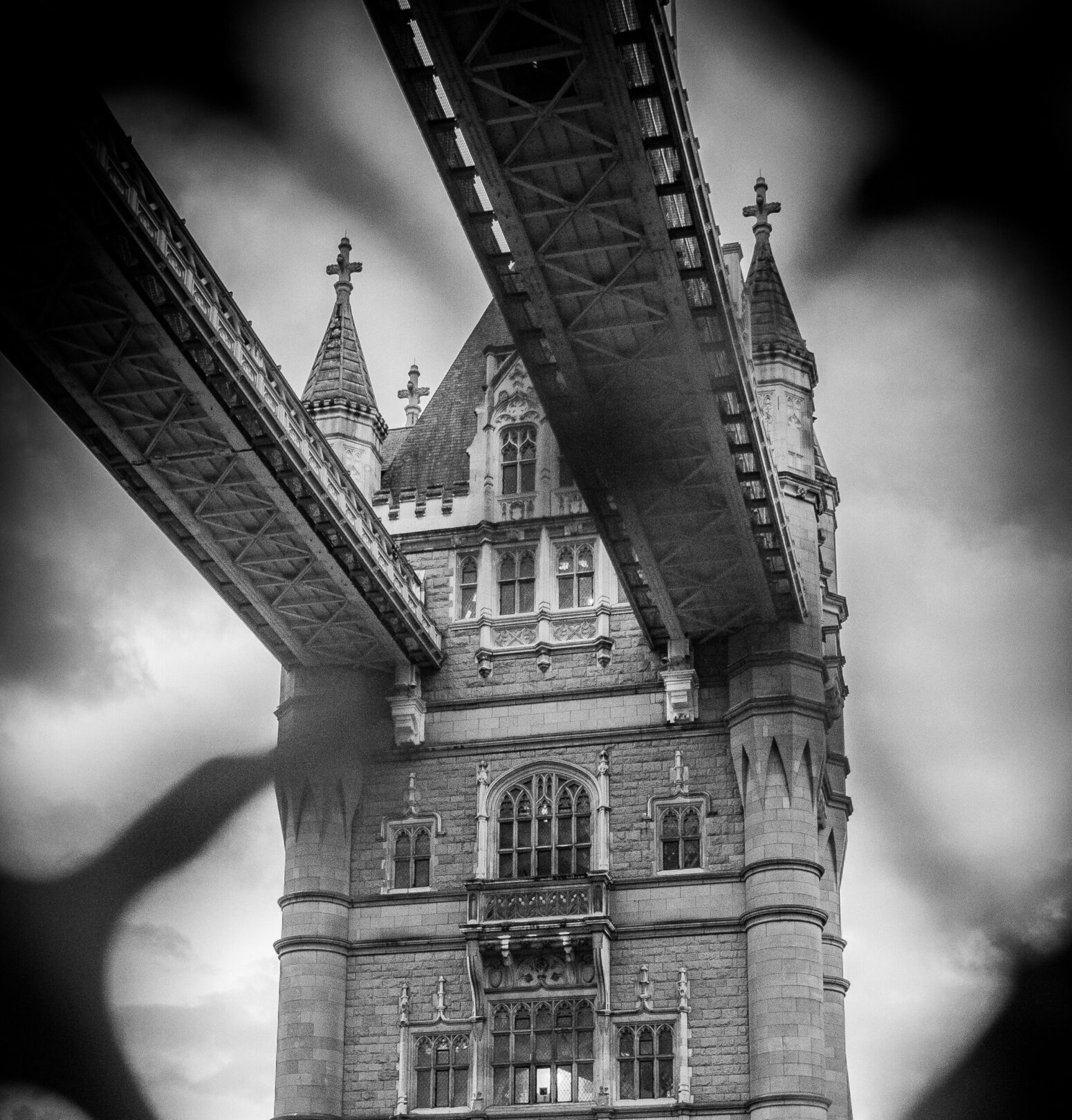
Meanwhile, the Tower of London entombs the horrible and glorious structure of royals run amok. “The little princes,” my mother says, describing how their small skeletons were found under the dark stone stairs. As we wend our way around the eleven towers, she names other names—Richard III, Oliver Cromwell, Thomas More, Walter Raleigh—and recites their dooms. But it’s Anne Boleyn whom I instantly adore, from my mother’s tale of her bravery, her half-Frenchness, and her name, since my middle name is also Anne-spelled-with-an-e. “She ordered the sword that would behead her from the best sword-maker in France,” says my mother. “That was smart. So it would come down in one fell swoop.” For me, this provides the prototypical example of the need for quality when it counts.
The original dungeon does not yet house a beautiful gift shop but is rife with dank iron racks and spiked implements that make my skin burn when I just look at them. This is how terror is intimacy.
Later I stand in the courtyard near the chopping block where many noble heads were lopped off, clutching my Illustrated Children’s Guide to the Tower of London, getting used to the smell of the city: wet building stone, traffic fumes, the breath of people speaking their witty, snide, obtuse, brilliant, sneering, kind, idiotic, transcendent, slurring, ele- gant comments. I learn the world was not so friendly for grinding, crunching spans of time. The time-and-place blip of decency and ease through which my family moves appears to me, for the first time, as anomaly. Were those Tower of London people just as human, just like anyone, just like me? I wonder, watching the ravens hopping around the courtyard. Or is humanity the problem.
I’m eating roast beef in the grand restaurant with flowery carpeting and soaring ceilings and gold-framed mirrors and dozens of candlelit white-tablecloth-covered tables. It looks like the fanciest dining room on the Titanic. There are no other guests. It’s my mother, my little brother, me, and half a dozen staffers. My mother is sneaking dinner rolls into her bag.
It’s February, and the three of us are still waiting to move to Saudi Arabia. Our visas are taking forever, and my mother has run out of traveler’s checks. Worse still, she has no way to reach my father, who is already in Dhahran, our soon-to-be home. This is 1977: You can’t just call Saudi Arabia from a hotel lobby. Fortunately, our suite—which is paid for by my father’s employer, apparently on an ongoing basis— includes breakfast and dinner in the hotel restaurants, though not lunch. This “half-board” room-and-meal configuration is a Victorian-era holdover. Every day we gorge on a full English breakfast, eat a lunch of pilfered bread rolls smeared with peanut butter from my mother’s bag, and then show up for dinner right at five o’clock, when the restaurant starts service.
It’s not exactly a Dickensian tale of hardship. At the time, I assume it’s normal for good fortune to always be striped with weird, hard-to- explain misfortune. The young waiters have sparkly, noticing eyes and bring us extra rolls.
I have no friends in London, not one, the entire time we’re in residence. I’m not in school, and my mother doesn’t seek out other expats or local families to find playmates for my brother and me. I am fairly isolated in a center of the world.
Diverted from kids my own age, I look outward. My extroverted nature twists toward the public, historical, epochal, aesthetic, and gossipy urban sphere, and my interior world is drawn to the street plans laid out by Roman, Saxon, and Norman invaders. I wring understanding from jewel-etched medieval maps of the city and Thames, from Renaissance mullioned windows, from the swooshing-by of beetle-black cabs.
All these Londons introduce “culture” to me: a set of preexisting conditions of meaning allowed to reproduce instead of many, many others. And the plot of culture is history: the story that tells us why, say, a constitutional monarchy persists in a parliamentary democracy. My mother introduces me to another word: counterculture. The more oppressive and conformist the culture, the brighter and braver the counterculture must be. A child grasps this instantly, as counterculture represents everything she wants to do, grab, and eat but her mother won’t allow.
That year, London’s counterculture will be torn open by John Lydon, aka Johnny Rotten, an Irish-Catholic Londoner, and Malcolm McLaren, a Scottish-Jewish Londoner. The city will unleash the Sex Pistols, The Clash, Siouxsie and the Banshees, the Pogues, and many other bands inspired that year by the fashions in a few storefronts on King’s Road. Later I will discern that sometimes in your childhood, you can rewire yourself to favor or suppress your natural traits. Sometimes it’s because you don’t have a choice. Sometimes things get weird (you are living in a hotel, have no relationships with other kids your age, etc.), and you find ways to grow anyway. From such transformative acts of will and imagination you may never recover. In other words, you will no longer be able to distinguish your own naturally occurring “culture” from the seemingly opposite—“countercultural”—qualities you also possess.
Just looking at the Queen’s omnipresent face, I’m struck by how much she resembles my grandmother, my mother’s mother, née O’Malley, who, back in California, donated money to the IRA, coached me on how to correctly pronounce Sinn Féin, and told me horror stories starring Oliver Cromwell, who ordered soldiers to torture and behead Irish Catholic children, then place their heads on spikes. This happened several years back—three hundred or so. My mother tells me that this tendency is the “Irish memory,” an experiential continuum where everything bad that has ever happened might as well have happened yesterday. It’s a trait I recognize, having largely absorbed it.
The IRA plants bombs in London so the English will stop trying to rule Ireland, according to my mother. I hope we don’t get bombed,
even if it is to help Ireland. A grand department store called Selfridges was bombed and set on fire the month before.
My mother does not approve of her mother sending money to the IRA. “You know Mother,” she sighs. On the other hand, she observes, “The English have no morals when it comes to Ireland.”
“The Irish are pigs,” sneers Margaret Thatcher during a BBC interview that year.
Yet my grandmother and Queen Elizabeth II could be sisters, they look so much alike. How different are the English and Irish, really? I wonder. Similar enough to want to bomb each other to bits.
London is hoards of businesspeople with the extravagantly vague air of spies.
London is where the world becomes visible to me; the fact that there is one, a world. I have already lived in three massive, roughhewn American states—California and Alaska and Texas—each in practice nearly countries unto themselves that don’t care what you think of them. If the US still assumes in the 1970s that it is what matters most in the world, is the world itself, then London is the first place I’ve been that knows all too well it isn’t, not any longer.
London is where I first learn what an “American” is, something you can only accurately grasp after leaving the United States. A strange creature, this American. Smiling and loud, provincial but ambitious, ignorant yet shrewd, lucky and tetchy, self-satisfied enjoyers of fast food and wearers of blue jeans. I see Americans, lots of them, walking around the city, shouting their confusion about traffic laws at one another. London teems with every nationality in the world, or so it seems to me. All these Londoners appear very long and thin. Bell-bottoms swing and make the rest of the body look like a broomstick. Or their jeans are skintight and pegged around bony ankles. Everyone seems hungry, sharp-eyed: my first city people.
“People are sick everywhere. People are sick and fed up with this country telling them what to do,” says Malcolm McLaren that year. He and Vivienne Westwood run the SEX shop on King’s Road. Along with selling blow-up dolls and shredded jeans, Malcolm McLaren has been reading Guy Debord’s The Society of the Spectacle.
Malcolm McLaren talks about the Situationist International to anyone who will listen.
Malcolm McLaren talks about Guy Debord and the French experiment.
Malcolm McLaren admits he wants to sell a lot of pants.
Malcolm McLaren will later claim he started the Sex Pistols as a stunt. That he was the mastermind, the Machiavelli of punk.
“Everyone on the planet knows Malcolm’s full of shit,” says Steve Jones, guitarist of the Sex Pistols, years later.
I suspect Malcolm McLaren reads The Society of the Spectacle less as a warning about what we now call consumer culture—where “the commodity completes its colonization of social life”—than as a manual for exploiting it. He already envisions art and culture as broken, be- cause there is no counterculture for consumers, not really. All that is left is selling pants, the avant-garde stealing market share from the mainstream.
“Everyone is so fucking bored,” says Johnny Rotten into a reporter’s video camera, as he walks the streets of 1977 London, his face gleaming with gaunt twenty-one-year-old beauty—and speed.
London is bunk buses, as my four-year-old brother calls double-decker buses, red and friendly looking, as if they are enchanted vehicles that can whisk you away to a magical fairy village made of tea biscuits, clot- ted cream, and strawberry jam. Except fairies are always clever, annoying creatures in the British Isles, like pretty mosquitoes with high IQs.
With no spending money, my mother packs the three of us off to a bookstore across from our hotel, wonderfully filled with couches, because “the English are literary,” she says. We browse there for hours, buying nothing. I discover Pu∞n books. Over and over I read Timothy and Two Witches, in which a boy goes to stay with his young aunt, Melinda, who turns out to be a good witch. Her London home is alive, like a plant, sprouting tendrils that hand him a cup of milk at breakfast. Her neighbor is a bad witch. The two live in London townhouses bustling with white or black magic, sun or sleet, as divided by the property line. It will be a favorite book ever. Its London will be one of my favorite cities. I will read it to my son, who will keep it by his bed, in his stack of favorite books ever.
Britain makes all the best children’s literature. No one has ever been able to convincingly explain why. You will hear theories involving the playgrounds of wordplay afforded by the English language, or the brutality of the public school system and the attendant fondness for vivid, intuitive, and disassociated realities. Perhaps the answer involves the long tradition of those lovely, evil fairies, who represent a shared sense of the real powers at play in this world and the imagination required to combat them. Of all its countercultures, England’s children’s literature is the most voluptuous and sly.
On May 27, 1977, “God Save the Queen” by the Sex Pistols is released, and on June 7, Malcolm McLaren throws a party on a Thames river- boat to celebrate. Video available on the internet shows the London police arriving in speedboats to break it up. There’s Richard Branson, lion maned and shirt open, who’s bankrolling the fete. The gathering is treated as a criminal emergency, with loudspeakers, sirens, flashing lights, and handcuffs.
American viewers might wonder: What on earth is going on here? It’s hard for us to grasp that the English do not enjoy free speech in 1977. They are ruled by sedition laws, which have snared the Sex Pistols. Their particular crime involves making fun of the Queen of England and having a band called the Sex Pistols. Also, hiring a boat called the Queen Elizabeth and hanging a banner reading “God Save the Queen”—her portrait marred by these words in block letters—from its upper deck. McLaren, by all accounts except his own, knew the party would be broken up in a big, flashy, newsworthy way. He wanted the Sex Pistols to get arrested. But Johnny Rotten sensed the setup, tipped off the other Pistols, and snuck off the boat. Only McLaren and minor members of the entourage got arrested.
But the stunt worked brilliantly: The words punk and Sex Pistols made international headlines. Soon, all across London, posters of the band lined walls and utility poles and telephone boxes, complete with the version of the Queen’s face covered in text.
In “God Save the Queen,” Johnny Rotten sings for England’s young, impoverished lower class—like himself; and guitarist Steve Jones, illiterate until adulthood; and Rotten’s childhood friend, John Ritchie, aka Sid Vicious, raised by a heroin-addicted mother. All of them had grown up in council flats in London’s outer boroughs. The song’s ironic mani- festo, and the truth of the matter in 1977 London: “No future for you.” Even if Malcolm McLaren formed the Sex Pistols as a Situationist spectacle, Johnny Rotten was its scathing poet of witness. His lyrics still pierce. But Rotten and McLaren fought incessantly over the group’s direction, and the singer quit the next year. Without his voice, the band dissolved, unable to signify much beyond shredded pants.
In the fall, my family returns to a London colonized by punks hanging around its street corners. We move into that flat just off Kensington Square Gardens. The park is walled off from the now punk-infiltrated public by a tall black wrought-iron fence. I’m disappointed it’s just a plant garden, without a special wealthy children’s playground for my brother and me to experience.
The flat is packed with dark old furniture and gloomy historical paintings. One portrait is of a dark-haired nobleman with greenish-pale skin, whose creepy eyes follow my brother and me everywhere in the room. The woman who owns the space rents it out furnished to families from my father’s employer, who often stay for long stints in London. Is the man an ancestor of hers? An antique-market find? We do not know. But we feel like we are living in a museum of English aristocracy. I sleep in a scary dark wood bed that looks too small for average-sized adults and eat at the enormous dining table that my mother guesses is from Chaucer’s day. Mainly I hang around the kitchen with the housekeeper, who works for the owner, checking in on our family and keeping the flat in fine shape.
She teaches me the opening lines to a poem:
Remember, remember! The fifth of November,
the Gunpowder treason and plot;
I know of no reason
why the Gunpowder treason should ever be forgot!
Guy Fawkes and his companions did the scheme contrive,
to blow the King and Parliament all up alive.
I learn about Guy Fawkes Day, but exactly wrong. It will be many years before I realize that Fawkes is burned in effegy forevermore as an antihero. When my family and I walk the streets of London to see the bonfires on the night of November 5, I believe they are burning him be- cause he’s a hero—a funny way to commemorate him, true, but maybe this is how they do it in England. Fawkes had wanted to blow up the English government hundreds of years earlier, which, as an American, I find reasonable. Back then, who wouldn’t? The Americans, the Irish, the French—all the rebels, the idealists, and the humanists hated the English. The good people, in other words, in my child-eyed view.
The next month, we go to Harrods to buy Christmas crackers, little foil tubes whose ends you pull open to reveal treats like caramels or chocolates. In the store, which is like a magical shopping castle of buyable treasures, we purchase a glass Father Christmas for our tree and Christmas pudding, nothing like packaged American pudding but instead delectable, sweet, buttery spiced crystallized fruit sauce. “London is the best place in the world for Christmas,” say my parents. This has got to be true, with one exception: Scrooge. I find myself subjected to A Christmas Carol, which my father has a deep love for, a love that entirely eludes me. It is a ritualized story I despise on sight. I’m not bothered that the poor are virtuous and the rich evilly selfish— that I could accept, I suppose. No, it’s how the underclass take on their roles in the story like good little soldiers. Why aren’t they angry? I wonder. They should be. Americans would never swallow it. Or would we? As we walk the fairy-lit streets after seeing A Christmas Carol staged, my mother talks about Dickens, how he wrote stories about all the dif- ferent Londons of his time, with people from all backgrounds and their funny accents. She says this was new, revolutionary: to depict a poor orphan with the same care and value, twists of fortune and black humor as a rich miser. She says London was never the same after Dickens: It was so much bigger, a city where everyone is interconnected by stories.
The next week, my mother is seized by abdominal pains and must be checked into a hospital for surgery. My father brings my brother and me to visit her in a district made of rain puddles, concrete, sloshing grayness: Lewisham. He ushers us onto the train at Victoria station, wearing his trench coat and wool tartan scarf, his face pale with worry. My brother, still slight enough to slide onto my lap, clutches his Paddington Bear like a proper English child. If we don’t open our mouths, we could pass for a small clan of anxious Londoners. And this, during the last month of 1977, is what we are.
As we roll away from central London, I can’t wait to see my mother. She will be fine, if groggy, in a metal hospital bed, wearing her pink nightgown in a tall Victorian room as important looking as a museum gallery. She is doted on by nurses called “Sisters” who wear starched white uniforms and little veiled caps, and who greet my brother and me like long-lost family.
Lewisham’s London is not tourist London, not famous London: past the East End, on the South Bank, an inner borough of brick Edwardian row houses and drably modern suburban shops. But by this point, London could look like almost anything and I wouldn’t be surprised. It’s a word, a sense of place, I’ve come to love—pure as a pagan faith, an urban idolatry. I am on its side, and it on mine. At seven, I am absolutely sure London is my friend—not that it ever told me that.
London has taught me what a city is—and this I learn exactly right. It’s a place where interesting always beats beautiful. London, for all its charms, can’t get by on its looks. And anyway, nature already has beauty covered. London instead contains enough tight spaces, tumult, and interested bystanders for the unlikeliest of harmonies: between architectures and texts, revolutions and royalty, exclusive parks and studded leather jackets. It layers so many histories that chronology itself seems freed, jumbling public narratives with countless private scenes, as easy to rework as taking a different street.
Visiting hours are over. My dad, my brother, and I have kissed my mother goodbye and are heading back to the city’s heart. At Victoria station, we transfer to the Tube to get back to Kensington, through the now-familiar whoosh of hundreds of strangers scattering around us, the London that feels massive, yet pressed so close. I am temporarily motherless, but her voice is in my ear, the growing sense of my own history taking place, and I’m ready to take the London Underground home.
Read more from Issue 15.1.