Hibernation
18 Minutes Read Time
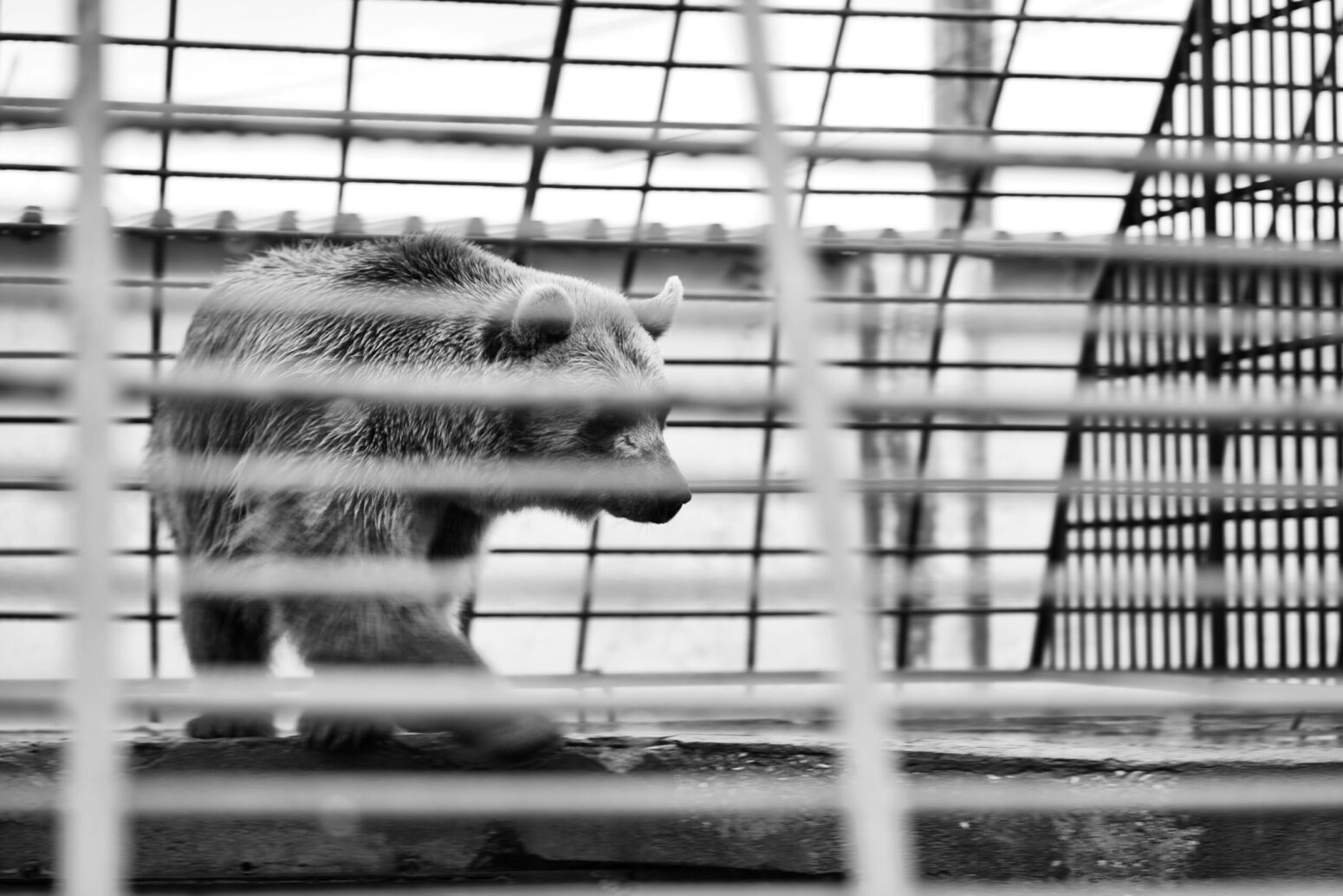
Our train broke down in the frozen heart of the taiga. At first we were startled. We had grown accustomed to the relentless presence of the engine, the way that it throbbed beneath our toes and thrummed through our veins. When we tried to rise, we stumbled and then tried again.
How strange it was to find that now, after thousands of miles and more, our world was standing still.
We didn’t need windows (our car didn’t have them) to know that it had started snowing. We had felt the pressure of the sky buckle and release. We heard the flakes slicing through air as thin as silk, hissing when they fell against tracks that were still warm. We imagined the snow twirling like trapeze artists, twinkling like their sequined skirts. The car door slid open a crack, the cold white wind twisted forward, and the girls were blown inside. Their faces were jumbles of bones beneath matted hoods, their eyes too wide for their skulls. To us, they were lovely and strange. The fair one tossed a handful of frozen currants between the bars of our cage. The dark one hung back. “You’ve stained your mittens,” the dark one said.
“I don’t care,” said the fair one. We knew she didn’t. “Who is here to see them?”
No one, we rumbled in reply, feeling a sudden urge to stretch, to yawn. We composed our faces into what we hoped was a look of genuine human warmth. No one is here but us.
(We couldn’t say, later, when our sense of foreboding began. Was it before the train stopped, or after?)
When the engineer passed by our car, we listened to the crunch of his boots on packed snow. He told the conductor that the supplies he needed to fix the engine were sitting in a factory five hundred miles ahead of us, in Saint Petersburg, where we were due for a performance in a few days’ time.
“Whoever heard of a frozen train?” the fair girl asked her friend. Her sister? We couldn’t tell. Everyone without fur looked so much alike: fragile and bare.
The dark one crossed her arms. We could see the sharp angle of her elbows even through her blankets. “They say that we’re not the only ones,” she said. “It’s happening all up and down the lines. The cold puts cracks in the engine.” She paused. “And if it’s not the engine that stops the train,” she added, “it’s the revolutionaries.”
The word fell off her tongue, weighty and delicate. Revolutionaries.
In each place the train had stopped over the past several months, we encountered an intensifying stench of fear and unrest. We could see humans surging through the streets, weaving between carriages and trolleys. Often, as we lumbered from the train to the ring for one of our shows, the chains rattling between our legs, we were followed by crowds, trailed by hungry, yearning faces. Their buildings loomed behind them, the walls caked with soot and the rooms packed with still more bodies. On the edges of the larger cities, factories spat black smoke into the clouds. Even at midday, everything felt dark.
“What do they want?” the fair girl asked the dark one, time and again. Her voice trembled, and we smelled her fear.
The answer was always the same. “Peace,” the dark one would say. “Land. Bread.”
(Our mothers had told us a story once about a bear who befriended two little girls. Did you think that only humans had these tales?)
We waited for the girls all night, all day. We were always listening for the flutes of their voices, the drum of their steps striking the wooden floor of the dining car behind us. We knew when they were approaching our car because the scent of them—honey, sweat, dirt, sugar—would grow stronger. We paced in our cages, anxious to have them again before us.
Where have you been? we wondered. Isn’t it dangerous, out there among the revolutionaries?
It was true that the girls brought our meals of fish and dried grasses and that they came to lead us, before every performance, out of our car and into the light. And yet we had the unshakable sense that, no matter how well they cared for us, it was actually we who were the keepers of them. This was why we kept them so close when we tumbled from our car, half-blinded by the ashen sky, and dragged our chains across stone paths slick with ice. This was why we kept our small eyes trained on the crowd, on the hawklike noses and the wolflike teeth. It was up to us to protect our girls from these wild animals. Who better than we, after all, who had so recently been wild ourselves?
We remembered the woods—trees cloaked in dusk light, branches shimmering with ice, bird shadows darting across downy snow—and tried our best not to shiver with grief. Instead we focused on our girls, wondered where their families were. What kind of parents would send their daughters to a place like this, where people wore painted smiles and home never stopped swaying?
That was before we saw them swinging through the rafters of the circus building, their small hands clasping wooden bars, their pale limbs glistening with sequins and paint. They flew without fear. It seemed to us, as it seemed to the rows of chapped faces in the stands, the hundreds of dark mouths gasping with delight, that they were born to be up there. The wooden beams of the ceiling, the rise and fall of the wires as the girls flitted across them: This was their natural habitat.
Sometimes, for that, we envied them.
The temperature in our car dropped every hour the engine stayed off. We heard the girls’ teeth clattering, saw their lips trembling. Just looking at them made us cold.
We believed this is what our trainers wanted: for us to feel like people. This was why they dressed us in human clothing and insisted we perform human actions. During our first year, we learned to jump rope, to climb stairs. Soon they had us dancing with them: sometimes fox-trots, mostly waltzes. One two three, one two three.
How lonely you must have been, we would say to our nimble, furless partners, to have come so deep into the woods in search of us!
Thousands of eyes watched and hands cheered us over the years; the thick scent of vatrushky and pirozhki just beyond our ring became as familiar to us as the smell of fresh snow. We tried our best to ignore the crush of noise, tried to focus on the steps. One two three, one two three.
We tried not to think about the forests to the north, the Siberian woods from which we had come. Among those trees the silence grew as thick and as rich as our coats. We wore it, adored it, pulled it close in the cold for comfort. We were so young when we were taken.
For humans, we learned, silence stifles. They beat it back with clapped hands and raised voices. Horns croon at every hour on the train; words trickle constantly between the cars. We flattened our ears to our heads and waited for the girls to come. For their sakes, we tried our best to bear the noise inside the train and out: the shouting in the streets, the cries of the wounded, the hungry, the fearful.
“Why don’t those people leave?” the fair girl asked the dark one. “If there is no food? No bread?”
The dark one frowned at her. “Where would they go?”
It was then that we understood how the humans were trapped in their own cities, snared by nets of their own creation.
Stay close, girls, we said. Stay close.
(Sometimes we wondered: What if we were the trainers, and they were the ones waiting to be trained? Would we too try to make them just like us?)
We had been stopped for several days. Since there were no shows to put on, no audiences to please, the performers lounged in their bunks, play- ing cards and passing flasks. We found ourselves growing tired: more tired than we had been in years. As the cold settled deeper into the folds of our fur, seeping into our blood, we felt our heartbeats slowing. We yawned in unison, our bright teeth knifing through the darkness. “We have to keep them awake,” the fair one told the dark one. “Those are Mishka’s orders.”
“Why can’t they go to sleep, if they want to?”
“There’s no show without the bears. And there’s no food for us without the show.”
“Then why can’t Mishka come and do it himself?”
“Because we’ve got to earn our keep. Now come on, help me with these kettles.”
Together, they poured gallon after gallon of sweet black tea into our trough. The steam billowed in white ropes, twining around the bars of our cage. The girls’ faces turned red. Pieces of their hair stuck to their foreheads, their cheeks. The wooden sides of the car grew damp from the steam. The girls leaned back, removed their hoods. They poured cups from the samovar for themselves.
“I wonder how long the circus will last after the revolution,” the dark one said.
“If it doesn’t last,” asked the fair one, “what will you do?” She sipped her drink.
The dark one was silent. Her eyes shone like icy ponds.
“I’m going to be a svetskaya,” the fair one said to her, to us, to the frozen countryside. “I’ll throw parties and balls. All of society will be there.”
“There won’t be any society,” the dark one said. “There won’t be any Russia.”
“You’re frightening me,” said the fair one, angrily. The dark one shrugged.
When we knew that the tea would not scald our tongues, we lowered our heads to the trough and drank. Later on, they brought us more tea, then chocolate packed with sugar and caffeine. We wanted to stay awake; we would stay awake. Who knew when the revolutionaries would arrive? Who knew what those beasts would do to the girls if we were not there to shield them?
A fight broke out on the train. As soon as it subsided, there came another. One of the cooks was beaten until he slept; a clown was stabbed. Even through the fog of our exhaustion, we could sense how sharply the train was divided.
“We need to start moving,” the fair girl said to the dark one while they waited for our tea to cool. We could hear the trembling of her voice, its pitch much higher than normal. “I heard Mishka say that if we don’t make it in time for our show in Saint Petersburg, we won’t be able to afford the supplies we need. Everyone on this train is hungry.”
“Everyone in this country is hungry,” replied the dark one. “Maybe if the workers weren’t striking, they’d be able to buy more to eat.”
“They’re striking because even when they work all day and all night, they can’t buy enough to eat.”
“I don’t understand!” the fair one cried out, alarming us. We shifted in our cage, knocked our snouts against the bars. Her tears froze as they fell, glittering on the crests of her cheeks.
We know you are afraid.
The dark one lifted the edge of her fur and pulled it across the fair one’s shoulder. They sat together in the darkness, limb to limb, while the fair one tucked her head in her knees and cried.
When the fair one spoke again, her words were muffled and thick. “Is it really the fault of the tsar?”
“I don’t know.”
“What will become of us if he falls?”
“I don’t know.”
For a long while they were silent. We lapped our tea and swayed on our feet and looked at them. They rose together from the furs like a mythical two-headed beast, their faces blanched, regal, strangely serene. If they had not been sisters before, we decided, they were cer- tainly sisters now.
Finally one of them said: “Are you afraid that we will die?”
We didn’t hear the answer, but we didn’t need to. The cold slid closer to our bones, and we fought against sleep, struggling for consciousness, for our girls, because we did not see how they could survive this troubled world without us.
We could feel the buzz of activity on the train, the rush of performers to dress, to stretch, to paint their faces. The girls poured more tea into our trough.
“We’re moving,” they said, and once they told us, we could feel it. We had assumed that our difficulty standing, stepping, was due to our exhaustion when, in fact, it was because the frozen earth was flying away, once again, from beneath us.
We were not moving long enough to grow accustomed to it. As the train rumbled into Saint Petersburg and rolled toward the empty circus building, we prided ourselves on our fortitude. Yes, we were terribly sleepy—had we ever been so tired in our lives?—but we were able to follow the girls out of our cages, out of our car, and across the frozen boulevard. The snow fell between our eyes, melted on our noses. We stumbled, and the girls bent close to whisper their encouragement, to cajole us up onto our paws again before the trainer had time to lift his whip.
Don’t worry, we told the girls as we rose, time and again. We are here.
The girls were tasked with walking us through the city before the show to let people know that the circus was in town, to encourage them to buy tickets. We understood this routine; by now, it was habit.
“Mishka said to keep it short today,” said the dark one. “We’re already behind schedule. They’re rushing to set up the stage.”
The fair one didn’t answer. She was staring straight ahead with an expression we didn’t recognize. The streets were teeming with black coats and black caps and rough faces, which made it di∞cult for our little procession to push forward. People did not react with the same explosions of delight we had come to expect. Most seemed unaware of us. Those who did notice our presence scowled at us, at our girls. Some of them began throwing packed balls of ice. Others pelted us with stones, which glanced off our backs.
“Hey!” shouted the dark girl, flinging up her mittened hand. “Stop!” She pulled up short, and the fair one paused with her. We swung our great heads from side to side, seeing but not seeing, too weary to understand. In the streets were the smashed remains of imperial stone eagles, their bodies broken and each of their two heads removed. Shop windows had been shattered, food stores looted, and the snow was packed with broken glass. Our paws were throbbing, and we looked down to discover blood in our tracks.
“They’ve cut their feet,” said the fair one in a whisper, dropping to her knees beside us.
The dark one heard her. “We need to get them back,” she said, although she didn’t move. Her breath crystallized in the cold; her words froze as they fell.
We were drawing more attention now. The ice flew with more anger, more force. The crowd around us seemed to swell and rise. Our path was blocked with bodies, the air full of feelings that we did not understand. When the dark girl tried to help the fair one stand, some- thing struck the side of her face. She let out a cry and fell back into the fair one’s arms.
It was then that we remembered we were bears and they were revolutionaries. Revolutionaries! Wasn’t this the moment we had been waiting for? Wasn’t this the reason we had struggled so valiantly against sleep? We roared, we snarled, we bared our teeth and brandished our claws. We lunged at the crowd and swiped at human heads to remind them that, no matter how terribly they might behave, we would always be much more terrible, more beastly, than they.
(Beneath their tears, the girls’ faces shone like royals’. We worried that we might be dreaming.)
We were glad to reach the circus building at last, relieved to be led into the ring. The girls were frightened, but safe, and it was we who had saved them.
Was that why we believed we could rest?
The girls chained us to our post hurriedly, with shaking hands. They turned toward their changing room, but then the fair one paused. She looked up at her companion.
“Why do they hate us?” she asked.
The dark one glanced back at us, hesitated. Finally she said: “We dance and twirl and train bears to be like humans. They work like horses and live like rats.”
The fair one’s eyes glinted in the rose-colored light of the theater. “But it wasn’t up to us. We didn’t choose this life.”
“Neither did the bears,” said the dark one. “It is your fate that chooses you.” Her voice sounded soft, foggy, as if she were speaking from a great distance. In unison, we yawned.
They left. The room wavered, and we wavered with it. Why was it so di∞cult for us to move our limbs? We laid our heads down, just for a moment, to regain our strength.
In a few minutes the girls would begin their act while we watched them from the ground. Once they had finished, it would be time for our waltz. One two three, one two three. The music would soar through the circus building as the trainers held us close. The hands in the crowd would clap and throw coins. We would complete our act and be led back to our posts, from which we would watch the juggler and then the horseback riders. We would try to block out the clamor of the horns and the drums, and we would wait once more for our girls.
(At the end of the story that our mother told, the bear found himself transformed. But perhaps this was not the time for princes.)
Why did we love those girls? Was it because we depended upon them? Because they gave us a sense of purpose? Or because they reminded us of ourselves?
No. We loved them for the way they moved. Sometimes, as we clattered on the tracks between cities, bundled warmly in our car with our breath pu∞ng in summer-shaped clouds, we would dream of their performances: We would remember how they dipped and dove so high above us, how they swam through the air like swans.
We loved them because those were the only moments, while they danced across the wires, defying gravity and all that was sordid and murky and earthly, when we did not miss the silent woods from which we had come. For a few seconds, we forgot about our forests, about the vast white expanse of frozen plains. The girls would lift us to the rafters along with them, and in that instant—brief as it was—we forgot that we were trapped down below. We marveled at the wonder of this spe- cies, at the uniquely human capability to conquer and create, at this set of talents and grace unrivaled by any other animal we had ever seen, encountered, eaten.
How could we have known, seeing the girls whirl so naturally, so eloquently up there, that there would come a day when they would fall? When the fatal moment came, we were caught in the nightmare that had plagued our sleep since the day we had been taken. We heard the snap of the wire, but to us it was the snap of a silver trap in a snowdrift; we heard the screams, but to us they were the shouts of the men who had come for us with their dogs and chains.
We did not know; we could not act. And so the girls fell like snow at night, dark and fair, while we were dreaming on a cold stone floor somewhere far beneath them.
Read more from Issue 15.1.