Possessed by a Dying Tongue
17 Minutes Read Time
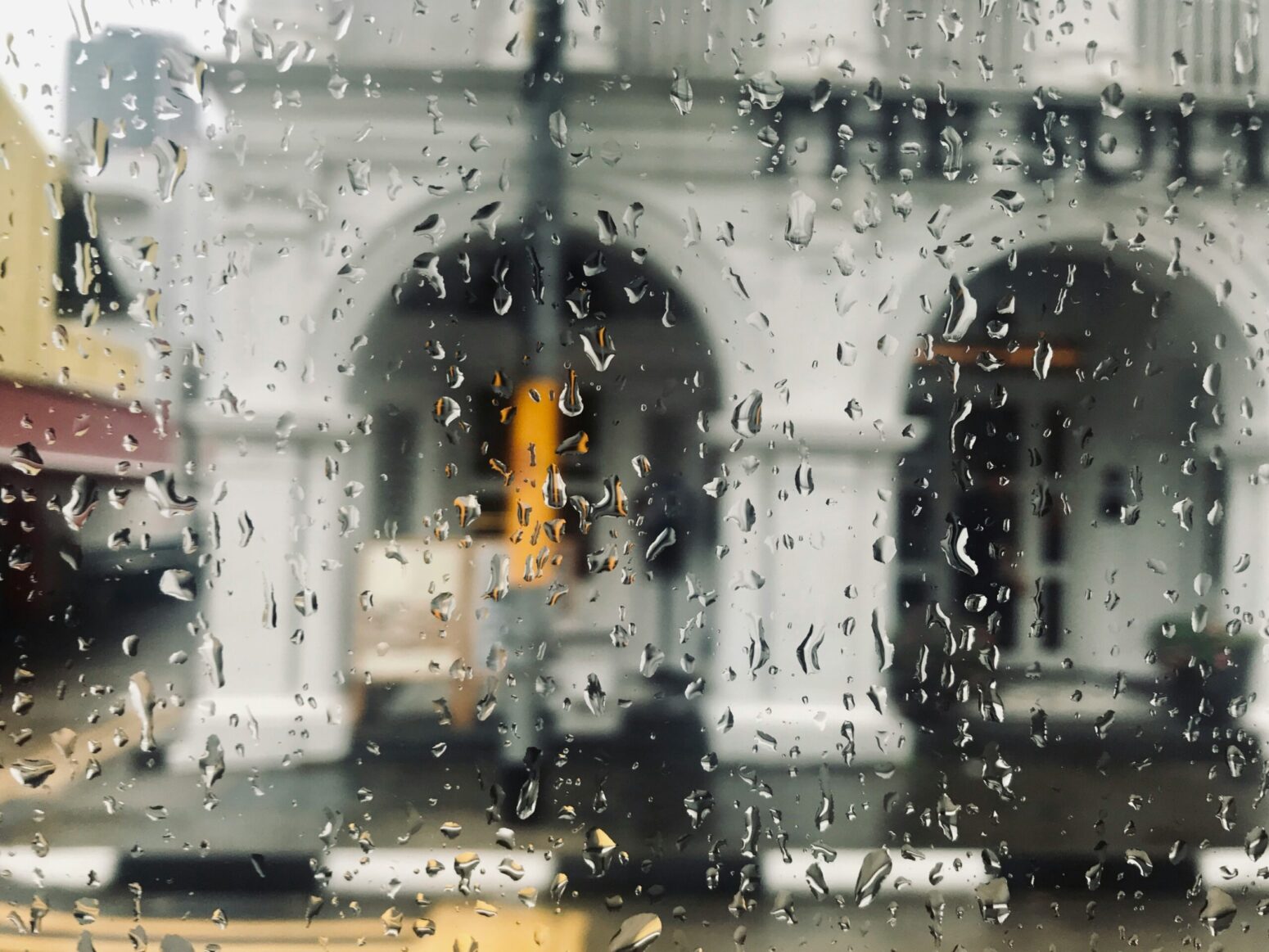
My mother used to say that the gods were crying when it rained; my father said that they were pissing. That was in the early 2000s, when the news reported on the dangers of acid rain. Singaporeans fooled themselves into believing that the rain smelled sharp and sour, that it pockmarked the concrete sidewalks.
Rain has always reminded me of Hokkien, the mother tongue that I have lost. In 1979 the government launched the Speak Mandarin Campaign, banning the use of dialects (Hakka, Teochew, Cantonese, Hokkien, and Hainanese) in media and thus cementing them as languages of the uncouth and illiterate. All the dialect groups disappear under Mandarin Chinese, which is called the Mother Tongue in schools. The label of dialect is contentious, because it denies the culture and heritage woven into those same tongues, as if they weren’t just as formidable and weighty as those of our “official” languages.
The campaign tore open a generational rift between grandparents who couldn’t speak Mandarin and grandchildren who couldn’t speak dialect. Hokkien is the mother tongue I wasn’t allowed to learn, that lives on as broken pieces and hazy memories. Something about rain reminds me of this language I don’t speak. During my teenage years, I fell asleep in my father’s taxi while I watched raindrops race to the bottom of the car window. My parents were speaking to each other in Hokkien. They did that when they didn’t want me to know what they were talking about. I thought of Xihe and Changxi, goddesses recorded in the Classic of Mountains and Seas. The former birthed ten suns, the latter twelve moons. They bathed their offspring in a river; I imagined them splashing water down from heaven. On the asphalt road, the water steamed from the remnant of the suns’ heat and trickled down the street, still holding onto the moons’ pull.
The suns and moons must have bathed in the 银河, literally “silver river.” It is the Milky Way. The same galactic river forever separating the cowherd from the weaver girl, a punishment for their forbidden love between mortal and celestial. But, in their sentence, the two lovers became eternal. A bridge of magpies would form over the river, so the cowherd and the weaver girl could be reunited for a single day every year, the one sliver of clemency shown by the heavens. This, over infinite years, giving them an infinity of days together.
There is a Hokkien saying, “ti gong tia gong kia.” The gods protect idiots. I think of the first Chinese settlers of Singapore. They were mostly uneducated and impoverished and had to work as coolies, supporting the island’s growth with sinewed muscle. Before they crossed the ocean, many of them prayed to Mazu, a goddess who granted safe voyages. What was it like to make the desperate, ludicrous choice to uproot oneself and make home of an unknown land?
I last heard the phrase “ti gong tia gong kia” many years ago, used to comfort my relatives with children who were not academically inclined, as if they were spared a life of striving and could instead be happy.
Mazu is the deified form of the shaman Lin Mo, a figure from the tenth century made up of many stories—too old, too contradictory to all be true. In one, she goes into a trance and saves a boatful of men caught in a violent typhoon, using her spirit to carry them to shore. In another, her brothers and father are on the boat, and someone breaks her out of the trance before she can save the last person. In yet another, she’s aboard the boat and saves everyone before the typhoon surges a wave that swallows her whole. As Mazu morphed into myth, she became capable of containing more lives than a singular person could.
Some people still worship Mazu, though the number of believers is dropping with every generation. The believers assume that her powers evolved into a sort of homogenized omnipotence, and they blindly pray for good grades, for money, for love.
The natives of Singapore, the Orang Laut, lost their language when they were assimilated into the more-general Malay ethnicity. And they lost their affinity with the sea because fishing and foraging could not compete with the might of industrialization.
One night when I waded into the low-tide sea at Changi, the water was black as obsidian, glimmers of moonlight sharpening the waves. I imagined being cut to ribbons if I jumped in, while the ships in the distance remained motionless. A plastic bottle brushed against my ankle, and I was glad to be there when it was dark. The water would have appeared muddy and sick in the day, and would have made it impossible to believe that people used to live by this sea.
The Hokkien word for rain god is a homonym for housefly.
My mother dropped out of school when she was eight because she refused to be separated from my grandmother. My grandmother would walk her to school, wave goodbye, and turn around, headed home. She’d hear echoed footsteps behind her and find my mother next to her. She’d tell my mother to be good, to stay in school. And they’d repeat the same tango until my mother was ushered in by a teacher. This went on for a week. Then my grandmother got tired of the routine, and let my mother follow her back. And that was the end of that. What if it had rained that whole week? Would that have kept my mother in school? What if it had rained, but she braved it anyway?
The first king of the Shang dynasty, Tang, faced a seven-year drought soon after he took power. In those times, when kings were also shamans, Tang held rituals that lasted for weeks, praying for rain. We know little of these ancient rituals, save that they involved song, dance, and offerings. The gods, however, asked for a human sacrifice. Unwilling to hurt his people, Tang cut his hair, trimmed his nails, and took a long bath before offering himself to the gods. He sat in the middle of a firewood pile in the mulberry forest and ordered his officials to set him ablaze. Before the fire could singe his skin, the sky went dark. Lightning. Then, thunder. Then, rain.
What is it about thunder that reminds us of anger? Distant roars evoke, at least, a forced indifference. I tell myself to keep my head down, keep up that pretense of calm. Lightning will strike where it strikes. There’s too much I don’t know about pain.
The Hokkien I heard growing up is, for the most part, brash and loud, grating to those not used to its nasally tones; its plosives crackle at the back of the throat and pop at the lips with a satisfying intensity.
The first Hokkien words I was conscious of were the dialect’s suite of swears. Cheebye, the perennial classic, meaning cunt; chao cheebye, meaning foul cunt; lanjiao, meaning cock; lampa, meaning balls; jiao wei, literally cock language, meaning nonsense; kum lan, meaning sucking a cock; sibeh, literally father dying, used as an extreme form of very; kan ni nabu, meaning fuck your mother, often shortened to kanina or nabeh to be used in the same exclamatory manner as fuck; kan ni nabu chao cheebye, shortened to KNNBCCB in text, meaning fuck your mother’s foul cunt.
The adults around me swore with almost every sentence they uttered, but I learned that was language reserved for grownups when my mother slapped my sister for saying “cheebye.” Still, when my friends and I found ourselves without adult supervision, we’d relish saying all these things we weren’t supposed to, spewing swear words at one another gleefully. We didn’t know what they meant, only that they carried a tinge of potential for violence.
Li Bai saw a waterfall in Mount Lu and wrote two poems, one of which includes the lines “飞流直下三千尺, / 疑是银河落九天.” The waters streaked down, a thousand miles; / is it the Milky Way spilling from the heavens?
The poet died thrice. First, as recorded in The Book of Tang, he died of alcohol poisoning. Second, as recorded by Li Yangbing, contemporary of Li Bai and the editor and compiler of his poetry, he died of chronic thoracic suppuration, a condition where pus enters the chest and lungs, also a condition associated with alcoholism. Third, as recounted by many over centuries, Li Bai was drinking on a boat drifting down the Yangtze River when he saw the moon reflected on the water surface. He drunkenly stretched out his hand to grasp the reflection but fell overboard and drowned.
Li Bai had tried to achieve immortality by immersing himself in Taoist practices, cultivating his inner qi, studying scripture, and ingesting elixirs. His attempts failed, and he’ll never know that he became timeless through his poems and the stories people tell about him.
In ancient times, perhaps they imagined rain falling from the stars to the waterfalls to the Yellow River and to the sea. And so we are connected to the gods through water. We quench our thirst with the same atoms. We breathe and sing with the same air.
The rain tree, or the Pukul Lima (five o’clock in Malay), so common in Singapore that we forget it has many names, folds its leaves when it’s pouring and when dusk falls, letting raindrops and twilight through its thick branches. The leaf petioles overflow with nectar devoured by cicadas, secretion dripping off the crown of the tree, raining a mist of treacly sugar on those seeking its shade.
My father said that in his childhood he often climbed up a rain tree that no longer exists to look at his kampung, which also no longer exists, from up high, and he knew not to take height and gulps of rarified air for granted even as skyscrapers rose all over the island.
I overheard someone tell a friend at a lecture that the old Chinese poems have lost their marrow because we recite them in Mandarin now, spurning the tones and rhymes that the poets used. He then read two lines from a Li Bai poem in Hokkien, rhyming “hair” and “snow.” That’s the way it’s supposed to be, he said, “huat” and “suat,” not “fa” and “xue.” Huat, suat. Hair, snow.
I once asked who the man in the temple was, the man seated in the ornate wooden chair surrounded by the old musicians and an attendant, and was told that he was a tang ki, Hokkien for spirit medium. He was the mortal vessel of the thunder god Leizhenzi. I glanced at the god’s effigy, one of many in the temple, arranged in rows that denoted a sort of heavenly hierarchy. It had the head of a demon, the beak of a bird, dark green skin, bright red hair, and a pair of wings. Every week, the temple would summon the god, who’d possess the medium and tell the fortunes of believers seeking advice. The god spoke only in Hokkien, which most believers could not understand, and the attendant had to act as translator. My parents asked about my future, but we no longer remember what was said, not a single word, and so it likely didn’t matter in the years that have since passed. I wonder what it’s like to be possessed by a god, by a being so powerful it could, if careless, sunder the flesh it borrows.
Perhaps the only way to follow the percussion of rain is by surrendering to it. The beat, uncountable and ceaseless, reminds me of Taoist temples’ ceremonial music—the metallic crash and ring of the hand cymbals, the tingly ripples of the small gong, and the blunt intimations of the muyu. It’s music that wraps itself around my head and drowns me in a trance.
The Chinese word for rain, 雨, consists of a horizontal stroke representing the sky, a 冂 shape representing a cloud, and four water droplets. I list out characters (many not used nowadays, their meanings too granular) hiding it in plain sight, searching for different ways to know the rain: 雨靁霣霆霅電震䨮霄䨷雹霝零霢霂霃霖䨞霑屚䨣霽霋霩露霜霚霾霿霓雩需䨒霞霏霎䨴靄霹雳雫霛雭雪雰雬雮雱雲雯䨍雴霫雼霐雷雾雵雸䨔䨏雿䨖䨐䨑霪䨗霊霉霈䨤䨡霍䨛霔霕霒霙霌霮霟霘靈霠䨥霤䨪霥䨦䨯霦䨬靊霳䨫霨霫靆䨱霵䨰霯霱霸靀霶霺䨲靉霼䨳䨶靌靐靇靅靋靍
When it rains at night, I want to be asleep, my body rested and cooling. But I also want to be awake, and listen to moisturized darkness wash everything clean.
There is a legend about how the town Redhill got its name. Once, Singapore faced an infestation of hostile swordfish, and the fishermen could not go out to sea. The village, which relied on catching fish to survive, was at a loss. They asked the sultan for help, but he didn’t know how to solve the problem either. Then, a boy suggested building barricades using banana tree trunks along the beach. He told the villagers to bait the swordfish into attacking, then to run behind the barricades. The swordfish’s long, sharp bills pierced the tree trunks, and they were stuck, unable to return to sea. The villagers hailed the boy as their savior, which made the sultan jealous. He sent his soldiers to kill the boy, who lived atop a hill. It didn’t take much for the soldiers to draw blood, which gushed endlessly out of the boy’s wound, raining down the hill, dyeing the soil a cursed crimson.
Some changed the tale to keep the boy alive. In their telling of the story, a witch found out about the soldiers’ plan and confronted them as they were climbing up the hill. She chanted a spell, summoning a deluge of blood that streamed down the slope, scaring the soldiers off. This blood, too, seeped into the soil and painted the hill red.
Some thought the boy deserved a name, so they gave him the name of Hang Nadim, after the warrior who fought the Portuguese when they occupied Malacca in the early sixteenth century. Eventually, people thought they were the same person. Eventually, the legend became the one thing people knew of the name.
Characters relating to rain, translated: Rain, thunder, a kind of falling, the peal of thunder, the twist of lightning, electricity, tremors, snow, high clouds, sleet, hail, raindrops, the drizzle of dying rain, light rain, long rain, never-ending rain, the appearance of rain, for water to leak through the roof, to be soaked, wet leather, the color of sky after rain, the way clouds move after rain, when the clouds dissipate after rain, dew, frost, mist, fog, dusk, the shadow of a rainbow, a prayer for rain, waiting for rain to stop, the sound of water, the glow of sunset, the shifting of mist, light rain, dark clouds, the gathering of dark clouds, crackling thunder, rain, the soul, the sound of light rain, snow, mist in the snow, mist, a bird preening, heavy snow, clouds, a pattern of clouds, a deep pool, heavy rain, a cave, dark, thunder, fog, the rising of clouds, frost, hail, the sound of heavy rain, loneliness, clearing skies, harmony, clear skies . . .
. . . ceaseless rain, heavy rain, the soul, mildew, torrential rain, premonition of rain, excess of rain, the speed of lightning strikes, snowflakes, timely rain, pouring rain, the largeness of clouds, the shadow of clouds, the appearance of raining clouds, passing clouds, the soul, the rushing of water, dripping, mist, thunder, heavy snow, cloudiness, the colors of jade, after a long spell of rain, the thunder god, rolling thunder, a drizzle, the appearance of rising clouds, rain, dark skies, spilled water, a storm, heavy rain, the colors of clouds, tyrant, a downpour, light rain, stopped rain, treasure, a rabbit, a crane.
Lullabies tempered Hokkien’s rough edge. I remember just one. The song starts with darkened skies just before rain. A grandpa is digging for sweet potatoes but digs out a loach (fish) instead. An interesting turn of events! He brings the loach home to be cooked for dinner and wants to add a lot of salt, but his wife wants less salt. They fight over the pan, and in the process, it shatters. Then, their dinner plan dashed, they break into laughter.
“Ti orh orh, beh loh hor . . .”
The skies are dark, and it’s about to rain. This is the first line of the lullaby, the only line I can sing. This is the only line Stephanie Sun kept in her song “Cloudy Day,” which has since become a mandopop classic. This is the only line needed to keep us tethered to a childhood that’s gray yet complete and unblemished.
A spell of rain is an uncertain measure of time.
Heavy rain delays plans and slows travel. It kindles a desire to curl up indoors, to play audience to the rumbling thunder and pattering rainfall, to stay sheltered and safe.
We carry umbrellas to keep this rain-time under our control. The umbrella symbolizes a world of people unable to wait, as if the point of being is to always be moving from point A to point B. As if we have more urgent places to be than here and now. If I were to be stranded at a coffee shop or a laundromat or a train station because of rain, so be it. Let me find a seat and watch people make their choice—to stay or to run against the traffic light. Let me be moved only by things worth walking into the open rain for.
All these stories, all of them, are but one version of many. In the process of writing, I found myself asking which version is the most true. The answer, I suppose, is that they are all as true as they need to be.
In 1977 NASA launched two probes, Voyager 1 and Voyager 2, into space. They are no longer in the solar system, and they continue to drift farther away from us with every passing second. Each probe carries a golden phonograph record containing 116 pictures, music from various cultures, sounds of vehicles, animals, volcanoes, wind, rain, thunder, heartbeat, laughter, and greetings in fifty-five languages. Including Hokkien.
The Hokkien I know is the language of dying gods, a tongue that has accepted its decline into irrelevance.
But I imagine a world where aliens would find the Voyager record, decipher the complexities of a whole language from a single line, and keep its sound alive even as its pantheon of myths perishes.
“Tai kong peng you, lin ho. Lin jiak ba buay? Wu eng tio lai guan jia zeh oh.”
Hello, space friends. Have you eaten? Come visit if you have the time.
The bus stop offered no route I needed. I was fifteen, in my school uniform and lugging a too-heavy backpack after school. But the downpour had stranded me under the stop’s canopy. It was the sort of rain that swathed the surroundings in gauze and sounded like white noise. I was in no rush. However, my bag was pushing a hunch into my back that wouldn’t show until a decade later, and the raindrops grazing my arm felt uncomfortable. In a bolt of devil-may-care whim, I walked out into the rain and was drenched in mere seconds. Pelted by the cold shower, my uniform became stuck to my skin, my feet squelching with each step. A hint of petrichor was in the air. I trudged down the footpath and saw no one else was around. As long as the rain didn’t stop, the world belonged to me. I placed my backpack on the ground, homework be damned. Invigorated, I closed my eyes and tilted my head up to the sky. My mouth opened slightly. I drank the clouds, wishing I could float and never have to worry about going home again. There was that music, undeniable and divine, everywhere. I hummed an old song and danced badly.
Read more from Issue 23.1.