pine, n. and v.
2 Minutes Read Time
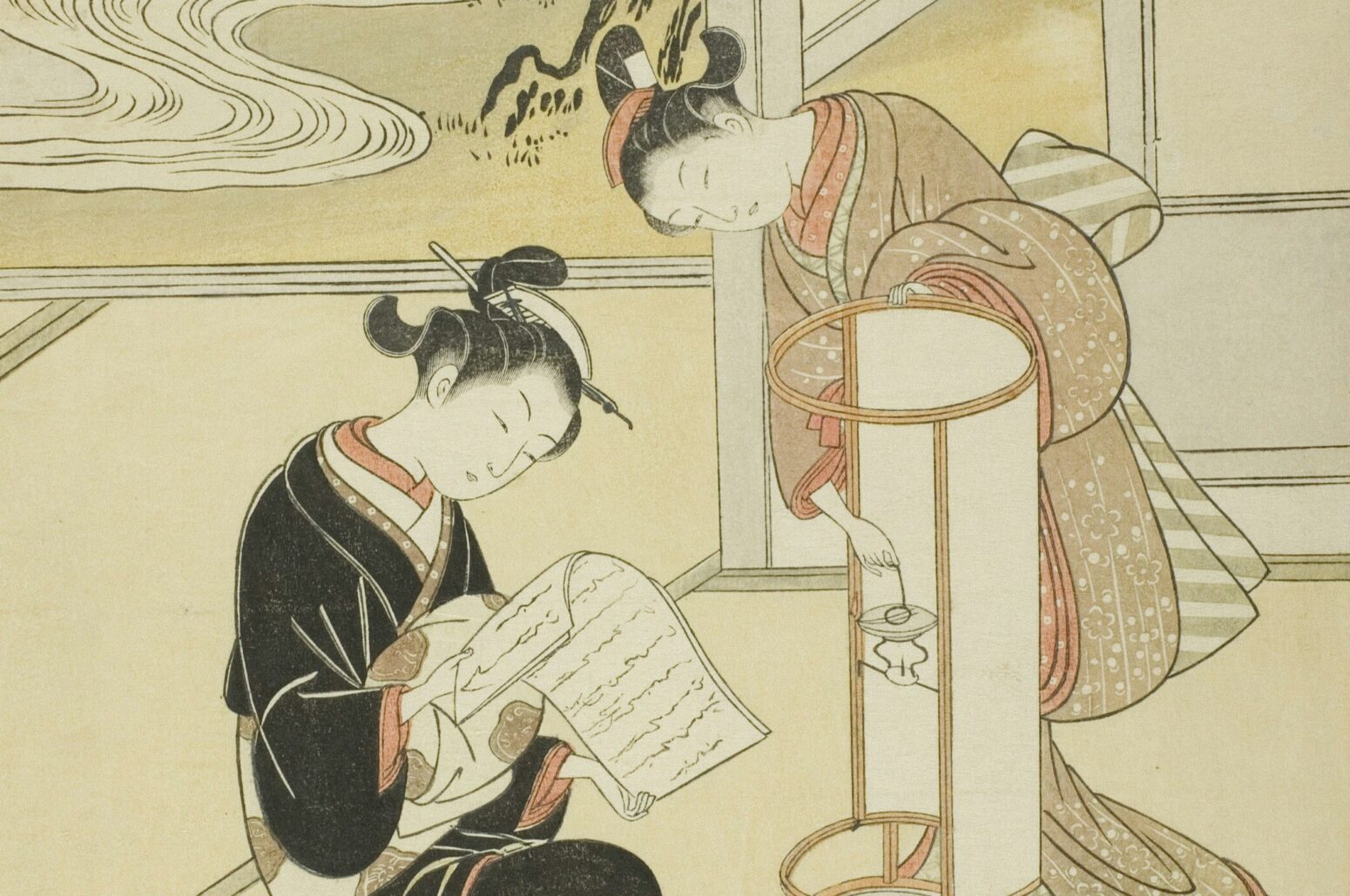
                         for the nun Ryōnen Gensō (1646–1711)

Years until you take the tonsure, years
until I learn to learn, and I can’t stand
to sit inside the crawl space of this word

so I’ll turn it to a window, open it to you,
pretend it’s different when you speak it—
just the tree, a murmuring eternity,

I’ll believe our living could be like
learning a new language, where
every word holds just one meaning

and that’s enough. I see you,
new attendant in the empress’s chamber,
facing a wall of golden air papered

with golden clouds, inked with a stand
of pines: staircases to nowhere.
Tracing each branch with a finger,

remembering the boy you once heard
breathing outside your first house
with its walls so thin, nearly nothing

between you. Such pines. Painted
at the edge of a painted sea, seashells painted
on the painted shore. There is always

another meaning: waiting, in your language.
Like longing’s bone with its marrow
sucked out. There is always

a stilled verb, like the shell your finger
has trailed down to on the wall:
all that one small life has left behind.

You press your ear to it and hear inside
a painting of the wind.
Read more from Issue 19.2.