Nighttime Rambler
2 Minutes Read Time
This piece by Kim Hoyeonjae is translated from Chinese into English by Suphil Lee Park
Translator’s Note
Kim Hoyeonjae 김호연재 / 金浩然齋 (1681–1722) is a Korean poet. Her work, like others of the mid-Joseon dynasty, is composed of Chinese characters, reflective of Korea’s history of diglossia. This divide between the vernacular Korean and the Chinese characters used for writing created widespread illiteracy among the middle and lower classes, and deprived and isolated women in particular. Even many years after the invention of Hangul, Korea’s independent alphabet, many still rejected it as 암클, female language, literally translated, because women benefited from this easier, compatible alphabet. In particular, women who could afford to master Chinese characters enough to write poems of their own were either aristocrats or courtesans, the highest and the lowest of the castes. Different as they were in their social stations, they both had no say in their fate.
Kim is unique in that despite her aristocratic background, she lived a life of poverty and openly wrote about her financial struggles. Her husband was an often-absent philanderer who kept failing kwageo (Joseon’s civil exam) and was without scholarly or political talents. Kim struggled with the irony of having her own talents but no possibility of a paying career. “With My Brother on My Mind” and “Nighttime Rambler” are exemplary poems about this internal conflict.
I first translated the original poems (written in Hanja, Old Korean/ Chinese characters) into Hangul, modern Korean, then finally into English. For both of Kim’s poems, I offer a sequential translation that consists of three versions, from the most articulate, to the one faithful to the original syllable count, then finally to the word-for-word interpretation, in order to showcase each poem’s contextual interpretive possibilities that stem from Korea’s complex multilingual history.
Nighttime Rambler
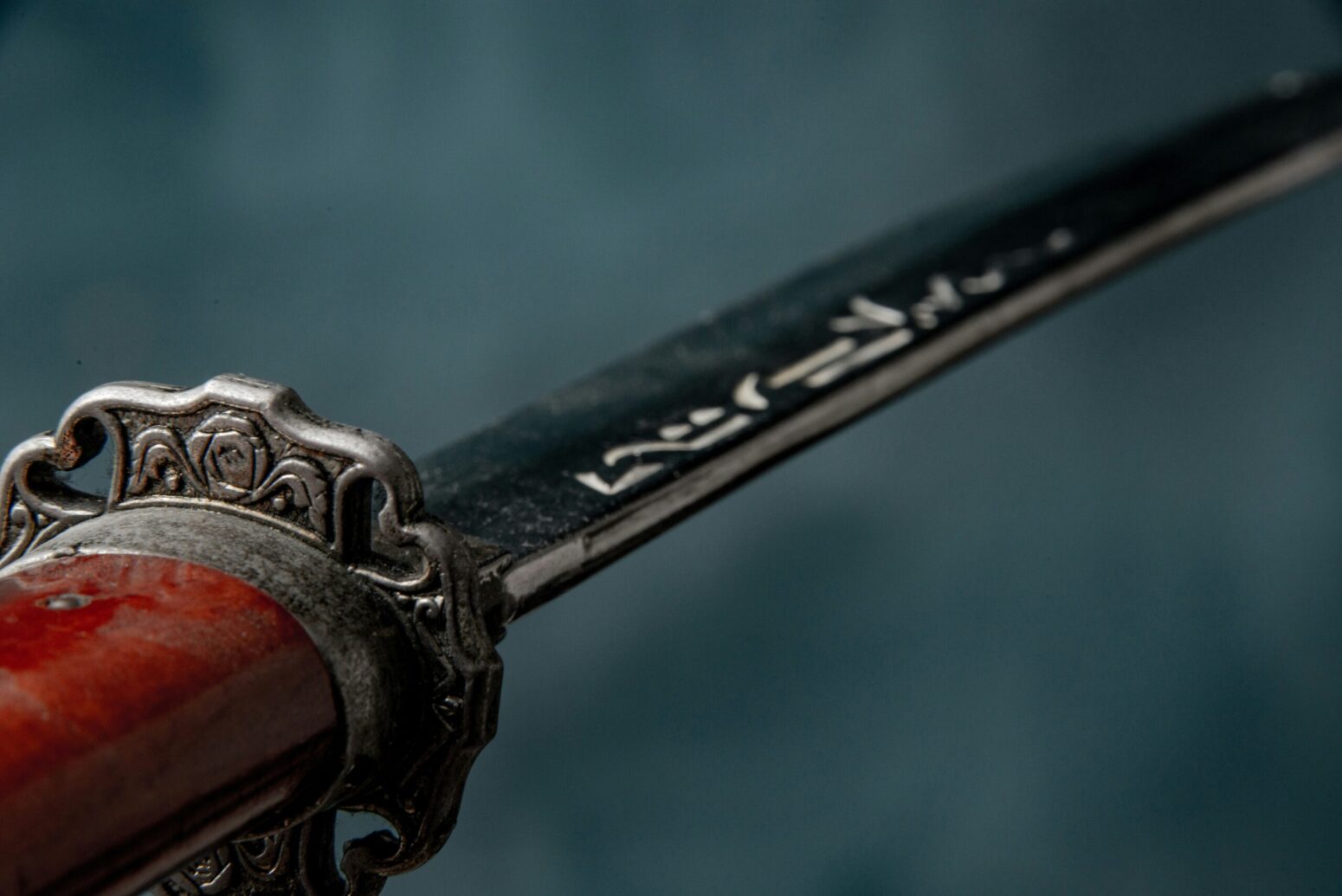
Life is a sword long as three palms
Heart’s affairs one hanging lantern
Dull, disappointing years will wane
More gray strands of hair every year

Life, three-palm-long sword
Heart, hanging lantern
May unchanging years
Add gray strands of hair

LifeEndThreeCheok1Sword
HeartAffairOneHangLantern
BoringDisappointingYearsLightSet
GrayStrandYearAgainIncrease

夜吟
金浩然齋

生涯三尺劍
心事一懸燈
惆悵年光暮
衰毛歲又增

야음
김호연재
생애란 삼 척의 검이요
마음은 매달린 등 하나
심심하고 원망스러운 세월 저물고
센 머리카락은 해마다 늘어나네
The first four lines have been edited out.
1. Cheok is a Korean foot, measured by hand instead. One cheok is approximately the length of one adult man’s palm.
Read more from Issue 19.2.