Eden
22 Minutes Read Time
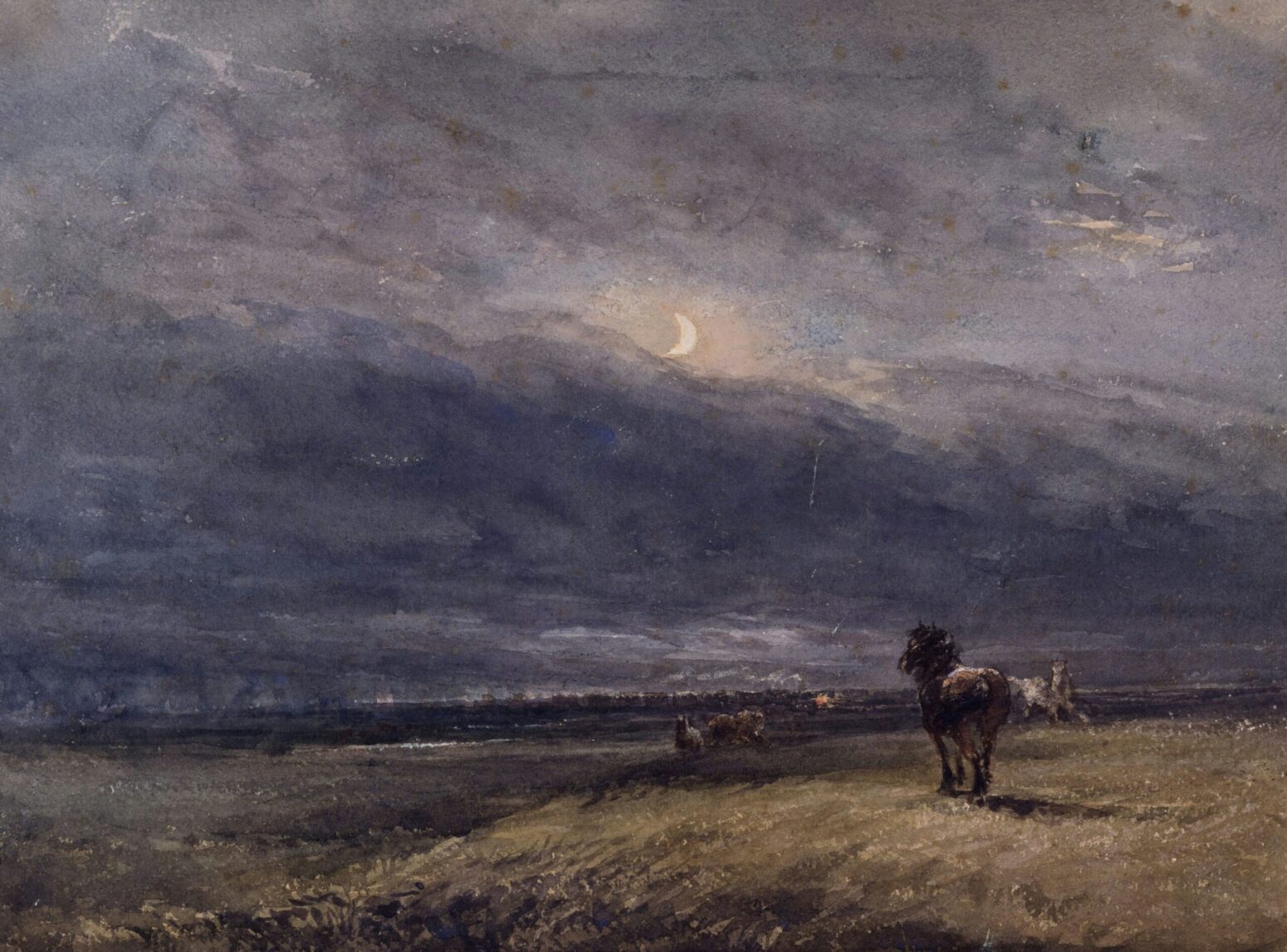
Hard to say on which side of the Edenic divide she now lies, post divorce. Which was the land of innocence? The death of a marriage seemed an obvious kind of fall, but she was alone for the first time in years, grateful for it, discovering creation again and renaming things. Like wakefulness or archaeology or gut-hungry or patterned rug. She lifted off the earth sometimes, unexpectedly, afloat in the potential of any given moment, untethered like a maple seed, spinning, spinning, spinning, and that felt like banishment every now and then, brushed away by an immortal breath. One would think this way only if one grew up Catholic, if in one’s dark hours one sought the kind of binaries children anguish over. She was in a dark hour. She felt like a child again.
She was also confused. What the hell was this painting? Why had he sent it? For what possible reason? They’d not spoken since the moving out, the final parting so many weeks ago, yet just this morning a fist of men pounded at her door with paperwork to sign, a shiny and dented metal clipboard, aburst with apologies because they didn’t know the arrangement, they were just paid to transport and hang the piece, white-gloved, and they were told about a very specific wall in the house it should adorn—he remembered those things, into which drawers the masking tape had sunk, the tweezers, extension cords, twist ties, Allen wrenches, where her yellow scarf had fallen, where the mug of coffee had been abandoned, what color the upstairs bathroom was—if she agreed, and they had other deliveries to make, so, so, so. Shit. There it was, and it brought out all her tics: the putting up of her hair; the rubbing of eyes with her dry, meaty palms; deep sonorous breaths, the birthing kiss. She liked museums, she went to them often, especially now—the hermetic joy of possessing your attention entirely, all of it pouring out and then back, the ego as weather front. The only question:
What do I think?
Jesus, this was an invasion.
What was he trying to tell her? That was an old problem, or one of the last problems. He was always touching her, sympathetically, empathetically, lovingly, but those little pats—a hand on her knee, a gentle pinch at her elbow, a palm rubbing her lower back, like a mollusk finding its crevicey home—didn’t mean anything. She’d stopped knowing what message was pulsing in his fingers, or assumed they gathered together as one blank compassion, the opposite of love, which should be sharp, pointy, shivish, a surgeon’s knife, you know exactly where and how deep and why it cuts. Wincing, not groaning. Gasping, not screaming. But the energies had gone. Kinetic depletions. Currents were numbed. The delta sludged up after a long, steady storm, the silt flooding amok. Nothing sang through her skin, and it was just a pressure, an outside pressure, always finding her when she was weak.
Lord, it was dark outside. How long had she been staring at this atrocity? Another goddamn secret message—speak with your mouth! He had a tongue. She used to wash it with her own.
She put a light on the painting. Yes, the colors were there, the painter had an eye. Move the lamp around and see what you see. Go slowly. Yes, red underneath, but you had to look. Who starts with red? What arrogance. He did have good taste, could see real beauty; they once saw real beauty in a redwood forest. She took him west, to the coast, to the brume and fog and the gargantuans, absurd trees no one could hug. He said often and repeatedly, Fuck. He was a good egg.
But, but, but . . . she started going to Mass, back to Church, just to get away from him. He was a goddamn atheist, though not a pushy one, more uncertain than anything, a bit cowardly. She didn’t really believe in God, but she knew He was there, the way you know the Amazon is a river in Brazil. Some of its water eventually makes it north, rains a little on your yard, you drink it up nonchalantly, but then it’s inside of you, indistinguishable from all the other water that constitutes 60 percent of your muscle and bone. You piss Him out, and the cycle starts up again. He’ll be back, that One always comes back.
To see something at last! The ghost of a painting underneath? They had a term for that, pentimento, the traces and residues, lingering accidents. A layer that imposed itself. And she was certain she saw the impression of a cross, and perhaps that was the key to everything. Three crosses, maybe? Or six? Or three with weak shadows? Was he digging at her belief? The belief she didn’t have? That seemed dumb of him, but maybe also true; she had submerged that part of her heart a long time ago, before they ever coupled, and now it came ashore, an oily dolphin on the beach drying out in the sun, and no one really knew what to do with it. Splash seawater on its rubbery hide. Say a little prayer. It hadn’t surprised him, the churchgoing, he did leave her be when she wanted, but the impulse was like a gas, expanding in the vacuum he’d generously granted her.
If only he knew. She went so often now, never to Mass, she never nibbled the Great Skin, but to all the happy-hour devotions, the side stuff that was supposedly extra, where you said nary a word to anyone, and Jesus Christ, that was addictive, to be right next to a human being, to see her face—often her—drowned in faith, underwater almost, shimmery, and to know she didn’t give a fuck-all that you were there. To pray alongside such indifference! So marvelous, so generous that oxygen. She could finally say some things to God, to the liquid greasing her joints. What now? she often asked. Is this all right? I was thinking a cup of coffee afterward, that book I told myself I would read. Have you read it? Do you read? Does that sound fine?
There was a thick something at the center, like a soft lava, and it called to her thumb, she could stick her thumb into it, a little gelatin, she’d lick it right off her finger, but maybe not paint, shouldn’t the paint be dry? Did he send her a wet mess? Oh God, oh God, oh God, oh fucking Christ. That had been a joke of theirs, something a friend had once said, the offhand for her arousal, I was a wet mess, and the tears, the guffaws. He would, thereafter, just lob it into the air, that disgusting phrase, to tilt a moment, during a lengthy quiet, after a shitty work dinner, anytime the universe needed to be turned inside out, blood on top. Then there was the time he said it and they laughed and fell to the bedroom floor and he said it again and again and again and again, and he kept saying it until his voice softened, until he was whispering it, and he put his lips next to her ears but did not touch her with his hands, or his body, and there was his tongue just at her lobe, saying it until all was true, and that truly was the last good lay, the last time they forgot they were anything but neurons and piles of salt. They licked each other up good, real fucking good.
The sleep was fitful, and she dreamed of sticky clouds and brackish rain, but the morning weather was not, was instead exceptionally cooperative. It asked very little of her, just the denim jacket, like something from the ’80s, like a teenager, but no, not even the travel umbrella, that nubby police baton. This was unusual, but so was all the weather now, and the sun was supposed to have traveled south, but it had come home early, missing something, maybe wanting to catch the snow. But there wasn’t any, even the grass outside was still greenish in spots, like a fungal pattern, and this was unfair, because her hands were out, ungloved, naked to the wind, and it did feel like an early spring outside, the heat just off in the distance, about to tumble down between all the buildings and pour onto the streets. And that gave her the sense it was May when it most certainly was not, and that would mean she was months into this new life, which she wasn’t, and her body and her mind couldn’t agree as to when they actually were, and when you are is really how you feel, and Jesus, if she hadn’t just the other day got a hold on some—not all—but some of her ne’er-do-well emotions. In the bright, sap-licking sun they scattered like fat squirrels.
The fucking truth is she can still feel its going, the love they fashioned for one another. It slips out of the body still, arduously. A doctor pulling a tapeworm from your aorta, and it’s inconceivably long, and you don’t know what, if anything, of that person you can keep if you let the love go, and you’re also saying goodbye to that version of yourself that was loving, that did love, that loved long, that loved through difficult love, and loved at times with joy and recklessness, at times with tremendous power. Maybe it’s a trap, the water of Narcissus, that you don’t want to say goodbye to yourself, but you know you’ve already given that version over to your partner, and he couldn’t give it back, even if he wanted to, even if that were possible, even if he could invent a way, a contraption for recompense, a shining app, even if he could gather the courier pigeons and send your spirit back to you piecemeal and nostalgic and note by note, apology word by salvation sentence.
Only once she’d gotten to the gallery did she remember how many people there were in the world. All of them seemed to be replicating: a man at the door nonchalantly wearing two collared shirts; a woman choked by an infinity scarf, her thick glasses doubling her eyes, her two children coughing revolutionary microbes into the world; the private school children in their prison garb, each polyester skirt a cheap navy blue, every twittering set of bone-ish knees a copy of a copy of a copy of a copy of some prissy legs from Victorian London. So on, et cetera.
The artist was a professional after all, and she wondered immediately, did the painting cost him an arm and a leg? How did he find this gallery, its particular gray walls, amid all the drabness in this city?
She followed a voice, feminine and low, to the back, through a cave of sorts, the lights dimmed to twilight levels, and on the walls portraits of tunnels as far as she could tell, each with a pinprick of light at the deep end, sometimes yellow, sometimes white, one bluish. The darkness, she realized, forced her eyes to narrow, and in the shine of day those ecstatic specks would go unseen, like X-rays, their meager light passing through your optic nerve absentmindedly. The room beyond was a cattle stall brightly lit, from which the voice called, and she had to squeeze between the padded shoulders of men, lots of men, and she could see why, the artist being a young woman, who did not wear a bra, and who condescended haughtily to the crowd, who was maybe there to buy her work, which seemed much too popular to be serious, to be worth all the trouble. Plenty of paintings to go around, honestly. There was quite a bit of it, honestly.
Someone bumped her, and she bumped someone, and hands flew, touching in odd spots, the neck, the stomach, her clavicle, her cheek, apologies and graphite eyes. She tossed her shoulders back, reached between two suited belugas, and swam for the front. These were the kind of men she’d since fucked, more or less, clumped but clean, awash in royal lotions and bespoke soapery. She’d had fun, more or less. A bit slow, this crowd, you had to shove, really, to make abundantly clear the direction of your body, and she coughed twice loudly—ahem!—but she was finished with the idea of one good man to lay, was forging instead a chain of lays, enough that every fourth was good, every twelfth excellent, the hundredth a Hundred-Year Lay, a once-in-a-lifetime dissolution. She plowed through the stacked flesh, she ground through all of it, because divorce had made her a shark and to sit still for a moment was going to absolutely fucking kill her.
To Hell with me! she thought as she broached the radiant space of the artist, who was quite fetching and had old eyes, and who, it was so obvious now, was free to sleep in any direction and, being an artist, could make something of festering skin, could paint sex into a ruddy swath or a darkened tunnel, could turn any encounter with a wrinkled admirer into profitable merchandise. What a gas! She should have looked closer, she should have pressed her thumb into that begging jelly, where she might have found his squidgy ejaculate, because of course this was a painting after their coitus, he’d sent her a painting of his lovemaking with another woman. Well, no. No, no, no. Just their fucking. It was all fucking from here on out.
You’re his wife, the painter said after she’d voiced some thoughts about the color red and taking one’s time, how you couldn’t really be sure until the paint was dry if you’d risked enough.
Okay, she said.
It reminded him of you, is what he told me, the painter said. Maybe, she said, and the painter laughed and laughed and laughed, very loudly, and it scared the men away, a woman comfortable enough to open her mouth that wide. They discerned immediately her pooling supremacy, but she thought the painter looked marvelous with her teeth out, and she started laughing too, because it was clear her husband, the ex-husband, hadn’t told the painter anything about their dead marriage, their snuffed light.
Where is he? she asked, and the painter was off again with her wolfish tongue.
How the fuck? the painter said, but then stopped laughing and looked at her, and a sadness poured out of the painter’s shining irises, it seemed there was an abundance of sadness inside the painter and she could let it out at any moment, because the painter blinked and then came more, a flash flood of bitter fallout, and it was not an altogether awful feeling, and if you stared back into it, the wave became a vibration that worked under your skin, traveled along the bones, and her spine and knees and elbows sang, so she cried a little.
What’s your tincture? the painter asked, and her apartment was, of course, just upstairs from the throbbing gallery, but all the walls were bare, painted a feckless white, flawless as an Easter cassock, all because the painter was broke as a joke, it turned out, and the painter had to be ready to vacate the apartment at any moment, when the landlord and his German shepherd got sick of waiting for the rent check or an envelope of twenties, nearly enough, one or two Jacksons shy.
I make messes downstairs, the painter said, handing her a yellow mug of green liquid. Let me know if it’s too spicy.
I made some assumptions, she said. I thought he was being mean.
Your husband? the painter asked. I’d be surprised.
This is really spicy, she said.
Habanero is best, the painter said. Opens the nasal cavity, so you breathe better. More air gets into your blood. More air in your blood, and your stomach churns in a pattern. The tea works through on a cycle.
Through to what? she asked.
The dizzy parts of your brain.
This all feels very obvious, she said.
The painter said, You’ve got a lovely flush in your cheeks. I could paint you right up.
Please don’t.
It goes all the way down your neck, doesn’t it?
The painter closed in. The painter put a hand on her shoulder and brushed aside the jacket’s collar.
I don’t know if I was being clear, she said. But I thought you and he had maybe?
I’m a lady’s lady, the painter said.
The kissing was a bit painful, all that hot sauce, but the painter wasn’t monkeying around, this was top-shelf fooling, the Oh my America! sort. Once the husband had asked her, postbellum, You’re not gay, are you? and she’d said, No, I don’t think so, but I never got to check. She was confident she could handle the situation.
The textures were marvelous. This was fun. She was a bit distracted with the painter’s crotch, which seemed both tidy and not at all groomed. Fingers everywhere, and she traveled south. Hi-ho! she nearly said.
This is what folks meant by excess, and she could see clearly the path to shame. But it was her one saving grace to always let pleasure run its course, and it gave her strength to dwell in surfeit joy. With the husband, she hadn’t ever really known. He was capable of meager rations. And surprising electrical connections. Random fuses blown. Like the time she saw him cracking a boiled egg by bouncing it on the kitchen counter. Every thrust burst the shell, freckled shards popping, but the egg didn’t break, the membrane withstanding, and he caught it gently on the return, as if he’d summoned it like a magician from the granite slab. On his face a genuine smile. He had a patience she didn’t, and she’d wondered, mostly at the end, if he knew something she didn’t, if he knew what was coming, whatever that meant. It made her angry, how little he seemed to want. Lord, you let the borders of another heart suffocate your own, your own worst and all that.
Afterward the painter said, I wouldn’t drive for a couple of hours.
Most of her clothes were still on her body, hanging riotously like the pelts of small game.
Looks like you’re in the catbird seat now, the painter said. What are you going to tell him?
I lost him, she said. A friend told me he went on a trip, but she doesn’t know where. He has a new apartment. He has a new cell number. There’s a bathtub in the back. It’s a hot tub, but the jets don’t work, so it’s just a bathtub. But there aren’t any curtains over the windows because I like the light. It can be thrilling. Help yourself.
One January they drove south to the California deserts and rented a cabin just outside Joshua Tree. The cabin was a dump, so they spent the night outside in the hot tub, which was otherwordly, because the desert was a black frigid hole at night in winter. The coldness made the air heavy, which had a sharpening effect on the stars. At times you had to shield your eyes. There was weed, but only she smoked it. She made the sounds of a person who would never be hungry again. He said, You know why you love hot tubs? Because your mother died when you were young. Another go at the amniotic stew. Who the fuck was going to say shit like that to her now? A best friend? A lover? A therapist? You couldn’t buy such awesome thunderclap.
Why did you start with red? she asked the painter. It was the color of the hills.
What hills?
The hills I was painting. It’s a landscape?
The painter blinked at her, like a cow.
Where? she asked.
New Mexico. Near the Arizona border.
There are no lines in the painting. The crosses don’t count. Not really.
I thought I could abandon lines. But, yeah, it probably threatens the work.
It’s a mountain range?
I wouldn’t call them mountains.
People were like this, she thought, like learning a foreign language. After a while you just wanted to go home, back to the private chamber of your skull. More so if you loved them. Honestly, she didn’t love this girl, so why was it so hard for them to understand one another?
The painter said, It’s on a map.
She lost the map, forgetting it on the airplane, tucked inside the mouthy seat pouch and pressed against the vomit bag. She didn’t need it anymore. She saw the high desert as they landed, dreamy and technicolored. The Judean desert, east of Jerusalem, was considered by some to be high, but it was also, in parts, low. What mattered was that this one, like every desert, was a call to God. Every desert was a reminder of what we did to Him.
There once was an adobe church. The foundation poked up from the dusty earth, like a sluice box on geologic time, Time with a capital T. This was in a narrow valley, maybe a canyon to some. You had to know it was there. The trail she took was not insignificant, curled wispy as a bighorn’s footpath, up and down nonsensically. Some ledges were involved. It seemed impossible that he’d been here. Of course you couldn’t miss the cemetery, the lot of dead priests, the gray crosses in lines but also leaning, none of them aiming exactly toward heaven, three rows of prickly teeth.
Mild sympathy for the painter, because she could see the truth, that one could not, in general, paint a cemetery well. Abandon hope all ye who color here.
The most obvious answer was that she’d been born in the desert. Not this one, but one in Nevada, in a haggard town out in the rurals because her father worked for the railroad, when people could still do that sort of thing. They went to that town once, where she’d lived until she was ten, but just the one time and they didn’t stay long enough to eat. She could hardly tolerate the sun. He stared for a long time at the house that used to be hers.
She bit her thumb and tasted dirt, a rusty chalk that mired her tongue, that pulled the water from her gums.
The painter hadn’t used blue in the painting. The sky burned an acid yellow, and she realized the painter, in her angst about the lines, had gone after O’Keeffe, had tried, desperately, to make shadows from light. Sickly haze and glowing fogs and naked intersections, the whole druggy enchilada. The sunlight fell without prejudice on the canyon walls, the dry riverbed, the boulders, the sand in front of her. This was not the hour of the painting. The painter had come at a different hour. She hoped for dawn but knew dusk was likelier.
At the party where she and her ex-husband first met, she’d said aloud, It’s a scam, a wicked displacement. The incarnation, the wine, the cross—all chintzy in-betweens. No one would remember she’d said such a thing. That was a tremendous impossibility.
He knew the static world did not dwell long in her consciousness. It drew back like the final tide. He knew she would leave the painting lying against a wall for days and then for weeks and into perpetuity. She would let it languish, would eventually trip over it, kick it, knock it down, drop something stupid on it, like her keys or a splash of black tea or a fat book. She’d never give it a home, and he’d made that decision so she wouldn’t have to, and it looked marvelous there on that particular wall, and she did not want any longer to argue with its fucked, mysterious, objective beauty. He’d saved her from that debate, which was both something and utterly inconsequential. But such ambiguity was also every ecstasy of so-and-so—Theresa choking, Catherine watching her weight.
He was sweet, that was the truth of it, had always been so, even before. This before was, of course, the answer, it could not be the after. So she had to go backward in time, she had to diminish the memory of their togetherness, she had to remember him as she first met him, his first half-life, his primary radiations, the glow of his gentleness, the consideration he carried like a torch, the ease of his hands when he spoke, none of it hers still, none of it corrupted by their atomic interaction, their whirling electrons, nothing nuclear as of yet. She could always have that man, because it had nothing to do with her, she’d not really touched that man—you changed the second your heart skipped its beat, preserving in some other dimension the original copy, the unloved, the preloved being, and that creature still thrived, was still breathing, still grunting somewhere, she hoped on a warm beach in Vietnam or among the rows of a sleepy vineyard in Greece, some adventurous landscape, swampy in his shirt, or by now the shirt lost, his dark hairy chest heaving in the sun as he lumbered up a green hillside, plucking from the branchwork or the vines the low-hung gifts of God, tasting a new kind of fruit.
Read more from Issue 17.1.