What It Sounds Like
21 Minutes Read Time
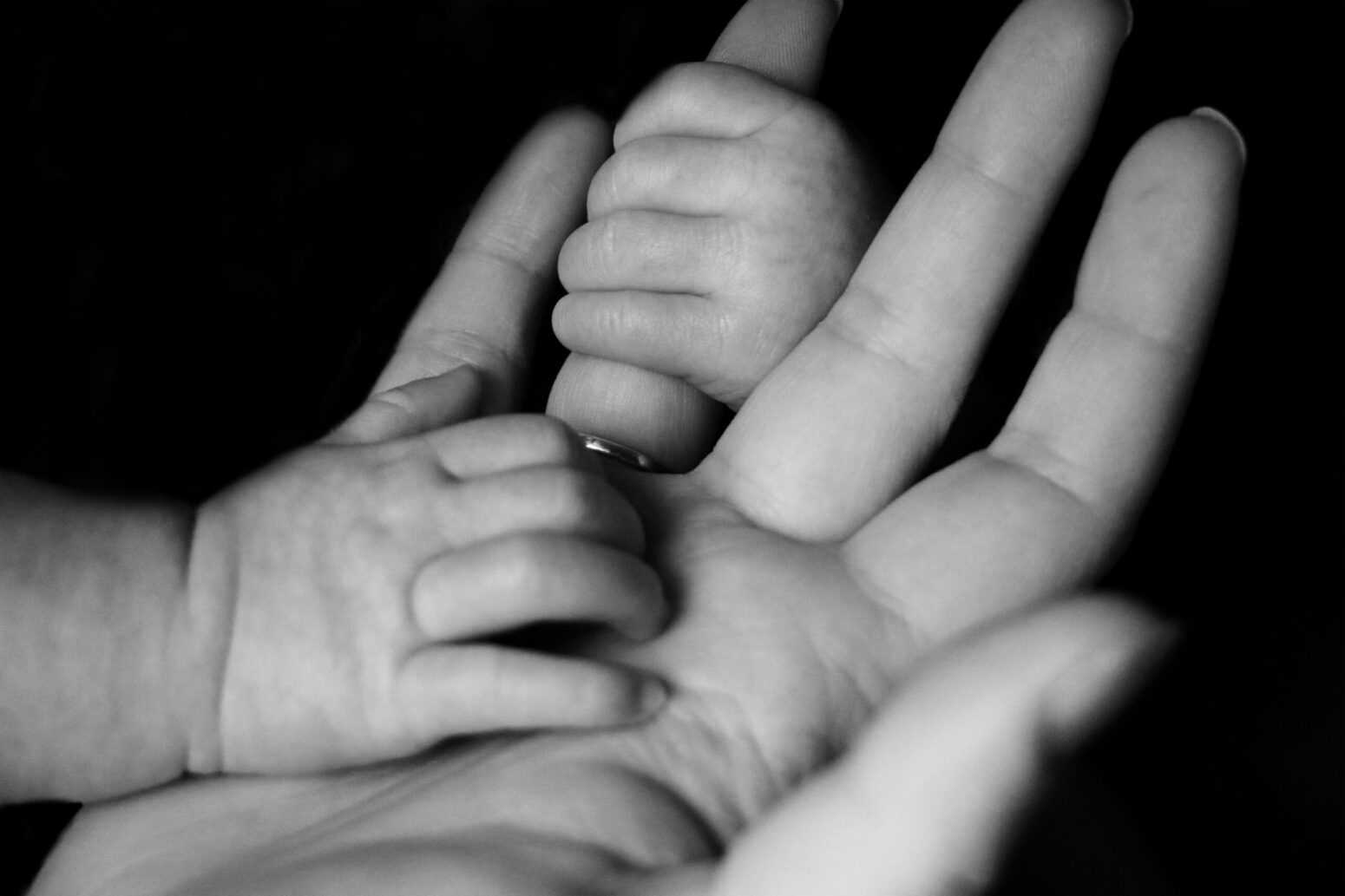
I’d heard plenty about how a mother’s devotion to her kids is primal. I got it—I could imagine that sort of wild, beyond-the-brain love, the kind of protectiveness that can sprout claws and incisors. I expected having a child to change my priorities, my routines, my capacity for tenderness and rage.
I didn’t expect it to change my soundscape.
But my son’s cries were lava. They were lightning. They were a hot razor raked through my insides. My milk would start flowing—my body’s way of saying, before my brain could get there, Here, let me fix it.
In his book Silence: In the Age of Noise, explorer Erling Kagge says silence can be found within, even in the noisiest of circumstances. It is, he writes, “more of an idea. A notion.”
Either this is bullshit, or I’m doing it wrong.
Summer 2018: the news about the Honduran woman whose infant was taken from her while breastfeeding. This story was the flashing red light at the top of a mounting skyscraper of inconceivable reports: Children separated from their parents at the border. Children kept in cages at “facilities.” Parents told that their children were going to bathe, guards saying they were “following orders”—unmistakable echoes of another horror.
Homeland Security officials denied they’d removed any breastfeeding infants.
Natalia Cornelio, criminal justice director for the Texas Civil Rights Project, said, “I know what I heard from this lady. She told it to me in tears.”
I thought for a long time about what this mother might have heard as her child was carried away. About what those sounds did to her body.
Sometimes my son would cry when he wasn’t hungry or wet or tired. He would cry just because he was a new human—and he was mysterious. The wailing would go on and on, rattling through me as I tried everything I could to fix it.
But sometimes I couldn’t fix it. And sometimes when I couldn’t, I’d hand our son over to my husband and shut myself in our bathroom, turn on the fan, stand there under its loud hum. The relief was immediate: as soon as I blocked out the crying, my breathing returned to normal, my lava-blood cooled. I’d stand there inside the blessed white noise for a few minutes, then return to where my husband was doing his own unsuccessful best. Our son would still be wailing. “Okay,” I’d say and reach for him again.
In grad school my friend and her partner had a baby. We were all young, and parties were weekly, but I marveled when my friend told a handful of us to come over on Saturday and bring some wine. Their child was maybe two months old. I’d always imagined one’s life pausing once a baby was born, rotating in place, suspended, like some sort of orb in a ’70s sci-fi movie, and then returning to earth completely transformed. What did I know? I was years from having kids myself.
When I showed up, the gathering was in full swing. Not a party, exactly, but a small group of twenty and thirtysomethings hanging out, drinking, laughing. It wasn’t quiet. “Where’s the baby?” I asked my friend, wondering if maybe a grandparent had him for the weekend.
“He’s asleep in there,” she replied, nodding toward a slightly ajar bedroom door a yard from where we were standing.
I was aghast. “Aren’t you worried we’re going to wake him up?”
“Nah,” she said, “we want him to get used to noise. Otherwise we’ll have to be quiet all the time.” She laughed and turned to greet another guest. What a genius strategy, I thought.
For the first two days of our oldest son’s life, he slept almost constantly—a peaceful, cozying-in slumber. This is bliss, I thought, gazing at his impossibly perfect ears. Then he stopped sleeping altogether. Or, more accurately, he stopped sleeping for any substantial stretch. Twenty minutes at a time for a nap, maybe an hour and fifteen minutes at night. We tried the rocking, the swaddle, the shushing, the ocean noise, the swinging. None of it worked. He would fall asleep only after nursing and would wake the second I laid him down. My husband said, not really joking, that someone could make millions inventing a long-handled tray to slide infants into bed without disturbing them. I developed a technique—I’d lay my son down and keep my hands on him. I’d count to five and remove one finger. Count to five again and remove another. I’d do this until I’d slowly detached myself from him. Sometimes it worked. Other times his gray-blue eyes would pop open, and again I’d rock him, shush him, swing him, sing to him, reswaddle, reswaddle, reswaddle.
For months I was bleary with lack of sleep. My days were fogged. I felt vaguely disassembled, as if each of my atoms had a teeny bit of extra space around it. It was like being slightly drunk all the time, which isn’t a feeling you want unless you’ve been drinking. So whenever our son did nod off during the night, I dove for sleep myself like a hawk for a rabbit. I was ravenous, single-minded, unabashedly greedy. I was absolutely desperate not to wake my son, desperate for the quiet that might let his sleep continue.
I became silence-obsessed; I’d do anything to create and preserve it. If I wanted a snack before bed, I’d find something that didn’t require unwrapping or utensil clinking. If I got up in the night to pee, I wouldn’t flush the toilet. If I had to sneeze while in bed, I’d bury my face in my pillow, swallow the sneeze so that my throat stung. A car horn outside, an incoming text, a cat fight across the street made my heart spasm in an illogical concord of panic and rage—Shut up, I thought fervently, shut up. Our bed creaked, so I’d find one position for sleep and hold myself to it all night.
According to the Department of Homeland Security, in the six weeks between April 19 and May 31, 2018, nearly two thousand minors were separated from adults at the US/Mexico border. When questioned about the cruelty of this policy, the attorney general said, “I would cite you to the Apostle Paul and his clear and wise command in Romans 13, to obey the laws of the government because God has ordained them for the purpose of order.” I read this quote online. I couldn’t bear to watch the clip because I didn’t want to hear his voice.
The first time I spent a night away from my son was a year and a week after his birth. He’d stopped nursing a few days before, and though I was sad to be at the end of that deep and still intimacy, I was glad to have some measure of freedom again. So when my friend invited me up to spend a night with her in Brooklyn while we were in New Jersey with family, I packed a bag and left my son and husband. On the train from Little Silver to Penn Station I read an entire book of poetry I’d been meaning to check out for more than a year. I talked to my sister. I watched from the window as we passed sub shops and billboards and marshes. All through the train ride I felt the miles between my son and me increasing. It was a thrill. It was a wound.
In New York my friend and I went to an excellent Italian restaurant where I drank wine and ate affogato for dessert and was exquisitely aware of not worrying about either the alcohol or the caffeine. We stayed up for a bit, talking, and then I stretched out on the air mattress in her living room, read a magazine—luxuriating in staying up late because I was guaranteed not to be needed—and fell asleep, exhilarated and exhausted.
Just after midnight I woke with a start. My son was crying. I sat up, heart racing, fumbled for my glasses, realized they weren’t on the bedside table, realized there was no bedside table, realized I was fifty miles away from him. My heart slowed. I listened. There were city sounds outside—people laughing, a bottle breaking—but no babies crying. I lay back down. Two more times that night I woke in the same way, having invented sound where it wasn’t. My body no longer knew any other way to sleep.
When our oldest was two and our youngest hadn’t yet been born, we spent the winter holidays at my mother’s house in Pennsylvania. On New Year’s Eve, after carefully, painstakingly getting our son down to sleep in our upstairs room, my husband and I poured glasses of champagne. My sister and brother-in-law, sharing a room downstairs with their four-month-old son, apologized in advance for the crying we were sure to hear during the night. No worries, it isn’t a problem at all, we said, and we meant it. Around one in the morning, our own son still sleeping peacefully in his crib at the foot of our bed, we heard our nephew start his fussing. “Not our kid,” I whispered to my husband, and we high-fived silently in the dark and went back to our dreams.
While my sons watch a cartoon about an environmentalist cat, I check the news and learn the US government has opened so-called “tender- age” shelters for babies and young children who have been forcibly separated from their parents at the border. Reports from inside these shelters describe rooms full of preschool-age kids sobbing without ceasing.
Imagine being the mother of one of these tender-age children imagining what that sounds like.
A few years ago, when I got a text saying there was an active shooter on my campus, I immediately silenced my phone. Though I hadn’t yet gone through the now-required active-shooter training, I knew enough to do that.
The second text, one or two minutes later, said the shooter was now in my building. I waited to hear the popping that witnesses always say the gunshots sound like. There was nothing. No noise at all. Our building is large. It houses English, Classical and Modern Languages, several classrooms, administrative offices. Still, everything was utterly quiet. All of us, barely breathing, as if our silence could make us invisible. As if silence could be a shield.
There was no shooter. It was a false alarm (threats, miscommunication, reasonable panic). It wasn’t real, but for thirty-seven minutes it was. Across campus, everyone—students, faculty, staff—waited to hear the noises that meant it was here, it was happening to us now.
When the all clear came through, my fear slowly dissipated, but my anger remained. I use it now to write letters, to draft petitions, to call and call and call. Slowly I’ve spun it into sound.
I elected to have an epidural with each of my sons’ births. The first went perfectly. The second seemed to have gone perfectly. Then, sometime the next day, my head began to ache. I told the attending OB, who dismissed my concerns. The epidural had gone smoothly, so this was, he insisted, just a postpartum wrinkle. But the headache got worse in the days after I went home. When I sat up or stood, the pain was excruciating; when I lay flat on my back, the pain ebbed. These symptoms precisely matched the description of a spinal headache, caused when the epidural needle punctures the dura mater that protects the spinal cord. Spinal fluid leaks through this puncture, which decreases the pressure—the cushioning—of the cerebrospinal fluid around the brain. I made an appointment at the women’s clinic, where I saw the doctor who had performed the epidural and told her I was worried I might have a spinal headache. No, she said, and she too told me that because everything had gone well, this was just a bad headache, probably a migraine caused by hormones.
“But I’ve never had a migraine,” I said.
“Birth does strange things to a woman’s body,” the doctor said and sent me home.
On the seventh day I woke with double vision. I looked at the house across the street and couldn’t count the windows. My baby’s face swam. I began to panic. The whole world was physically shifting around me. My head hurt and hurt and hurt. I called the clinic again and told them I was coming back.
In the office the nurse secured the cuff around my arm and stepped back to monitor. “Wow,” she said after a minute. “Do you normally have high blood pressure?”
“No,” I said.
“Wow,” she said again.
The doctor—the same one who had sent me away with a migraine diagnosis—listened to my symptoms again and then said, as if the idea were just occurring to her, that it sounded like I might have a spinal headache. “Let’s get you over to the hospital for a blood patch,” she said and smiled, glad to have solved the problem.
A blood patch is, essentially, a second epidural, only instead of injecting anesthesia, the doctor injects a patient’s own blood, pumped directly from the patient’s arm to the hole in her spine. That blood clots and seals the hole, effectively “patching” it and stopping the leak. For people like me—people terrified of hospitals, people who have to shove down every fear and instinct in order to have a child in the first place—this is borderline nightmare territory.
In the hospital I was wheeled to a preparation/recovery area near the OR, which felt like a weird white dreamscape: twenty or thirty or fifty (with my doubled vision I could take in only impressions) tiny “rooms,” each with a bed and not much else, separated only by white curtains, no walls. I was shifted from the gurney to the bed and left alone. They were fitting me in between scheduled surgeries and true emergencies, so I had a long time to lie flat on the white sheets, eyes closed against the overhead lights, and listen.
At first there wasn’t much to hear—someone wheeling a rattling cart, two nurses hashing out their lunch order. Then the crying started. It was a child, and the crying was continuous and heartbreaking and vastly, vastly sad. It wasn’t a wail of sudden pain, like from getting a shot. It wasn’t even very loud. It was just steady. It did not stop. I didn’t hear anyone talking to the child, and the child didn’t say any words. There was just the crying.
I didn’t know anything about the child: how old he was, why he was there, what had prompted his tears. But he sounded familiar to me. Specifically, he sounded like my three-year-old son, and I couldn’t help him. It hurt more than the headache, more than the needle in my spine was about to. I felt it with an intensity that shocked me, even in my addled state. Deep down, lightning in the veins. Someone go help that child, I thought, but there was no one for me to address. I was scared, waiting alone for the doctor in that weird white space, thinking about the leak in my spinal cord, thinking about the needles to come. And if I was that scared—a thirty-five-year-old woman, a grown-up who understood fully the mechanism of this treatment, the very limited actual threat the procedure posed—how terrified must that child have been of whatever was about to happen or already had? Where were his parents? The doctors, the nurses? Why was no one with him?
Finally a doctor whisked into my makeshift room. She checked my vitals: my blood pressure was still alarmingly high, my heart was racing, and I’m sure my eyes were alien-wide as my husband has told me they get when I’m worried. “You’re very upset,” she said brusquely, “and you need to calm down. You’re making it worse for yourself. I can’t do this until you relax.” And because I had to get this fixed—because I couldn’t sit up, because I couldn’t see, because I had to get back to my infant who was hungry, because my three-year-old might need me—I did. I breathed. I willed my heart to slow, my eyes to look human. I concentrated hard on pulling myself the fuck together. “Okay,” I said to the doctor after a few minutes, and she set about hooking me up to the complicated network of needles and tubes that would repair me.
It wasn’t until much later—after I was home, recovering, vision still doubled but headache receding, nursing one son while listening to the other play with his grandmother—that I realized I hadn’t heard the crying child again after the doctor came in. Maybe he had stopped crying or was moved somewhere else. More likely, I tuned him out. I had my own children to get back to, and I could do that only if I shut out the world enough to calm down, so I did. I’m ashamed to say I didn’t ask about the child, didn’t look for him as I was wheeled out on another gurney after the needles and tubes had done their job. Out of earshot, out of mind. Or, more accurately: out of mind, out of earshot.
Sometimes I still wonder what happened to that little boy.
What a luxury idle wondering is.
In the ProPublica audio file of detained minors, the crying of the children—ten of them—is steady, sustained, gutting. It’s awful in a way that language can’t quite describe. The Washington Post reported “a chorus of children sobbing and asking for their parents, some in what sounds like significant levels of distress.” The New York Times wrote about “immigrant children calling out desperately for their parents after being separated from them by United States immigration authorities.” I can get into specifics and subjective metaphor, can detail the catches of breath, the way Mami and Papá transform into much longer words inside the chaos of sobs. But none of this even gets close.
About one minute into the recording, a border patrol officer says, “Well, we have an orchestra here, right? What we’re missing is a conductor.” The man’s voice doesn’t seem cruel, and because I don’t know much Spanish, and because things don’t always sound like what they are, it’s possible that if the recording didn’t have subtitles, I’d have mistaken him for someone trying to comfort the children.
All parents have their own tended, unshakable fears. One might obsess about choking, another about drowning, another about car wrecks. I’ve obsessed about all of these, but my most tenacious worry has been about what might happen during sleep, during those moments when I’m not right there. While my children were babies, I slipped into their rooms multiple times each night to watch their backs rising and falling in the night-light’s glow. Now that my kids are older I check less frequently, but I still check. When I do, I rely on sound in their big- kid-dark bedrooms, putting my ear close to their faces and listening for the breath that lets me go to sleep myself.
In the press-conference video, the press secretary is fielding increasingly heated questions about the administration’s zero-tolerance policy separating immigrant children from their families. Finally one reporter makes it personal. “You’re a parent,” he says to her. “Don’t you have any empathy for what these people are going through?”
An admission: When I first saw the articles about the border separations in my news feed, when I began seeing my friends post and tweet about these horrors, I didn’t click on any of the links. I didn’t want to read the stories. I wanted the country on mute for a little while. Like so many people living in the United States in 2018, I was exhausted. Worn down. I was having a nice summer—my oldest son learning to swim, my youngest developing a deep commitment to ice cream, my dreams having returned to standard bizarro dream fare after a spring spent working against a statewide campus-carry bill and dreaming nightly about guns—and I didn’t want to give that up. So, for a couple of days, I let myself pretend it wasn’t happening. I avoided Twitter. I skipped past NPR. I didn’t acknowledge this to myself, exactly—I just carefully curated my world for a few days, which is one of the more obscene levels of privilege to which one can admit.
Not my kid.
But when the press conference appeared in my Facebook feed, having been shared by a handful of friends with comments like infuriating and abominable and evil, I heard what my cowardice had been saying. I watched the video—first with only subtitles, to ease myself in, and then, like a penance, with audio.
The press secretary tries to brush off the man asking the questions. Tries to open the floor to the next reporter, a woman from the Washington Post. On the subtitled version, the chaos of this scene isn’t apparent, but with sound the press secretary’s desperation is clear. “Go ahead,” she says to the woman, talking over the man’s questions. “Please,” she says. “I want to recognize you. Go ahead.”
But the man keeps going. “They come to the border with nothing and you throw children in cages. You’re a parent,” he says. “You’re a parent of young children. Don’t you have any empathy for what they go through?” The press secretary keeps trying to get the next reporter to take the floor. But the next reporter doesn’t speak, not yet. Instead, she waits. She lets the questions hover. Her silence makes room for them.
I’m on the beach with my children. We’ve set up, as we always do, near a lifeguard stand, and my sons are digging just beyond the surf, working hard to create their own tide pool. It’s easy for the news to feel far away here, the sky a brash blue, dolphins arcing past. The beach is loud in that beach way: the ocean’s constant roar and rumble, seagulls shrieking, everywhere kids yelling and laughing and crying, Toto’s “Rosanna” playing from someone’s portable speakers. The waves are big today, strong, crashing hard against the shoreline.
Suddenly a lifeguard’s whistle pierces through the sounds, and everything hushes except the ocean. The guard is standing, waving his red flags emphatically. I follow his gaze. The water is crowded: teenagers boogie-boarding, kids splashing, people bobbing out beyond the breakers. A man and woman are standing knee-deep in the surf, talking, a little girl on the man’s shoulders.
Nearly everyone in the ocean—the teenagers, the bobbers, the kids—looks at the lifeguard. Having been in the ocean during plenty of lifeguard whistles myself, I know what they’re thinking: maybe they’ve unwittingly broken some beach rule, gotten too far out, too reckless, too close to some unmarked shipwreck. Only the parents standing in the surf with the little girl don’t turn toward the guard. How could it be them? They’re just standing, chatting, in shallow water.
But it is them. When they finally turn toward the whistle that isn’t stopping, the lifeguard signals again, and the father pauses for a moment, as if trying to make sense of something senseless. His daughter is safe. He has her, is holding her ankles securely, isn’t going to drop her, would never drop her. His stillness as he looks at the lifeguard says You don’t understand, I’m not going to let her go. But the lifeguard whistles again, gesturing, and his whistle says Just because you’d never let her go doesn’t mean the ocean won’t take her.
Carefully the father lifts the little girl off his shoulders. The guard sits back down, and the beach returns to its peaceful chaos: the kids, the crashing, the gulls, all the sounds we cling to, the ones that tell us everything is fine.
Read more from Issue 17.1.