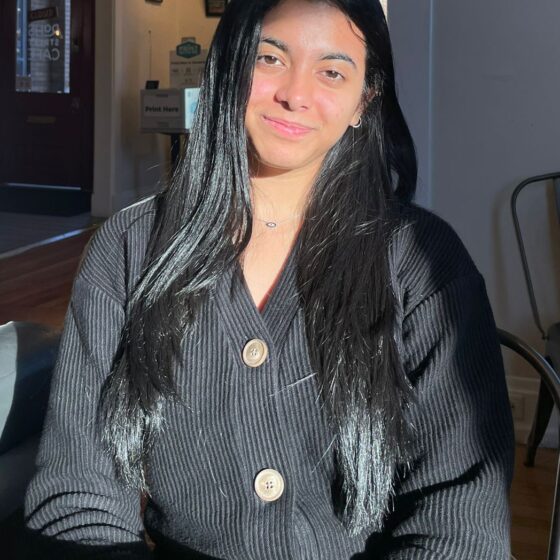
The Imposter Syndrome of being a BIPOC writer
5 Minutes Read Time

Nearly a year ago, I was in a fiction workshop class. Elated and anxious, I looked around the room, partially in hope that my fellow classmates would share this bizarre sort of anticipation I had been feeling. Yet, everyone seemed to be at ease, and no one seemed to be slightly rattled at the idea of sharing their stories to be workshopped and discussed in an excruciating detail. Everyone was heavily encouraged to participate, initially most people were hesitant to answer, but ended up doing so anyway, expressing their thoughts and ideas with a form of ease I often envied. Every time the professor asked a question, my hand was rarely the first one to shoot up. Even when it was, there was an excruciating amount of planning that went into my response, something I thought of hours before class. Articulation was an act I had very carefully practiced yet I am always anxious of seeming inarticulate.
Reflecting on that class, in fact, most writing classes I took, I realized I spent a great deal of time formulating a “perfect” answer. This painstaking preparation was often debilitating and discouraging, because there is no such thing as a perfect response. Being a writer of color in classrooms where I am a minority feels like a high-stakes, zero-sum game. Somewhere, there is this hefty expectation from within that asks to formulate a response that is impeccable, yet no response is inherently immaculate. Therefore, I always succumbed to an awkward silence. Even literary traditions have been filled with canons, catering to only one segment of the population, a certain stratum whose experiences have been prevalent and resonant throughout. So, carving out that space for my own experiences, especially ones that originate in an entirely different environment, makes me feels self-conscious, despite the authenticity of those experiences.
When I sit to write about anything—a prose piece, a poem, a non-fiction piece—I am always thinking about my audience. What will the people who read this piece will think? Will they think I am being too tacky? Will they think I am arrogant? Will they think I am rude? Will they not understand what I am writing? Will I be deemed irrelevant? I automatically assume the role of this imaginary audience in my mind, judging myself before I even finish a piece. I always believe I have to prove I am a “good” writer before I even start writing. For if I fail to write a “good” piece, I would be reduced to a stereotype. The literary world offers space for writers to bring the certain type of diversity, a “fresh perspective”, and novel experiences through their writing, but diversity still feels like a box that claims to be outside of the box. It’s a label that I am not particularly fond of, because in the pursuit of trying to be more inclusive, it still instills that feeling of an outsider. Between this myriad of contradictions, it’s hard to find balance to write a piece that is truly about my experiences and doesn’t seem stereotypical.
I was introduced to the concept of Ars Poetica in a poetry class, a concept which invited a meditation on the craft of poetry using poetry itself. I pondered a lot on why I write what I write. Instinctively, my answer was simple: to tell a story, my story, and to some extent, that answer hasn’t budged. But, growing as a writer, honing my craft and preparing for my MFA made me realize that my Ars Poetica can’t simply be to narrate my story, when my story is inherently influenced by how I interact with the world around me through my identity. Writing, for a moment, made me feel like I can be a writer and a woman of color, but the reality remains that those two facets are one, and somewhere the desire to be a writer derives from navigating literary and cultural spaces as a brown woman. This reconciliation is important because to realize my full potential to be a writer, I have to explore each fracture of myself to be a whole.
Imposter syndrome is a sentient creature, breathing down my neck, guiding my hand as I write. Sometimes it manifests as the audience which I am assured will detest my writing or it is an audience that deems my writing irrelevant or even myself, dismissing a piece for the fear of it being too tacky, too loud, too obnoxious. This entity, I fear I can never exorcise completely, but there is an imperative that I persevere. Writing has been a space where I’ve felt the most authentic, albeit with obstacles, but the need to overcome this imposter syndrome isn’t simply about me, it’s about all writers of color, unsure if they should carve out space for their story. Power structures and systems create a sense of isolation within writing communities, but at the same time this community aims to create a safe space for all writers, regardless of where they come from. Imposter syndrome might persist but I find myself persevering despite, and knowing that I want to carve out a space for my story, for it is in the world of literary communities I know would be welcomed to narrate my story for what it is, and not what it should be.