Angry Girl Summer: Four Poetry Collections that Honor Rage
7 Minutes Read Time
I feel like every time I read the news these days, I log off steaming. There’s so much to be angry about, and with record-breaking heat waves in the Eastern United States, we’re sweltering outside and inside. While I was stewing in front of an AC unit and mulling over some poems, I thought, why not embrace the heat? The anger and the temperature. CR contributor Tramaine Suubi once told me that of all the forms of grief, anger is the least accepted. But there are good reasons for fury. Here are four stunning poetry collections that honor rage—especially the feminine variety—to keep you company in the sauna of summer.
False Offering by Rita Mookerjee
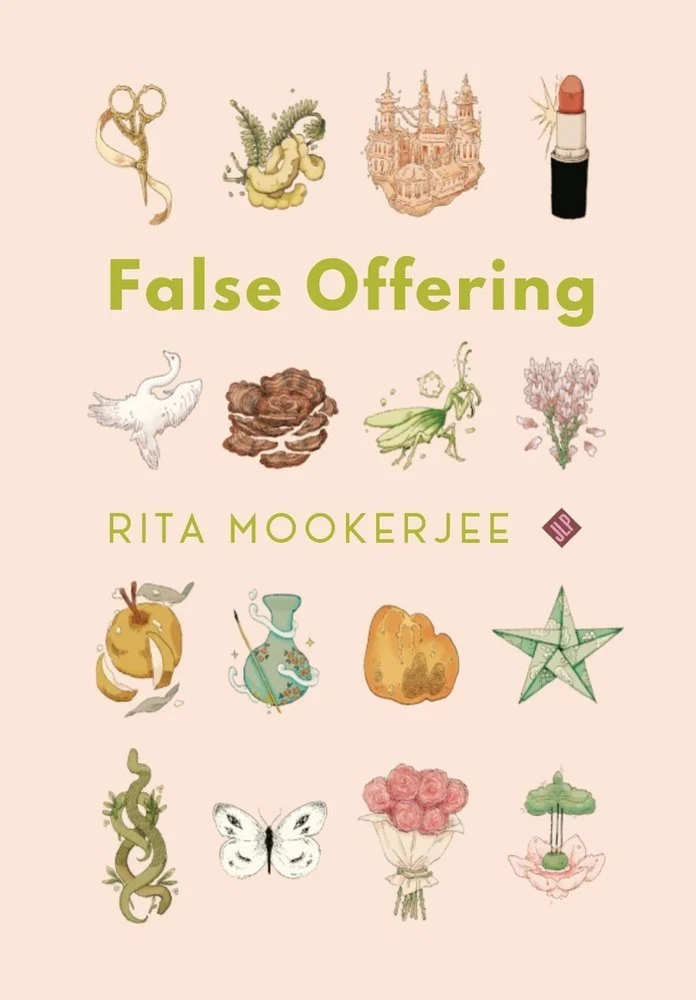
Rita Mookerjee’s False Offering is an irresistibly vivid collection with a distinct voice rich with attitude. False Offering is all about being defiant in the face of racism and sexism and the pressures of faith and perception. This book is productive with its glittering anger, biting back, such as in “Song of the Oyster Girl, Naked in the New World,” which ends:
so keep your eyes on your wallet

I’m here to take your money and your man
Sexy and exuberant, the collection flits between love poem, sex life, pop culture, faith, and confession with the capacious, friendly, and naughty tone of a girl’s sleepover, all grown up.
Mookerjee advocates not only for taking up space, but all of your senses as well. In “Love Song for Sourness, Stink, and My Acid Tongue,” she captures taste, declaring, “I am tannin. I am toxin. I am always tart.” A few pages later, “On Brown and Yellow College Students Making It Work” uses smell and color to react to the frustrations of experiencing microaggressions in academia as a BIPOC person:
                                                      I’ll keep chasing this vision in Iowa

where my movers haven’t brought my boxes yet, which pisses me off

because all I want are my pots and pans to cook aloo sabzi and coconut

curry, watch the neon splatters color my plates marigold and let the heavy

smell waft through the building to let everyone know I’m here.
This is a book that does not accept making oneself small. Instead, it uses anger as a powerful fuel to drive the poems.
Ask the Brindled by No’u Revilla
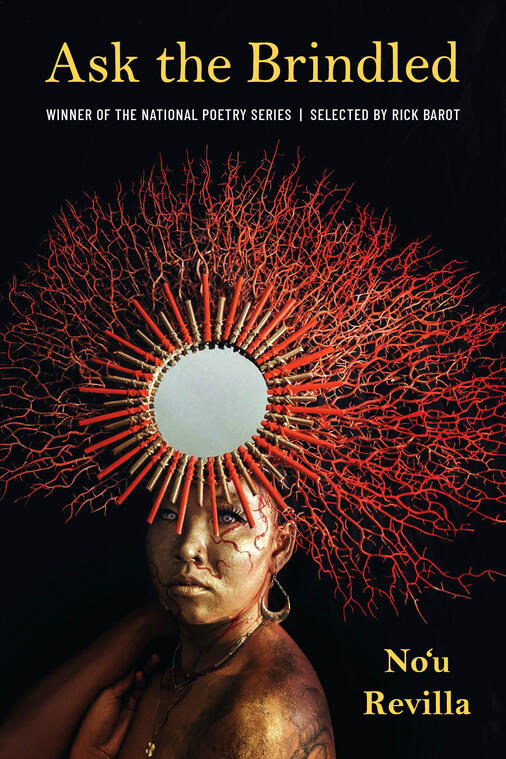
Ask the Brindled is a ferocious and lush debut poetry collection by No’u Revilla. The poems here are dynamic and contain multitudes as the poet explores Indigenous queer identity, ʻŌiwi, or Native Hawaiian, history and language, embodiment, and ecocriticism. Revilla organizes her themes around the recurring evocation of mo’o, a Hawaiian word that can mean, at once, “Shapeshifting water protector, lizard, woman, deity,” “blood line,” and “Story, tradition, legend.”
The land, or ʻāina, is a vital and sensual (and furious) character in the collection. The poem “Don’t have sex with gods” describes it:
If aloha ʻāina is love and lover of land,

Then she who feeds is she who fucks.

ʻĀina will fuck back.
The poem ends defiantly: “we’ve always had sex with gods.” The following piece “When you say ‘protestors’ instead of ‘protectors’” continues this portrait of the land intertwined with gender saying:
we are, yet again, portrayed by you,

the girl the Native the water the mountain who was

‘asking for it’
The violations of the sacred landscape of the islands are inseparable from the abuses of bodies in this collection.
Cumulatively, Ask the Brindled is fiery, blood-stained, reverent, erotic, and alive with deities. This book is a gorgeous exploration of transformation and feminine decolonial rage—the kind of collection that grows within you like a planted seed.
Dear God. Dear Bones. Dear Yellow. by Noor Hindi
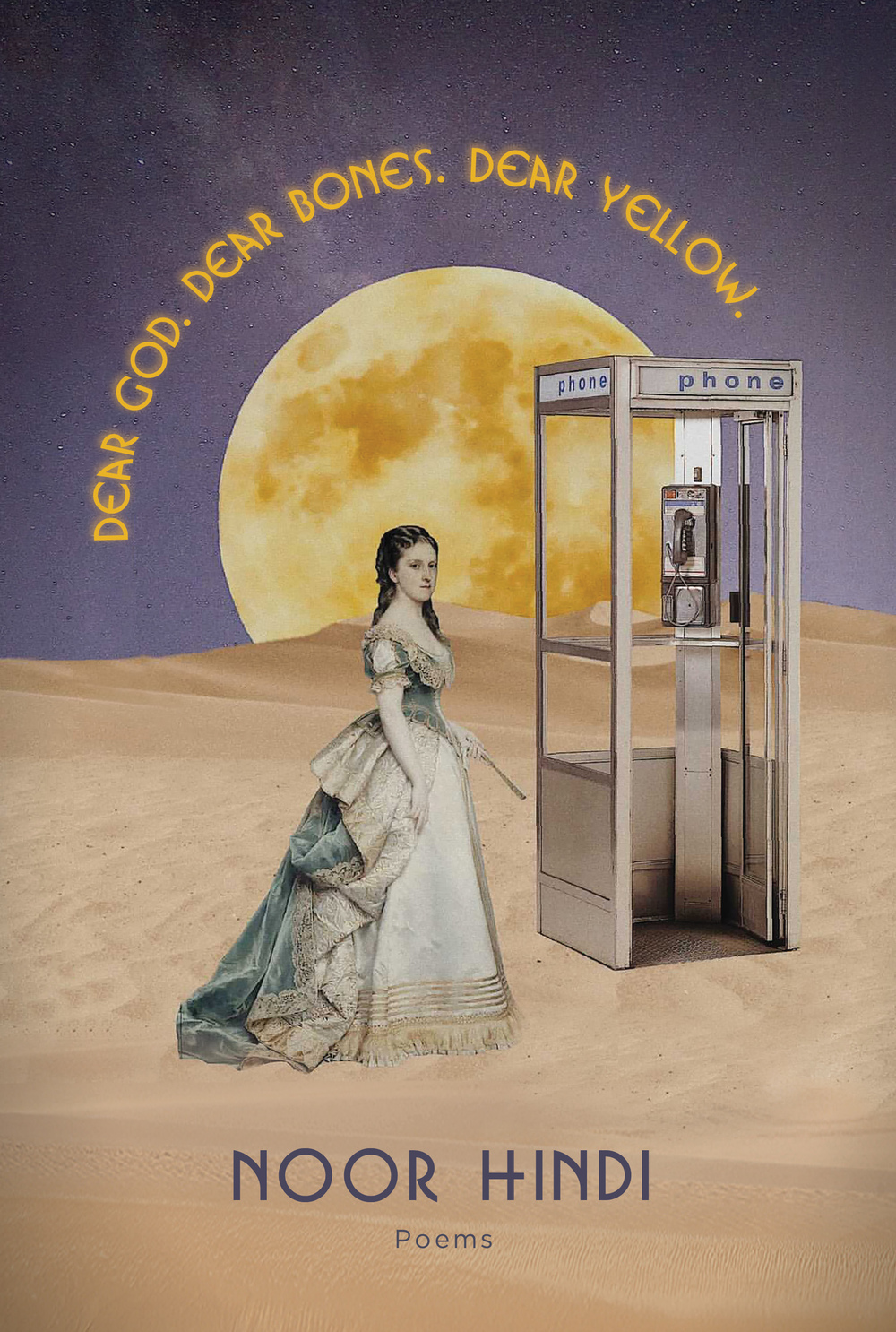
Noor Hindi’s scalding debut poetry collection Dear God. Dear Bones. Dear Yellow. honors the painful and multilayered experience of being both a woman whose life and rights are at risk, and Palestinian, exposed to systematic violence and injustice. Hindi says, “Tell me why my people’s // deaths become a hopeless, endless / conflict” tapping into the grief that is a part of anger, also.
I see this book daring readers not to look away from the rage-inducing wrongs of our time, like in the poem “A Day, A Life: When a Medic Was Killed in Gaza, Was It an Accident?” where “a child…stares // into the eyes of an Israeli soldier. / And laughs.”
I’m moved by the way these poems demonstrate how grief, despair, and anger pierce the veneer of polite daily life. For example, in the poem “Dangerous Business,” a simple tampon wrapper explodes into a history of violences against women, all caps breaking through:
THE UNITED NATIONS ESTIMATES THAT

AROUND FIVE THOUSAND WOMEN ARE KILLED ANNUALLY IN

HONOR-RELATED CRIMES IN JORDAN, WOMEN CONSIDERED

TO BE AT RISK CAN BE DETAINED INDEFINITELY”
Perhaps best-known in the collection, Hindi’s moving poem “Fuck Your Lecture on Craft, My People Are Dying” changed the way I think about poetry in the classroom. With an economy of lines, Hindi shows how impossible it is to write quaint poems about flowers or the moon when the very survival of your people is endangered. The poem begins “Colonizers write about flowers” and ends, “When I die, I promise to haunt you forever.”
This book came out in 2022, before the deadly genocide in Gaza ramped up in 2023, showing how the anger Hindi expressed then is part of long-lived, generational oppression. Dear God. Dear Bones. Dear Yellow. reveals how anger is an inheritance—and a natural reaction to lived injustice, and it must be embraced or it will take over.
Replica by Lisa Low
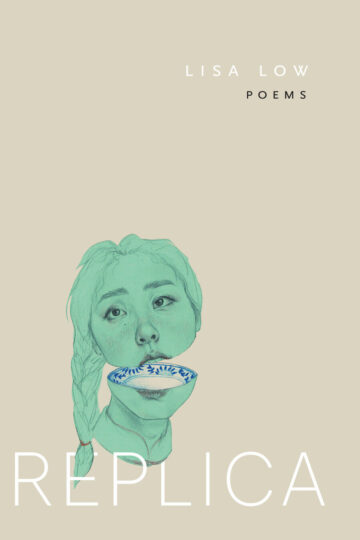
Whip-smart, cutting, and hilarious, Lisa Low’s debut Replica wields the sharp humor of a stand-up comedian and the patient timing of a teacher to dole out line after devastating line. Low is furious about racism and sexism, and shows it through lyric, such as in “Ars Poetica”:
For years I used the body

of my younger self as proof

racism exists. I placed her

into the blank space

of a poem as if no one

would see her. She let me

arrange her like that—
Low is done being arranged by others. Instead, she turns the mortification of racist experiences back through her poems, like when a dentist asks, “Where are you from?…No, I mean…where’s your family from?” in “Extraction,” and readers cringe at the interaction.
Magnificently, Low’s anger is funny. She uses parody and smart pacing like weapons. My jaw dropped reading the poem “Nine Apologies” shaped “with a tweet from Shane Gillis” that erases and parrots back pieces of the post, which is a poor apology for using anti-Asian slurs in comedy skits:
                                                                                                                               If

                                                                                                              you’re

                                                                                                                                           actually

offended by anything I’ve said. My intention was never to hurt anyone

but I am trying to be the best comedian I can be and sometimes that

required risks

. . . . . . . . . . . . . . . . . .  . . . . . . . . . . . . . . . . . .  .

                                                                                    I

                                                                      apologize to

                                                                      My			hurt

9)

                                                                                                                                      you go

                                                                                                              you’re going

                                                                                    to apologize			        actually
Low’s message is clear: Apology not accepted. Do better. The anger in these poems flips the script, making others uncomfortable instead of the one experiencing microaggressions. These poems call all of us out, make everyone think a little more before we speak.
Anger isn’t polite—and it’s seldom welcomed, especially in women. But it is vital. As Audre Lorde wrote in “Who Said It Was Simple”:
There are so many roots to the tree of anger

that sometimes the branches shatter

before they bear.
These poetry collections show us, through wit and lived experience, branches that shatter and branches that bear, and show us how necessary and productive anger is to art, to expression, to justice, and hopefully, to healing.