
Writing Silence in Fiction: Craft Review of Natalia Theodoridou’s Sour Cherry
5 Minutes Read Time
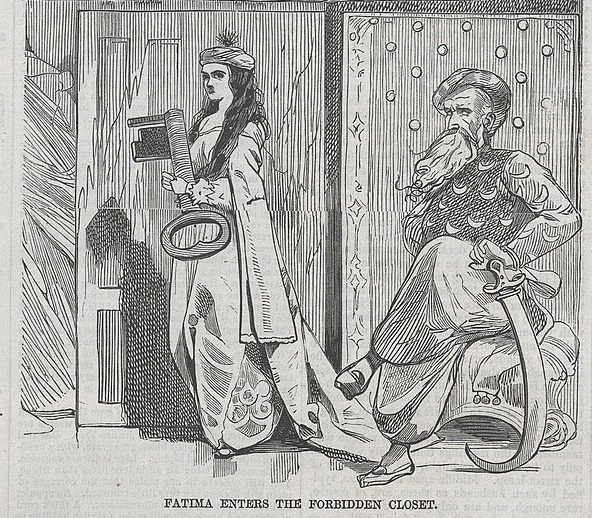
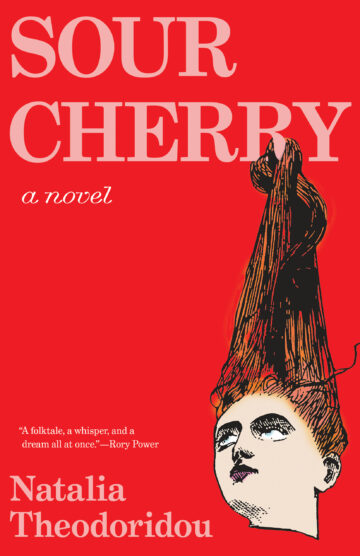
Editorial Assistant Mialise Carney: How do you write a story your characters aren’t supposed to tell? This is a question I’ve been circling around in my writing about first-person characters who have been silenced, and one that concerns CR contributor Natalia Theodoridou’s debut novel Sour Cherry (Tin House, 2025). Theodoridou reimagines the Bluebeard fairy tale in a haunted, slippery story about toxic men, and the women and children that disappear in their wake.
In Sour Cherry, an unnamed narrator recounts Bluebeard’s life from the perspectives of his nanny, his first wife, and his son, tracing the ways evil grows within him and how he repeatedly chooses to continue down a murderous path. Like Charles Perrault’s famous version of Bluebeard, Theodoridou’s Bluebeard charms different young women with his wealth only to murder them again and again. Every wife becomes a ghost in the chorus around the narrator as she tries to tell their collective story to her son.
The narrator, who’s been pushed into silence and acceptance of her husband’s violence, urgently needs to tell her story, and Theodoridou uses the craft techniques of fairy tales, hauntings, and rhetorical questioning to expand upon the question that the narrator poses at the beginning of the novel—“But how do I tell it?” she asks. “How do I talk about this?”
A Fairy Tale Frame
To get some distance from the unspeakable horrors of her story, the narrator, Cherry Girl, reimagines her life story into that of one of Bluebeard’s wives. Like all good fairy tales, the purpose is to teach the listeners (her son and the readers) a lesson about masculinity, violence, and relationships, but it also serves as a way to show her anxiety about her experience of domestic violence not being believed.
Where this fairy tale frame creates distance, Theodoridou also uses it to create a sense of intimacy between the narrator and the listener. The narrator mostly addresses “you” (the reader and her son) in boxed-out sections at the end of every chapter, but occasionally the direct address slips into the chapters with an observation about how her listener is responding to the facts of the story:
You eye me as I describe the box. You have one just like it, don’t you? It was a gift from your father. This was a slip. I didn’t mean to get so close. But it’s too late now, and you let me go on, saying nothing.
These moments of slippage remind the reader that we are in a story inside of a story. Just as the distance of the fairy tale creates mystery, it also creates suspense when the speaker forgets herself and gets too close to her real story, urging us to keep reading to see where these two stories finally converge.
Ghosts and Hauntings
This novel isn’t just a fairy tale; it’s also a ghost story. The murdered wives of Bluebeard haunt the room where the narrator is speaking to her son, making noise to show their displeasure and urging her to stop telling her story:
(The sun is coming out.)
     The ghosts interrupt. They object to the way I tell the story.
     What do you want? I ask them. Am I being too kind to him? Too lenient with Agnes?
     Do you need me to say he never loved anything?
Although the narrator is isolated in a room with her son, Theodoridou uses the ghosts as metaphorical representations of the messages that the narrator has gotten in her life, messages that require her to stay silent and accept her husband’s violence, as well as other signs that he’s also human. Theodoridou also uses the ghosts to represent how the reader might be reacting to Cherry Girl’s story as well.
Questions
One of the “rules” of writing good fiction I was taught in my earliest writing workshops was not to ask any questions, that as the writer I should have all the answers to the questions my characters might ask, and that I shouldn’t burden the reader with my uncertainty. I often questioned this rule because I wanted to write characters whose stories concerned them grappling with what they didn’t know. Theodoridou resists this rule throughout Sour Cherry and uses questions and questioning to show the narrator’s uncertainty, her hesitancy to tell the story, her grasping at meaning in a cyclical abusive relationship, and to add narrative tension.
    “What was the child's name?” you ask, and I pause.
     Does it matter? I wonder. Sometimes you become a character in someone else’s story and so lose your name. Sometimes, you give it up willingly. Because a name can also be a burden, a legacy and a responsibility. A curse, even—and he, for now, is only a child. So I will not give him a name. For as long as I can help it.
Here, the narrator is asked a question and asks another one, to us or herself, in return. Then, she grapples with the question for a few sentences before arriving at an idea or choice that will affect how she continues the story. By representing this grappling with difficult questions on the page, Theodoridou crafts a narrator who is still in the processes of figuring out how to tell a story she isn’t supposed to tell, who is resisting the silencing that she has been accustomed to her whole life, and who is slowly coming into her authorial power.