Interview with Lisa Low: On Humor, Triumph, and Reckoning with Racism in Replica
6 Minutes Read Time
Summer Assistant Editor Arah Ko: I was thrilled to read CR editorial veteran Lisa Low’s debut full-length poetry collection Replica, the Editors’ Selection for the Wisconsin Poetry Series, released in March 2026. Hailed as a “lyrical reckoning,” this book caught my eye immediately. In celebration of the book launch, I asked Low about her poetics and process.
One skill I am constantly amazed by is having excellent timing. Timing is crucial for both humor and poetry—and you accomplish both! Your “Nine Apologies” poem responding to a tweet from Shane Gillis changed the way I think about comedy in poetry. What is your process for timing and delivery? How do you infuse your poems with both humor and gravity?
Thank you so much, Arah, that’s the biggest compliment! When trying to be funny, something that grounds me is the idea that all emotions are interconnected. I feel mixed feelings about almost everything. And in my writing, humor often stems from something negative—so with the gravity already incorporated. That’s why I think it feels so satisfying when writers writing about a positive experience also include moments of irritation or irreverence of some kind. And in terms of timing and delivery, humor is still a mystery to me. I try to treat it like any other good line in a poem (thinking about juxtaposition, surprise, repetition, etc.). I’d love to learn more from stand-up comedy itself, but I don’t want to take a stand-up comedy class because I’m too scared to perform!
You are not only a gifted poet but also an accomplished nonfiction writer: Your essay “How to Apologize” won the 2020 Gulf Coast Nonfiction Prize. How do you see the relationship between poetry and creative nonfiction in your own life and process? What separates the two for you—if anything does?
For my own writing, I like to think of poetry as good at complicated feelings, and nonfiction as good at complicated situations, though of course both live on a spectrum. Details and logistics immediately send me to nonfiction. Sentences as a unit of writing feel sturdier to me than poetry, and can stand up to more explanation, but also looser, with less pressure to sound instantly immersive or even estranged like poems often do. But since I write about the same or similar issues in both genres, I try not to repeat myself and instead let the genre allow me to explore the topics differently.
Continuing in the nonfiction vein, I am constantly balancing the pros and cons of writing about people in my real life. On the one hand, writers draw from their lives, good and bad, but on the other, writing about people who can read the work has the potential for real consequences. I so admire how well you call out bad behavior like racism and sexism in your poetry. How do you approach writing about living people? Does it ever affect your relationships, or do you take more of an Anne Lamott stance that “You own everything that happened to you. Tell your stories. If people wanted you to write warmly about them, they should have behaved better”?
I always try to write first and think about audience later, or else I might get too caught up in worrying about future reactions. In my book I write extensively about my relationship with my mom, and with my husband. Writing about a partner is much easier than writing about my mom, I think. He reads my work and has a much more straightforward response. But with my mom, there are a lot of other things going on, including the dynamics of our relationship that seep into how I think about writing about her. Something that helps is that part of the project of my book is exploring the ethics of writing and representation, so I get to question these issues in the poems themselves.
I’m an admirer of your “Ars Poetica” poems in Replica—do you think of these as three separate poems with the same title, or as a sequential poem woven through the final section of the book? Or something else entirely? Are there any poetic influences you look to for these pieces?
I think of them as three separate poems. One of my influences for these poems and the book as a whole is part 3 of Layli Long Soldier’s poem “Ȟe Sápa,” which is a concrete poem in the shape of a box (four lines, each line forms a side of the box). The line “This is how to place you in the space in which to see” has been especially important to me and the way I think about self-representation, and how I want to use ars poeticas to show readers how to read me.
Replica is still brand-new, but what is one question about the book that you wish you were asked more often? Are there any overlooked pages that deserve more love and attention?
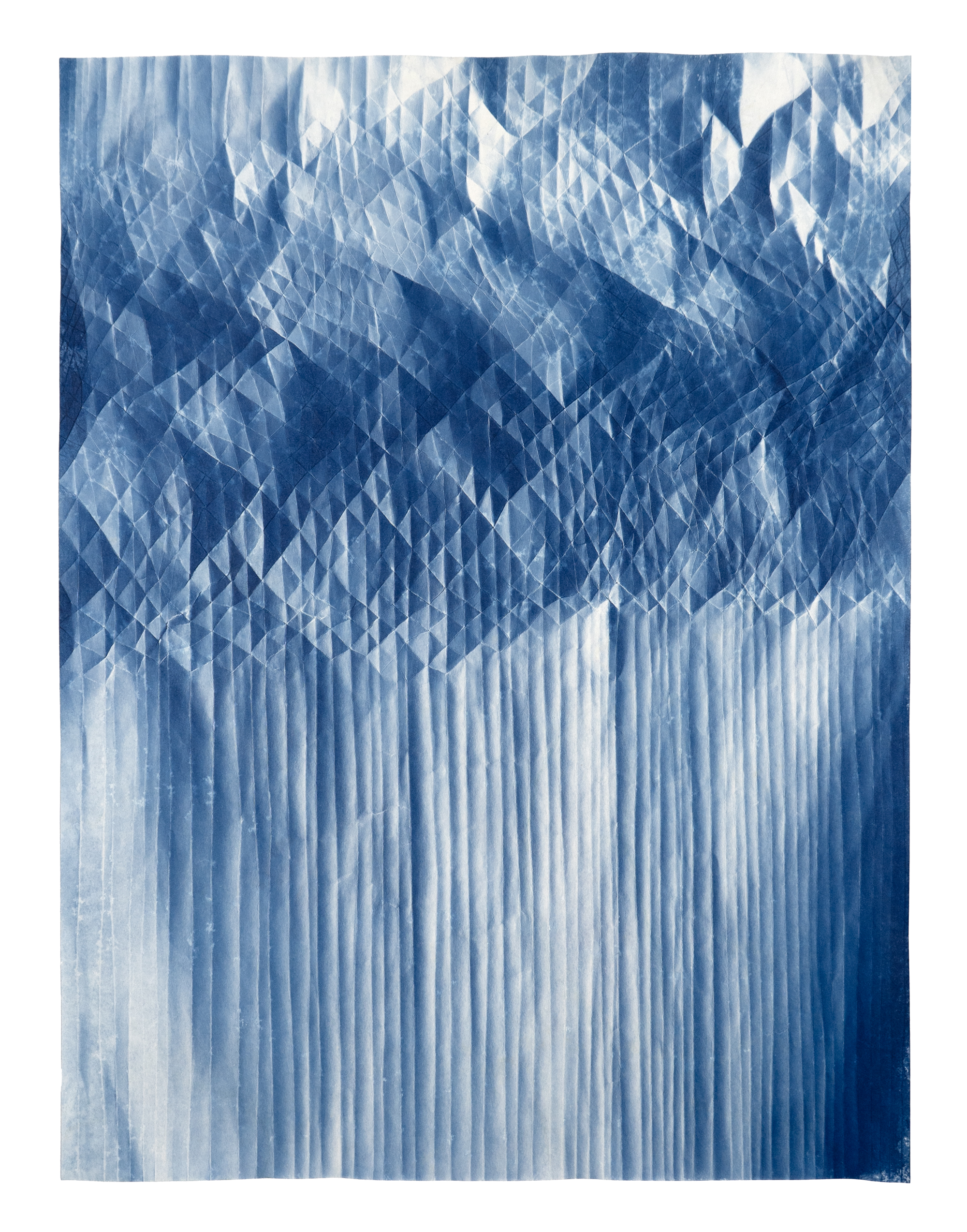
I don’t get asked about Replica as a title that much, and I’d love to talk about it, if only because the book went through many other (bad) titles to get to this point! “Replica” was originally the title of a different poem in the book, which didn’t feel very representative of the book as a whole, so I didn’t think I could use it. Then after cycling through some other titles, I got the idea to poach the title for a different poem (the current title poem) and give the original poem a different title. I also really love how the title ties in with the cover art by Yuqing Zhu! She is a neuroscientist in addition to a visual artist, and I find her surreal self-portraits so evocative of the ideas of repetition, identity, and mirroring that I’m trying to explore in my book.
I’m so grateful I got to chat with you, Arah. Thank you so much for your thoughtfulness and for supporting me and my book!