Emerging Writers: Gordon Taylor
6 Minutes Read Time
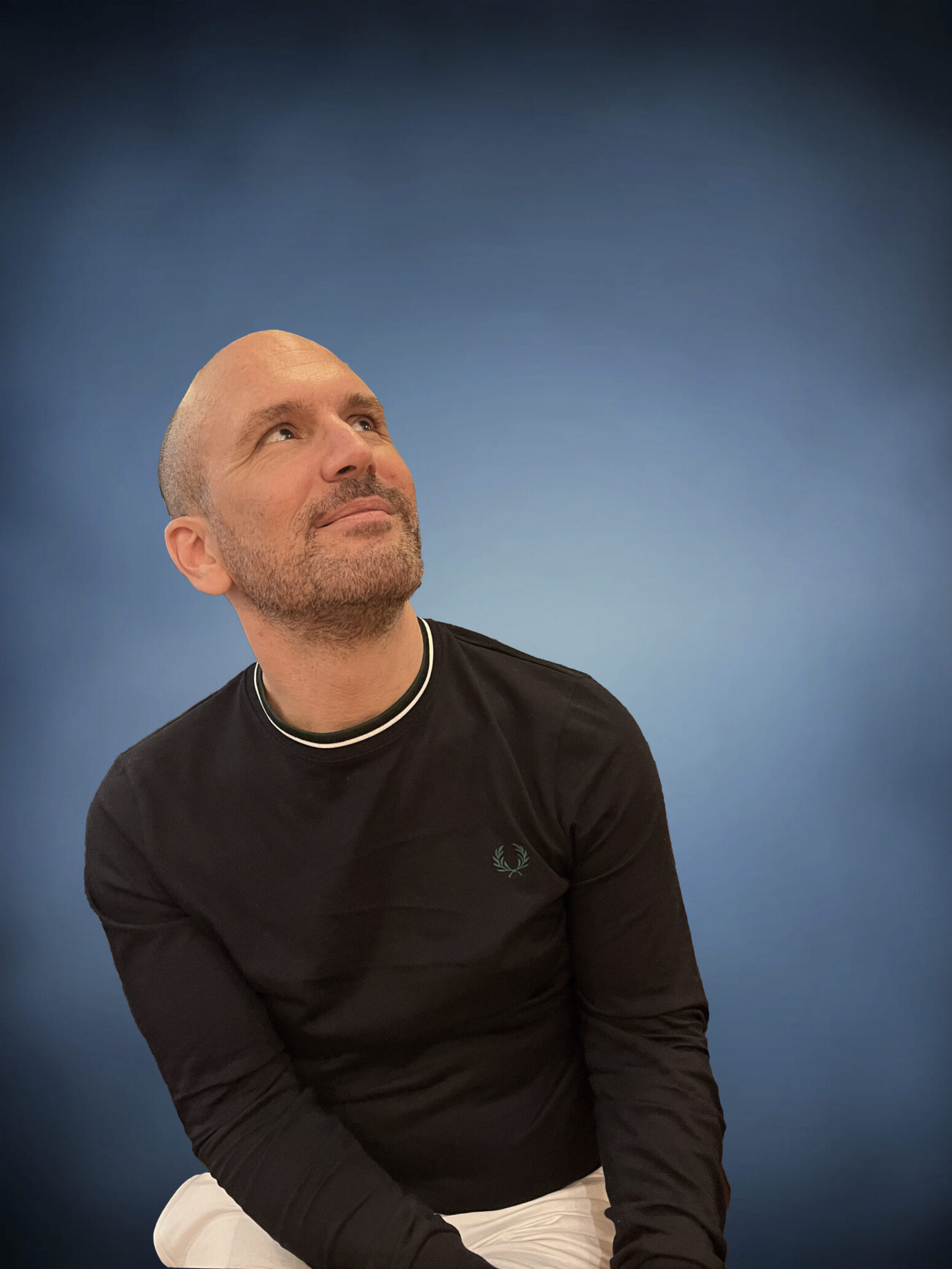
Associate Editor Andy Sia: We noticed a number of writers in our recent issue who are in relatively early stages of their publishing career, and reached out to chat with them as a part of our emerging writers series. In a sense, writers are always “emerging,” given the constant self-discovery and self-transformation that happen throughout any craft process. For the purposes of this interview series, we focused on the scope of professional affiliations—institutional support to date, range of publications—though we recognize that ultimately, emergence is an ineffable state that exceeds easy definitions. More broadly, our curiosity about emergence extends to the work itself: How does a poem or story take shape from amorphous origins and, indeed, emerge? Here’s my interview with Gordon Taylor, whose poem “Memory Foam” appears in the issue.
Take us back to the start, before you’d begun drafting. What set the stage for “Memory Foam”?
I often wonder where a poem begins. In sleep as the mind processes, organizes and heals? Or perhaps in a liminal space between dreaming and waking. I ask the same question of memory. While we know it inhabits a specific part of our brains, what spiritual space does it occupy? In a way a poem begins as it ends, with an emptiness that is occupied with our yet to be named feeling after reading or speaking a poem, a something-something tingling in the spine, or the echo of the poem that preceded it. Memories move like poems, I think. Many things are interlaced in our minds, posing with and against each other, separate but inseparable . . . like two beings, a sort-of family.
Tell us about the process of writing “Memory Foam.” Did the poem change significantly since its inception? How did you land on the structure and overall trajectory of the poem?
This poem started out as two poems. One was called “Memory Foam,” the other was called “Postcoital Dysphoria.” I was reading something by David Kirby about braiding and how Kirby will take two or more poems and braid them together to achieve a greater metaphoric consequence. The concept of braiding occurred to me as I was editing these two poems. I began thinking about memory and souvenirs and film, and it seemed to me, suddenly, that these two poems belonged together as a diptych, a kind of dual memory—a memory of my father’s funeral and a photograph of us on the beach—memory of an erotic moment. These memories unified by the sound of the sea or a memory of the sound of the sea. I was also playing in a silly way with the title, memory foam. If you have memory foam in a pillow, it records the impact or the impression of you and molds to your form. This led to the idea that film and photographs are also imprints, fading, revising, and evolving over time. The idea of a person changes over time too, the memory of a person changes over time, and both grief and memory can lead us from one place to another.
Describe the first poem you wrote. What’s the most recent poem you wrote?
If I remember correctly, the first poems I wrote were list poems, and I didn’t know what a list poem was at that time. However, I just felt an urgency to write or record things around me. I had twin experiences eight years ago when my father was actively dying of a lung disease, and I had been diagnosed with colon cancer and was recovering after treatment. I made lists constantly, almost as a historical record. I remember making one list about silences after my father passed, for example, the silence of the pill bottles, the silence of his socks folded, the silence of the unoccupied wheelchair, the silence of the half-open window, the silence of the rotting tiger lilies . . . and there were other lists about objects in my hospital room and other locations. Retrospectively, making these lists led to further reflection and image and meaning making within newer poems.
The most recent poem I wrote was a retelling of the myth of Sisyphus. I was thinking about the Greek word therapon, which was taught to me by a teacher in a writing workshop. A therapon is a companion and is the root of words like therapy. So, in a way, Sisyphus is acting as a therapon for me in my poem and a stand-in to tell my story. The myth became a container for my “therapy.” I was also trying out the sonnet crown form, which is very hard to do, at least for me. I’m not sure this poem will ever see the light of day, but it was fun to experiment.
What is something you’ve been learning or practicing of late, whether that’s related to writing or not?
Lately, I’ve been trying to step away from my perfectionism. What I’ve discovered through my writing process is that I tend to overwork poems or over-rotate on revision when in fact this over-rotation can steal the energy from a piece. I don’t know the experience of others, but the act of writing for me is an act of ecstasy, it’s very raw and an energy flows through your body, which in turn is contained by the language on the page and the page itself. This raw energy can be extremely exciting both in reading back a poem that you’ve written, and within the act of revision as a thing to preserve for the reader to inherit. I’ve noted that my attempts to find the perfect word, the perfect line break, the perfect structure of a poem, can sometimes steal the original energy. I guess, I’ve been trying to find a balance between artifice and instinct.
I was watching RuPaul’s Drag Race recently, and one of the judges said to a drag artist that they should edit their outfits before emerging from the workroom. And the judge said, “Look in the mirror before you come out and take one thing off.” And I began thinking about that in relation to poetry revision. Sometimes a poem is wearing too much makeup or too many jewels, and it needs one item removed before it leaves the house. Trying too hard to control a poem is directly translatable to other areas of my life where I want things to be a certain way or I need a certain outcome to feel safe. It’s the curse of an anxious mind! It’s difficult to live in uncertainty, to fall in love with unpainted edges, but I’m hoping to become more comfortable with it. Maybe floating through ambiguity is a part of emerging, of growth.