A few weeks ago on the blog, we featured an appreciation of Marie Kare’s short-shorts, a series called How to Celebrate National Days. As additional bonus content, in honor of National Dance Day (the final Saturday in July), here’s one more installment of the series: National Dance Day July 28, 2018 (Last Saturday in …
For this special audio blog, we’re excited to present contributor Vincent Hiscock (issue 14.2) as he reads not only his own poem from our pages but also the work of Gary Snyder (“Piute Creek”), William Wordsworth (“The World Is Too Much with Us”), and Denise Levertov (“O Taste and See”). He sees a tether between …
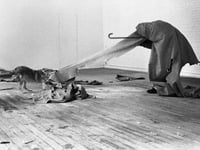
In our Issue 14.2, we feature a stunning story by Yxta Maya Murray, “YouTube Comment 2 to Video of I Like America and America Likes Me by Joseph Beuys.” When we read and copyedited the story (read an excerpt here), we experienced it almost as a hybrid piece, with such developed descriptions of performance art …
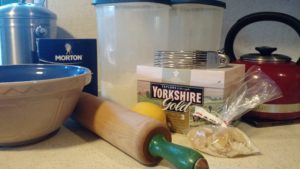
In our current issue, we feature a story by Siân Griffiths, “Wooden Spoons,” which describes a man watching his estranged daughter on a cooking competition. Today, to accompany the story, we offer you Griffiths’s “Scones: A Recipe,” just in time for baking for Saint Lucia’s Day or your next holiday party. Enjoy! …
In Issue 14.1, we featured a stunning poem by Jessica Ankeny, “Albuquerque.” To accompany the text of the poem, we’re pleased to present this multimedia experience, with Ankeny reading the poem and some photos of images from it. Cotton seeds: A New Mexico sunset: The “old volcanoes”:
Kelly Kathleen Ferguson helped us think about the “second best” (figure skaters, runners, but especially drummers) in her essay of that title in Issue 14.1. We loved reliving our memories of the music mentioned in her piece and are glad to share with you a companion playlist to accompany her essay (read an excerpt here): …
We love that contributor JP Grasser’s poem “excavate” is featured on Poetry Daily today! To complement the poem, here’s his reflection on its origins: JP Grasser: I’ve spent the last three years trying to understand the nature of griefwork, its seeming paradox: You strive to dig up loss, dust it off, and bring it into the …
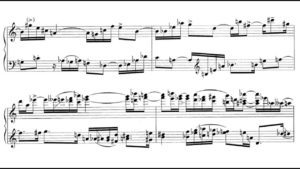
In Issue 14.1 of the CR, you have a chance to read Ethan Chatagnier’s story, “The Unplayable Études.” (Read an excerpt here.) We love how the story meditates on grief, creativity, and other difficulties through the perspective of an acclaimed concert pianist. Here on the blog, we’re pleased also to share with you Chatagnier’s inspiration …
At Acre Books, we’re working through the proofs of our first publication, A Very Angry Baby: The Anthology. Here’s a peek at some of the wailing within its pages.
These days it’s easier to fall down the rabbit hole than ever. To see an interesting morsel of information, and grabbing it, is like a kind of reverse fishing; we put the lure into our mouths, bite down, and get yanked into the binaric seas of the information age. Once we see information that we’re …