We Fry Reggae
36 Minutes Read Time
On a Friday in June 2022 the nurse practitioner warned my husband, Brad, and me that it might be too soon to hear our baby’s heartbeat. “If we don’t hear anything,” she said, “I don’t want you to worry.” For the next few minutes, as she finicked with the Doppler and cocked her head this way and that, I worried. But just when it seemed she was about to give up, she walked to the other side of the exam table, pressed against my abdomen once more, and found it: a fast, squishy thump, twice the rate of my heartbeat.
“Oh” was the only word I managed to speak.
On the following Friday, I began my eleventh week of pregnancy and the Supreme Court ended federal protections for abortion. In my state, Ohio, this led to the enactment of Senate Bill 23, the Human Rights and Heartbeat Protection Act, which had been signed into law and subsequently blocked by a federal court in 2019, and which prohibited abortion after detection of what the legislation called a “fetal heartbeat,” around six weeks of pregnancy.
Medical professionals opposed to Ohio’s bill—and others like it—noted that the “fetal heartbeat” referenced in the legislation was neither “fetal” nor a “heartbeat.” The ACOG Guide to Language and Abortion on the American College of Obstetricians and Gynecologists website explains that an embryo does not become a fetus until after eight weeks of pregnancy. The guide includes heartbeat on its list of terms to avoid and offers this reasoning: “It is clinically inaccurate to use the word ‘heartbeat’ to describe the sound that can be heard on ultrasound in very early pregnancy. In fact, there are no chambers of the heart developed at the early stage in pregnancy that these bills are used to target, so there is no recognizable ‘heartbeat.’”
In other words, when most people think of a heartbeat, they imagine the sound of the rhythmic closing of valves in a four-chambered heart—a sound that can be heard with a stethoscope. But these valves and chambers are not developed enough to be heard via stethoscope until between weeks eighteen and twenty of pregnancy. At six weeks, the valves do not yet exist, though there is what medical professionals call “embryonic cardiac activity.” Cells beginning to thrum together. A flickering detectable only by transvaginal ultrasound. At six weeks, there is the hope of a heart.
“There’s no issue with using the term ‘heartbeat’ on its own,” said Dr. Nisha Verma of the ACOG in an interview with NBC News. “The issue is using that incorrect term to regulate the practice of medicine and impose these artificial time frames to regulate abortion.”
For the purposes of Ohio’s legislation, Senate Bill 23 collapsed all stages of development into two words: “‘Fetal heartbeat’ means cardiac activity or the steady and repetitive rhythmic contraction of the fetal heart within the gestational sac . . . ‘Fetus’ means the human offspring developing during pregnancy from the moment of conception and includes the embryonic stage of development.” The bill provided exceptions to the abortion ban only in cases where continuing the pregnancy risked the life of the mother or “the substantial and irreversible impairment of a major bodily function.” It provided no exceptions for rape or incest. It made it illegal for a person to have an abortion starting in a time frame when they might not even know they were pregnant.
I learned I was pregnant on the fourth day of my fifth week. Throughout the morning I composed typo-laden emails and struggled to recall the vocabulary of my profession. Precedent. Contingency. Ex officio. At lunch, my stomach flipped at the sight of a ham sandwich. Upon leaving the office at five o’clock and walking to the parking garage, I discovered I’d lost the ability to climb a flight of stairs without gasping. I drove straight to the store to buy a box of pregnancy tests, and after, back in my car, I had a startling thought: I’m pregnant, my baby is a girl, and her name is Georgina.
Immediately, my Scully brain kicked in to remind me that I knew no such things. I might not be pregnant at all; I could just be coming down with something, maybe COVID. If I were pregnant, it’d be weeks before a doctor would know the sex. And as to Georgina, that was a name I’d never considered and wasn’t sure I liked. I must’ve heard it somewhere recently, I thought—a conversation in the checkout line, or on the show I’d fallen asleep to the night before. But at home an hour later, three tests confirmed my first prediction: I was, in fact, pregnant.
At my first ultrasound scan—twelve days after the Doppler and five days after Ohio’s abortion ban took effect—the nurse practitioner explained that the images showed several “alarming abnormalities.” Possible explanations ranged from “nothing” to conditions that caused severe intellectual disabilities, fatal heart defects, and organs growing outside of a baby’s body. I asked for a genetic screening on the spot. The result arrived a few days later, over Independence Day weekend: positive for Turner Syndrome, or Monosomy X, a genetic disorder in which a female is missing an X chromosome. At a follow-up appointment with Maternal-Fetal Medicine a few days after that, a specialist reminded Brad and me that a genetic screening is, by definition, not a diagnosis but that in light of the accompanying ultrasound images, she was confident in our screening’s conclusion. And so, our baby was, indeed, a girl, and there was a 98 to 99 percent chance—to stretch the meaning of the word—that she would not survive the pregnancy.
As to her name, my third prediction was slightly off. The week before we lost her, I told Brad about my experience on the way home from buying the pregnancy tests. “I don’t know what I believe about God or the universe,” he said, “but I don’t think you ignore a sign like that.” He began saying her name with another “a” added in, and so, our daughter became Georgiana.
The year I decided I wanted to be a mother was the year I learned to depend less on language.
It was 2010. I was twenty-three, had just graduated from college, and had secured a job teaching English at a private pre-K through eighth grade school in Seoul, South Korea. I took a one-weekend crash course in Korean culture in Seattle—courtesy of my new employer—and arrived in Korea armed with approximately six words, an overly obsequious bow, and a piece of advice from my supportive but, I think, concerned, mother: “You can’t use sarcasm when you’re talking to kids,” she’d told me. “They take everything you say at face value.”
I was more concerned that they’d have no idea what I was saying at all.
But on my first day as an English teacher, I walked into my kindergarten classroom, and to my relief and surprise, twelve children turned to me and said, “Good morning, Karen Teacher.” Their world in English, it turned out, was already a cornucopia of verbs and nouns—a favorite of which, to my baffle-ment, was the word cornucopia, which they defined for me, in pantomime, as “a booger floating in the nostril.” It was up to me to introduce past and future tense, possessives, and adjectives, but we were hardly starting from nothing.
Near the end of the first week, a group of them approached me after class and confessed that they’d had the wrong idea about me too. “When we meet teacher, we think teacher name is Kirin.” Korean for giraffe, they explained. Lucy, the youngest and least fluent in the class, wrapped her arms around my thighs, looked up at me, and smiled. “Tree trunks,” she said.
My students, it quickly became apparent, were far more adept at learning my language than I was at learning theirs. I hung the Korean alphabet over my desk in the staff room and sounded out the characters a few times a day. By the end of the first month, I could read parts of menus and the scrolling signs in subway cars announcing the next stops—sometimes even before missing them. By my second month there, the man who ran the convenience store down the alley from my apartment had taken pity on me and taught me to say milk and eggs. My kindergartners soon began offering their own informal lessons. They weren’t supposed to speak Korean on school grounds, but on field trips and holidays they slipped me words like contraband. “Kokkili is ‘elephant,’” one of them whispered on the back of the bus, on the way to the science museum. “Kottagji is ‘snot.’”
It might have been overwhelming, navigating a metropolitan area of twenty-three million people and more than 750 subway stations with vocabulary limited to basic survival terms and zoo animals, but my students also began to teach me a new way of existing in the world, or one I’d forgotten. For these young beings, with only a few short years of experience, nearly everything was new and nonsensical, bewilderment a semi-constant state. And yet, for the most part, they remained undaunted. Their eyes opened wide to the absurd. Their mouths opened wide with unbridled laughter. Not everything in life needed to be understood or explained. In fact, it was more fun if it wasn’t.
On weekend mornings a siren announced the arrival of a man who distributed finger-size bananas from a bicycle cart in the alley below my window.
One day outside the war museum two men in expensive suits pulled each other to the sidewalk and wrestled—teeth bared, brows shining. Their colleagues smoked cigarettes and watched in silence until, after a few moments, the wrestlers stopped, stood up from the ground, and brushed themselves off.
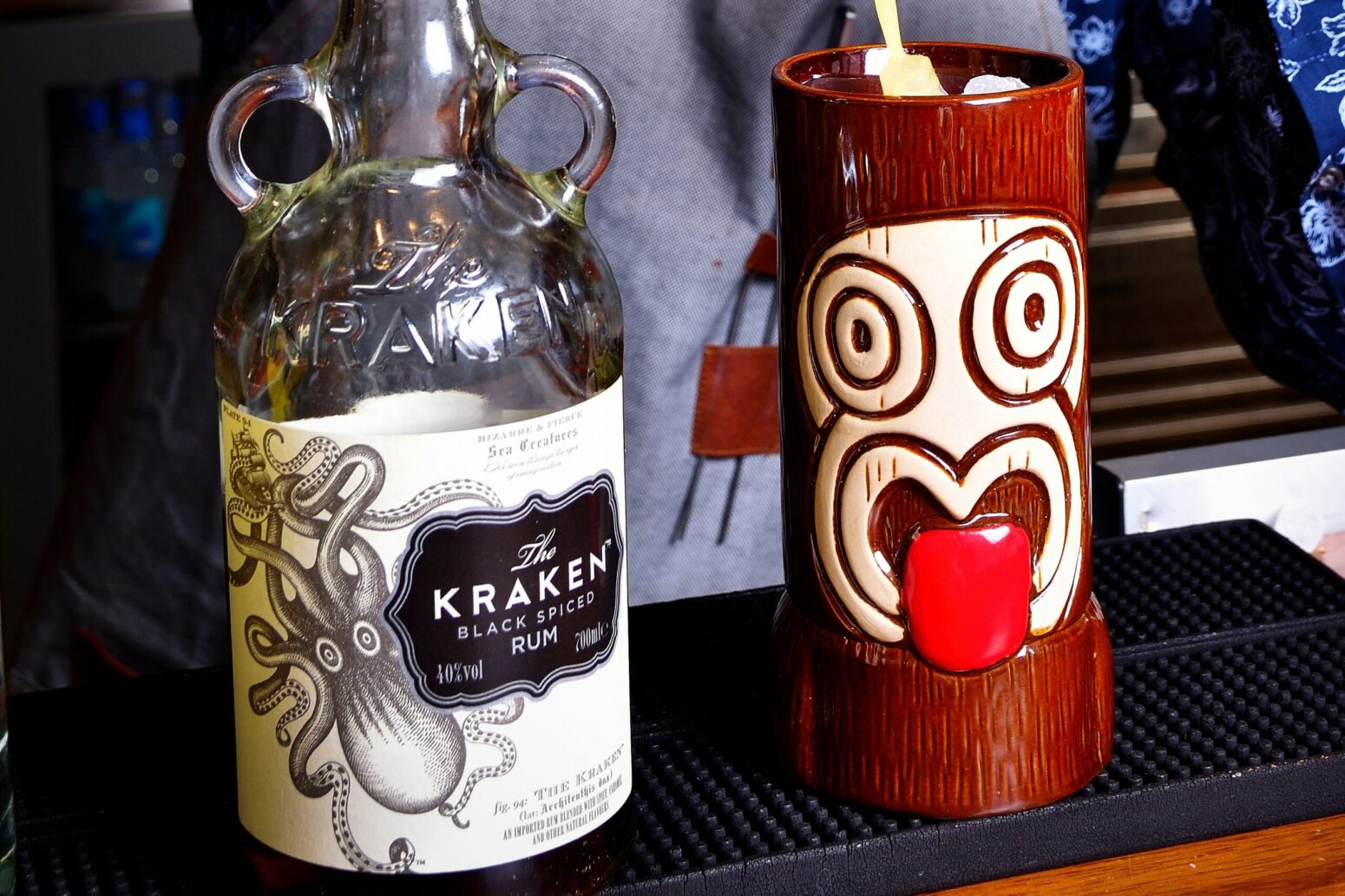
Walking an empty boulevard one night, I came upon a hand-carved wooden sign that said, “We fry reggae.” It pointed down an alley adorned with Christmas lights that then wound up the railings of a metal staircase, which led to an open door on the second floor of an outdated high-rise. Inside, a man stood behind a tiki bar serving tiny bananas and Red Stripe to no one. Spots of light from a disco ball swam over the dim space’s few furnishings: a sampling of Persian rugs, a handful of mismatched bistro tables, and, on the far wall, a massive projection screen.
I took a beer, a banana, and a seat and spent the next hour watching videos of kaleidoscopic nonsense, rainfall and desert, gods of all pantheons, creation and destruction. The images flowed into one another, set to music of every genre and origin. I looked behind me, once, and saw the bartender sprawled in a hammock in the corner. He met my eyes, raised a Red Stripe, and smiled.
More meaning can pass between two silent strangers than words could ever carry.
On homesick nights in the months that followed, I wandered the boulevards searching for the way back to that bar. I never found it again, but loneliness never lasted long. In the mornings I had my kids to return to. In my absence they buried my desk in paper lions and strung handmade garlands across our classroom walls. They fed me crunchy noodles and corn puffs, warmed by their pockets and sticky hands. In the water-fountain line, Henry waved for me to stand beside him. Julie pulled my arms around her. Angelina placed the palm of my hand across her forehead and closed her tired eyes.
By the time of their kindergarten graduation I could still count only to four in Korean, but Lucy could express in English, in future tense, what went without saying: “I will miss you, I will miss you, I will miss you.”
“My kids,” I realized I’d begun calling them.
Lucy, I later learned, was even younger than I’d first realized. According to the international age-counting system I grew up with, the years of a person’s life are counted starting at birth. But according to South Korean tradition—and until new legislation took effect in June 2023 adopting the international system—a person was considered one year old on the day they were born, and they gained another year every New Year’s Day.
It seemed odd to me at the time, but it’s not so different from the chronological and linguistic slipperiness of how we talk about pregnancy. The two systems for describing the progress of a pregnancy are gestational age and fetal, or conceptional, age. Medline Plus, the National Library of Medicine’s online resource, defines gestation as “the period of time between conception and birth.” Cleveland Clinic explains that conception refers to the fertilization of an egg by a sperm, which occurs at ovulation, around two weeks after the start of menstruation. Conceptional age is measured starting at the date of conception, but gestational age is measured starting from the first day of the last menstruation. In other words, gestational age begins around two weeks before the start of gestation.
Gestational age is the system most American doctors use to discuss pregnancy with their patients, and it’s the system most expectant parents use when talking about their pregnancies. The reason for this preference is simple: it’s easier for a person to recognize the start of menstruation than the moment of conception.
Under the gestational age system, at “six weeks pregnant” a person has been pregnant only for around four. A person is pregnant before she is pregnant. Life, however you define its starting point, begins before it begins.
Under the traditional Korean age-counting system, the same kind of magical rounding occurs. After thirty-eight weeks, or around nine months, developing inside their mother’s body, a person emerges fifty-two weeks, or one year, old.
In the United States, when it comes to the subject of age, we draw a clear line of demarcation: a person’s life begins the moment they leave their mother’s body.
In the summer of 2022, I acquired new vocabulary to describe Georgiana’s condition—nuchal translucency, cystic hygroma, pleural effusion, hydrops fetalis—and lost the ability to put my own condition into words.
What is the term for grief that precedes loss?
What do you call a woman who loves but will never meet her child?
“If she happens to be one of the 1 percent to survive,” I asked the specialist, “what would her life look like?”
“I’m not saying I haven’t seen miracles,” she responded, “but that isn’t what we’re facing here.” Already, within a week of the first ultrasound images, the fluid-filled sack at the back of Georgiana’s neck—the cystic hygroma—had grown noticeably larger. It’d be only a matter of time before it would encircle her neck entirely. Already, fluid had begun to fill her chest cavity—pleural effusion—and it would continue to spread throughout her body—hydrops fetalis—until her organs gave up under the strain. “You need to prepare to miscarry,” the specialist told me, but as to when that would happen, no one could say.
For the next twenty days, I outgrew my clothes and put off buying new ones. I avoided meetings but kept up with emails. One person’s began, “I know I waited until the last heartbeat . . .” instead of “minute.” I set an automated out-of-office message with no end date. It read, to paraphrase, “I’m here, maybe. I don’t know for how long. It’s possible you’ll hear from me soon.”
At the end of each weekly appointment, the specialist asked, “Would you like to discuss the option of termination?”
It wasn’t an option in Ohio, of course, but I had a financial safety net and work flexibility. I could still drive to another state, to an unfamiliar city, to meet with an unfamiliar doctor. My doctors could give me the number of a hotline that would help me find someone with an open appointment. I could fill out the paperwork to request “vacation time” and could spend a few days recovering—bleeding—in a hotel room, maybe even one with a view of the beach. Or I could bring towels for the long trip home. Brad could drive us.
“I don’t want to pursue that option this week,” I said each time, “but please keep asking. I need to know it’s on the table.”
In the mornings I stayed in bed staring at the ceiling until my bladder felt ready to burst. In the bathroom I checked the toilet paper for blood and cried.
In the evenings, sometimes, I spoke to Georgiana or held my phone’s speaker to my abdomen and played songs with heavy, vibrating bass. I revisited fetal development timelines, hoping I’d misread them the first or fortieth time. Hoping that, by some miracle, she could already hear the world outside my body; that she’d survive, somehow, to week twenty-five when the timelines said she might hear my voice; that losing her wouldn’t take that long.
As I entered my second trimester, I realized I would soon cross a threshold beyond which “miscarriage” would resemble less the perfunctory depictions I’d seen in movies—the wince and hand to belly—than depictions of child-birth. At my appointment at the end of week thirteen, I asked where, exactly, this threshold lay. “We’re pretty much there,” the specialist told me. From here on, my miscarriage would mean a hospital visit. Inducing, then waiting for, cervical dilation. The option of an epidural. Pushing. I could hold Georgiana after but should prepare myself for how she’d look, the specialist said. Small and undeveloped. Clear skin. And of course, the cystic hygroma.
I couldn’t imagine this. I wanted to be knocked unconscious. I wanted to be put under anesthesia and to wake up in a new stage of life—or grief, anyway. I asked about a procedure I’d read about that would allow this—a dilation and evacuation, or D&E. “I don’t know anyone who performs those,” the specialist explained. Not in southern Ohio, anyway.
An article from KFF—a nonprofit focused on healthcare journalism, research, and policy analysis—offers a possible explanation for why: “Almost all of the methods used to manage miscarriages and stillbirths are identical to those used in therapeutic abortions. Therefore, the clinical training necessary to safely manage a patient experiencing a pregnancy loss is very similar to that needed to perform abortions. As such, medical residents at religiously affiliated hospitals or in states with restrictive abortion laws may struggle to obtain the necessary training and caseload to become proficient in these skills.”
Ohio is a well-known battleground for restrictive abortion legislation. Senate Bill 23 was only one of nine antiabortion bills introduced in 2019. The most notorious was the proposed House Bill 413, an abortion ban that required doctors to “attemp[t] to reimplant an ectopic pregnancy into the woman’s uterus” or be charged with “abortion murder.” (An ectopic pregnancy is one in which the fertilized egg implants outside of the uterus, usually in the fallopian tube. The condition can be fatal for the pregnant person, and House Bill 413’s proposed treatment is medically impossible.)
Before that, in December 2018, then–Ohio Governor John Kasich signed into law Senate Bill 145, which criminalized D&E as an abortion treatment method, though a court blocked the law from taking effect. As KFF notes, “Bans on D&Es . . . for abortion may also cause providers to shy away from their use even for pregnancy-loss management; providers may be fearful to provide these services due to perceived legal ramifications and may become less practiced and proficient in D&E procedures over time, even when performed for pregnancy loss.”
“Second trimester miscarriage,” I typed into my search bar one night after learning a D&E would not be an option for me. “Hold baby yes or no.” I found only one woman’s answer. After losing her son in week fifteen, she’d held him and taken his picture, which she shared. “He’s beautiful,” someone wrote. “I’m so sorry,” wrote a few others. “Words fail.” “There are no words.”
I needed more words anyway but didn’t know whom to ask for them. The online forums I’d scoured early on for those facing positive Turner Syndrome screening results were filled with happy endings: “Another false positive! Don’t let those results scare you, mamas!” The miscarriage forum I’d more recently begun haunting had a rule against “mentions of current pregnancies.”
Is a person still expecting if she’s expecting to lose her pregnancy?
“I don’t want to violate any rules or cause anyone pain,” I wrote to the miscarriage forum’s moderators, “but I don’t know where to go.”
After twenty-four hours of silence, I turned back to the forum for Turner Syndrome. I wrote out every detail, every milestone, every measurement I could remember, putting off asking, character by character, the question I most desperately needed someone to answer—“Has anyone else ever had this unspeakable thought: if my daughter doesn’t die soon, I don’t know if I’ll survive?”
“Please tell me something about the waiting,” I wrote at the end instead.
From Chapter 2919 of the Ohio Revised Code, “Offenses Against the Family”: “A medically diagnosed condition that constitutes a ‘serious risk of the substantial and irreversible impairment of a [pregnant person’s] major bodily function’ includes preeclampsia, inevitable abortion, and premature rupture of the membranes, may include, but is not limited to, diabetes and multiple sclerosis, and does not include a condition related to the woman’s mental health.”
Once, in Korea, I found myself stranded in a mountain valley, miles outside a town whose name I’ve since forgotten.
All told, I ended up stranded for less than an hour, but at the outset I had no way of knowing how long it would be.
It was summer, and I’d taken a bus into the northern mountains to spend the afternoon at a temple, whose name I’ve also forgotten. There, I watched a monk tossing rice water on the grass, pinwheels spinning in the gardens, and a pair of older women drawing slow circles with their limbs, doing calisthenics by the river. By the time I remembered life outside that valley, the last bus had come and gone.
I had no words with which to call a taxi service or to tell a driver where I was. I walked a mile from the temple gate to a convenience store by an empty bus stop. Inside, the manager was passing time talking with a monk.
“I’m sorry,” I said in Korean, then launched into pantomime.
The manager watched me intently. “Taegsi?” he said when I’d concluded my flailing. It was the same word in Korean. He made a call from a landline, counted out the minutes on his fingers, and motioned to the sidewalk outside where, after bowing my way out the door, I sat on the curb to wait.
Only a few minutes passed before the monk came outside to join me. He gave me a cold Pepsi and an ice-cream sandwich shaped like a fish. Small offerings to make the wait more pleasant. Then he went on his way, waving behind him and smiling at the road ahead.
“People in your situation don’t stay here long,” a woman wrote in response to my request in the Turner Syndrome forum. “You might find more support in Miscarriage.”
I want to say I reminded myself that she couldn’t have known that I’d already tried reaching out to that other group of strangers, with whom I didn’t quite belong, or that I’d come to her, to this group of strangers, as a last resort.
I want to say I kept in mind that words are often well-intentioned but insufficient and that it is hard to know what, if anything, might help a grieving person.
I want to say I appreciated her taking the time to say anything at all.
But in truth, this was one of those times when my anger clawed its way up the back of my grief and held grief ’s head underwater.
What is the promise of “not long” to the person who is stranded, with no one who knows where they are, with no one to take them back home?
At the ultrasound scan in week fifteen, the technician found no heartbeat. On the screen Georgiana lay still.
The specialist embraced me for a while, then called the OB-GYN’s office across town and asked them to fit us in later that morning. Only their office could schedule my induction. “They know why you’re coming,” the specialist assured us, before leading us out a back door so we could avoid the pregnant women and their children in the waiting room.
At the OB’s office an hour later, the woman who called my name in the waiting room asked me for my urine sample. Seeing I didn’t have one, she sent Brad ahead to the exam room and ushered me to the bathroom to pee. “You should bring one every time you come in,” she said as I stood beside the toilet, staring at the shelf of empty cups. “Take a few extras with you.”
“She’s not alive,” I heard myself say.
After a startled pause, the woman replied, “I’m sorry. I didn’t have time to read your chart.”
In the exam room a few minutes later, the OB arrived to inform us she’d scheduled my induction for 5:00 the next morning and to ask if I had any questions.
Why is this happening?
Will I ever experience joy again?
What do we tell people when they ask us, from now on, if we have children?
Am I allowed to call myself a mother?
“Are there any other times available?” I said, focusing on the more immediate concern of sleep. “They book up quickly,” she replied, sounding doubtful and annoyed, so I moved on to my only other question: “Can you explain to me, step by step, in detail, what’s going to happen next?”
By then, more than one doctor had explained the steps to me more than once—but those conversations suddenly seemed to have happened in a previous life. In that life, I’d had other, more imminent steps to consider. In that life, I’d sometimes tried to imagine that I would never need to know what happens after. In that life, I’d sometimes grown so consumed by the impossible thought that I would forever be The Waiting Woman that I’d tried to stop imagining altogether. But now I was no longer waiting. I was a woman with something to do. And as the hour when my body would transform these instructions, these words, into visceral experience grew near, I found myself repeating them in my head, like a silent mantra. I’d begun to believe that if I could get used to the idea and the sound of them, the reality of them might hurt less. I’d begun to believe these words were the key to my survival.
“Like I said last week,” the OB began.
You will go to Labor and Delivery, just like anyone else. You will have a private room, just like anyone else.
Over an indeterminate number of hours, nurses will insert a number of pills—misoprostol—into your vagina to soften your cervix, causing it to dilate. You’ll have access to the same pain-management options as anyone else. You can have an epidural if you want one, just like anyone else.
“What do most people do?” I cut in to ask. I knew I shouldn’t care. I knew this wasn’t the time to worry about what other people thought of me. But amid all the new and more important concerns, there lingered that old insecurity: If I ask for what I need, will I seem weak, or dramatic? “I mean,” I rephrased, “what should I expect from the pain?”
She explained that it would feel “like a heavy period” and “like labor pains.”
“I’ve never been in labor,” I reminded her. “This is my first pregnancy.”
She repeated “like labor pains” a few moments later, but by then I was barely listening. My attention had turned to another kind of pain. The pain of knowing that this would always be my first pregnancy. That if I were unlucky, it would be my last and only. That if I were lucky, I would still never again be the happy pregnant woman to whom worst-case scenarios were only abstract worries. That in some way, after all, I might always be The Waiting Woman.
While I gathered my belongings, the OB called the hospital to move my induction to 6:00 a.m.
In 2020 Tommy’s National Centre for Miscarriage Research in the UK published the results of the largest-ever study into the psychological impact of early pregnancy loss. Looking at the experiences of 737 women, the study found that one month after the loss, nearly one in three women had post-traumatic stress disorder (PTSD), and nearly one in four had moderate to severe anxiety. At nine months, almost one in five were still suffering from PTSD, and one in six were still experiencing anxiety. Another study, “Depression and Anxiety Following Early Pregnancy Loss: Recommendations for Primary Care Providers,” published by the Physicians Postgraduate Press, found that symptoms of depression and anxiety after miscarriage can last for up to three years.
A small study published in Women and Birth, the official journal of the Australian College of Midwives, examined how the psychological impact of pregnancy loss can be compounded by negative experiences with healthcare providers. “While some women described some very positive experiences with healthcare professionals around the time of miscarriage,” the study states, “many women described an array of negative experiences which only added to their distress levels.” The majority of the fifteen interviewees reported negative healthcare experiences in the following categories: lack of information (specifically regarding “what might happen during and following the miscarriage”), lack of follow-up (particularly regarding their mental health), insensitivity, and dismissive attitudes.
I’m far from the first person to believe that the right words might save me.
In Korea’s southern mountains, I visited a temple, Haeinsa, whose name means “temple of reflections on a calm sea.” It is home to the Goryeo Daejanggyeong, or Tripitaka Koreana—a collection of Buddhist writings carved into eighty-one thousand woodblocks nearly eight centuries ago. The story goes that King Gojong ordered their creation to implore the Buddha to save his people from the Mongol invasions. Before carving the blocks, craftspeople soaked and boiled them in seawater for three years, then dried them in shade for three more. Laid end to end, the blocks would stretch thirty-seven miles. Combined, they weigh more than two hundred tons. They contain some fifty-two million characters—the carving of which, some accounts say, was accompanied by fifty-two million prayers or bows.
Over the centuries, parts of the temple complex have burned and been built again. The surrounding forests have endured war and natural disaster. But the tablets have remained untouched by fire, rot, or insects. Some call this proof of divine intervention. Others, a testament to scientific and architectural ingenuity.
If nothing else, their survival speaks to what care and attention can do.
At the hospital, the first nurse to care for me was Casey.
At 6:00, her shift was ending, but before she left, she took me by the shoulders and looked me in the eye. “I’ve been where you are before,” she said. “You can do this. You are so strong.”
For the first time, I believed it. Sometimes it’s not the words that matter so much as the person saying them.
Haeinsa itself predates the tablets by several hundred years, and the temple wasn’t founded because of invasions or sacred texts but because of a woman, though which woman depends on whom you ask. In the likelier story, a wealthy queen dowager converted to Buddhism and gave two monks money for its construction. In the more popular story, a king’s wife fell ill, and the same two monks saved her with a spool of magic thread. They ordered one end tied to a tree outside the palace, the other to the queen. As the tree withered and died, the queen grew stronger. In gratitude, the king ordered a temple built at a site of the monks’ choosing.
More than a thousand years later, at dawn and dusk the monks of Haeinsa gather at the drum pavilion in one of the temple’s courtyards and take turns striking four instruments—a bronze bell the height of two men, a giant barrel drum, a wooden fish, and a gong in the shape of a cloud. Together, the sounds that emanate from these instruments are meant to deliver all the creatures of the universe from suffering.
But as to the woman’s suffering, not much seems to be remembered. In some versions of the popular story, the queen suffered a tumor. In others, an abscess. In the version I heard from a guide at the temple, the monks tied the thread around her tumor, but was that a mistranslation? Perhaps, as another account I read suggests, they tied it around her waist instead.
I wonder: How long did the process take? Did the woman have to stay tethered to the tree the whole time? Did it take minutes or hours or days or weeks? Did people bring her food while she waited? Did she have the energy or will to eat? Did she lie down beside the tree and sleep?
Sometimes when I think of this story about the ailing woman, the withering tree, and the thread between them, I wonder whether Georgiana was the tree, or whether the tree was me.
At the hospital I coiled and sweated, vomited and shit, sank fast and deep into sleep, then was buoyed up, dizzy from the sudden ascent, with no idea whether seconds or hours had passed.
After eight hours and several rounds of misoprostol, the inside of me had grown raw, announcing every dose’s jagged edge. My cervix hadn’t begun to dilate. I asked for an epidural.
Then, for a few more hours, I felt pain as if from a distance. As I regained the ability to think in words, the OB’s from the day before returned to me. Like a heavy period. Like labor pains. Like labor pains.
Like, but not the same.
I opened the browser on my phone.
“Is second trimester miscarriage labor?”
“What do you call the pain of induction?”
“Misoprostol cramps labor pains?”
What is the word for labor that bears no fruit?
After wading through an endless stream of news about abortion legislation, I drifted off without answers. I only learned the name for my experience days later: labor. It seems so obvious now, but in the midst of it I was convinced, somehow, that I hadn’t earned that word.
Another word that eluded me: contractions. I’d never learned that some people feel contractions in their back, or even hips; so, around hour twelve, when I woke to a pulsing ache in my right hip, I assumed I’d been lying too long in one position. A nurse helped me roll from one side to the other. The pain subsided but soon returned. The nurse put a folded pillow between my legs. Subsided, returned. She unfolded the pillow. The pain grew worse than ever—a steady burn now beneath the ache—but I stopped complaining.
I woke up to one of the machines connected to my body sounding the alarm. “Upstream occlusion” read the display. Brad paged the nurses’ station
and read the alert. After twenty minutes, the anesthesiologist arrived. There’d been a kink in the epidural line. I should feel more relief soon, she said.
In the time I’d spent waiting, I’d developed a new sensation. My catheter, I told the anesthesiologist, was moving.
She went to find my nurse.
More waiting.
Then, a rush of warm liquid. I couldn’t move my legs to look, but a small amount of watery blood trickled from between them toward my aching hip. A new nurse arrived a few minutes later. She lifted one leg from the other and said what I already knew: “Oh, that’s baby.”
Things happened quickly then. The room filled with people. Someone put Georgiana on my chest. Someone carried her away again. I put my feet in the stirrups to push out the placenta, which was larger than her. The doctor put one hand inside of me and used the other to push down, hard, on my abdomen, searching for leftover tissue so I wouldn’t go septic, need surgery. At some point, she raised three gloved fingers to show me what made this so excruciating. “When your cervix is dilated 9 cm, I can fit my whole hand through it to feel inside your uterus, but you are only maybe 3 cm, so I can only fit these fingers.”
As she worked, I asked for painkillers. Someone gave me fentanyl.
Then, through the haze, amid the bustle of bodies, I saw someone new enter the room and heard a word, a name: “Casey.”
In the end, I was thankful the process took fourteen hours. It was enough time for Casey’s next shift to begin; for Casey to be the one who swaddled Georgiana and put her in my arms again; for Casey to be there—after they undressed my daughter to take her measurements, just before they took her away—to ask me, “Would you like me to swaddle her again?”
“Sure,” I said. Even as it came out of my mouth, it shocked me. Was I embarrassed to show how thankful I was? Was I simply high and exhausted? What I meant to say, what I wish I’d said, was “yes god thank you please.”
I try to remember there are no right words for this sort of situation.
In the notes about my hospital stay, the doctor wrote this of my experience: “Mild pain, no complaints.”
At the edge of a park in Bucheon, South Korea, I watched men playing tennis, women juggling purses and coffees from the shop at the corner, schoolboys crouched on the sidewalk over small toys and games.
A girl walked the length of the tennis courts, then the length of the park, then down the street out of view, head down the whole way, kicking a dead rat in front of her.
How else could she say it?
I held Georgiana for two hours.
I held Georgiana’s body for two hours.
I don’t remember how long before my induction I decided I was going to do this. I remember saying to Brad, “I think I want to hold her,” but I don’t remember what day it was or where we were. I remember that at the hospital, when the induction pills still weren’t working and I was nearing the maximum dose; and the nurses were changing shifts again, comparing notes, and speaking in hushed, concerned tones—“What then?” and “I don’t know”—and someone raised the possibility that they might have to let me sleep and start all over again in the morning, or maybe put me under to do surgery after all—which at one point, not long before, had been all I had begged the universe for—I pleaded with my body, with Georgiana, to let go. So that I could stay awake. So that I could hold her.
Not long after, I did. And I’m glad that I did.
No, glad isn’t the right word. Gladness has no place here.
What word exists for the feeling that overtakes you when, as you hold your daughter’s body in your palm and begin to believe that someday this might be a beautiful memory for which you are grateful, you hear someone else’s baby crying in the hall. A new father laughing. “Congratulations.”
Second to losing Georgiana, the hardest part was telling those closest to me we’d lost her, and how. I feared that in their responses I’d hear how much had been lost in translation. But when they found few words to offer, they responded, instead, with food and flowers.
A bundle of herbs.
Something fresh from the garden.
A set of smooth stone bracelets that filled the space on my wrist left empty by the hospital band.
A plant that could endure just about anything.
Small comforts for this strange new continent. Their kindness returned me to a night more than a decade ago in Korea when I made my way back to my apartment by subway, homesick and heart heavy.
On the floor of the car, a busker sat playing acoustic guitar in front of an empty case. He tried to get my attention. When I said I spoke only English, he began playing “House of the Rising Sun.” Even now it’s hard to say why it moved me to tears. Partly, it was gratitude. Largely, I suppose, hearing the familiar song in a familiar language drove home how far from home I was.
Seeing I’d started crying, he stopped playing and asked a younger man standing beside him if he could translate between us. Soon the whole car of strangers jumped in to help us have a conversation. Where was I from? What sort of music did I enjoy? But when they asked what had made me so sad, I couldn’t find the words. I shook my head, looked down at the floor, and hoped to be forgotten.
“You are very beautiful,” the man with the guitar said. “Be careful of men.”
There was a woman sitting beside me, the age my mother is now. She slipped a tissue into my palm, placed a hand on my shoulder, and rubbed my
back in slow circles.
How grateful I am to her for what she said. How grateful for all those who came after, who found their own ways to say it.
“I’m here.”
Read more from Issue 21.1.