
We Are All Survivors in the Frog Palace
3 Minutes Read Time
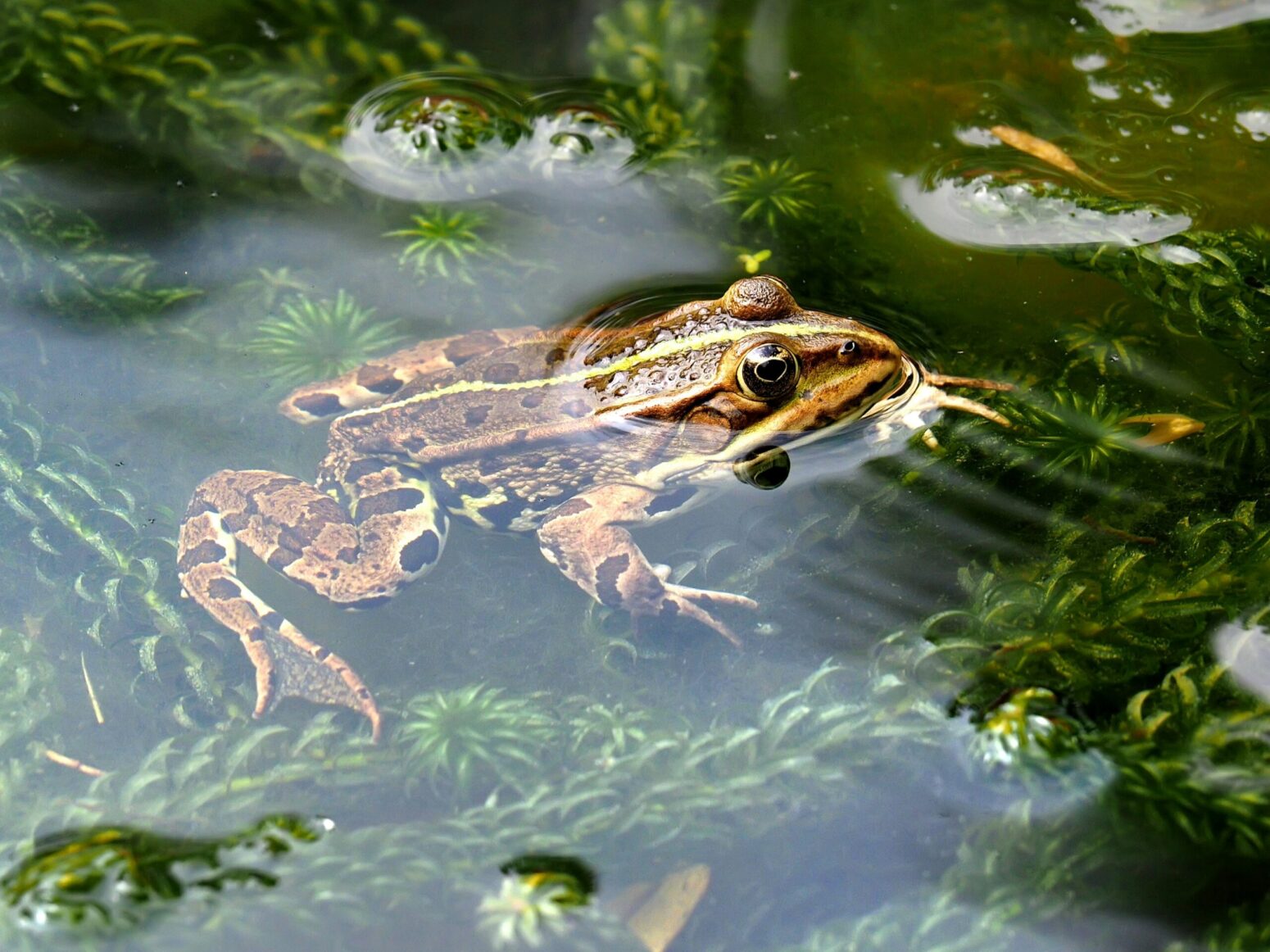
All afternoon & evening, sometimes morning & midday—in fact, when-
ever they feel like it—the frogs speak. They are strident, resonant,
bassy. Sometimes they speak sequentially, as if they are orators in a
long ceremonial event; occasionally they overlap or interrupt & drown
one another out, a quarreling parliament; more often, they monologue,
they aria, one diva at a time taking, like their neighbors the crows, all
available sound at once & amplifying. The frogs have dominion over
the square-edged, bisected pond at the end of the green sod whose not-
yet-grown-together seams echo the pond’s geometry. The frogs have
erected—or have laid claim to, historians cannot be sure—a colossal
sculpture of their enemy, the Great Blue Heron: displaying the enemy’s
effigy in their kingdom, they avert invasion by a rival, live bird. Every
day the frogs speak of the greatness of the Great Blue Statue, image of
the bird they loathe & revile; as long as they keep the Great Blue Death
content with its icon in the cubic pond, they need fear nothing else.

So the frogs believe. So the frogs teach their children, bellowing grandly
into the air above the pond as the tadpoles swim frantically into adult-
hood or the nimble mouths of the carp. The frog-parents—for there
must be parents if there are tadpoles, & so there are—do not fear the
carp who swim in the tea-green pond sometimes beside them & cannot
grip the pebbled edge with a hinged appendage, push, & lie on the sun-
warmed surface prattling in pleasure. There are so many tadpoles! The
grass green water teems & wriggles with what look like watermelon
seeds propelled by tiny whiplike tails. The tadpoles cannot leave the
water, lacking legs, having (still) gills, like the fish, who are not their
friends, who are many times larger than the tadpoles, as the Great
Heron is many times larger than the frogs.

We can watch the frog-children swimming for their lives; we can watch
the carp glide with a silken flourish of tail & fin, consuming, without
malice, as many freshly hatched frogs as hunger dictates. We can linger,
watching, on the warm angular edge of the green pond, as the tadpoles
cling to lily leaves & reed stems for safety. We cannot watch the frogs.
From their sturdy seats by the warming pond, they’ve plunged like a
team of synchronized swimmers into the water at approaching footfalls.
Not a ripple disturbs the surface to tell their hidden location. Not a
hasty gruuunk of warning resounds. But they must be there, clandestine,
for where there are children, there must be parents. No frog—not even
the frog-president, the frog-prime-minister, the frog-high-priest—can
give birth to itself.
Read more from Issue 17.2.