In This Sort of World, the Asshole Wins
appeared in The Best American Short Stories 2021
30 Minutes Read Time
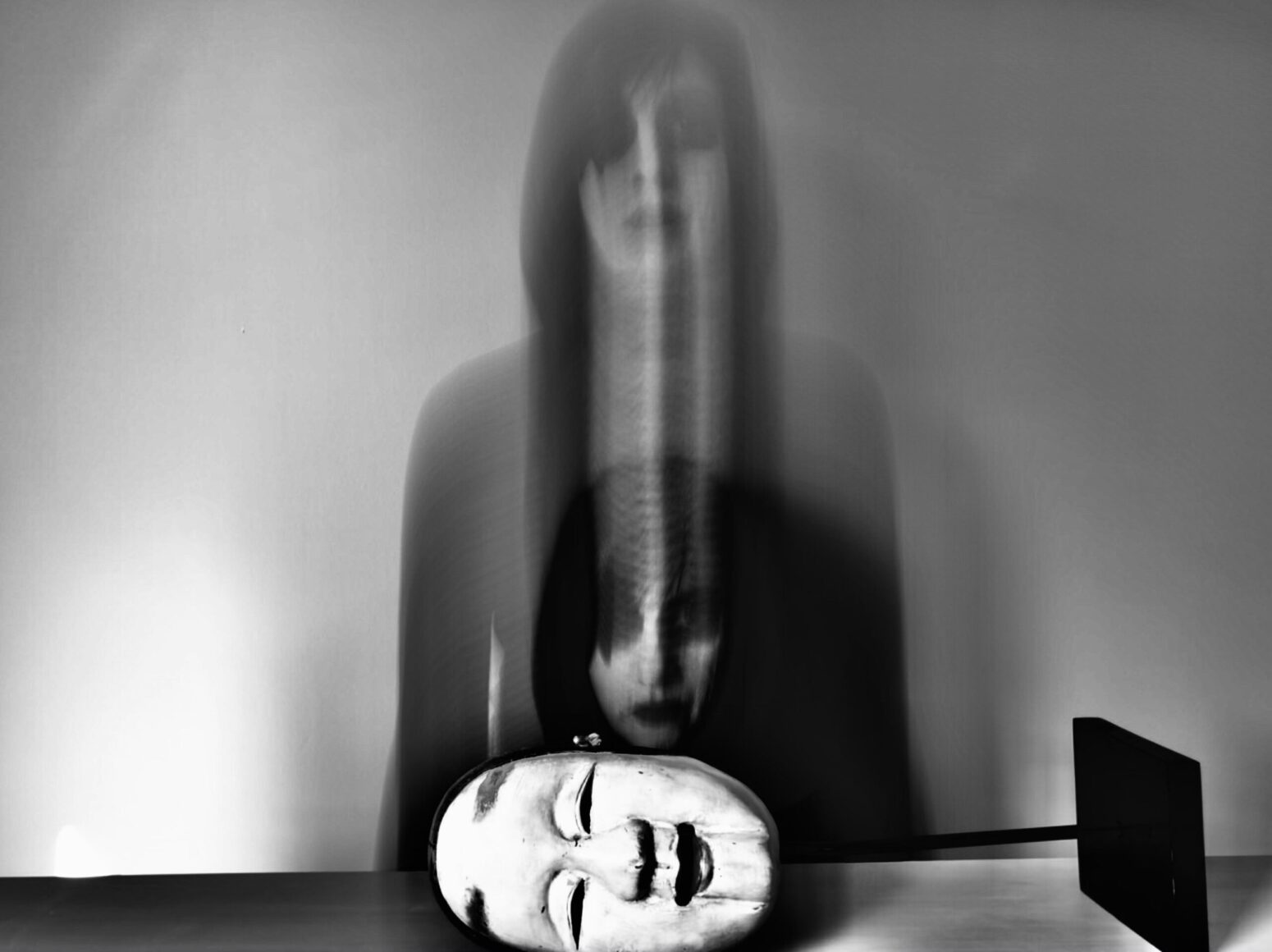
When the fatigue finally hit, her sleep brought dreams of Don before he overdosed, and in these dreams his skin was made of colorful crepe paper that kept tearing off when she reached for him, until all that was left was a tumbleweed frame, a hollow yellow bouquet of him. And when she woke in the afternoon with her aching unbearable, Tiff finally gave up and called up some bitch who’d known Don and had a car and owed her and would take her to Grubber John.
When Some Bitch pulled up, late as usual, Tiff loaded her son, Bucky, into the back seat, and they rode to the gas-station ATM while Tiff smoked out the passenger-side window. They rolled through the McDonald’s drive-through, muffler rattling, Bucky trilling “Lu lu lu lu lu” until Tiff finally said, “Quit!” and then: “Eat your nuggets, baby.” She took a bite from her steaming burger and threw the rest of it out the window. Then she was hungry again; it branched through her like rivers, like a burrowing, aching pulse.
“Stop smoking around your kid,” Some Bitch hollered, which Tiff ignored, because who the fuck was she? The hairs of her legs hurt. Her teeth ached. Bright plumes of exhaust moved around them like they were hauling a dragon. Tiff shoved the twenty in her bra. “I’ll pay you back,” she said. That bitch was known for holding things over your head when you least expected it.
“Keep it,” Some Bitch said, “then neither of us are liars.”
The small things, the ways people tried to demean Tiff, she’d learned, carried no weight. She’d heard it all. She imagined rain. Imagined those roly-poly bugs, armadillos, Magic 8-balls, hail—everything moving downhill and disappearing for good, straight off her back, into the abyss. They were all assholes. The only way for them to win was for her to lose, and she refused.
“I’m tired,” Some Bitch exhaled. “The neighbor’s dog barked all night. I’m putting antifreeze in its water, I swear to god.”
“The whole world is tired,” Tiff said. “Get over it.”
Grubber John lived above Rust Creek, where the mines had tunneled through and left, collapsing the field at the edge of the hills in rough divots. Trees had grown back sickly and anemic—hawthorns, crab apples. Tiff stepped over tarp. There was more in the bed of his truck, rolled and fastened with rope around a human-size object. “Christmas tree,” John explained. “Just now getting around to dumping it.”
This was no-man’s-land. Pokeweed rose up from broken porch boards, stacks of newspapers. A few rusted torsos of trucks on cinder blocks. In his garage John analyzed Tiff like a dog in a kennel, sniffling, sighing before handing off the crisp baggie, saying, “I got you, girl.” Her body flooded with relief just having relief so close. “If you want to earn,” he added, “hit me up sometime. Don was good people.” On the concrete step someone had arranged cigarette butts in the shape of a smiley face. “My boy’s got the insanity fleas inside,” he added. “Want to kick it with me out here?” but Some Bitch had to work a late shift, was already back in the car, already singing “itsy bitchy spider” to Bucky, who was losing his shit over spilled chicken nuggets.
The foothills fumed with the fog of a hot evening, like ghosts rising from the dead, all at once, up into the uninterrupted sky. Somewhere in the hills, dozens of abandoned mineshafts, half-sealed and filled with bats—an exit wound that had no entrance.
Don loved it out in the boondocks, which is what he’d always called it—he’d grown up deer hunting, rabbit hunting. “You can eat anything with a pulse,” he once told Tiff, when he shot and skinned a raccoon. “Where should I drop you?” Some Bitch said, elbowing her. “I’ve got things to do.” She was all bones, this bitch, like a Halloween prop, half-inflated.
“You don’t have diddly-squat to do,” Tiff said, because the only thing she could think of was to push back.
At Tiff’s parents’ house, the canaries didn’t sing, and the tropical fish made tiny unplanned laps around the tank. The television filled the room with a nervous blue light. Tiff switched on cartoons for Bucky before locking herself in the bathroom with the tiny china dolls her mother loved so much, the dolls she had once accused her mother of loving more than she loved Tiff, to which her mother replied, “Those dolls aren’t constantly misbehaving, so.” Her mother never loved her yet somehow extended her love for the canaries, the tropical fish. She loved the eleven o’clock news. She loved bacon bits. It was pathetic how many inanimate things Tiff’s mother loved.
Tiff lit and inhaled quickly, imagined herself a crab pulled out of its shell, spindly and legless—and when she began to feel the deluge, she fit right back into the shell like a thimble, a silver soldered thing. When her mother pounded on the door forty minutes later, Tiff shouted, “Jesus, I’m constipated!” And when Tiff finally emerged, Bucky was standing in front of the door in sweat pants too large for his body, and she lifted him to her. “How’s my brave little man?” she said, kissing his face, tickling his arms. “Let’s find a cartoon that you like. Did you miss me, buddy?” She kissed his smooth face. This feeling, this love for him, there was nothing like it.
At night there was no anxiety, no expectations to be doing day work. Tiff felt nocturnal, like her world did not depend on the daylight. No one had bothered to put the window screens back in, and mayflies charged the TV, the aquarium lights, tapping like dog nails, and night beetles hammered into the kitchen light. Tiff flipped through TV programming no one cared about—world’s best avocado slicer, the incredible pillow refresher—her stash gaping and unused like a minnow on the coffee table, didn’t hear her father come into the room, had no idea how long he’d been standing there when he said, “What is going on here?” and she bolted upright to grab it away, to tuck it into her waistband, a place her father couldn’t reach. Minutes, seconds—she imagined herself becoming liquid, leaking through the couch into the carpet, evaporating upward.
“Someone gave it to me,” she finally said, crossing her arms. “I don’t even know what it is. I was trying to figure that out.” The infomercials had shifted to the two-step pet-fur remover. Happy yellow dogs flashed across the screen. They leached into the walls. Everything about this place was god-awful and decaying, with a glittering veneer.
“Do you think we’re idiots?” her father said. “Don died from that shit, and you’re bringing it into our house?” His voice was loud, but his body sagged in its beater, and everything carried the cadence of someone acting a role. “How could you do this to us, after everything we’ve done?”
And Tiff felt that flooding hot knot in her body, huffed, “After every-thing you’ve done, I fucking hate you,” feeling suddenly fifteen again, then twelve, as though she was devolving, melting right there in the living room. Like she was roadkill sloughing off layers, until all that was left was a scattering of bones that could not be reassembled. The whole place stunk of dog piss, creek water.
“We enable you. That’s what it is,” her father said, as if he was delivering sad news, a death, a stroke, something unrecoverable. “If I called CPS right now, you’d be out of here, and you’d never see Bucky again. I don’t know, should I do it?” He picked up the phone. “You tell me what I should do.”
And Tiff said, “Go ahead. Then everyone will know what a fucked-up parent you are.” She felt her love drain, hurled the candle off the coffee table, the magazines into the wall. She could lose Bucky. Her father could finally hold true to his word. “Funny how you never called CPS when that other thing happened,” Tiff shot back, because she would call every bluff that ever existed.
When he reached to grab her arm, she bolted, out of the house, barefoot, down to the creek with the dead fish, dead trees from the fracking water, thinking maybe it’d be best if she were dead too. But as the sadness dredged out her insides, mutated and emptied the hurt and desperation, she began to refill with rage.
She would leave in the night. She would start a new life and they would never see her again. She would make sure that Bucky hated them, those hypocrites who never did a thing about that thing she refused to talk about, and now it was too late to fix it. Her brothers lived three states away, and Tiff was stuck—a bruised thing no one wanted and no one could make better. And somewhere, someone who should be locked up was free.
Tiff’s father moved through the rooms of the house like a heavy wind, a silent nebula, a heavy, distant tide. “Tell that girl,” he’d say to her mother, “to take Bucky outside for a change.” And her mother would say, “You tell her,” while Tiff stood six feet away, organizing fish sticks on a tray, bending the aluminum around them like a mass grave. Bucky played computer games. Bucky learned to use a remote. Days passed where Tiff refused to get out of bed altogether. There was no point. Without the dope, she ached and itched and shivered uncontrollably. Some Bitch refused to take her anywhere when Bucky was with her, so she was left in captivity, pacing the trailer. She was balled up on the couch. She was constipated, not eating. “Excavator,” Bucky kept repeating, pressing the toy against her legs. “Dump truck!”
“You need to get a job,” her mother said after work, ripping the covers off her wilted, rippling body. “Turn in applications.”
“Get out of my room!” Tiff yelled, pulling the covers back. “I’m not even dressed, you fucking pervert!” Her posters from high school were curling on the walls: P.O.D., Linkin Park, hiding the holes made by hairbrushes, jewelry boxes, fists. She might as well still be sixteen.
“Are you depressed?” her mother accused. “Do you need to be medicated again?”
Every joint ached, every fiber. Even her underwear hurt.
“You’re the one who needs to be medicated, crazy woman,” she huffed.
Her mother switched gears. “You used to be so different,” her mother said. “I don’t understand what happened.” But Tiff recognized this tactic too.
“You know exactly what happened,” she said.
And when her mother tried once more to pull the covers away, Tiff growled, “You are a fucking terrible mother.”
“And you’ll be one too. Then you’ll know how it feels,” her mother snapped before exiting, blanket trailing like a parachute. And down the hall she heard her mother exhale: “We should have sent her away when she was in high school.” And her father reply, “I told you then we should have done it.” And Tiff began to feel that familiar buzzing, her skin itching, on fire, like rocks skipping on a lake above her bones. She touched her arm where the cut marks made a tiny fence line above her elbow, piano keys. She dug her nail in. “I’m getting up now. Are you happy?” she shouted, locking the door and smoking a cigarette to help settle the aching. She pulled on a dress—something striped and faded that she hadn’t worn since she was fourteen, before she’d begun covering her arms.
But her parents had discovered the marks anyway, had forced her to attend exactly one therapy session. “You think the cutting is the problem,” the therapist had said during the evaluation, “but it’s a symptom.”
“You’re a symptom,” Tiff said, crossing her legs. The walls were decorated with scenes of sailboats, periwinkle wild flowers. “Is that supposed to make me feel better?” She curled into herself, away from this woman who knew nothing about her life and, after she left, would never think of her again.
“You’re going to find,” the therapist continued, unfazed, “that in this life, you are pushing everyone away from you, forcefully repelling people—but really, at the core, all you want is someone close.”
“I’ve never been repelling,” Tiff said. “I have a fear of heights.”
It had gone like that for the rest of the session. “Without vulnerability,” the therapist finally said, closing her notebook, “you can never really heal.”
Whatever the therapist had reported to her parents, they had never taken her back there.
Don was the reason she had finally stopped cutting, not the therapist, not her parents. “That’s rage being put inside you,” he explained to her. “You got to let that rage out.” She’d beaten on him until she really felt each hit, turned his brown chest red as radishes, then cried into his own hurt body.
“See?” he said, kissing her head, unscathed. “You just needed somewhere to put it.” He had smelled like pepper and wild bergamot. Like sun-hot fields. Sometimes she still dreamed of waking up next to him, in the house they lost, on a mattress that Tiff had since dragged to the curb, left in the rain to rot along with the rest of the possessions she could not take with her.
By the time she was dressed, Bucky was the only one left in the house. Her mother had put sticky notes on the TV, the remote, the screen, the bathroom door: FEED PETS. But for the amount of time it took for her to write that out, she could have fed them herself. Tiff felt the biting, prickling anger stirring up, climbing her throat.
“Shark?” Bucky was saying, thrusting the toy in her face. “Shark?” His diaper had leaked onto his pants, which her mother had not cleaned up before leaving. Tiff’s lips ached. Her teeth ached. She couldn’t find any clean diapers, stuck Bucky’s feet through a plastic grocery bag, tied it in the front, which made him wail. “Don’t you dare rip it off,” she said. The broke remote kept freezing the TV, and the canaries began rattling their cage, pecking and scratching for food. Her entire body was buzzing, vibrating, crawling inside of itself. She threw the remote onto the couch, shook the wire birdcage, which only caused more ruckus. The air conditioner rattled in the window. Tiff grabbed the cage from the counter, lugged it out to the front porch, and hurled it into the driveway. The door popped open on impact. And before Tiff could rush to it, the birds were gone, into the wide white sky, toward the gas site that had scalped the hillside.
Tiff tried to determine how her mother was really to blame for this. She should have clipped their wings. She should have known better than to ask Tiff to feed them. Those birds never sang anyway. They were prisoners, and Tiff had done them a favor, even if they died by sundown tonight. That, Tiff decided, was the god-awful truth.
She packed a suitcase. Her back hurt. Her toes hurt, her fingernails. She checked the mail again, saw a birthday card for her father, slit it and pocketed the twenty bucks, tucking the card and envelope into the side of the kitchen trash.
She texted Some Bitch about getting something. After thirty minutes and no response, Tiff moved onto a guy she’d met at the bar a few months back, had met up with a few times since—an oil-and-gas man, here from Texas for nine months, just long enough to collect a hefty paycheck and retreat from this shithole town, taking anything of value with him. When he didn’t respond, she called five times in a row. Then she texted once more: “My son’s sick and I need twenty bucks for a co-pay.”
At the Red Roof Inn off the highway, she let that man come on her stomach on one of the yellowed double beds while she stared at the ashy wall. “Oh oh oh,” she cried out as she finished him off in her hands, because these men always felt better believing Tiff got pleasure too. His belly heaved with relief. Then they both snorted some shit, and she felt like a person taking her first breath after falling into a cold river.
After exiting the building, she chucked her hoodie into the dumpster next to the empty outdoor pool. She couldn’t stand the smell of bodies, their emissions—the rotten, sweet fragrance of them. The stucco siding looked like one of those sugar eggs that you could lick until you created a dent, a hole, like she could crawl through and keep going, into the innards of some other person’s life—a businessperson, a car salesman, a cashier.
A maintenance worker carrying a few trash bags to the dumpster stopped and stared at Tiff before finally saying, “You can’t loiter here.”
She eyed him over. “I was visiting a friend, Jesus.”
“Jesus would never be your friend,” he said shortly. He looked like a toothless mannequin, a blow-up-doll version of a man. She could have crumpled him in her own two hands. “You better get on your way now.” She threw her candy wrapper onto the concrete. “Do this earth a favor and fuck off.” The buzz was wearing off, and she began feeling deflated too.
He followed her through the lot. When they got to her car, she whirled to face him, raised her key between her knuckles. “I am afraid for my safety. I am going to report you to your manager.”
“I see you have a car seat in there, you piece-of-shit mother,” he replied. “For the record. CPS will hear from me.”
“For the record, I’m a babysitter,” she exclaimed. “I haven’t even babysat in years, so you’re the piece of shit, for assuming things you don’t know shit about. And besides, this isn’t even my car.”
There weren’t any sidewalks, so she cut through the grass. When she got around the corner by the McDonald’s, her heart was chugging like an old washing machine, and between dumpsters she snorted a little of the crank she’d stolen from the guy at the motel, the stuff she’d sworn she would save for later, some cheap trucker amphetamine to keep her moving. She decided that everything could happen. Everything was a possibility. She hooted a few times like a siren into the open air. It felt good. She would make something of her life. It was true that years were lost, ruined—but there was still so much time.
Three days passed like freight cars, maybe more. Some Bitch finally called her back, but Tiff was rambling about possible futures, audio waves. She began to see cockroaches coming out of every hole, every orifice. Sleep was for the weak, and days passed in a fever. The sycamore leaves were green and flapping like condor wings, everywhere she went. The creek seemed to be inching closer to her, no matter what part of town she wandered into. Friends came and went. “They’re making meth in the old mineshafts,” someone was saying. “They’re actually making it from nail polish remover, Jesus.”
“That’s bullshit,” Tiff said. “They’ll burn up.”
But the next time she looked for that guy, there was only the peeling earth in front of her, covered by pavement, and cars on top of that. Time was a funny thing, the way it stretched and recoiled.
Her car was still in the motel lot, and once it was dark, she followed the highway home—just her and the water trucks heading toward the gas wells that speckled the hillsides. She put on Bach, a CD her father had given her as a high-school graduation gift. “Thank god one of you has brains,” he’d said that day. The windshield wipers swayed in B-flat minor. She felt their pain, her pain, every pain that ever existed. She saw a naked woman standing in the horse field, but when she glanced back, it was just empty floodplains.
At home she shut a window, slammed a door. Turned on the radio, the AC. When Bucky finally woke up crying, she cuddled him to her chest. “I got you, baby,” she said, rocking him. “Something woke you up, huh? Something scared you.” He smelled like mint and vinegar, baby powder. Her mouth emitted the heat of her sore bottom teeth, and she inhaled him like a fugue.
When things got dire again, when her mother was bitching about the lost canaries, lack of rent, threatening to kick Tiff out, Tiff called Grubber John, who said he could probably think of some ways they could help each other, and by the time Some Bitch dropped her off, Grubber John was already on the porch in a beater and Steelers cap, planting petunias with a shotgun stuffed into the earth like a sapling. “My cane!” he said. “And my widow-maker.” He cleared his throat, glanced down. “Hell, I don’t shoot that thing. Sorry again about your loss.”
The screen door was ripped at the bottom, and a hound walked through it onto the porch, barking. “Is he friendly?” Tiff asked as Some Bitch pulled away.
“Come on and see,” Grubber John said, shifting weight, and when she did, he grabbed her in by the arm and pushed a handgun into her rib cage. “If you ever run your mouth or steal from me, this is what’s going to get you. I want you to remember that. If you tell anyone about where we’re headed, you will be buried there. I am trying to help you out because I know you got a kid. But if your loyalty wanes, your kid will no longer have a mother. Understood?”
His eyes were wide and brown and empty. He reminded Tiff of one of those alien television creatures Bucky liked to watch, like, you could fall down the rabbit hole of his eyes—while it sang and chirped and pretended to be having a wonderful day.
“I am not going to run my mouth,” Tiff replied, shaking him free. “Jesus.”
“Don told me if something happened to take care of you. So that’s what this is. Business.” He paused. “Maybe pleasure.”
She followed him to the Chevy. The cornfield out front wavered like desert air. Tiff regretted not having Some Bitch along. Her bottom incisor hurt. She put some lidocaine on her gums. By the time they drove over the creek, he was slowly pressing his fingertips against her leg, down the length of her, as though there’d been some unspoken agreement.
“You think Don meant this sort of taking care?” Tiff asked, and John replied, “In fact, he did not specify,” which made Tiff want to laugh and sob and rip something to shreds. Don was a sweetheart. He would have befriended Saddam Hussein.
The hillside was eroding, shale crackled like mangy dog skin, road cut out and rocky, but between two ravines about a half a mile back, Grubber John turned off the engine. Below the heavy ridge of rock and clay, a pit entrance, shaded by crab-apple trees, sumac, milkweed, thistle. “Here we are,” Grubber John said, handing her a flashlight. “We are the forgotten people, owner of the forgotten things. And this is my humble abode.”
Inside, Tiff was startled by a hunched woman who looked like a holo-gram of a person, wavering beneath the fluorescent light fastened above her, clutching empty soda bottles. “I have paper cuts on all of my fingers,” she was explaining. “I don’t know why this always happens to me.” “Okay,” Tiff said. “She’s nuts. And this place is going to cave in on us.” She’d read about the runoff. How it killed off an entire river.
“Greta works for me. She’s my mom’s best friend’s sister and a hell of a lady,” John said, redirecting her to an area of the mine that widened around the bend, where gray tarp sat beneath medicine bottles, bagged fertilizer, Tupperware, empty soda bottles. “I want you to work with me too. I know you need it.”
The old shaft was damp and smelled of rotten eggs, was held up by propped railroad ties, old metal machinery that looked like the abandoned jaws of a gator. Somehow, Grubber John had gotten a sofa inside the shaft, a folding table and chairs, a battery-powered radio, a few large plastic bins.
He smoked her up quickly, and Tiff felt completely, utterly alone, like time was stretching her like a rubber band, warping her into an unrecognizable thing. A hound slunk by as if it was guilty of some terrible crime, eyes glowing in the lantern light, and a caged cat in heat kept rubbing against the bars, howling. “That’s my coyote bait,” he said, leaning in. “I put her in that cage in a field and shoot what comes to eat her.”
“That’s fucked up,” Tiff said.
He pressed his fingers into her wrist. “You’re fucked up,” he said.
He let his finger trail along her collarbone, down her rib cage.
Tiff could not remember the last time someone touched her who wasn’t taking something from her. The cavern was achy, and the single light shivered, like Tiff was seeing it from the bottom of a pool, and Grubber John leaned in and said, “You act all tough and mighty, but I know who you really are. You’re small. You’re so small, you’d fit into the palm of my hand and there’d be room to spare.” He moved his knee between her unshaven legs. “I always know how to spot a girl like you.”
He was right. And he was not right. Her head was cramped against the cushion, and he clutched her wrist. The woman with the bottles had disappeared. And when she closed her eyes, Grubber John smelled like a far-off campfire, the burning hot engine of a car. Like she was in the backyard of Don’s and her house, grilling up burgers. When she opened them again, he was at her waist, pulling off her shorts. “You have the body of a ten-year-old child,” Grubber John said, shaking his head, pulling off her underwear. The couch reeked of BO and vomit.
He didn’t use a condom, moved against her roughly, saying, “Is this okay?” and Tiff focused on the glossy bituminous walls of the mine, the way the shadows pulsed like oceans, the flaking layers of mud and stone. “The crazy ones are always wild in bed,” he was saying. And Tiff simply let her brain unplug from her body. She did it all the time: Waiting in a long line at the Walmart. Getting a tooth pulled. For some reason, she kept seeing trees—long fans of sumac and walnut, and weather vanes, all whirling in the same direction. She slapped him hard in the face, in the chest, and listened to his response echo through the chambers. She thought about bats, those canaries. How saving it would be to have wings.
“I want you here every day,” John said. “Don was my boy, and you’re the mother of his child. And that means we’ve got to get you right.” But no one in this world was right, and then he gave her some dope and cash—for one last spin, he explained—drove her back to the road past his house, said, “You should probably call someone.”
Tiff walked through other people’s lawns, blank as daylight, two miles like that. She made a call to Some Bitch. Pissed in a gas-station bathroom. An hour later Some Bitch picked her up along the road in an unfamiliar beat-up truck, foam falling from the seat where it had been rat-chewed, split open. “Why can’t you ever come to me?” she said, hair knotted into one frayed rope.
“Do you have any Plan B?” Tiff asked. “Or Plan C?”
“You stink,” Some Bitch said, rolling the windows down. “God, you reek.” She was wearing pink plastic barrettes that probably belonged to one of her daughters, and had a scab across her cheek.
“Tonight I sent Billy to his dad’s,” Some Bitch confessed. “I said I’d never choose my boyfriend over my kid, but then I went and did it, what the fuck.” Tiff offered up some of her stash. They smoked up in the Walmart lot, beneath the shivering lot lights. Then Some Bitch eyeballed Tiff, exhaled. “At a certain point, what is the point of going on like this?”
“The point is the sharpest part of the knife,” Tiff said. “The stabbing part.”
But Some Bitch was already gone off on a tangent. “The thing about John,” she was saying, “is that he will fix your glasses and then rob you blind. You watch him. He is never looking out for you, I’m telling you what. I went to county for him.”
“People want to pretend they’re all noble and generous, but guess what? They’re not. Life is all about figuring out how to get yours. It’s your own fault you went to county, bitch.”
Some Bitch tried to argue with her, but it was like taking your car to the shop. They were always going to tell you that you needed to buy something, to fix something that didn’t need fixed. It was all about making a buck off your back. And the government was the biggest crook of them all. They were probably putting something in the water to rot out her teeth, cause cancer. Send out computer viruses to sell the antidote.
The flags at the car lot across the street rippled and retracted. Tiff inhaled and felt her entire body widen. “Better?” Some Bitch said, driving her back. “That shit is in its prime.” In the driveway of Tiff’s parents’ place, Some Bitch gave her something to calm her nerves, snorting some herself. “Valium-type shit. But now you owe me again,” she said, gaping, giggling, widening before Tiff’s very eyes. “How do you want to pay me, bitch?”
“I’ll fucking pay you,” Tiff said. But after that hit, time was fuzzy, passing like a train in both directions. Tiff sunk into the truck, the world like a drill bit. It was possible that Some Bitch was her only friend in the world. Her body felt lifted, carried, helium on a warm night. It reminded her of the balloons released at Don’s funeral. She’d written a note in black Sharpie. Her name and number, an outline of Bucky’s hand, I’ll see you soon, and since she never got a call, she figured the balloons had just kept ascending, all the way up.
When she finally woke, it was dark, and she was in her parents’ driveway covered in mosquitoes, dew. She slammed the door going in, causing the dogs to stir and grumble. “Can it,” she said, kicking her shoes off at them. Bucky was asleep in his bedroom, cupping the head of a ratty stuffed dog. He looked smaller in the hallway light. The first time she’d held him, he was only two pounds, five ounces, a month early and tubes out the wazoo. They had named him Buckingham Prince Morris—Don thought it should be something with royalty, in case he wanted to be an actor someday. “He would have the name for it,” Don had insisted.
The hallway echoed with orange light, carpet worn down in the center. On the door to her room, a sticky note: FEED FISH OR MOVE OUT. When she reached into her purse for her pen to write back, You feed the fish, she saw that the cash from Grubber John was gone. The baggies were gone. Everything was gone.
The swarming, crawling heat beneath her skin returned, and the anger beneath that. She would cut Some Bitch. She would take her out with a shovel, like a rabid animal. She would grind her face into the road. She slammed the door, over and over, until her mother, from her bedroom, yelled, “People are sleeping! Knock it off!”
“You assholes think you can fuck my shit up,” Tiff yelled into the walls, the doorways. “The joke is on you. Everything is already fucked up. Everything is ruined, you ruined it, and nothing I can do will ruin it any further. You think I’m the asshole—but let me tell you something. You are the real assholes, you phony, ludicrous people! I will ruin every thing you love. I will rip you to shreds.”
She stormed into the living room and scooped one of the aquarium fish in her hand, then another, hurling them into the kitchen sink. “I’m a maniac! Is that what you want to hear?” she shouted. “I’m psychotic.” With each fish, the noise they made hitting the metal, she felt a small surge of relief. And when all nine were dead and smeared across the sink bottom, Tiff began to subside, the way an ocean wave eventually reels itself back in.
She imagined her parents awake and welded together in bed, comforting each other, confirming what they’d always believed: Tiff was no good. There was something wrong with her. Tiff was a thing that had happened to them. It wasn’t that she was cursed; she was the curse. But nothing stirred, and she used the toilet, wiped her face, shuddered like a night insect. Then she climbed into Bucky’s bed, pressed her forehead against his shoulder, his tiny arm. Her wet sleeves left marks on his clothes.
“Hey, little man,” she sang softly. “Who do you love more than anyone else in this world?” She cooed, “Your mama loves you, no matter what those assholes do. You know that?” She felt warm, lighter. She would go back to the mines. She would do whatever Grubber John wanted. She would work with that nut Greta, whatever it took to get right, get out of this house, get her own place, and take Bucky with her. Tonight Bucky smelled like mint, old sweet milk. She pressed her mouth to his lip, as though he held the source to the only oxygen in the room. And when Bucky finally stirred, she said, “You having a bad dream, baby?” but he slept on, oblivious to how much Tiff loved him. Enough to consume him, she thought. What a funny way to feel about a thing you love.
Read more from Issue 17.2.