The Watchman
17 Minutes Read Time
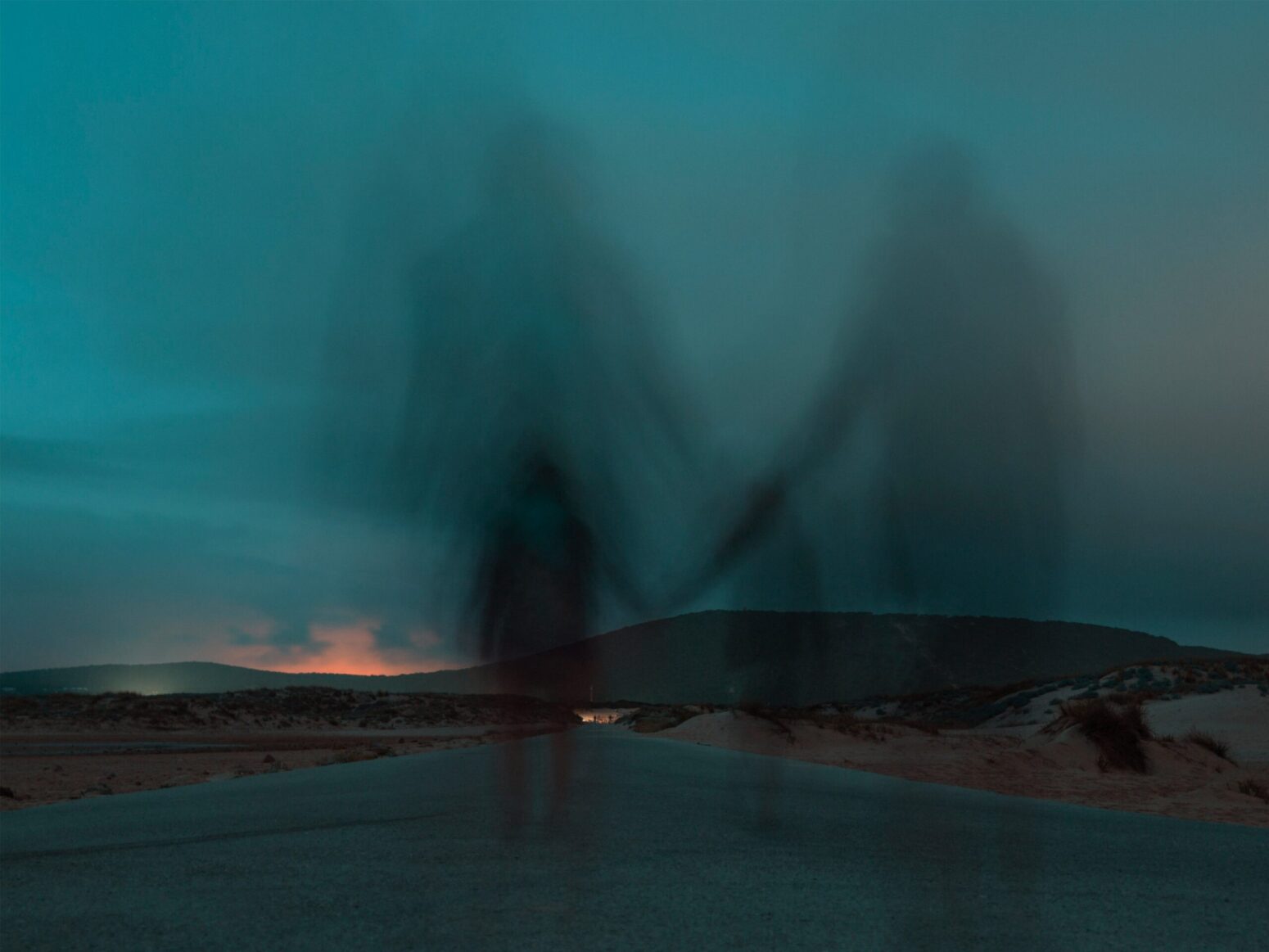
There’s nothing much wrong with the Bridgeway Motor Court. The carpet in Coleman’s room is dappled with burn marks, and the exterior wall, the one with the windows, has these psychedelic zigzags at the bottom, like somebody’s kid was left to run their crayons back and forth over the same spot, rubbing them down to the nubs. It’s cheap, though, the motel, and there aren’t any bugs. Since his wife kicked him out eight months ago, he’s seen far worse.
At first, he’d spent nights at shelters or in the cab of his pickup, his clothes and tools locked down in the covered bed. Then a space opened up in a sober house downtown. The owner was a lawyer with connections in the probation department. He helped some of the guys with their cases. Or gave them drugs. Especially the younger guys, the pretty ones. I take care of you, you take care of me, that was his motto. Two weeks and Coleman was out of there.
For a little while, he was crashing with a buddy, a roofer with a spare room. The guy had this wallpaper in his bathroom, dogs playing poker. He must have thought it was funny, but every time Coleman went in there it made him gag, a furry paw to the back of his throat. Plus, he got tired of the bad nights: listening to the same stories over again, cleaning the guy’s vomit off the toilet or the bathroom floor, putting him to bed.
So, the Bridgeway Motor Court.
In his room, he irons a pair of khakis and a polo shirt that says Apex Hardware on the front. He has a date tonight. On first dates, he likes to get there early, to be already seated in a booth if it’s a restaurant. If it’s a movie theater, he stands in the lobby, tickets in hand. He’s been off the crutches since January, but there’s still the limp. He doesn’t like the idea of his date seeing him come through the front door half-lame, dragging one leg behind him.
He hasn’t been dating long. Only four times since the separation, all through an app. Five if you count the one who stood him up. There was a college girl who’d left flirty comments on his pictures. They texted back and forth, and when it was time to meet, she made all the arrangements. He had never seen anyone walk like that—a rapid trot, self-consciously cute, as if her ankles were bound together by a short length of elastic cord. At the BBQ place, she’d ordered a lot of food and then, as he was taking care of the check, she asked the waiter to pack most of it up. He walked her to the MAX stop. She boarded the train carrying styrofoam containers filled with pulled pork, hush puppies, and fried okra. He never heard from her again.
Then there was the wide-hipped woman with bleached bangs. They’d had dinner outside on the patio at Stormbrewer. The woman said, As a fat girl, it’s kind of over the top for me to wear lipstick—like an unfair advantage. I have these big plump lips.
She smoked cigarette after cigarette, reapplying burgundy lipstick after each one, delighted by the red-painted filters as they piled up in the ashtray. She was funny and frank, and he liked her. In her profile, she’d said she was a social drinker. But while he sipped Coca-Cola, crunching at the ice with his teeth, she kept ordering whiskey sours, one after another.
You really don’t drink? she asked.
I can’t, he said. Not anymore.
Tonight, he is meeting his date at a diner, a Greek place that serves breakfast all day. In the display window a column of sliced meat turns slow circles. A song is playing, something about a laser in the night. He hasn’t heard the song in thirty years, but then today, twice. He wonders if it’s some kind of tribute, if maybe the singer has just died.
He orders a coffee and waits. The guy in the next booth is a loud talker; he asks the waitress where she’s from.
Baltimore, she says and slides an omelet in front of him.
Did you like it there?
Hated it.
Nice train station, the guy says, as if that alone redeemed a place.
Coleman checks his wristwatch against the clock in the diner. He has to wind it often, or it runs slow. He spotted it one afternoon in a pawnshop window. It was silver colored, like the coin he’d gotten at his first meeting, his twenty-four-hour chip. The chip didn’t mean much to him, but something about the watch—this ordinary, tarnished thing—it gave him chills. It seemed to be singing to him from behind the pawnbroker’s glass.
My higher power, it can be anything? he asked at his next meeting
Anything, they said. The watch, then. Mine is the watch.
His date, Sandra, jangles through the front door and throws herself into his booth. Her hair is long and curly. Damp, it rests on her shoulders in thick, wet strands. She’s breathing hard, like she just ran from somewhere.
I’m sorry I’m late, she says. It’s my house, it’s so haunted.
The waitress brings their menus. He already knows what he’s getting (the baked lamb), but Sandra turns each of the laminated pages, squints at the pictures of food. A couple of her fingers look badly bruised. Smashed.
What happened there?
She sighs, regarding her hand. Do you believe in ghosts?
I’m not sure, maybe
My house. Really, it’s my sister’s place. There’s a ghost, maybe more than one. Like tonight. I was getting ready, and the thing slams a door on my hand. Bam!
Sandra slaps the table with the flat of her good hand. The silverware clatters, and the loudmouth in the next booth lets out a little shout—Ooo boy! Something like that.
Show me, he says.
Sandra holds up the injured hand. Between the first and second knuckle, her ring finger is purplish pink, darkening as it nears the tip. The pad is a shiny gray, almost black, as if it’s been freshly inked.
Can you wiggle it?
The finger moves stiffly, and Sandra winces, waves it in the air.
I think it’s broken, he says.
Are you sure?
Pretty sure. I used to work construction. New guys are always smashing their hands with hammers. That finger, that looks broken to me.
Shit, she says.
When the waitress comes to take their order, he asks for a bag of ice.
They eat dinner in the emergency-room waiting area. There are signs prohibiting smoking, but nothing about food. A man with a round florid face is giving them dirty looks, his hand over his belly, as if he’s trying to keep his guts from spilling out. Coleman ignores him, goes back to sawing at his lamb with a plastic knife.
You probably think I’m crazy, Sandra says.
He chews, considering. I think you’re hurt. I guess it doesn’t really matter how it happened.
You’ve never seen a ghost, then, nobody in your family? The night my grandmother died, her ghost appeared in my sister Liz’s bedroom. She was in bed with her husband. A Black man. Nana hadn’t approved of the marriage, but that night she said she’d been wrong, that they had her blessing. Walter saw it too, said he’d never been so scared in his whole life.
Coleman hardly ever talks about the Watchman. But this, he figures, is a special circumstance. When I was a kid, he says finally, I was in a car accident. There was this man, he just showed up out of nowhere, and he saved me.
He’d been five years old at the time, playing outside, rolling over and over down the slope of his front yard. Grass stained his knees, and his hands stank of dandelion stalks.
He doesn’t remember climbing into the family car, only the vinyl’s sticky heat. On his knees in the front seat, he tapped on the faces of the dials, twisted the knobs, pulled the levers. The car creaked and began to move, drifting backward down the long driveway. Tires gnashed the gravel, and little rocks ticked beneath him. The yard, his house, they began to slip away. The way he remembers it, there were tracers, like the time he did LSD. The car was moving; so were the bushes by the roadside, the woods behind. All this moving, but Coleman couldn’t move. It was like being in a dream.
He shut his eyes, and when he opened them again, he was not alone in the car. There was a man in the driver’s seat, a watch loose on his wrist. Coleman tried to look at the man, but a bolt of sunlight flared off the watch’s face and struck his eyes. The steering wheel jerked to one side, and the car veered into a ditch.
That’s all he remembers before the hospital. They’d pulled three broken teeth from his jaw. New ones grew in to replace them. After the accident, he knew he would never die. At least not until he was very old. Something was looking out for him, shielding him from harm. He could do whatever he wanted.
That’s amazing, Sandra says. And no one else saw him?
We were out in the sticks. There was nobody around.
Sandra sets the plastic bag from the diner onto a little table built into the row of chairs. The bag says THANK YOU THANK YOU THANK YOU, and what’s left of the ice sloshes around inside.
She says, You can go if you want to. It was really sweet of you to take me, but I think it’s going to be a while. With her good hand, she takes a couple of fries from the container in her lap. Bet this wasn’t how you saw your Friday night going.
I’ve had worse, he says, grinning. How’s the finger?
About the same. Aspirin isn’t doing much good.
Sandra holds up the hand. Two of the fingers are bound together with medical tape from the first aid kit he keeps in his truck. The ring finger looks wider than the others; the palm has begun to swell.
A woman with a crying toddler sits down nearby. Setting the boy in her lap, she presses a damp cloth to his forehead. Sandra watches them, seeming—for the moment, at least—to forget about her injury.
Do you have any kids? It didn’t say in your profile.
A daughter, he says. Heidi. She’ll be five next month.
Does she…
She lives with her mom. We’re separated. Almost a year now.
So, why did she leave you? Sandra asks.
He considers objecting. What does this woman think she knows about him? He couldn’t have been the one to leave?
I was a drinker, he says.
Sandra picks absently at her food and tosses in the fork. She snaps the container shut and sets it at her feet. The boy has stopped crying. He squirms out of his mother’s lap, totters around, his bare feet leaving outlines on the vinyl tile that wilt and then disappear.
Coleman looks away. It is hard for him to be around young children. He doesn’t even like to see them on television. His shame, it comes over him sudden and black, like someone yanking a sack over his head. The mother fills out paperwork, looks down at the clipboard, and then over at the boy. Sandra catches her eye and smiles.
I love kids, she says. I can’t have them, though. Or maybe I could, but it would have to be somebody else’s eggs. And who would that be? Not my sister, that’s for sure. Anyway, I wanted to be a teacher, like for little kids, but then I failed out of early childhood education. Twice. I don’t think they’ll let me back in.
I work at a daycare now. When I first started, they gave me the hard kids. It was like—what do they call it?—hazing. There was this boy whose mother worked in a factory. We didn’t open until five, but she’d be in the parking lot at four thirty, in the dark, her car engine rattling. We’d open early so she could make her first shift. She wouldn’t come and get him until we closed at night.
That boy was so sleepy. First thing, I had to change his pull-ups. I’d show him the different ones and say: Hey, we gotta get up and save the world. Who are you going to be today? Iron Man? Captain America? He’d rub his eyes and pick an Avenger, and that’s how I’d get him to wake up. These kids, you just have to treat them like humans.
Sandra, he thinks, is a good woman. But after they’re through here and he’s dropped her off back at the restaurant or her sister’s house, that will be it. All this talk about kids, he wouldn’t be able to take it. He wonders sometimes why he goes on these dates. Maybe it’s because he wants to believe they’re not true—the stories he tells about himself. He has two buckets for his life now: things he can’t change, and things he can. The aloneness, it’s stubborn, but he keeps pushing it back, hoping one day it will give.
So, Sandra asks, did you say you work construction? Used to. Carpentry. I was a framer, mostly, but I did some finish work too. That was before I got hurt. Busted up my leg, was on crutches for a while. Not much use on site for a guy who can’t get around. That’s when I started at the hardware store. He pinches his polo shirt, puckering the fabric where the store name is stitched.
So they let you go? That really sucks. Were you hurt on the job?
Yeah, he says, lying.
It happened on a bright summer day. Alone in the house together, he and Heidi played Simon Says and danced the Hokey-Pokey. It was such a beautiful day, though, how could they waste it by staying inside? He got Heidi into her bathing suit and floats. He swept her up, put on her helmet, and strapped her into the child seat mounted to the back of his bike. He’d had a few pulls from the bottle in the basement, but he was definitely not drunk. He was just happy. They were going to the pool; such a beautiful day!
He pushed off the curb and started pedaling. Behind him Heidi was squealing, delighted. He wanted to do tricks. To pop a wheelie. Wouldn’t it be funny? Wouldn’t Heidi laugh? Just the idea, it made him laugh. It was all he could do not to laugh his head off.
He angled the handlebars, turning off their neighborhood streets and onto the avenue. They were going faster now, causing the wind to gust. But not fast enough for the car behind them. It swung out alongside, trying to pass. There was honking and the screeching of brakes and then a feeling like being hit with a baseball bat. His bike jerked out from under him and spun sideways in the air. A moment later, he slammed against the pavement, one leg tangled in the frame.
The leg was dead. He didn’t look as he pulled it out of the wreckage. He got onto his good knee and crouched next to the red wailing bundle that was his daughter. He unstrapped her from the seat and pulled her close.
There was an ambulance. He let the paramedics examine her but kept a firm grip on the sole of her sneaker. Scrapes and bruises, they said, but she was going to be fine. It was a good thing she’d been wearing her helmet.
His daughter was all right and so he could feel again. Pain and anger. The driver who’d hit them was there, trying to apologize, to talk insurance. Coleman tore off his helmet and spiked it to the pavement. He raged. Tearful, he threatened to drag the man bloody through the streets.
A patrolman arrived to restore order, to take statements. All Coleman wanted was to get Heidi home, to go home himself, but the medics said the leg was fractured, that he needed to go to the hospital. And the patrolman, he kept asking his questions.
Sir, have you been drinking at all today?
The accident hadn’t been his fault. But it was Coleman who blew a point-twelve on the breathalyzer, and it was his life, not the other guy’s, that got ruined.
I know that store, Sandra says.
He’s sweating now, and it feels like someone has put his leg in a vise.
Is it the one in Buckman? I had some keys made there a couple of weeks ago.
It’s only temporary, he snaps.
All right, she says, okay.
He breathes in and out, takes a long sip of cold soda. He says, I’d like to start my own company. You know, down the road. Remodeling old houses, that sort of thing.
A male nurse wearing a blue smock and badge calls Sandra’s name.
Will you be here when I get back? she asks, collecting her purse.
I’ll be here.
He wipes the sweat from his face with a paper napkin. He curls into the narrow plastic chair, tries to get comfortable. He closes his eyes against the brightness of the waiting room, the television chatter, the noise of the sick boy, his shrill shouts of Mama! and No!
After a while his wrist begins to tingle. His hand, awkwardly bearing the weight of his head, has gone numb. He shakes blood back into his fingers and wipes the sleep out of his eyes, the groggy feeling of a nap gone bad. The ER is strangely still. The few people left in the waiting room are quiet, their heads pressed to their knees like the drawings on airplane safety cards. He is not sure if he’s awake or dreaming, not sure if it matters.
He walks over to the automatic doors, and they open like fate. Outside, the parking lot is empty. It’s nighttime, but harshly bright, as if illuminated by invisible floodlights. When he looks up, the stars are wrong.
It’s only a few steps before the parking lot gives way to a forest. Gray trees, their trunks covered in pale mosses. There are birches, tall ones with bone-white boughs and smaller ones with branches that weep to the ground.
He walks for what seems like a long time. Past wounded trees, scarred by fire. It is so silent here. No birdsong. No chittering of squirrels. No rabbits rustling the underbrush, tracing frantic, crooked paths to their dens. Against his wrist, the watch gives off a fluttering heat, like something alive.
And then the forest is gone and he is standing in a clearing. A yard. A house. There is an old Buick parked in the driveway, a child bouncing in the passenger seat, playing with the knobs. Coleman starts walking toward the car, then runs. There’s still time. If he hurries, maybe he can save the person inside.
Read more from Issue 20.1.