The Very Great Abyss
28 Minutes Read Time
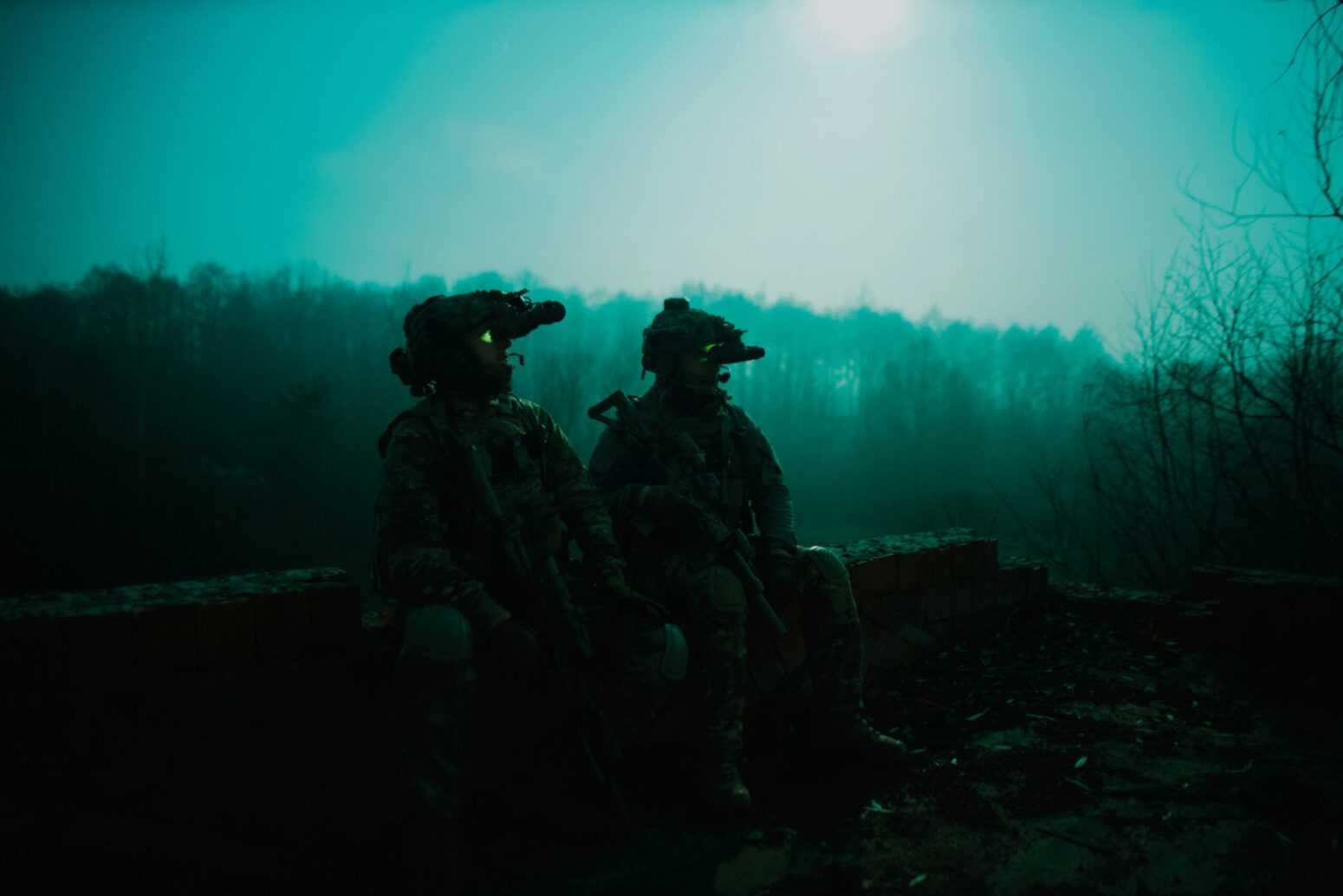
Her name is Miranda, and she’s an Engler on her father’s side, raised to be proud of the good her family did during a troubled time. To this day, at every family gathering, an ancient Engler is helped to their feet to tell the story of the weeks, months, years after the Battle of Gettysburg, and what always interested her about those stories was how new details kept being added, as though the stories hadn’t ended yet. She and her brother Curtis had sat side by side among the relatives, listening hard, reviewing the details together later.
The story was about how the Engler men were too old to fight for the Union, but the family did their part. On July 1, 1863, the day the battle began, they fled to Carlisle, and when they returned on July 5, two days after it ended, they burned half a dozen dead horses in the yard. For days, as rain poured through the broken roof of the barn, they tended the wounded and dying there. They went out onto the battlefield and buried the dead, making no distinction, as some of their neighbors did, between the Union soldiers who deserved a decent burial and the traitors who could be left to rot where they fell, with only a thin covering of dirt and leaves kicked over them. An historical marker on the road in front of the Engler farm marked their place as a field hospital.
She’d been around real and make-believe soldiers all her life (her brother, her father, his father, and his), and that’s how she knew that the man Jesse had brought to her door for his three o’clock appointment was dressed as a private in the Confederate army. His gray kepi sat straight on his head; his uniform was creased, like he’d just unfolded it, and a pair of new leather brogans stuck out from underneath the too-short pants. He took off his cap when she opened her door, an act of misplaced chivalry that almost made her laugh until she noticed his high-and-tight haircut. A Marine, she thought, and she saw the close clipped back of her brother’s head disappear into the door of the bus the morning he left for Afghanistan. She looked at the floor to shake that sight, then went back to sizing up this soldier. A first-time reenactor, she guessed, but not a hard-core, like the men who swarmed over the battlefield every summer, obsessed with getting every nineteenth-century shoe and button right, except for their deaths, which were only temporary. He was spooked like a new one, too: fresh from their battlefield deaths, they came here to prove they were still alive.
Behind her soldier-boy, in the sour yellow light cast by the hallway wall sconces, Jesse checked the giant white wristwatch on her skinny arm. Let’s get this show on the road, she signaled with her thin penciled eyebrows.
Last January Miranda had graduated from massage school in Pittsburgh. She knew Swedish massage and deep tissue and reflexology and Japanese shiatsu and acupressure. At school they’d called her a natural, said she had good hands, intuitive hands that felt the places where the body armors itself against the pain of walking through this world. She was the one the teachers called on in acupressure class. “Come show us the location of the Sea of Tranquility and the correct pressure to apply there,” they said. “Come locate the Very Great Abyss.” And every time, she’d go straight to the tiny point on wrist, hand, foot, eyebrow that set the life-force flowing again.
In March she’d rented this room, knowing what this place was, still believing she could do here just the work she’d been trained to do. Now it was September: the leaves on the oaks in Soldiers’ National Cemetery were turning, the reenactment armies had left for their winter camps, and the show she was supposed to get on the road was the show you imagine as soon as you hear the name Gettysburg Massage. An old stone house where a wounded Union general had died during the battle, now reincarnated as a place where four local women, each for her own reasons, did old business. And if from time to time one of the women claimed to feel the edge of her mattress sag as though someone were sitting on it, they joked that it had to be the general. After all, this was the most haunted place in the country. Brochures in the lobby of every motel listed haunted restaurants, haunted houses, ghost tours of this hallowed, haunted ground. Why not a horny ghost from the last century? Some things, they joked among themselves, never change. Miranda joked along with them, and it was funny, though sometimes when she was alone in her apartment, away from the stone house and the person she was there, she allowed herself to imagine the general as just another wandering soul trying to outrun his sorrow.
Her room had two long narrow windows set high up in one wall so that the view was all sky, and she knew all its moods: bright with sun, gray with rain, pale and shining after. The wood floors in her room snapped and creaked; on cold days a steady blue flame burned behind the grate of the gas space heater in one corner. How had she gotten from Pittsburgh to here? That was the question she asked herself when she was alone in her room, and every morning as she ran on the battlefield roads, she worked it through again. She’d started running the day after Curtis left for Afghanistan, and she still hadn’t missed a day. At first she ran because it kept her close to Curtis, who was a runner too, and to her father, who’d been a battlefield guide, and to this place and why it mattered. She ran along Seminary Ridge and past the Virginia monument—R. E. Lee and Traveler up there against the sky, keeping watch over the scene of the final disaster. She crossed the Emmitsburg Road and ran through the Wheatfield, the Peach Orchard, past Devil’s Den and through the Valley of Death at the foot of Little Round Top. Great carnage happened here on the second day of the battle, their father told her and Curtis every time he took them there, but when night fell, so many men went out with lanterns to search for their fallen friends the valley was lit up bright as day.
Every day, her run ended in Soldiers’ National Cemetery, where Lincoln had resolved that these dead had not died in vain. It was easy to share that resolve in that green, quiet place, to walk among the graves that widened out in semicircular rows from the tall soldiers’ monument near the place where Lincoln spoke, and to keep the faith that there was some order and purpose to their deaths.
But in May Curtis died in Afghanistan, blown up, along with three of his men, by a suicide bomber in the Afghan army unit they were training, and shipped home in a sealed coffin, and it was like a hole got punched in the bottom of things and the meaning all drained out. She and her mother clung to each other while two Marines came up the walk and into the house and conveyed to them the commandant’s deep regret. “My brother?” she said, but the tiny sound that came out of her mouth was more like a kitten’s mew than a human voice. Her strength returned later as she held her mother back from trying to open the coffin, then put her on a plane to Hawaii with her sister the week after they buried him.
That same week she folded up the massage table her mother had given her for graduation and slid it into the closet in her room in the stone house, and she let Jesse bring in a new mattress and a set of purple satin sheets, because after Curtis died, it didn’t matter what she did. You’d be surprised, she might have said if anyone had asked her, how you can adapt to almost anything once you find the right distance from it, the way she did every day, watching herself on the bed with the men, saying the things she said, laughing, moving her body as though she meant it. She hoped that her mother stayed in Hawaii and lived among strangers who’d never tell her what her daughter was doing, which would break her heart again. This, she thought, is how you live in vain.
Most of her clients were Confederate officers who swaggered into the room in tall shiny boots and red sashes, so she was surprised to see a private at the door, but his rank didn’t matter, nothing about him mattered except that he’d paid Jesse and Jesse had brought him to her. He had a fallen-angel face and dark restless eyes that looked at her, the ceiling, floor and window, the closet door, the hall behind him, back to her again. She thought he’d been here before, he looked so familiar, and then she knew why. Curtis had watched everything that way when he was home between his second tour of duty in Iraq and the beginning of his third, in Afghanistan.
“This is Lacey,” Jesse said.
“Afternoon, Private,” she said, and she curtsied, which was ridiculous, and she knew it was ridiculous. She was about as far from the nineteenth century as you can get. No woman of that time ever chopped off her hair and bleached it white or wore a tiny diamond in her nose. They didn’t go in for red bikinis back then either, or purple satin robes or black patent stiletto heels. What next, the women who worked there asked each other, hoop skirts? But Jesse said “Curtsy, girls,” so they curtsied, which made no sense, and that was fine because nothing she did there made sense, and that was the point. So she curtsied, and most of the men got a kick out of pretending that in spite of the bikini and the heels, they were living in the nineteenth century. Her job was to help the two of them pretend as long as they could. To erase herself, become unreal, someone she no longer recognized, a citizen of a world so strange and foreign and so distant it could not be the same world where Curtis had died.
“Come on in, soldier,” she said, and he winced. Jesse stepped in behind him and handed her the ticket, Full Service scrawled across it, which meant he’d come for sex, and they’d get there, but they had to pretend they weren’t doing it until they were. It, doing it, because it was what it was, nothing more.
After Jesse closed the door, Miranda watched him scan the mattress, the pink scarf she’d draped over the lampshade to soften the light, the two white wicker chairs with the fringed shawls thrown over the backs facing each other across a wicker table, the things she’d brought here when she’d had other plans for this room. “Are you looking for some thing?” she asked, and he shook his head. She’d had those kind, too, the ones who wouldn’t look her in the eye or speak, which was better, in a way: each of them alone in their own world, making no attempt to cross the silence between them.
“Have a seat,” she said, and he eased himself down onto the edge of one chair, set his gray kepi on the wicker table between them. You can always tell a Marine, she thought. Sitting, walking, standing, they’re ready for anything. She sat in the other chair and crossed her legs, let her robe fall open. “What regiment are you in?” she asked—most of them liked to tell that story—but he spread his arms and looked down at the uniform like he couldn’t believe he was wearing it, like this was some kind of dream they were dreaming together. You’re right, she wanted to say. It is.
“Could we dispense with the bullshit?” he said. He was jiggling his knee, eyes darting everywhere, definitely one of the spooked ones.
“You’re the one in uniform, darling,” she said. “But, sure, whatever. Why don’t you take off your jacket, let me get my hands on you?” Some of the other women talked for as long as they could get away with, but she believed in giving good value for the money. There was dignity in doing something well, even pretending.
He unbuttoned the jacket, slipped it off, and handed it to her. Underneath he wore a white T-shirt, also creased and new. A lot of men showed up sweaty and smelly, but he was clean, and there was something touching about that. She went around behind his chair and touched the back of his neck, where the muscles spread out like tree roots into the shoulders. Tight as bridge cables; she’d figured as much. He flinched when she touched him and she wanted to say I get it. When someone touches you after you haven’t been touched in a while, it’s a shock. It brings you back to where you might not want to be because of what’s waiting for you there. Best to stand back, watch yourself live, move, pretend to feel, to care.
By the time they were done with the bath and back in the room, she was barefoot and the robe was gone. He’d shucked his trousers, and he was holding a towel around his waist and breathing hard from the soaping and rubbing and stroking that went on during the bath. His eyes had stopped roaming, though, and now they watched her every move, sharp as hornets.
There was always a moment after she brought a full-service customer back from the bath when she wanted to kill the lights, pull the shades, take them down into the shadowlands, but Jesse said no. Darkness might spoil the illusion that they weren’t about to do what he’d paid for. So she slid the dimmer switch down as low as she thought she could get away with. “Why don’t you lie down and get comfortable? That’s what I’m going to do,” she said, and she knelt beside him on the mattress, slipped the straps of her top off her shoulders, and reached around to unhook the back.
“You don’t mind, do you?” She looked up at him as she unhooked her top because it was time to make that move. “I work better this way,” she said, moving her shoulders the way she always moved her shoulders at this moment. She took two steps back from herself like she’d been doing every day since the soldiers came up the walk and told them about Curtis. Two steps, three, four. She watched herself move, heard herself talk and pretend to care whether he minded that she’d taken off her top. Watched herself being someone else. If she could just get far enough away, it wouldn’t matter that Curtis was gone or that she was doing this.
“Okay by me,” he said, and he lay on his back with his arms behind his head, watching her breasts.
She squeezed some oil onto her hands (unscented to leave no trace for another man or woman to find) and slid them down his legs, knelt at his feet, kneaded and stroked, worked her knuckles into the dip just under the ball of the foot. The Bubbling Spring it’s called in reflexology, The Root of Life, the wellspring of the life-force. He grunted like men do when something pleases them.
She glided her hands up the backs of his calves and around to the front of his thighs. She straddled his thighs and worked her hands up the front of the thick quad muscles and under the edge of the towel. “Any particular area you’d like me to focus on?” she asked, and she loosened his towel, opened and eased it out from under him, became an onlooker again, that strange, submerged, departed feeling. Then they went on from there.
Next day he was back, out of uniform this time, but with the same sweet, spooked face, the dark high-and-tight, those restless eyes. Jesse discouraged repeat full-service customers; she claimed a sixth sense for the vice squad or violent weirdos, so none of the women had regulars, other than a few carefully vetted men from York and that lawyer from Chambersburg who thought he was far enough from home no one would recognize him. But it looked like Jesse had made an exception, because she beamed as she handed over the slip—another full-service session.
The second day was like the first: down to the bath and back to the room and down onto the mattress, where he lay with his arms behind his head, looking so serious she had to say something. “Smile, sweetness,” she said. “We’re here to have fun.” That was a lie, and she saw that he knew it too, because he winced and looked away from her as though he were embarrassed for both of them.
There was a puckered scar on the underside of his arm, a small purple drawstring pouch of flesh. She knew a bullet wound when she saw one, and she also knew not to ask about it. Curtis was shot through the calf during his first tour in Iraq, but he wouldn’t talk about it, and when this soldier saw her looking, he said, “Work around it,” no sweetness in his face then. She unhooked her top, asked if he minded, moved her shoulders, said, “Any particular area you’d like me to focus on?”
“I’d like to touch you,” he said. “Please.” Usually when this moment came, most men got flirtatious or gross, or they just grabbed, so his directness made her wary and hopeful and confused.
“What’s your name?” she asked, and she moved off him long enough to strip off the bottom of her bikini and push it onto the floor.
“Travis,” he said. “You?”
“Lacey,” she said, smiling down at him.
“Come on,” he said. “Nobody’s actually named Lacey.”
“You got me,” she said. “It’s Miranda,” she said. “But you never heard it from me.” And she rolled the condom on, straddled and rode him, and where they went felt good, but not so good that it meant anything or she lost track of the minutes left in his full-service hour.
“You’re a vet, right?” she said afterward, hooking her top.
And that was a mistake and she knew it as soon as she said it because it made him wary, just like Curtis used to get. Ask him a question, any question, about his service, and you became the enemy; he wasn’t going to tell you anything. “Marine Corps reconnaissance,” Travis said. He stomped his feet down into his boots. “Afghanistan.”
The word made her heart surge in fear. “My brother was there,” she said. “His third tour. The first two were in Iraq.”
He stopped lacing his boots, looked at the floor. “Where is he now?” he asked.
“He’s dead,” she said. “He died. In May. A suicide bomber.” Other words rushed up behind those, and she put her hands over her mouth to hold them back, but it was too late. She’d told him Curtis was dead; it was out in the world now; it couldn’t be called back.
Travis’s face got really still. He swallowed hard and tied his shoes. “I’m sorry.”
“I know,” she said. “The Marine Corps already expressed its deep regret.”
He slapped his knees and stood up, nodded, that quick, tight Marine nod. Affirmative, she expected him to say. He couldn’t wait to get out of there.
She was sure he wouldn’t be back, but next day there he was, and Jesse was so pleased, she practically wiggled like a puppy. Got us a live one here, Miranda could almost hear her say. He’d paid for another full-service session, and when the door closed, she said, “You again,” as though she couldn’t care less, which was about half-true.
He stood with his back against the door. “We’re done with that other business,” he said. “I want an actual massage. No fooling around. A real one.”
“What makes you think I can do that?” she said. Easy, he said. He’d seen her folded massage table in the closet when she’d opened it to hang up her robe before their last session. Of course he had. He’d been in reconnaissance, and those men notice everything, Curtis had said. He’d talked about their skills all the time. Travis’s eyes were steadier now, sad and warm and brown. And could she believe, he said, that it had taken him this long to work up the courage to ask for this?
“Nice try but not really,” she said, teasing him a little, surprising herself.
“Okay,” he said. “You got me. I liked the sex.”
“Sit down,” she said, and she knew she was trembling. Me too, she couldn’t say. She stood behind his chair, smoothed the tight muscles in his shoulders. She’d forgotten how much you can learn about a person from studying the nape of their neck. It’s where you see how they must have looked as a child, standing on tiptoe, craning to look through the window or over the fence, at a life they couldn’t wait to get out into, one they trusted was going to be good. All those hopes stayed in a person’s neck, and what became of them stayed there, too, the hurt and the sadness and the armor they’d put on to protect them from hurt and sadness.
She’d felt that armor in the bodies of the Union and Confederate reenactors who came here straight from the battlefield and lay on her mattress afterward and talked about how we should bomb the fuck out of Iraq and Afghanistan and take out Iran and Syria while we were at it. They practice a seventh-century religion over there, the men said, so let’s help them get back where they belong. Her father used to talk like that, only it was the Stone Age we should have bombed the North Vietnamese back into. Curtis said the same about the Iraqis after his second tour, the one that changed him. “The only way to win is to kill them all, and since we’re not going to do that, we’re not going to win,” he’d said, in a perfectly reasonable, flat voice, as if just stating a logical conclusion.
She didn’t want to put her hands on Travis’s body in any way that made him real, but she did, and he was. “Well, look,” she said as she smoothed his shoulder muscles. “How long are you here for?”
“I’m heading back to Arizona tomorrow,” he said, eyes closed.
“You’ve come a long way,” she said.
Then a struggle ensued, she felt it under her hands. “I came here for my buddy,” he said.
“Did you promise him or something?” Please say yes, she thought.
She’d had those kind before, wished he could be predictable, familiar. “No,” he said. “Let’s get this show on the road.”
They were both embarrassed then. She opened the closet door, slipped on a robe over the absurd bikini, kicked the stilettos off her feet. She slid the massage table out and set it up and flared a sheet over it. She hadn’t forgotten how to flare a sheet, let it float and settle. How to smooth it and cover it with another sheet and a light blanket and invite him to undress as much as he felt comfortable with and crawl underneath. She turned away while he undressed. Modesty had come back into their dealings with one another, as it should, she remembered, when you’re dealing intimately with another’s body. She heard zippers, dropped shoes, the rustle of the sheet as he got up onto the table, and then she stepped up next to the table and tucked the sheet around his legs.
She brought her hands up under the back of his head, cradled his skull and felt the tightness along the occipital ridge. Where does it hurt? she wanted to ask him, but she knew that his answer would scare them both. Everywhere, he might have said. She lowered his head to the table, brushed her fingers across his forehead, smoothing the deep lines there. She laced her fingers through his, pressed her thumbs on his open palms, pressed the fleshy web between thumb and forefinger. She found the acupressure points at the top of his chest and she leaned in hard; she remembered how this might be done. She moved around the table, around his body, pressed her fingers, palms, elbows into the stuck places where the body locks up to avoid the pain of walking through this world. Lesser Surge, Little Miracle, Small Ocean, Royal Spirit, she worked them all, and when she looked up, the hour was almost over, so she moved to the Very Great Abyss, which is a very small spot on the palm side of the wrist below the thumb. She pushed into it on one of his hands, then the other; she had not forgotten.
She glanced at him again and saw tears leaking from the corners of his closed eyes, running down the sides of his face, but he didn’t turn his head or lift his free hand to wipe them away.
“What was your friend’s name?” she asked, and she kept her hand on the pressure point. She leaned into it, and he groaned, and she remembered the groan the old people talked about, the one that people heard for days after the battle. It came from everywhere and nowhere, they said, as if the sky, the light, the ground itself were groaning. There was nowhere to go away from that sound. Inside your own house, with the windows shut tight, the doors latched and bolted, you still heard it.
“William,” he said.
“My brother’s name was Curtis,” she said, and then, as though she’d called him and he’d come, she saw Curtis at her graduation in Pittsburgh in January. Curtis in his full dress uniform—blue tunic, white pants, shiny black belt and shoes, white hat—walking down the street without an overcoat, walking into the knife edge of the wind, the icy, swirling snow. And she’d grabbed his arm, said, Curtis, it’s twenty degrees out here, don’t you need a coat? But he’d said no. A coat was not part of the full dress uniform, he said, and he would wear it properly, to honor her. That cold day in Pittsburgh she’d held her brother for a long time; she’d never loved him more.
“You loved your friend,” she said, and Travis nodded.
He kept his eyes closed, as if talking in his sleep. “I just wanted to get close to a place he cared about,” he said. “He was from Alabama, and one of his people fought here in a regiment that attacked Little Round Top. He could tell you every move they made. He was a southerner, and that was a big deal for him. I spent the first morning at Little Round Top, walking over the ground where his people fought. For him. Then I came here, and you were good to me.”
She put her hand over his mouth. “I do not understand devotion,” she said.
He reached up and took it away and held it. “Yes, you do,” he said. “You do.” And he lay there with tears running out of the corners of his eyes and down his cheeks, and neither of them moved to wipe them away.
And then his hour was up. She pulled the sheet up under his chin, smoothed his forehead with her thumbs. She left the room so he could dress, and went into the little bathroom in the hall. She leaned her head against the cool tile wall and let herself down into that cold Pittsburgh day. She felt how much she’d loved her brother, and how that love had turned to grief, as though grief had slipped in disguised as love, and she didn’t recognize it until it was too late to hide or run, so she let it come over her, and when she was done, she wiped her face with both hands and went back to her room.
Travis was standing beside one of the wicker chairs. “I’m going to stop working here soon,” she said, but then she had to sit down. It was as if, since Curtis died, she’d been walking with her head down through the whipping Pittsburgh snow, and now she’d looked up and seen a future beyond this room.
“That’s good,” he said. “Because you’ve got some serious chops.” He touched her shoulder. “Out,” he said, like Curtis used to say when he ended a call from Afghanistan; then he was gone.
Now the day is ending, and she goes, as she’s gone at the end of every day since her mother left for Hawaii, back to the Engler farm where she somehow still belongs. Every day her routine has been the same. Park in the yard behind the house, walk up the lane to the mailbox and sort the mail on the slow walk back to the house under the darkening sky, so that she can put off as long as possible the moment when she looks up and sees the banner with the gold star on a white background bordered in red, hanging in the window of the mudroom off the back of the house. But tonight she doesn’t look away, and at the top of the steps that lead to the mudroom door, she stops. She doesn’t want to go into the silent house tonight or see the framed medals from four wars and the folded flags in their wooden cases that hang on the dark beadboard walls of the living room, or the folded flag from Curtis’s coffin on the coffee table where her mother had been persuaded to leave it when it was time to go to the airport.
Tonight she feels plain and newly arrived from a distant place. She wants to sit on the mudroom steps under Curtis’s star, in sight of the barn where her family once did what they could about suffering, and watch the moon rise over the far ridge. It’s September now, the Winesap apples ripening in the small orchard behind the barn. She wishes Curtis were here with her to feel the season change. She wants it so badly it almost seems that the wanting could bring him back, so she lets herself believe that for a minute, and then she comes back to what she knows. Curtis is dead. The scale is forever tipped that spilled him into darkness. Even so, she’s free to imagine him sitting here beside her. She imagines that she would tell him about Travis and how she felt his love for his friend mix with his grief, and then she felt her own. Felt, feels, will feel forever, because there’s nowhere to run where sorrow can’t find you, Curtis, she would tell him; you might as well try and run out from under the sky.
She sits while the sky darkens and the moon rises and three scrawny barn cats weave around her feet, waiting to be fed. She thinks of Travis on the road to Arizona and how she’d like to tell him that when she said she’d soon be leaving the stone house where she’d tried in vain to forget what she’d lost, she’d meant now, tonight. She’d like him to know that she’s glad to picture the two of them, setting off under the same sky.
Read more from Issue 17.2.