The Force of a Sentence
18 Minutes Read Time
The Sentence
My father’s heart exhausted itself. Cardiac arrest, the cardiologist said.
A man was arrested in my Ugandan village when I was a child. A few years later he was released, only to steal and get sentenced again. Release can mean its opposite—”stretch out again” from Latin. Acquire back. So, this catch-release-and-release went on for many years. To my young mind, arrest never meant final. One could always return after completing a sentence.
My father died in the middle of a sentence. My brother was strapping him into the car when my father asked, “Is this how . . .”
Still, they drove to the hospital, and the doctor passed the sentence.
After I heard the news, it hung in my room like a caged dragon. Even when I opened the window, the suspended sentence stretched and gulped the air before I could breathe. I tried to swallow the news, but it sat heavily in my throat.
To be sentenced is death. A chapter closes on one’s life as we know it, as we’ve known it. I am reluctant to say that my father “passed away.” That sounds final and suffocates hope. I prefer “passed on” or “transitioned,” since the latter allows me to imagine him elsewhere, proceeding, making his way on a nice patch of green. Perhaps farming, which he loved. Spared, as in passed, which is different from ceasing to exist. One could argue that this is merely semantics, but what of the memories, feelings, thoughts, and experiences that assure me that he continues to live in my heart, where I have set him a permanent stool?
But first, I refused his death.
Dreams of My Parents
I woke up on May 1 and saw five missed calls from my brother Erasmus. This is not good, I thought. Drink a glass of water before you call back. I was in Denver, Colorado, a month left until graduation. Two weeks prior, I’d successfully defended my dissertation. A month before that, I’d signed a contract to be an assistant professor at UNC Asheville, and I was eager to begin in fall 2016. Things were looking good. I’d talked with my dad about him coming to my graduation. I wanted us to celebrate together. He was very happy and excited for me. “I’ll be with you,” he said, and for the first time, he told me that during Idi Amin’s presidential rule, he had won a scholarship to advance his studies at Ohio State University, but he couldn’t go because Amin had banned all teachers from leaving the country, fearful of brain drain if they did not return. “Who knows,” my father added, “maybe after getting a master’s I too would have proceeded with a PhD. But you did that for me.”
Until then, it had not occurred to me that I was pursuing some of my father’s dreams. In my field, psychology, we are told that our subconscious contains the unlived goals of our parents, much like how our DNA contains the survival instincts of all our ancestors. My first master’s degree was in organizational psychology, and I remember my mother telling me that she also had had an opportunity to pursue a master’s in education in Ireland. Then she found out that she was pregnant with me and deferred. Soon after me there was another child. With a total of six kids to raise, she abandoned any idea of further studies. When she said, “You got this for me,” I protested vehemently and told her to keep her dreams to herself because I had mine to accomplish.
I must have been afraid that I would not know myself, that I would not distinguish my individual motivations from those of my parents if I accepted the weight of their unfulfilled hopes on my small shoulders.
After my father revealed his tucked-away secret, I wanted more than anything else for him to board the plane he never got a chance to, from Uganda to the States. “We’ll drive to Ohio, and you’ll see your campus,” I said, high on hope. “Funny,” I went on, “I was admitted to Ohio University, just an hour from Ohio State, but opted for the program in Denver.” The year of acceptance into PhD programs was an abundance of riches I did not know how to deal with. All three of my wonderful choices said yes, and I fretted about which one to accept.
Remembering that, I asked him, “Dad, when and how do we know we’ve made the right choice?”
He narrated the story of how he’d chosen my mother. I’d heard it a million times.
“You know, I had six girlfriends.”
“Dad—”
“I invited them home and served roasted corn on the cob. Then I asked them to tell me which corn I should eat. The first said, ‘Aren’t you an adult? Pick for yourself.’”
I laughed because I saw myself in that one.
“The second said, ‘I don’t know.’ The third, too, could not decide. The fourth . . . but your mother, she held the tray and looked carefully at all the corn, then picked out the one I would have selected for myself.”
“Very helpful, Dad.”
“Tell me, how did you decide?” he asked.
“There was a blue sky the day I visited the campus. The bluest baby blue—I wanted to hug it.”
It was his turn to laugh.
I did not mention the John Denver songs we both loved, which played a part as well. After weighing all the pros and cons on my spreadsheet, I had chosen not a program but a sky. Perhaps I knew that all three programs were great and would adequately facilitate my studies; there was no wrong or right one, so the challenge was mostly about my capacity to be in touch with the deeper content of my subconscious, a kind of knowing that is as elusive as it is difficult to articulate.
Cat on a Roof
I returned my brother’s call via WhatsApp. After the usual pleasantries, he mentioned how Dad had not been feeling well, had left our home in Kabale for checkups at the Heart Institute in Kampala. He was staying with our brother Emmanuel because our sister Mabel, who normally took care of our father at her home when he was in Kampala, was away attending a wedding . . . on and on, uttering each sentence carefully—I did not interrupt him. I knew right away that he was talking about a cat on a roof: a shared family anecdote. It goes like this:
Two brothers lived with their mother in a small African village. The eldest had a cat, which he left in the care of his sibling in order to pursue greener pastures abroad. Years later the younger brother telephoned and told his sibling that the cat was dead. The older brother was devastated and angry.
“Couldn’t you have cautiously prepared me?” he asked, amid sobs.
“How?” the younger brother replied.
“You could have said, ‘Well, the cat went up on a roof. It was sunning itself; you know how cats are. Something must have scared it. Suddenly it jumped and landed on the ground rather badly and injured itself. We gave it a glass of milk and tried our best to revive it, but—unfortunately—the cat is no more.’”
The younger brother apologized. Years passed, and then one day he dialed his sibling.
“You know,” he began, “our mother went up on the roof . . .”
“Stop, stop,” his older brother shouted. “She’s dead, isn’t she?”
Truth is, none of us can put off the inevitable. It’s soothing when the harshest blow is delivered with thoughtful kindness, but no matter what, pain still comes—numbness, tears, and other violent emotions. It’s difficult to break a heart softly.
When you live far from home, you learn to categorize calls into two groups: the cat on the roof, and then the rest. Nowadays, depending on how vulnerable I feel when I answer the phone, I can quickly cut in after the greeting and ask: is this a cat-on-the-roof story? If the person at the end of the line can admit it, then I have a choice to say, “Okay, go on” or “Give it to me straight.” That way, we can both be spared a lengthy agony. When I’m less prepared, I take the chance to fetch a glass of water, sit in a chair I can lean back in, and take a deep breath, knowing well where the story is heading.
I
Father

You have ferried home
what I adore.

Morning and evening I’m arched
like a rainbow before you.

I have nothing but brokenness
to bring. If you could speak—

what could you possibly say
that comforts?
The Trip
On the way home via Brussels Airlines, I came up with a plan to bring my father back from the land of the dead. Counting layovers and flight time, I had a total of twenty-four hours to rehearse and perfect it. The story of Jesus raising Lazarus was vibrating in my head. Call it denial, call it faith: I believed without a doubt that if I used my mind very well, if I stretched my imagination exceedingly while beseeching God to give me another chance with my father, He would.
I saw my dad sleeping. Not dead. He would cough, a startling sign to all the folks keeping vigil. He would cough a second time, and someone sensible would think it best to approach the coffin in which he lay. He would smile and lift a finger, and the person witnessing the gesture would scream. In the best-case scenario, my father would wake up around the time of my plane’s landing at Kigali Airport. In less than two hours I’d arrive home in Kabale, just as everyone was celebrating his recall to life.
Imagine my disappointment when I got home expecting music, laughter, merriment, only to hear dirges. It couldn’t be! I scanned my mind for a loophole. What did I miss? Something prickly, a bulge—annoyance, impatience, no, definitely anger the size of a golf ball.
“Come see Dad,” one of my siblings said.
We entered the sitting room, me thinking of other strategies to wake him up. The gift of anger is passion. Earlier I had had calm resolve in refusing a sentence. Now, I was infusing that resolve with the stuff of magic and venom. Hands balled up. Tears erupting. In small doses venom works, as in transmutation. In a large potion, it causes death.
I gazed into the face of my father and was taken aback by how beautiful he looked. The bastard slept peacefully with a clear message on his forehead: I do not wish to be disturbed.
That’s the moment when doubt entered my heart. How dare I summon him back! He was home. Content. I could continue to wrestle with myself, or I could abandon my wish.
“I did not expect death to be so handsome,” I said, and turned away. My siblings held me then.
My Sister’s Account
At night I replayed our last phone conversation. You said you’d be with me at my graduation. What did you mean?
The truth hit me. My father, the logistics guru, would not have said he’d be with me without going into detailed planning. Besides, he would never organize long-distance travel abruptly, unless one of his cows happened to be in trouble. His ideal was six months in advance, three at short notice. First, there would be the visa to apply for at the American embassy in Kampala. Where was my head? My gosh, he knew. He knew then that he would not be around. He knew and spoke of the fastest and most energy-efficient way to travel—the spirit form.
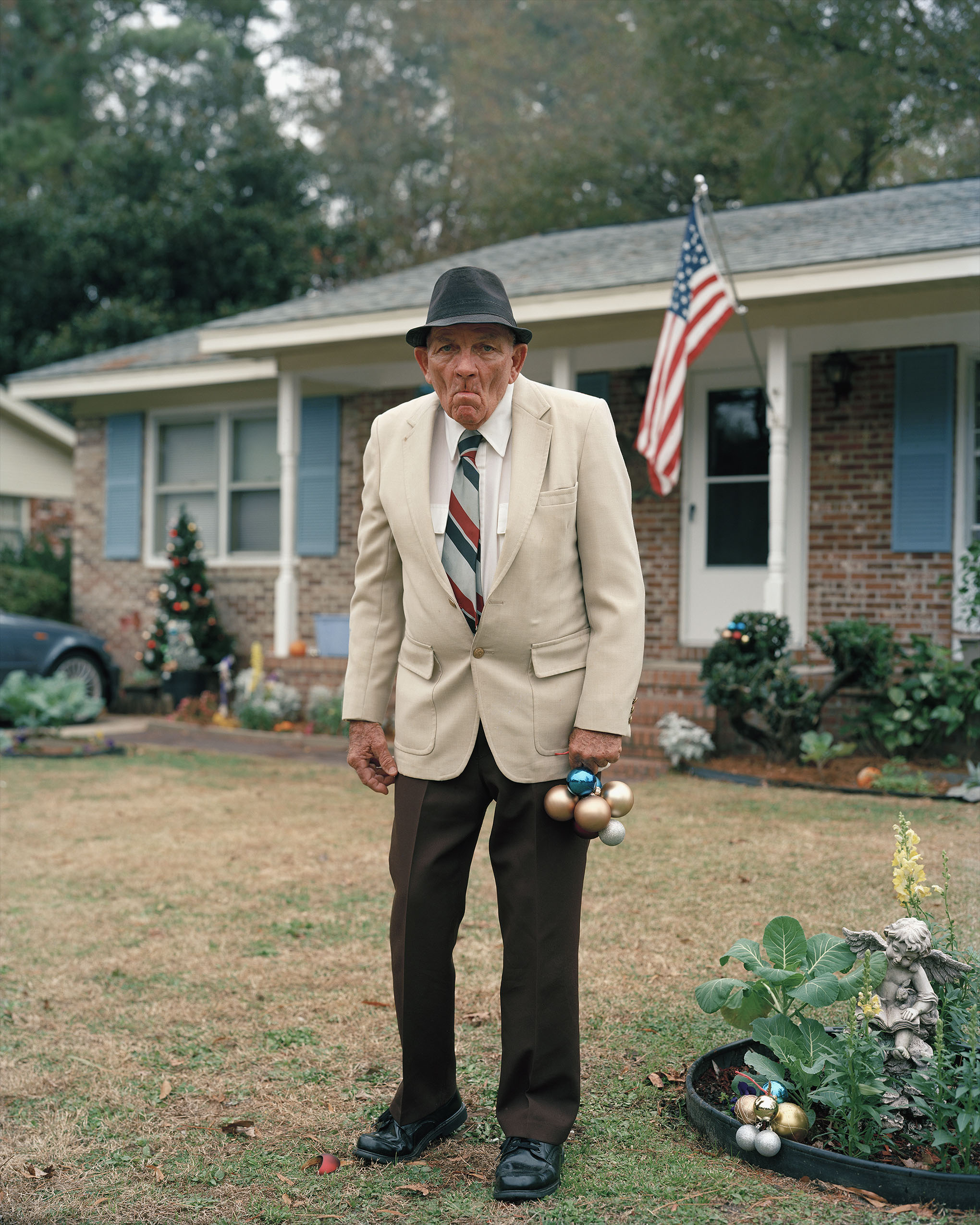
I was sharing the room with Mabel, so I voiced my thoughts to her. She laughed and told me her own speculation, how he orchestrated everything: about a month or so before he died, Dad showed up at her place with his best, navy-blue suit; a dark tie with red stripes; a long-sleeved light-blue shirt; and black shoes.
“Keep these here for me,” he said. “If any of our family friends has a party when I’m around, I want to have nice clothes to wear.”
“Sure, Dad.”
He cleared his throat. “You know,” he continued, “when the time comes for me to go, some day in the future, I would like people to sing ‘What a Friend We Have in Jesus.’”
“That’s a good song,” my sister said.
“Also, ‘Rock of Ages Cleft for Me,’ ‘I Know Who Holds the Future,’ ‘Blessed Assurance’…”
“That’s a lot of songs,” my sister said. “Let me get a pen and write them down so that I don’t forget.”
She wrote down the songs, then the kind of sermon he wanted, and that none of us should mourn him because he’d not leave us as orphans.
“You’re all doing great,” he said. “You should celebrate at my funeral and wear your fanciest clothes.”
“You don’t want us in sackcloth and ashes?” my sister joked.
“I am not leaving you as orphans,” he stressed. “If ever you need my advice, simply ask, ‘What would my father do?’ You’ll receive an answer.”
“Okay, that’s kinda creepy now,” I said, feeling sad again.
Apparently, my sister had already given it a try, and it had worked.
Dad had fixed his Order of Service and paid Uganda Funeral Services Ltd full cost (under the ruse of when that time comes). When questions came from the funeral home: Do you have clothes after we prepare the body? Yes. Do you know what songs . . . ? Yes. The type of coffin . . . Yes. Where he’d be buried . . . Yes, Yes, Yes.
“Now tell me,” my sister said as she switched off the light, ready to fall asleep, “if that isn’t the work of someone who knew his time.”
Between Two Avocado Trees—the Best Part Yet
We did everything according to Dad’s wishes. I remembered how, at the last Christmas in our home, we were all gathered at the dining table when the subject of death and burial arose. Mum said she preferred a proper tombstone—bricks, sand, cement, and an epitaph in capital letters. Dad wanted the most natural way—a reed basket or wooden coffin, and soil. No rocks, no cement. We all protested. Someone mentioned how, after a few years, we would not be able to trace the grave.
“That’s precisely the point,” Dad said. “In a couple years you should be able to plant food.”
“Oh, God,” someone exclaimed.
“You don’t want us to visit and put flowers on your grave?”
“You think I’ll be there?” was his response.
It was funny at the time, told humorously. I mustered the courage to announce that I favored cremation for myself. “Scatter my ashes in the Nile so that I can keep flowing.”
“You want your body to burn?” Dad asked, aghast.
“I won’t feel it.”
It was ridiculous.
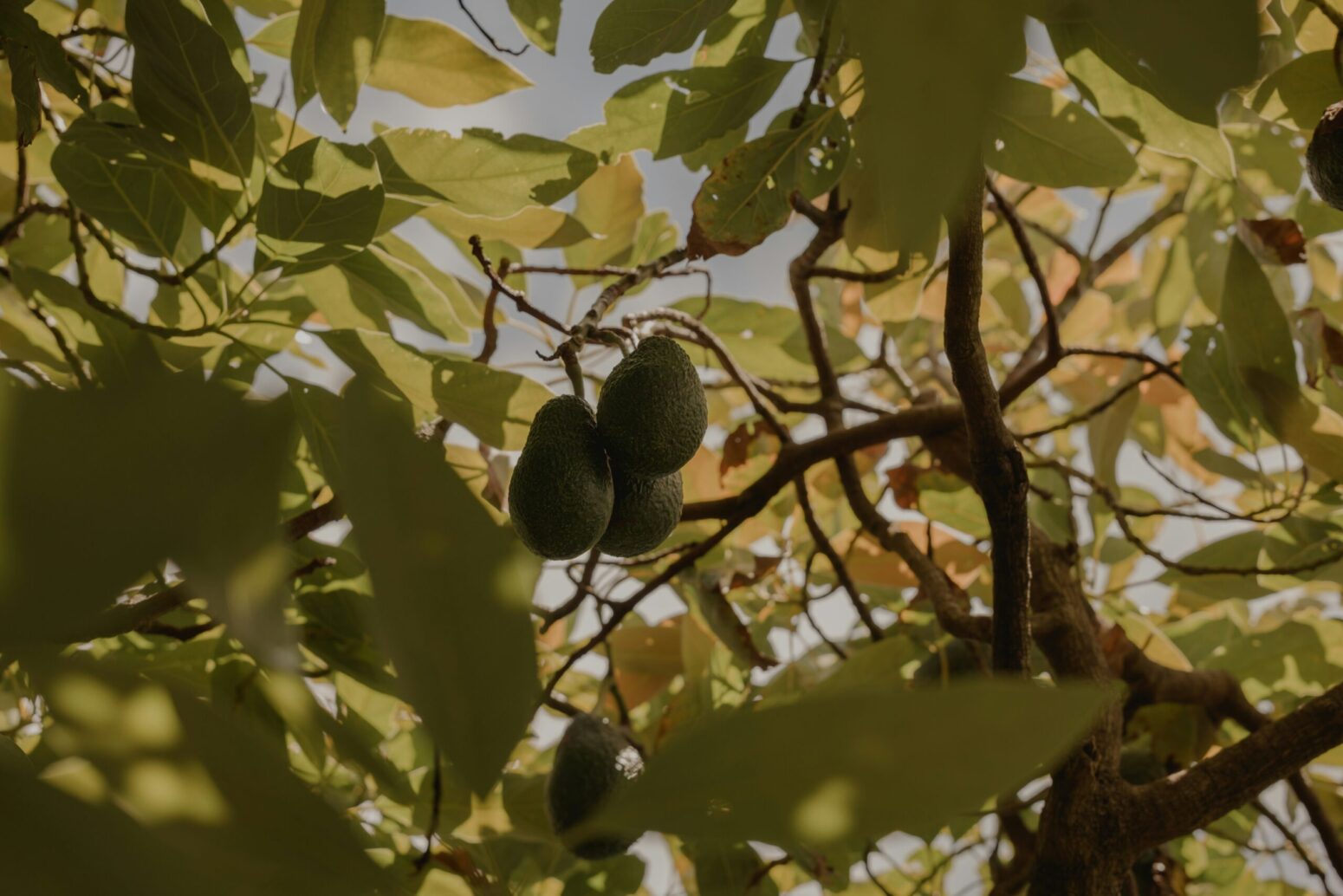
When I saw the spot he’d chosen, I could not help but laugh. After the church service, there we were in our fruit garden, six strong men lowering him into the grave between two avocado trees heaving with fruit. I was standing next to my two sisters, and the reverend was saying something I don’t remember. I elbowed my sisters and said, “Can you imagine how many avocados Dad will be eating? Just look up. If this isn’t greed, I don’t know what is. We won’t have a chance to harvest any, considering where he now lies.”
We all burst out laughing, and the reverend paused. Everyone looked at us like we had committed the gravest scandal. We could not help ourselves, perhaps in the same manner that Dad could not help but select the finest spot. For me, that was the moment he truly rose to life. He became large and gluttonous—qualities he never possessed in physical form. I had no option other than to celebrate him. He had demanded it, after all. I prayed his grasping ghost would be gratified.
His heart may not have resisted the final arrest—when one’s liver, kidneys, lungs, brain, or other major organ decides that it’s done serving its time, the whole body goes; resistance is futile. But here in his spot of abundance, he’d continue to eat not from one but two trees. I, who equally love avocados, would have to find another source for them, out of respect. I could laugh, but I could not imagine myself climbing upon my father’s grave to harvest them. I have my limits.
II
There’re days I still wish to bring you back
and I do. Until the present presses firmly
into my skin like a solid sponge
absorbing the hours of childhood,
adulthood, adjusting memory’s tricks to
wind everything back to before—my
palm in yours, walking, talking, laughing . . .

Do you look down, Papa? Do you look up at us
and wish you were here too, with us, with me?
The Force of a Sentence
I teach sentences—that is, obsessing about the meaning and intelligence of sentences, finished or unfinished. My literature and creative-writing students and I spend hours laboring over sentences, talking about their beauty and force, and also about the burden they leave us with. I’ve often wondered what it’s like for families with incarcerated members to hear a judge pronouncing the sentence that steals years from their lives—an entire life, sometimes. The force of it—how do you lay down the weight, the pain, and suffering? Where do you find laughter?
After reading Tayari Jones’s An American Marriage with my fiction-workshop students, I was humbled by the depth and direction our discussions took. I have a mix of traditional and nontraditional students, and one participant from the latter group shared a personal experience, how her relationship had not survived when her partner was yanked from their home and incarcerated. This person, who was her home, was confined to spend several years shut away.
At least with death you have a chance to acknowledge the passing on of a life, the transient nature of all living things. Imprisonment is the ugliest limbo. My student said that the long wait, excruciating visits, and indefinite mourning ultimately ended their shared life together. Then, a loaded sentence: “This is not fiction, people.”
We sat in the silence.
My understanding of “a teachable moment” is the opposite of the traditional definition of that phrase. While it still happens unexpectedly, I am not the person who offers insight—the student becomes the teacher in such moments and illuminates the significance of great literature, its capacity to convey lived realities through artistic conventions. My joy comes from facilitating these spontaneous openings that usher us into a place of singed beauty, which I believe is what enables us to cope with loss, to continue pursuing life. It is singed because we are scorched. And it is beautiful because it belongs to the kind of fire that purifies and leaves us with ashes of wisdom.
The burning of a body is not a burial but a cremation—which for some mysterious reason my computer autocorrects to creation. In the white-light lens of my computer screen, I am disposed to finish my father’s sentence, what he may have wanted to impart to my brother. Is this how we go/I go? Is this how we die/I die? Is this how it is—to be helpless? He who never knew a day’s rest, always laboring upon the land with his head, heart, and hands. Self-reliant. To have needed assistance from his son must have felt foreign. He never wanted to be a burden, always said old age wasn’t fun if you no longer had strength to sustain yourself. Could that be the reason he decided that seventy-six years were enough?
I imagine him falling out of his body in his final moments—his heart melting, his body softening, becoming warm light, followed by a sensation or, perhaps, a realization: all that has mattered before matters no more. He’s ready to go, to leap. This time not a leap of faith, although faith is still involved, but a leap of death. A departure. By the time the doctor touches him, the body is heavy and cold.
That moment in the car, he was giving my brother the last sign: Is this how it’s like to pass?
But he wouldn’t know.
Read more from Issue 19.1.