Space Invaders
11 Minutes Read Time
They were younger than I, but it didn’t matter that much. We had all stopped growing up. There was a pair of them in a two-room apartment over my head. At first, their clomping around and the like had driven me crazy, but nothing made them quit, so eventually I joined them. They had ragtag friends who were often there. Sometimes a few girls hung around. Mostly, the girls wanted to feel wanted, and the boys longed for some girl who might shed tears when his avatar died in a video game. Even Eli had a girlfriend, but she was not well-liked. She was just one of those people who required more than regular folk. The group had quickly closed to her. Because of the scarcity of such companionship for someone like him, Eli must have valued it more, but even he would be finished with her soon. It made me sad to think she would be jettisoned from this and every future relationship. Who will take care of such exhausting people?
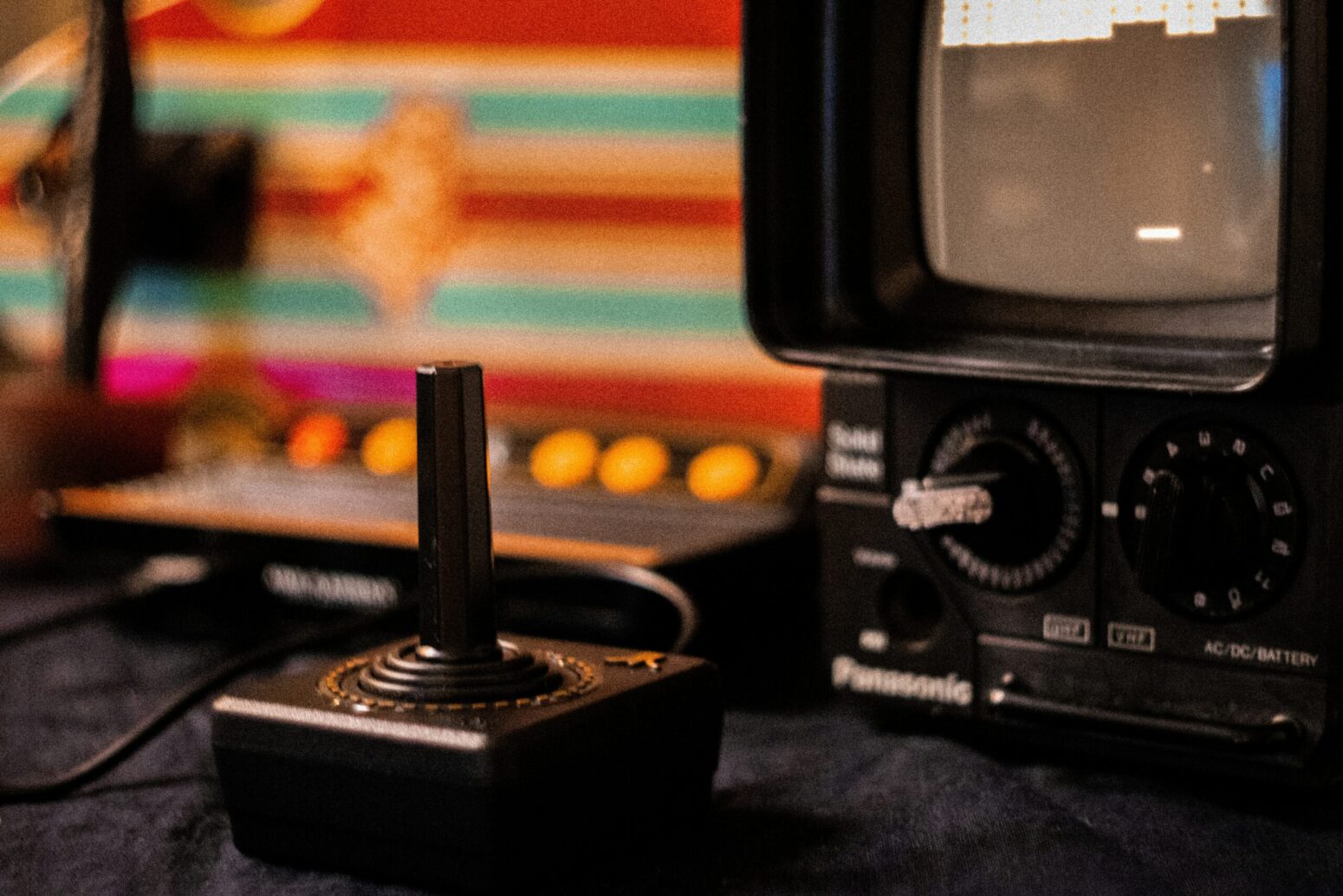
The place was what you’d expect. Scrounged furniture, all of it half-busted, half-fixed; a card table and TV trays; empty bottles as decorations; a giant Walmart television affixed to a wall with the cables from various pieces of equipment and consoles running naked down from it. I’d come up and play video games. Usually, there were half a dozen people lounging about. Once you folded into the environment, it didn’t matter how you got there. They smoked, and I didn’t. I might bring cheap beer.
A few times a week I’d take prescription-grade sleeping pills. These and sometimes other things were provided by the sister of the only woman I’d thought I loved, who’d gone to Chicago to take care of a sick grandmother. It was supposed to be temporary. But that time stretched out and grew complicated, the way time does, and we eventually found ourselves in a kind of purgatory in which I just wanted to go to sleep. Every day that passed was a day longer that she had been gone. The sister knew how to get anything. She worked doctors, government agencies, older men. I slept with her a few times on the strength of Chinese viagra. She looked enough like her sister—the woman who had gone—that I could squint and imagine she had returned. But the sister also looked and felt different enough that each time who she really was and wasn’t would suddenly strike and deflate me.
She gave me magical sleeping concoctions that took hold of you and stilled you. These pills melded you to your mattress and said to your brain, Shhh, shhhh, shhhhh . . . , and your brain believed. You felt yourself gentled into surrender, less and less worried about what you might miss: a funny moment in an old sitcom, or a product in the advertisements you didn’t know you wanted. The nighttime animals did not need witness to create their secret patterns on the lawn outside your window. Stars that would fall only once could flash and darken without you, just as with all the things that would never repeat themselves.
You did not need to be alive for any of it.
Mike, who wore his hair in a bun and had a kind of wasted prettiness, was the master of the living arrangement. He had been working construction for a few months and gotten Eli on. They’d come home in neon net vests looking like men just released from a prison. It was enough to pay whatever needed to be paid, and I wondered if they could go on like this for the rest of their lives. If any of us could. It was terrible to know that we needed to last years and years and years.
We gamed. This day they were arguing about whether there was any such thing as cowardice in a video game. Mike argued that in the absence of real stakes, there was no reason for real fear.
Eli said, “What they are going to do is to give you electrodes that you put, like, right into your scalp, and these electrodes will stimulate your brain very specifically, in specific places, into specific feelings, so that when your avatar is in danger, you’ll get this sense of the same kind of fear you’d have in real life if you were in real danger. You’ll know what it is like to believe you are going to die. You won’t think it’s real. But you will feel like it. See? They already do that with soldiers. Give them these drugs to heighten the sense in war games, to get them used to that feeling of emergency so that they won’t get frozen up by terror, because they will be used to it. They put in them the opposite feeling too. Flashes of glory and pride and all that jazz. That way they can addict them to the payoff of dangerous moves.”
I was an Atari baby, and everybody after me would be some version of the same thing. Our fingers were ready to fold around any innovation. Whatever had come and whatever was coming would not dumbfound or truly delight us. We were born to be nonplussed. The game we played now offered a world that was beautifully vivid. We had avatars with clean-lined exoskeletons, helmets, visors to shield our faces. Our real-world thumbs moved our digital-world bodies, swung around our avatar heads so we could look here, look there. We carried weapons you could fire with your right index finger, grenades you could toss with your left index finger. You could run, you could dive, you could leap. You’d get into a zone, and your avatar up there on the screen would do things exactly as you told it, perfect, tidy actions. Even when you died, it was with a kind of automatic grace that gave the whole thing a sense of purpose. There were times when you became such a part of the game that you were a genius at it. I had played Space Invaders in an arcade as a teenager and occasionally had the same feeling of transcendence. Years before that, even—before any of the kids in the upstairs apartment had been born—I’d bounced a glowing dot from my glowing blocker toward my father’s glowing blocker over and over on a nineteen-inch television screen, taking for granted that the way it held us together would never end.
Then a little boy came out. He was maybe four or five and in jammies, the old-fashioned one-piece sort, picked up at yard sales and sold to and bought from used-clothing stores over and over. It was dusk, but he looked like he’d been in some long, meditative sleep. He shuffled past everybody and into the kitchen and fooled around in there for a little while. Nobody said anything. I wondered if he was a figment of my imagination. “Hey, Mike?”
“Yeah?”
“Who is that kid?”
“That’s my son. You didn’t know I had a son?”
“No.”
Mike looked away from the screen and over into the kitchen, gave a satisfied nod, and returned to the game. “He came up yesterday. From Florida. I haven’t seen him for a while. Three years, I guess. His mama and I don’t get on. Mostly about money. But since I’ve been working and paying some of the child support down, she’ll talk to me.”
I nodded. The microwave buzzed. I heard its door open and close.
“She says he’s going to be with me at least until Thanksgiving. Maybe longer. This lady, his mama, she’s going through something not so good, so it might be awhile. She might be in real trouble. I’m just glad he’s here. It just doesn’t matter to me about her. But I did love her. I don’t know how that happens. How you love or how you stop.”
The boy padded through the room and came to sit beside me on the couch. He had a bowl in his lap and a big spoon. His hair was stuck up in several places. I wanted to pat it down.
“What’s that?” I asked.
He was watching the game on the television and didn’t look away as he passed the bowl toward me. I thought he meant for me to see for myself, but then I realized he was offering me a taste. To be polite, I took the bowl, and I fished out some noodles with the spoon and ladled them, lukewarm and salty, into my mouth. I passed the bowl back. He ate and watched the action on the screen. Mike handed his controller to somebody else and came over and sat on the little boy’s other side. Six months before, when I had felt crazy with lack of sleep and the noise of their music and games and heavy steps, I held a screwdriver in my fist and drove it through the hood of the car Mike and Eli shared. I knew I had the anger in me, but not the power. Or maybe it was the other way around. Anyway, I’d surprised myself. The car was in rough shape anyway, but I felt badly about this damage the morning after.
When the kid was done eating, he handed the bowl to Mike. “Give me some sugar,” Mike said. The kid leaned up to Mike’s pallid face, his stubble, his cigarette smell, the scar from the corner of his mouth, his entire history, the terrible and wonderful coupling of Mike’s ancestors all the way back through the ages, repeating not quite endlessly the coincidences behind any existence, that little boy kissed, kissed everything Mike would be too, and even his slow erasure from the earth. Then he got up and went back out of sight around the corner.
“He’s getting used to things here,” Mike said softly. “It’s a new world. It’ll take him a little while. I’ve got to get used to it too.”
Eli had fallen asleep in a beanbag. All the passion was out of the game. Nobody was making sharp moves, good choices. They were just running forward, firing and being killed. We turned the television off. Mike went around turning on lights. He had a pipe and lit it up—good, clean tobacco, the smell my father exhaled into the homes of my youth. I didn’t know what we were going to do. There didn’t seem to be anything. That made me anxious. Then Axle, the cat, leaped into my lap. His head moved so oddly it looked like a glitch in a video. His eyes were otherworldly. But the weight of him on my thighs was such a real thing, and the slow purr of him worked its way into my body. There is an order to the world, and maybe even the universe. It is terrible at heart. Life cannot be sacred if it is even possible to grind out of existence freshly hatched chicks with their black eyes in their little yellow faces. But you don’t have to look at everything all the time. Sometimes, you just feel the cat in your lap. Never mind the litter box and the cardboard container full of earth and bones, the slaughterhouse trucks and gestation crates, all the babies of starvation and strife. You can touch your lips to the forehead of this alien being and feel his skull in there, his gently throbbing brain. He doesn’t know that he must die.
Here you are in this living room not on fire with these people whose wickedness is not apparent, and the electricity and the heat keep pumping in.
It had started to snow. It was not even Halloween, but the snow fell in big white clumps. Somebody opened the curtains. We went out sledding, leaving Eli asleep in the apartment with the boy, who might also have been asleep. Nobody had equipment. We wrapped plastic bread bags around our tennis shoes, just as I’d done as a kid. It was cold and beautiful, and our sleds of cardboard sailed down on that new-fallen snow. I thought of how the little boy would dress up for Halloween, and I thought maybe I could go along with them from door to door, though I knew I wouldn’t really do that. It was okay. What would not happen was not yet upon us. We went racing down the hill. Nobody else in the city had thought to do it yet, just us, the only ones. In all that white, with our hands freezing, with the snow coming down and down, you couldn’t understand that the world, or even this storm, would end.
Read more from Issue 20.2.