Play Again?
19 Minutes Read Time
Gill’s father nudged him awake with the business end of a pair of gardening shears, which in the ashy black of Gill’s bedroom appeared like an octopus’s beak nibbling at his ribs. His father said, “It’s gotten out of hand.”
Last summer it was crabgrass, this summer it was pokeweed that kept his father awake at night.
All along the property fence, ruby-stalked pokeweed rose like charmed cobras. Or better yet, many-headed hydras, spiteful things—cut down one and two more grew in its place.
Weed killer was the only real solution, but Gill’s father had heard on a podcast hosted by a jacked neuroscientist that weed killer is bad for your balls. Something to do with single-cell sperm sharing 90 percent of their DNA with weeds, thus enabling the weed killer to find its way from your skin into your blood and down into your sperm-filled balls. Which left them with gardening shears.
Gill secretly believed his father enjoyed the futility, the certainty that tomorrow’s pokeweed would spread even more wildly than today’s. A battle whose victory wasn’t eradication but ill-fated persistence. His father had practically said as much a few mornings ago, quoting the jacked neuroscientist podcaster, whose voice trailed them around the yard, shouting from his father’s phone: “Even a failed rep reprograms your neurochemistry, so don’t mistake futility for defeat.” Or “Willpower equals suffering plus posture. Mind your chest.”
It wasn’t the yard work that bothered Gill. He didn’t mind waking up before the sun, trailing after his father with a yard-waste bag, battling a weed that couldn’t really be defeated. What unsettled him was his father’s concern for his balls. Not Gill’s balls—the future of the family name—but his father’s own balls. His father’s words: “I don’t want to poison my plums.”
Gill had come perilously close to asking whether he and Mom were planning on having another kid, but he managed to stop himself before swan-diving off that cliff. But why had he come close to asking it in the first place? He already knew the answer—an obvious and resounding no. But the answer wasn’t the point. He didn’t know what the point was except that if Gill asked the question, it would destroy his father. But if Gill didn’t ask the question, he was going to explode. It was growing inside him by the day. The violent gnaw. Like a zombie’s bite or a werewolf’s itch. It always ends the same: The soul dies and something else climbs forth. Hungry, ruinous, smiling in the wake of the bodies left behind.
Gill’s father plucked a caterpillar from the jungle-leaves of the pokeweed and held it up to the rising sun for closer inspection. For a moment, Gill thought he might eat it. His father had experimented with insect protein last year on the advice of the jacked neuroscientist podcaster, who said it increased testosterone and curbed the risk of Alzheimer’s (his father had even kept a canister of mealworms in his truck for on-the-road snacking). But instead, his father brought the caterpillar to the leaf of an oak tree. “That’s better,” he said. “No civilian casualties.”
The jacked neuroscientist in his father’s pocket said, “If you feel failure, that’s your mitochondria begging for leadership. Double your reps.”
“Why are you worried about your balls?” Gill asked. It came out as a single word: Whyareyousoworriedaboutyourballs?
“Huh?”
“Why are you so worried about your balls. You know, and weed killer?”
His father didn’t even pause the podcast but simply explained, once again, the stuff about DNA and sperm and weeds. He cut down a pokeweed the height of himself, held it like a snake-turned-staff. “And they’re called testes. Not balls.”
As much as Gill wanted to feel the obliterating immolation of his father’s response to the glaring follow-up question (“But why do you care about your balls so much?”), no matter how far the words foamed in his larynx, he couldn’t do that to his father. So, Gill box-breathed the way the family grief counselor had taught them. He even fashioned an impromptu manifestation that he chanted silently: Don’t ask, don’t ask, don’t fucking ask, don’t ask if they want another kid because you shouldn’t ask and they don’t and you only want him to remember Guthrie because remembering him by yourself sucks major dogshit.
He hadn’t heard his father, or his mother, say Guthrie’s name in four years, and it seemed fucked up.
The school photos of Guthrie hanging on the foyer’s walls disappeared shortly after his funeral, leaving only Gill’s school photos next to a slightly discolored and identically sized patch of painted drywall. He’d even come home a few years ago to find his mother applying a fresh coat of paint to where Guthrie’s photos had been, but he could still see the trace of absence in the fresh, semiglossy sheen. Soon after, Guthrie’s clothes disappeared from the room he and Gill had shared—and his toys, novelty baseballs, etc. In their place, his mother and father had dispersed Gill’s own clothes and toys around the room, like how Guthrie and Gill had smeared food around their plates to make it look as if they’d eaten more than they had.
Gill never asked his parents why they’d gone to such great lengths to erase all memory of his twin, but he thought about it. He played out the conversation a million times. The aching he’d bring upon them, the aching he’d bring upon himself. The intoxicating self-immolation inching, but never fully arriving, toward numbness. It was a drug of limitless supply.
If it wasn’t for the tattoo of Guthrie’s face on his father’s left bicep (as his father had begun power-lifting three years ago, the tattoo had gradually expanded, giving the half-comforting and half-haunting illusion of Guthrie aging beyond the grave), he might be allowed to think it had never happened. That he’d hallucinated Guthrie, an imaginary twin whose death signaled not the worst fucking thing in the entire world but Gill’s own personal growth. Leaving behind childish things. Like training wheels or booster seats.
His father sheared through a constellation of pokeweed, four stalks clustered together. He looked at where they fell, wiping sweat from his forehead with the back of his glove. The jacked neuroscientist in his pocket said, “Neuroplasticity peaks during adversity, so suffer strategically.”
Adversity. Suffering.
Gill opened his mouth for the question to march out. “Are you and Mom—”
“Huh?”
“Nothing.”
“What were you going to say?”
“I forget.”
“Hate when that happens.” He blew a snot-rocket into the grass. “You should try my Magic Mind protein shakes. Good for your memory. And testosterone.”
“Yeah, maybe I’ll give it a try.”
“How about you grab the other pair of shears in the garage.” His father surveyed the rest of the yard with restless resignation. An army general staring at an arrow-shadowed sun. “It’s gotten out of hand.”
Gill stopped in the kitchen for a glass of water. His mother was at the table with a cup of coffee, alternating between reading a book and watching news clips on her phone. War declared on Iran, nuclear threat, something along those lines.
“How long’s he going to be out there today?” she asked without looking up.
Gill shrugged. “I don’t know. He says it’s gotten out of hand.”
“Wear gloves.”
“I am.”
“And a little sunscreen wouldn’t hurt. Your nose is pink.”
“Okay.”
“And remind your father he said we could go pick out a new patio set today.”
“I will.”
“Iran, Iran, Iran,” she said, shaking her head and turning back to her book.
A few years ago, his father had converted the two-car garage into a one-car garage and a power-lifting gym. Weight racks, dumbbells, pull-up bar, incline bench, kettlebells, and a mini-fridge stocked with electrolyte gel and Magic Mind protein shakes. A poster on the wall featured the jacked neuroscientist flexing like a Greek statue made of beef jerky and was captioned: Stress is just misunderstood adaptation. Learn to love your cortisol curve.
His father had tried to get Gill into power-lifting, a well-meaning attempt at father-son bonding. He even bought Gill custom lifting gloves, a weight belt, and a tank top that said, beneath a cartoon caricature of the jacked neuroscientist, mouth agape in rage, “Assert or Perish.”
He’d never seen his father so giddy, so vulnerable in his happiness, as when demonstrating how to do snatch-and-grabs with a kettlebell. An embarrassed but gleeful smile twitching on his face as he held the weight over his head like a very heavy umbrella.
Gill began saying things like, “Good pump,” and his father said, “Hell yeah.” That part, at least, was fun.
Gill gave it an honest shot for a few days. Waking up at dawn for dead lifts, Arnold presses, upright rows, Hungarian squats. On a Bluetooth speaker, the jacked neuroscientist narrated every rep through sermons on enzymes, neuroplasticity, and, always, the grindset—“When you feel like giving up, remember: That’s just your chickenshit prefrontal cortex begging for comfort. Tell it to sit the fuck down and shut up.” They slurped electrolyte gel like astronauts. His father exercised to failure every single time, veins climbing his neck like kudzu. Grunting like he was birthing something divine. Rushing to the event horizon of medically significant pain. Real tears in his bulging, bug-eyed eyes.
When it got to be too much, Gill dropped a five-pound kettlebell on his foot for medical discharge. He hadn’t worked out since.
The additional gardening shears were behind the weight rack and the bench, next to the bins of Christmas decorations and one simply labeled “spiders.” The word alone nearly sent Gill back into the weight rack.
In third grade, their science textbook had a stupidly giant picture of a bird-eating tarantula (page 203) whose many teddy-bear eyes and hairy mandibles induced, without warning, Gill’s lifelong arachnophobia, not to mention his one and only disciplinary visit to the principal’s office after slamming his book on the tile and stomping on it repeatedly. Guthrie even joined in with his own book, sparking a class-wide textbook tap dance in solidarity with Gill’s evidently stalwart stance against formal education.
Despite subsequent years under his belt, Gill still required some serious self-talk with the assistance of another poster of the jacked neuroscientist (“The grind doesn’t care about your mood, and neither does mitochondrial density”) to unlatch the plastic lid on the reasonable-but-what-if assumption that his parents might be storing a bin full of spiders in the garage.
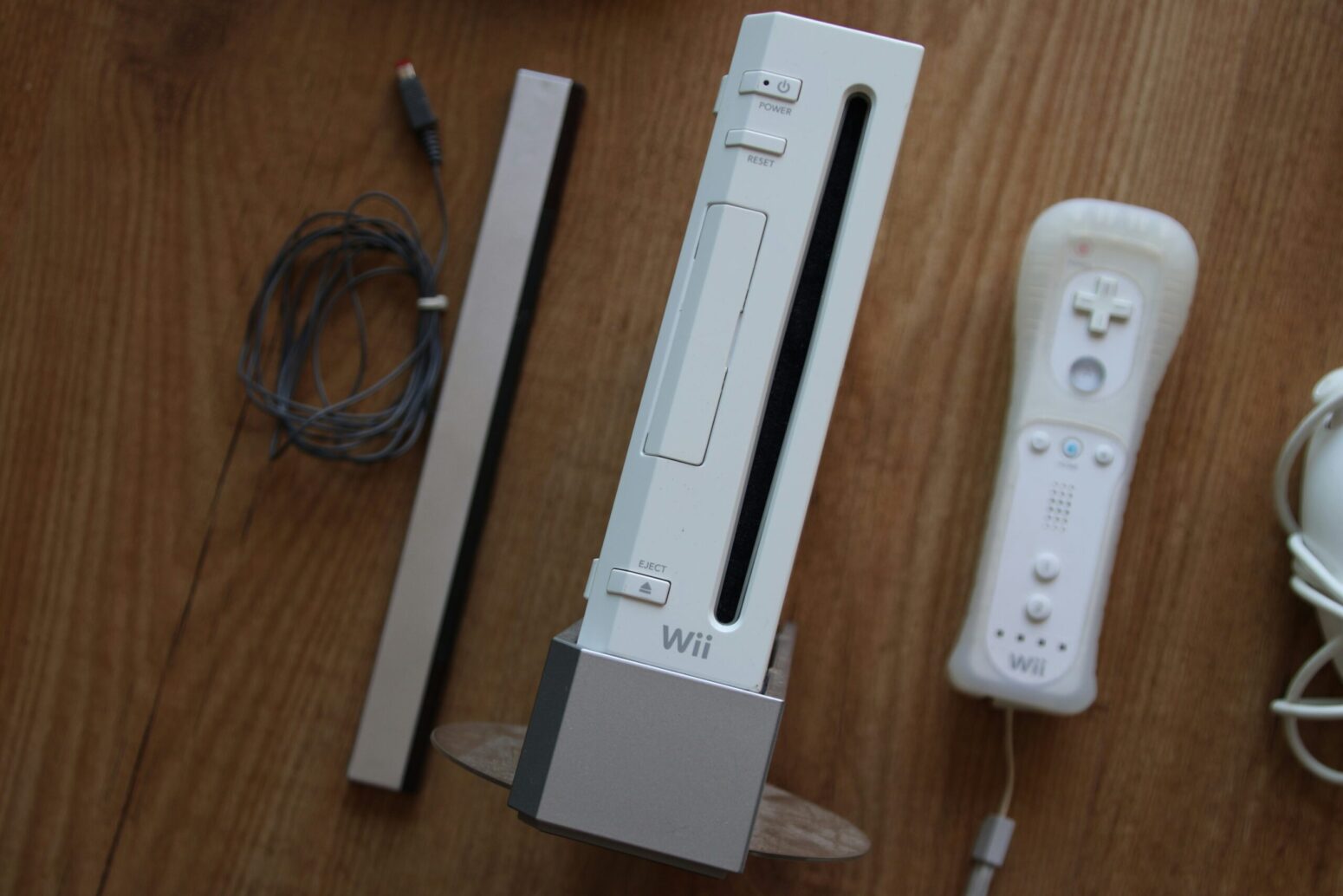
He cracked it open, leaped back, and braced for an eight-legged lava flow. When it didn’t come, he looked inside. His relief was short-lived. Spiders would’ve been simpler than his and Guthrie’s Nintendo Wii.
His family’s last meeting with the grief counselor had begun with the counselor asking them to share a regret. Something they wished they could say to Guthrie, something they wished they’d done differently while he was living, something they’d like to have seen him do in an uninterrupted lifetime.
His father melted into the couch cushions. His mother lay flat on the floor like she’d been tranquilized.
But the counselor left the question hanging like a deadly fart in an elevator: awful, inescapable, shared. She said she knew it was difficult, torturous even, but the sooner you could articulate these impossible things, the sooner you could reconcile grief with everyday life. Splicing together the visceral with the mundane. Then she asked the question again.
His father let out a moan that made it sound like the counselor had stuck her hands inside his intestines.
Finally, Gill shared. He regretted what had happened with the Nintendo Wii.
His mother rolled over onto her stomach and began shaking. His father dug his palms into his eye sockets.
The counselor asked him to expound.
The Wii was a Christmas gift to both of them, the product of a four-month begging campaign that he and Guthrie had worked in shifts. One week on, one week off. Like long-haul truckers. It took a tremendous amount of effort to keep up the intensity required to bypass their parents’ utter disdain for video games, which they agreed would liquefy their children’s brains. Luckily, this was before his father began power-lifting and listening to the jacked neuroscientist, who had since added that the electric waves from video game consoles and controllers radiate into your balls and mutate your sperm, so back then their whole operation only needed to assure their parents that they’d compensate for the brain melting by reading more. They unwrapped the Wii together on Christmas morning and high-fived each other like a Nickelodeon kid comedy.
Studio audience: Awwww.
The first thing they did was build those glossy, weightless avatars: Miis. Plastic-faced caricatures suspended in a blue digital limbo, their eyes too round and their grins too fixed. Predictably identical in every way, except for the shirt—Gill’s red, Guthrie’s green. It was Christmas.
They dropped their avatars into the Wii bowling alley and got to work. Guthrie figured out how to spin the ball in a very cool and very effective way. Strike, strike, strike. Gill said his controller wasn’t working and the game was stupid. Spare, spare, spare. Guthrie said “Watch this” and threw the ball almost directly at the gutter before it bent back for a perfect strike, strike, strike. To which Gill bashed Guthrie over the head with the Wii controller. There was blood, scratching, ill-executed wrestling. Their father bypassed their scrap entirely, unplugged the Wii from the wall, and the console was never seen again. They launched an ambitious remorse and rehabilitation campaign, including scripted reenactments of how the Wii fight ought’ve gone—“Guthrie, what you’re doing is making me feel bad”; “I’m sorry, Gill. I’m just teasing you”; “It’s okay. Maybe you could just teach me how to do that cool spin with the ball?”; “You bet, Gill!” Their mother seemed moved. Their father said he’d seen better acting in hemorrhoid commercials.
“I shouldn’t have hit him,” Gill said to the counselor. “I feel bad about that. I feel like maybe I really hurt him, more than he let on, and it was me hitting him in the head with the controller that somehow caused everything that happened later. Like,” hold it the fuck together, “I killed him.”
His mother had stopped shaking and gone perfectly, terrifyingly still. His father’s moaning turned to whale sounds. The counselor said “Thanks for sharing” and “How did it feel?”
“Not good,” Gill said.
“It’s not supposed to feel good. That’s how you know it’s working.”
When the counselor called to schedule a follow-up, his parents pretended not to hear the phone ringing.
Gill brought the shears to his father in the yard and then held his stomach with both hands. He said he had to take an emergency dump and would be back. His father said he should eat more cruciferous vegetables and extra virgin olive oil, but best of luck.
Gill went back to the garage, stuffed the Wii inside his shirt, and carried it past his mother at the kitchen table—a nuke was possibly being launched from Israel to Iran, sources couldn’t speak with absolute certainty. He brought it into his room, hooked it up to the TV, and wondered whether to pray that it would work or that it wouldn’t. He hadn’t time to decide before the console booted up, the offensively inoffensive waiting room Muzak bringing him to a log-in screen with two avatars to choose from. Red and green shirts. Both of them standing there like they were waiting for a bus, shifting side to side comfortably but impatiently, sometimes lifting their arms to stretch or to wave. Like they’d been here all this time. Frozen in waiting, together. Guthrie did a little shimmy when Gill hovered the cursor over his dead brother’s Mii.
“Hey,” Gill said, his words whistling through his tightening larynx. “Hey, man. Hey.”
He and Guthrie played Wii Bowling. Red and green shirts. Their Miis high-fived whenever one of them hit a strike. Guthrie’s did the splits when he hit a split. Whoever won jumped up and down, and whoever lost stewed in the corner of the screen, clapping politely, holding back cartoon tears. Play again? Again, again, again. If you didn’t touch the controllers long enough, the avatars would start checking imaginary watches, stretching phantom hamstrings, and whistling the Wii Sports theme with growing impatience. Guthrie even went up to the bowling alley counter and ordered a hot dog. Gill’s eyes ached. He hadn’t blinked in an hour. Guthrie handed a credit card across the counter. No hot dog appeared, but he chewed on something.
His father knocked on his door. How were his bowels? The pokeweed was getting out of hand. What was he doing?
“I’ll be right there.”
“What’s that music?”
“Just music.”
His father opened the door, shears at his side, and traced Gill’s terror to the television. His dead, bobble-headed son standing with arms crossed, waiting for his turn to bowl.
His father dropped the shears, then dropped to his knees. “Guthrie?”
“I’m sorry, I—”
“That’s him?”
“The bin was labeled spiders and I was just—”
“That’s Guthrie.”
“It’s his—”
“Guthrie,” his father howled, pounding his fists into the carpet. The heft of his biohacked body rattled Gill’s collection of signed baseballs. “Guthrie!”
His mother ran into the room. “Dustin! What’s going on? What’s wrong?”
His father pointed at the television. “He’s there!”
She walked slowly to the screen and then threw her arms around it, kissing Guthrie’s forehead. “My boy! My beautiful boy. My boy, my boy, my boy.”
His father got back to his feet and held his mother holding the television. Kissed the back of her head. “Look at him,” he said. “Just look at him.”
“Make him speak, Gill!” his mother said. “Make him speak for his mommy!”
“I don’t think they speak.”
“Just press the buttons.”
“There’s no button for that.”
“Let me see it.” She took the controller and began lovingly, gently working through the buttons. Guthrie’s avatar fist-pumped and grabbed a bowling ball. “You want to bowl, Guthy?” she asked. “How do I bowl, Gill?”
He showed her how to swing her arm, how to release the ball. It knocked down three pins.
“Oh, look at that, Guthrie! Good job!”
“Here, let me,” his father said. “Please, Patricia, let me.”
She showed him how to swing his arm, how to release the ball. A spare.
“Nice one, Guthrie!” His father’s face was shiny with tears and snot. “Way to go, big man! Excellent technique.”
“He’s so happy,” his mother squealed. “Look at him dancing!”
“Yeah, Guthrie! What other games do you want to play?” He looked at Gill. “Do they have power-lifting on here?”
“I don’t think so.”
His mother pawed at his father’s elbow, lowering her voice. “Guthrie’s enjoying bowling, Dustin. Let’s just bowl with him.”
“I just thought maybe he’d enjoy something else.”
“Look how happy he is.”
Around midnight, Gill ceded his room to his parents and went out to sleep in the living room, but their hollering kept him awake all night. The spastic bursts of celebration, the quiet conversations. His father filling Guthrie in on a decade, his mother cautioning his father not to overwhelm him. Even worse, the long stretches of silence. He didn’t know what was happening during these periods of silence, but he couldn’t stop imagining every possible scenario: his parents hugging, heads rested against each other, watching; playing frisbee golf with Guthrie, letting him win; standing perfectly still in front of the television, toggling the volume, whispering directly into the screen; his mother on bended knee apologizing for the paint in the hall, his father showing Guthrie proper form for snatch-and-grabs; both of them editing his avatar, giving him a beard, making him taller; assuring him they weren’t going anywhere.
Gill curled up tighter on the couch, head pressed into the cushions. If he dreamed, it was more of the same.
By sunrise, his parents had fallen asleep on his bed, both of them sitting up. On the television, Guthrie paced a boxing ring, shadowboxing, keeping his muscles warm.
“Hey, man,” Gill whispered. “Hey.”
Guthrie scratched at his armpit. Ordered a hot dog.
In the backyard, a forest of pokeweed had risen overnight, choking out the lawn furniture and the propane grill. Too much to even really know where or why to begin. And impossible to picture what it might look like tomorrow, to say nothing of the day after.
Read more from Issue 23.2.