Night Shift
18 Minutes Read Time
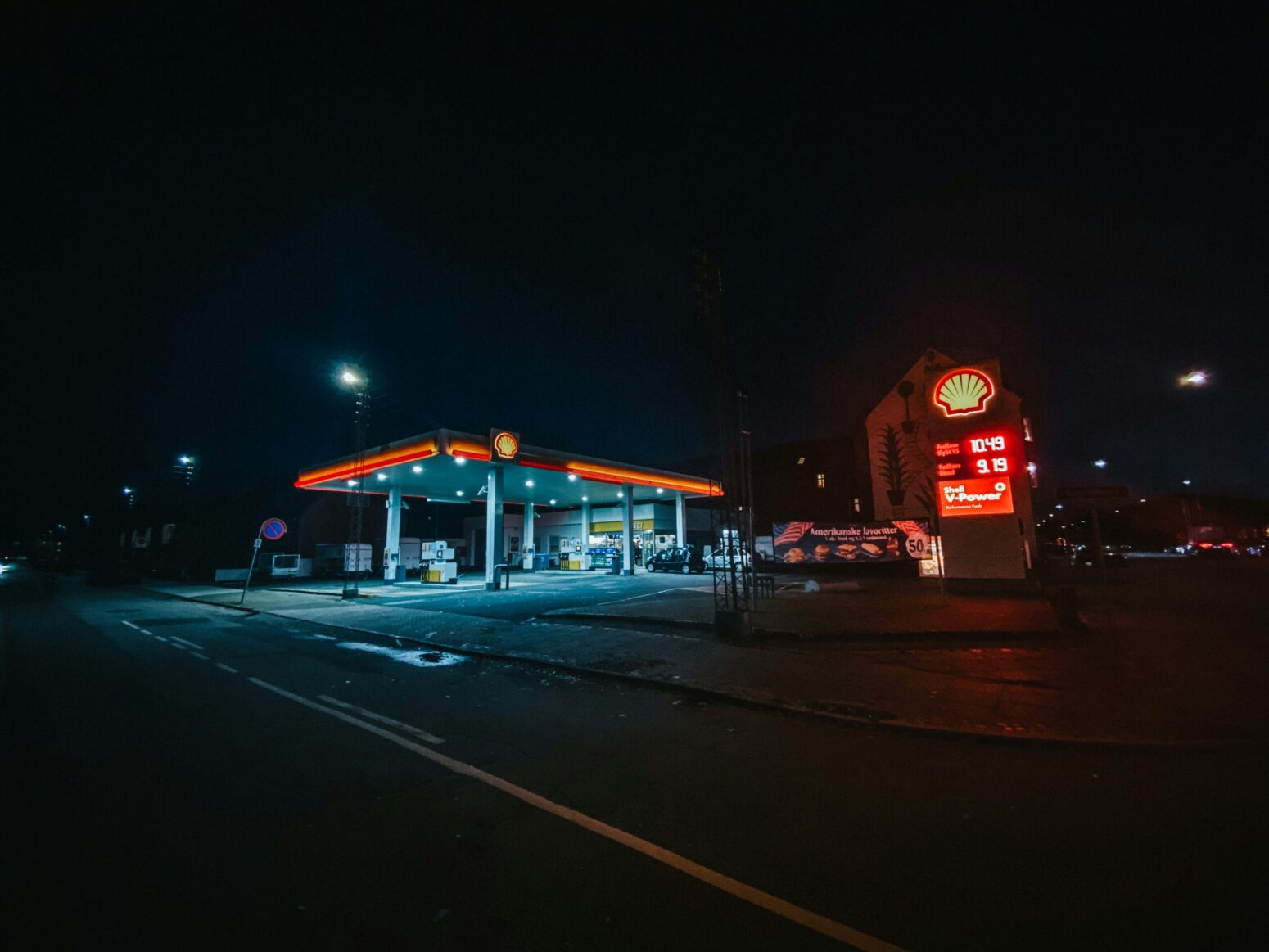
These days Isabelle’s exhaustion anchors itself in strange places. She feels it in her sagging wrists and the top of her head. As warm static at her fingertips. An oil slick in the gut. She’s been the night attendant at the Speedway for seven and a half years. Never before has daytime sleep eluded her with such persistence.
What’s changed? Nothing: Not the thickness of her blackout curtains. Not the quality of her pink foam earplugs. Not the volume of the neighbors who rent the apartment downstairs (retired couple, bird watchers, porch full of wind chimes and prayer flags). Yet at noon Isabelle invariably finds herself lying in bed as a tiny marching band blasts its horns between her ears. Or as old, idiotic riddles cartwheel through her brain on repeat.
What has four eyes but can’t see?
Mississippi!
What can you catch but not throw?
A cold!
Her daughter, Lynn, recommends yoga and meditation. But what does she know? Lynn is an attorney for a makeup company called All Natural Beauty that recently came under fire for testing its products on guinea pigs. (“Allegedly testing,” Lynn barks whenever Isabelle mentions the lawsuit.) She carries her stress like a war banner. Her back is a pretzel of knots. It’s a point of pride with her that she inherited Victor’s mania for long hours. “Daddy was such a hard worker,” she’ll sigh, gazing into her vast weed-choked backyard during their weekly lunches, and Isabelle will stab her fork into her salad and wish, as usual, that she had not come.
The Speedway manager, Baran, recommends valerian-root tea. “The ancient Greeks used it to relax. It smells like an asshole,” he says, “but it does the trick.” Baran stops by once a month, as Isabelle’s shift begins, to “touch base” and confirm that the little red pepper spray canister remains intact and ready for action beneath the register. His idea, not hers. Baran is twenty-six and feels bad about leaving an old lady defenseless.
After he leaves, Isabelle slouches forward and rests her cheek on the counter, inhaling the smell of Lysol. She likes the night shift—its mystery, its quiet. She likes how glossy and promising the snack pack ages look beneath the white fluorescence, so much so that she suffers a sense of letdown when she walks back to her car each dawn. Always she thinks there will be more mystery. More promise. When Baran drops by, she wants celestial fireworks and angelic fanfare to mark this glorious union between the forces of Management and Labor. Instead she gets a discussion about asshole tea. Why would she want her mouth to smell like an asshole? Anyway, she needs something a lot harder than ancient Greek flowers. One of those tranquilizer darts they use on escaped animals at the zoo would be good. A sharp prick in the butt, a rubbery heat spreading to her fingers and toes, and she would be out for hours.
The bell jingles as the door flies open. Isabelle stays where she is, watching impassively as a kid in glasses and cargo pants hurries past the glowing wall of beverages. At the counter he halts, panting. A white triangular stud gleams in his left ear. His T-shirt reads: Tacos for President.
“I need ten dollars’ worth of gas. Number four.”
Isabelle sighs. Her breath makes a little smog on the Formica. With great effort she lifts herself off the counter and prods the register awake.
“Thing is,” says the kid. He grimaces. “I don’t have ten dollars.”
She blinks at him. She lifts her hand from the register and sets it on the counter, drumming her fingers.
“Look,” he says. He lowers into a kind of half squat so they’re eye to eye. “I ran out of the house without my wallet. Please? It’s an emergency. My wife’s going into labor and I—”
“Try again,” says Isabelle.
He pauses. “My little brother got into a car accident and I’ve got to get to the hospital before—”
“Eeeeeehhhn,” says Isabelle, mimicking the noise of a buzzer. “You can do better than that.”
He looks flustered. “I don’t know what you want to hear.”
“How about the truth?”
The kid chews the inside of his cheek. He could be nineteen, early twenties. He jiggles his leg, and the keys clipped to his belt sway and jangle. “I think my boyfriend’s cheating on me,” he blurts at last. “Tyler texted me to say he saw Nick coming out of a bar with some girl.”
“Well, if Tyler said it,” remarks Isabelle, “it must be true.”
He seems not to hear. He licks his lips, patches of which are bright red and fresh looking, as though he picked at them on the drive over. “I just gotta know, you know? I gotta see for myself. I thought I’d try and get over there as fast as I could and catch them in the act.”
“Then what?”
His forehead crinkles. “Well, I—I hadn’t really gotten that far. But I’ll think of something. I’ll know what to do. Please.” The frantic, beseeching expression returns. “You can have whatever you want. My watch—” He sets it on the counter, a clunky digital thing, the inside of the leather strap faded from age and sweat. He begins to empty his many pockets. A crushed piece of Trident sugarless gum. A baggie with three green pills. A rubber band. The spring from a broken pen. A wad of tissues. Another rubber band. “You can have it all. I’ve got to get over there. My gas light’s been on since yesterday. There’s no way I’ll make it without—”
“What are these?” asks Isabelle, nudging the baggie of pills with her fingertip.
He looks shifty. “Vitamins.”
Isabelle considers the mess of him scattered across the countertop, everything he can afford to give. “All right. You leave these here as collateral, I’ll let you fill the tank. Then you come back once your quest has ended. Pay what you owe. Our transaction will be complete.”
She taps the register again. The kid looks a little dazed, like he can’t believe his paltry bargaining actually worked. He runs out of the building without saying thank you. Isabelle watches him fill the old Ford parked at pump number four. She doesn’t suppose she’ll ever see him again. The register will come up ten dollars short, but Baran will find someone else to blame. Phil, the gawky teenager. Danica, who comes in to replace Isabelle at dawn.
She resumes her slouch across the counter. Around one, a taxi driver walks in, looking for change. Then an exhausted-looking girl in pink scrubs, blonde hair a frizzy halo, purchases a pack of cigarettes and a Diet Coke. Isabelle mops the floor. She eats her lunch: a plastic cube of Kroger potato salad and a raspberry Snapple snatched from the back of one of the refrigerators. It’s quarter to three. The kid has not returned. She claws around under the counter for his baggie of pills, takes one, pops it into her mouth, and washes it down with a swallow of tea.
She waits for something to happen.
She and Victor used to get stoned when Lynn was at summer camp, but it’s been a long time. She goes to make the coffee, wobbling a little on the still-damp floors. She divorced Victor after he cheated on her twice—first with their real-estate agent and then with the high-school librarian. Later he got pancreatic cancer, and she had to endure Lynn’s dewy-eyed proclamations about how brave he was, right up until he died in a bed at Bethesda North.
The coffee steams and hisses. Isabelle sips from her cup too quickly. The liquid scalds her tongue and brings tears to her eyes. She never got to catch Victor in the act. The first time he came out and told her. The second time she guessed, and he didn’t deny it. He was bizarrely honorable like that. No excuses, no entreating her to take him back, not even when he was dying and the librarian had abandoned him for a healthy man.
If she had caught him in the act? Isabelle tries to imagine her response. Crying? Hurling shoes and picture frames? No: she’s always been too dignified to admit when she gets hurt.
The floors are dry now. Still, she continues to wobble. Her thighs feel like they’re eight miles from her feet. She can’t figure out how to bend her knees. Through a series of awkward lurches she makes it back behind the register. She’s so thirsty. The fluorescent lights emit a low organ melody. How has she never noticed it before? She closes her eyes, just for a second. When she wakes up, she’s lying on the floor, and a tiny green dragon is hovering above her navel, its wings beating a shimmering blur like a hummingbird’s.
“Oh, boo hoo,” says the dragon. “Poor Isabelle. Poor you. So lonely. So cold. No one’s got it harder than Isabelle. Lowest of the low.”
She touches the back of her head to ensure she didn’t crack it on her way to the floor. Everything seems to be in order. She sits up. The dragon settles on the edge of the countertop, peers down at her through crazy purple eyes.
“Who are you?” asks Isabelle.
“Take away my first letter,” says the dragon. “And I remain the same. Take away my last letter, and I’m still the same. Even take away the letter in my middle, and I won’t know the difference. Who am I?”
Isabelle thinks for a moment. “Empty,” she says. “You’re Empty.” “No, you are.” The dragon cackles. It’s a sound of destruction, like pages being ripped from a book. Isabelle shuts her eyes again, but when she opens them, the dragon’s still there, flying in tight circles around the rack of lighters and gum.
“I have a stomach,” says Isabelle. “I have intestines and blood and lungs and bones—”
“You know that’s not what I mean.”
She does know. But she doesn’t want to face it: the cavernous waste that finds her sweaty and sleepless at midday, that tempts her to its lip with its siren song of regret, regret, regret.
The door opens. A boy trots inside and yanks a six-pack of Dos Equis from the fridge. He’s almost certainly too young to be buying beer, but Isabelle rings him up without carding him. She no longer hears the organ melody. She can’t hear much of anything. It’s as if her head’s been packed with steel wool. It takes all her concentration to navigate the register’s touch screen. The boy flashes her a grin and races outside to his truck. Isabelle sees a girl in the passenger seat with a long ponytail, a tank-top strap sliding off one shoulder.
The dragon floats to the window and shakes his tiny head in disgust. “Young love is so uninspiring.”
“I never said that,” says Isabelle.
“I’m saying it right now, crazy pants. They don’t know what’s waiting for them. Abandonment, dejection. Or, if they’re really unlucky, they’ll get the long slow melt toward hatred.”
“I didn’t hate Victor.”
“No. You loved him. You used to sneak out to the hospital and feed him ice chips at night. Never told Lynn, though, did you? Far better to go on acting vengeful and wronged. You know she’s never forgiven you for how you treated him at the end. Her daddy dearest, Papa of the Year . . .”
“What can you easily break,” asks Isabelle, “but never touch?” She’s desperate to make the dragon shut up and has the feeling that if she can stump him with a really tough one, he’ll go away.
The dragon cackles again. “That’s easy. A promise.” “
What three letters change a girl into a woman?” “Age.”
“Everybody is attracted to me, and everybody falls for me. What am I?”
“Oh puh-leeze,” says the dragon. “At least give me a challenge. You’re
gravity.”
Isabelle feels feverish. She stumbles to the nearest refrigerator, grabs a bottle of water, and untwists the cap. Her blurry reflection hovers over the colorful ranks of beverages. The dragon is no longer speaking, but she can still hear him. Mama, goes the voice from inside her head. It’s the voice of an aggrieved eight-year-old—Lynn, begging for a Wonder Woman comic at the bookstore—though as the word repeats, MamaMamaMama, it becomes untethered from its origin, and Isabelle realizes her daughter could be asking for any number of things she never received.
After the divorce Isabelle cut herself off from the world. She drew Lynn into her self-exile. Wouldn’t let her stay after school or go out with friends. Forbade sleepovers, birthday parties, homecoming, prom. They lived like filthy hermits, takeout containers spilling off the arms of the sofa. The TV was always on, even when Isabelle stopped paying the cable bill and the screen glowed a harsh, empty blue. That was the start of all Lynn’s neuroses. She threw herself into her studies. She picked at her eyebrows and chewed the ends of her hair. Crescents of shed fingernails gathered beneath the kitchen table. The only reason Lynn had survived those years, Isabelle knew, was the weekends she spent with her father. Victor of the normal house and steady job. Victor, who went on doling out child support and alimony, never saying a single word against Isabelle, never threatening to take away custody, even though Lynn must have complained and he could see the yard falling into ruin, the wisteria vines snaking over the windows and sealing the house in darkness.
It is this silence that Isabelle resents the most. He was too polite, and she was too proud, and Lynn had suffered from their refusal to have it out with each other, get angry, throw shoes. It’s twenty years later, and she and Lynn still can’t step outside their perfunctory script. They talk about groceries, politics, the weather, Lynn’s job. Isabelle had always thought time would ease things between them. She sees now it has only frozen them back there, before that glowing blue screen.
Isabelle sinks to the floor with her back to the cold refrigerator door, but it feels more like flying, like a giant hand has bundled her into a slingshot, drawn back the leather pocket, and sent her wheeling and flailing toward some unimaginable target.
“Hey,” says the dragon. “Hey. Lady. Hello?”
It’s not the dragon. It’s Tacos for President. He’s crouched next to her, waving a palm in front of her face. Isabelle slaps his hand away. Her eyeballs feel like they’ve outgrown their sockets. The kid takes hold of her arm and helps her to her feet. Outside, the parking lot fills with the weird gray light of almost-dawn. An enormous crow perches on the ice bin. Isabelle staggers to the counter and leans against it for support. She flexes her fingers, curls them slowly and deliberately into a fist.
“Lady, you are high as all fuck,” declares the kid.
“I saw a tiny dragon,” Isabelle admits.
“Oh, him. He’s the worst. Here.” He hands her a crumpled ten-dollar bill. Isabelle smooths it against the counter and presses it flat against her cheek.
“Your quest?” she asks.
The kid shuffles his sneakers. “Nick was sleeping when I got there. Alone. He’d just got off the late shift at Walmart. Turns out Tyler’s sort of a liar. I guess he’s, like, jealous of me or something?”
Isabelle slips the ten into the register and begins blearily to count out the drawer. She’s having trouble with the numbers. She keeps looking around for the dragon. She can feel herself coming down, a sick settling, like a dirty bottle sinking to the bottom of a pond. The crow in the parking lot caws once, twice. The door jingles, and Danica waltzes into the building clutching a purple thermos. She’s in her late thirties, a dreamy girl with heavy wood jewelry and big headphones that she slides down around her neck when she asks Isabelle how her shift went.
“Usual,” says Isabelle. She’s afraid if she utters one more word, she might throw up. She shuts the cash drawer. On a whim she sweeps the baggie of pills and the rest of the kid’s stuff from under the counter into her purse before she walks out. She lost track of him while she was struggling with the drawer, but he’s still in the parking lot, sitting on the hood of the Ford with his heels propped on the bumper, looking shiny and unspoiled in the day’s first light.
“You got someone to drive you home?” he asks.
“I’ll manage,” says Isabelle.
“You shouldn’t drive in your state. Let me take you.”
She studies his features, the lines of muscle standing out on his young arms, and her thoughts leap briefly to the pepper spray taped under the counter. But she’s tired and sick, and for the first time in a long time she doesn’t want to be alone. The kid programs her address into his cell phone, and they’re off.
The sun rises above the highway. Cars clutter the on-ramp for the morning commute. It strikes Isabelle as crazy that there are people whose days are just beginning. She feels as though she’s been awake for years. The radio purrs soft rock through a fizz of static. The kid drives with the windows down; the air blasting through the car smells of hot tar. The passenger seat is pulled way back to accommodate legs much longer than Isabelle’s. She can’t remember the last time she was a passenger, but there’s a sweet comfort in allowing herself to be driven.
One of her bird-watching neighbors—the man, Horace—is sitting in a lawn chair facing the woods when they reach Isabelle’s apartment. He waves a pair of binoculars as the kid helps her out of the car.
“You just missed the most remarkable tanager!”
“Darn,” says the kid. He leads Isabelle up the stairs to her door, then whispers, “What’s a tanager?”
“Bird,” grunts Isabelle. She maneuvers the key into its lock. “Why’re you being so nice to me?”
“They were my pills.”
“You didn’t force them down my throat.”
He follows her inside. She doesn’t protest. A monstrous exhaustion is creeping over her. She stops at the kitchen sink to guzzle more water. The kid turns in a circle, taking it all in: the booklets of expired coupons taped to the fridge, the dead oregano plant on the windowsill, the pantry’s scuffed accordion door, the years’ worth of crusted noodles and scrambled eggs jammed in the groove between counter and stove.
“It’s nice,” he says.
“You’re joking.”
“Nicer than my place.”
“I moved here after I lost the house. Child support ran out when Lynn turned twenty-one.” She slips, nearly falls, but the kid’s got the timing of some action-movie hero. Together they amble down the hall to the bedroom. “Started taking these jobs,” mutters Isabelle. “Cashier. Car wash. Parking garage.”
“You like cars?”
“I like being around folks who are on their way.”
She lands on the bed without drawing back the covers, her purse pinned beneath her. The kid stands by the window. Light splinters the top of the curtains, covering him in bright moving splotches as he sways on his feet. The wave of her exhaustion reaches its crest. It’s poised, waiting to crash over her head. Isabelle extracts her purse from underneath her. She fumbles for his belongings and sets them one by one on the bed. He returns everything to his pockets, taking equal care with the pills and rubber bands and tissues.
“You’ll be all right once you get some sleep,” he says. “You’ll probably have a headache when you wake up. You got something for pain?”
“Why do you do it?” asks Isabelle. “Why do you take those pills when he says such awful things?”
“Usually I only take a half.”
“But you still see him.”
The kid gnaws his lower lip. “I guess it’s like, there’s this little voice inside my head, hating on all the wrong things I’ve ever done. Everything I’ve ever regretted. But the pills—they take it outside me where I can look at it. Fight it if I want.”
Isabelle curls onto her side, smothering her laughter in a pillow. She wants to ask this child what he could possibly know about regret. She wants to present to him the unsolvable riddle of love and resentment that have curdled until one is indistinguishable from the other. But she also wants to find him here when she wakes. His stupid T-shirt. His ludicrous faith.
Read more from Issue 17.1.