My Heart, the Stranger
29 Minutes Read Time
Maybe a skylight above this hospital bed? I could watch the moonrise and wish I did more of that sort of passive reckoning with the three kids, arriving mutually at our sacred nothingness. We’re always going, one thing to the next, mincing hours into minutes, minutes into seconds; if I sketched the effect, it’d be a scattering of seeds all over our worn wood floors. In the silent sleeping house I often walk around gathering, restoring, hoping I wasn’t dismissive of their attempts to understand everything all at once. It’s overwhelming to be a source of comfort, of answers, of confidence, of movement and rest. I plan to ask them one day how badly I failed to hear them.
I hear my heart mostly. Even over the typical hospital melee, I hear its thumping like an unwanted fetus. It’s a big heart, the right side disproportionately larger than the left—a Texas and Rhode Island situation—which doesn’t render me a more virtuous empath but the opposite: I think about my own heart too much. So much that I sometimes forget about other hearts, namely what they might need from me, which lately feels like too much. I’m caught up in its cacophony, its discordance borrowed from school band recitals, its relentless threat of hiccuping into a potentially lethal arrhythmia called ventricular tachycardia. I’m caught up in the fact that it was once a marathon-runner’s heart and is now—what? The flake you should never marry, the one who, if he bothers showing up, is an hour late and stinking of his uncle’s Fireball whiskey. The heart who claims to love you but is notorious for mistaking suffocation for adoration. The heart you stop inviting to dinner parties or even to go dancing because you just never know what he’s going to do next. Likely make a fool of himself: arrive in a cropped tank top, vomit racial slurs, and goose all the pretty girls before face-planting on the sidewalk.
Problem is, I was born with this heart, however faulty, and I’ll die with it. Or because of it. I’m just not sure how to talk to it without deeming it insufferable and canceling its lawless, impulsive voice. We hardly know each other anymore. We’ve grown apart, evolved into a resentful incompatibility one could argue is grounds for conscious uncoupling. In privacy I often ask it: Can we live apart and coparent this body? No answer, just a ratcheting chorus of conflicting desires: I want to run races again and it won’t let me. I ask it to return to its typical autonomic, subservient state, but it beats harder. I beg it to be a heart, just a heart, not a constant reminder of what’s at stake, only to feel it double down with a bout of erratic beats and blurred vision.
Yet we must make it work. We must rekindle our love. Or reframe it.
Weeks ago, a friend sent me thirty-six questions scripted by psychologist Arthur Aron for his ’90s experiment on falling in love. My friend in her accompanying note said the universe wrote the laws of love all wrong. Don’t you think, she said, it’s an epic failure how the giant sequined feelings that piggyback the act of falling in love somehow fade to anecdotal conversation pieces after years of togetherness? If we’re able to pack meat in jars and give it years of shelf life, why can’t we do the same with those ecstatic emotions procured while falling in love?
Yes, yes, I think, and when you’ve had it with your spouse’s shit after two decades, you open the jar, hear the satisfying little suction pop, smell the flesh of them as a new lover, the perfumes you’d never have liked on any other neck, the voice you first heard over the phone and knew you’d want replayed in the dark. The first fingers, the lips against which you hardly press your own anymore, the able hands escorting you to your most poignant self, a place you never imagined would ever be, could ever be, anything less than magnificent. But time slays.
In his experiment, Aron wasn’t interested in relationship development much past the first few weeks. He focused solely on the mysteriously charmed, slightly paranormal transition from stranger to lover. Forget the typical date, kiss, screw milieu; instead, Aron proposed the idea of instant intimacy: love conjured in a lab.
The parameters of the experiment were straightforward and completely void of the prescriptive flirty cues: in a sterile room (imagine an airplane hangar) two people faced each other and volleyed his thirty-six strategically ordered questions, which began as relatively benign but grew increasingly more revealing. Rather than empty bar-banter, Aron facilitated vulnerable self-disclosure; participants were electing to get naked without ever taking off their pants. One of the couples married six months later. Everyone involved in the study was invited to their wedding.
#5 When did you last sing to yourself? To someone else?

I don’t sing. Not really, anymore. For the same reasons I wish I loved tent camping and skinny-dipping, I wish I sang too. On a stage. I imagine it’s a wild unleashing practiced by daring people who view the world like a dessert to be eaten for breakfast. One time, stoned, I sang (butchered) “Kiss Me Deadly” by Lita Ford on the couch of my gay friends’ apartment. A few months later they got married and I was invited to the wedding. Though I had spent countless weekends with these two men in the year leading up to their vows, the first time I’d seen them kiss was at their wedding. I felt sad for them. Why hadn’t a kiss happened before—and more devastatingly, why hadn’t I, at any point, questioned this obvious void? So as they stood toe to toe, eyes glassy, I got the sick feeling that they’d been waiting too long to validate this truth.

Also, I didn’t sing to my three kids, nor even halfheartedly hum lullabies. I’ll go ahead and tally another ruinous mothering demerit.
I roll my body to the right side. I am a small middle-aged body with a growing assortment of suspicious moles. A body that at rest tends not to stay at rest. I am a body out of rhythm, as most are, but mine falls into a specific disharmony not for just one song but for the entire set list. My heart, my foolish heart.
Hearts aren’t allowed foolishness.
Each beat must remain measured in steady, paced intervals, with a period of rest between beats called diastole (dilation), where the heart relaxes as ventricles fill with fresh blood; then systole (contraction) kicks in, delivering a rush of oxygenated blood and breath. Over and over, critical tasks cycle, like Aron’s participants as they spilled secrets, each pausing and answering, asking and waiting. In the heart, oxygen is dependent on rest, and rest dependent on oxygen, rendering one phase incomplete without the other. It’s a mastering of give and take, motion and stillness, compressed to a surefooted dance choreographed by a God who, in the case of this sublime achievement, I can almost believe in.
There have been countless ends and beginnings, near misses, wins and losses, each activating a unique internal rhythm over which I had no control. Surging, sinking, expanding, contracting—the shifty moods of the heart share something with typhoons and births.
When my parents separated and abruptly became strangers to each other for a time.
When my kids—boy, girl, boy—were born, each one a daring invention of wonder.
When I lose. When I win.
When the two older kids drive: I hold my breath until you land safely home. When I hear you—I’m all mother animals at once—my heart roars and gallops and purrs.
Years and years of noise and disturbance tweaking my rhythm, all compulsory breathlessness, all par for the course. Except nothing is normal anymore about this heart.
I wonder how many needles are in this room’s biohazard box, as my youngest son, Wyatt, guesses how many stars fill the glassy sky on a winter night. I stare at the monitor tracking my heart rate, then the whiteboard with spaces to write in my name, blood pressure, my nurse’s name. It’s blank—outright evidence of a process not being followed. I’d be more at ease knowing a process is being followed. I should suggest, for instance, that someone includes a space for: Patient’s future plans_____. If vulnerable self-disclosure works favorably in Aron’s lab, why not here? As the nurses and I forge a tighter connection, I become less of an indignant patient and more someone they’ll invest in saving. Taking care of strangers is for saints, not for anybody with my itchy skepticism of humanity. I’d think only of what this patient/person might do when no one is looking. Send penis pictures to my daughter. Steal identities. Sabotage democracy. Kick dogs.
#13 If a crystal ball could tell you the truth about yourself, your life, the future or anything else, what would you want to know?

I’d like to know that my kids will turn out to be resilient adults. I want them to meet people, fall in love, and be capable of leaving if the relationship is indisputably more work than it is wonderful. I want to know they will trust their judgment and desires enough to ditch jobs that fail to feel either gratifying or necessary or sustaining. I want them to have the grit to endure the rutted and unsightly roads, but only if the destination promises a waterfall, a meal, or a stranger with a good story. Delusional? Maybe.
An important note on creative license:
I’m reordering Aron’s questions according to my own measure of vulnerability. In Aron’s experiment, the vulnerability component was further catalyzed since the questions were between strangers. For obvious reasons, and because this hospital room is a glorified linen closet, I’m sidestepping inviting another stranger in or even calling up my husband, Paul, who is at home holding down the fort, summoning Wyatt out of the shower and trying hard not to press an intrusive ear to the bedroom doors of the two teenagers who are slowly uniting into a monopoly with the lobbying power of the American Tobacco Company. We suspect that when they meet in their rooms lit like EDM nightclubs, they’re conspiring to seize house control.
Also, I prefer doing most things alone, and that includes being lonely and afraid. On the whiteboard in the space not yet there for “Patient’s future plans” I’d write: family road trip in two weeks to show Wyatt snow for the first time. We’ll stay in a log cabin in Brian Head, Utah, which we’ve rented with another family. I have visions of him dropping to the white fluff to flail his first snow angel to life, standing back and admiring his design as if he’s the first of his kind to create splendid art with his body.
The IV, angled into a bulging blue vein on my inner left forearm, is administering nothing but a dull ache. I do wonder if it’s just for show, an atmospheric statement akin to wearing sunglasses indoors. I’ve been told otherwise. It’s there as a precaution, just in case I need a quick dose of lifesaving __________.
I might ask the nurse for a melatonin. Will she look at me as if I’ve requested the resident witch doctor? Can she administer it through the IV, let it flow on the same circuitous circuit as the brewing fear, that insidious gap of waiting for answers and understanding they probably won’t be straight answers? In Aron’s experiment, it was impossible to account for lying. Sitting and staring into a stranger’s face while understanding the goal was to fall in love, I’d want to win the game and the person’s heart, and would therefore have a hard time not concocting stories to match their disposition and monopolize their thoughts. I’d also probably wear something low-cut and short shorts to reveal runner’s legs that haven’t yet atrophied despite no running. My body has always been a compliant workhorse, and I know someday it’ll be turned out to pasture and forced to graze on this inevitable truth: what it can do will be outdone by what it can’t. I dread the day. If I were a more evolved human, I’d reframe “dread” into “anticipation.” Because as Proust offers, “It comes so soon, the moment when there is nothing left to wait for.”
But, how did it happen so fast? How was I born, then giving birth, then holding on for dear life?
Dear life,

As if we can be pen pals. You’d never answer letters, busy as you are. Even if you did, you’d not be honest yet insist everything is going to be okay. Meaning, I’ll survive. But what does that really mean if too much has changed, if a heart is a mutinous dictator and shuts the borders, filches all my rights to running? I can’t just start praying or work harder to make peace. And please don’t do what you always do and propose something nauseatingly new-agey like

just breathe.

You’re too good at deception. As thieves are. Be honest for once and admit to your most flagrant fault: what comes instantly and all at once is the jarring scrape and struggle of one half of life departing and the other half arriving too soon.
Going home can’t come soon enough. I want the rote and the routine, the dogs at my heels and the inside-out socks strewn across the house as if Tempestas has summoned her stormy weather and blown them mysteriously atop tabletops. I want to roll and unroll the floppy ears of my vizsla, Fern. A perfect human, she asks no questions. Nor will she snitch if one day I break the rules and take her running. But my speed has been slowed to that of someone decades older. I tell myself that fast equals missing out, mitigating all passing beauty to a blur. I don’t believe it for a second. I’m only trying to find a way around hating my heart.
#7 Do you have a secret hunch about how you will die?

As a kid, nuclear war. Wide awake at night, I was certain every passing plane, thump, or backfire outside my bedroom window was a soaring nuke sent by the USSR.

As a teen, AIDS. The media made it seem like everybody, especially the joyfully promiscuous, were dying excruciatingly prolonged deaths.

As a newlywed, death by road bike. On Saturdays we cruised in a peloton of fifty-plus riders down the Pacific Coast Highway, past avocado-toast cafés in the famous surf towns. I worried a car would sideswipe me, end the glorious ride (and my life) prematurely, as my cautious husband watched in agony. From the get-go I’ve admired his vigilant, safety-first character. After college he took an aptitude test, and it advised he consider priesthood or being a policeman. That’s how safely married I am.

Theoretically, and statistically, this heart is my killer. I don’t totally buy it. I will be like the woman—true story—nearing the end of chemotherapy who, one gorgeous day after a rough winter, sunbathed on a beach at the base of an eroding bluff. Suddenly, bystanders reported, something like two tons of cliff cleaved and buried her alive. My only hunch is that I hear my heart more than it hears me begging it to behave.
Kundera posits there’s “a secret bond” between slowing down and remembering, and conversely, speed and forgetting. A scene from his novel Slowness depicts two men strolling the streets: one slows his pace to recall a pleasurable memory, while the other picks up his pace to escape an unwanted memory.This correlation between velocity and absorption shares a vital thread with physical wellness: slowing down and practicing a deliberate kind of breathing allows oxygen to fully enter and carbon dioxide (waste) to fully exit. Move too quickly and you lose breath.
But respiration is as unwilled as the Earth’s orbit, puberty, foliage. You don’t think about breathing—until you can’t catch your breath. Until you’re forced to pause in honor of its autonomic glory. I think of that song about only talking to God when you need a favor. I think of taking slower steps and singing praise songs when I can’t catch my breath. It sounds impossibly holy.
I do wonder if the de-naturing of hospitals has been done strategically. The dissonance between its sleek corridors and nature’s effervescence just outside (I almost wrote windows, though I have none) is so pronounced I can’t help but feel suffocated, unbreathing, inhuman. At once taken care of but at the mercy of knowledge and of science that is, by design, hypothetical and amendable. The scientific theory is based on wagering a guess aimed at reaching a conclusion that will likely be disproved/improved later by an opposing team of equally wise humans. It’s all theoretical until it’s not; every new discovery is bound to become an old one. Like love. Yet the through line in love and health care is submission. You must trust, concede, lie down, listen, compromise, or your happiness is in jeopardy.
Hours ago, during the IV and EKG hookups, the nurse asked:
Do you drink, do recreational drugs, smoke?
Water. Leftover dregs in the juice boxes abandoned on countertops. A hard kombucha on my birthday. Otherwise, my liquid life amounts to a priggish regiment of green smoothies, matcha lattes, boba tea, and alkaline water. I didn’t even drink the night of my gay friends’ wedding because I probably had a long run the next morning. No drugs, except maybe an indica gummy for sleep after a heated argument with the two older kids over the weekend’s curfew or whether or not my daughter can close her bedroom door when a boy aptly named after a weapon is visiting, because, as she says, It’s not like I’m going to— I stop her, Wyatt is right there listening, undergoing unfair brainwashing in teenage drama. And no, absolutely no smoking, except for one misty morning in an alley.
I probably should have done more self-absorbed bad shit just to feel the stark contrast of living for other people now. Don’t you agree? Paul thinks it’s weird not to have any regrets. To mitigate his fear of maybe having married a sociopath, I reclad my answer and assure him that while I’ve done things I wouldn’t repeat, I wouldn’t erase them either. He doesn’t request further explanation and might assume (rightly so) that my life before him was a series of impulsive acts of hedonism that made “settling down” with him as safe as coming upon a warm manger after a long, frigid walk through Galilee.
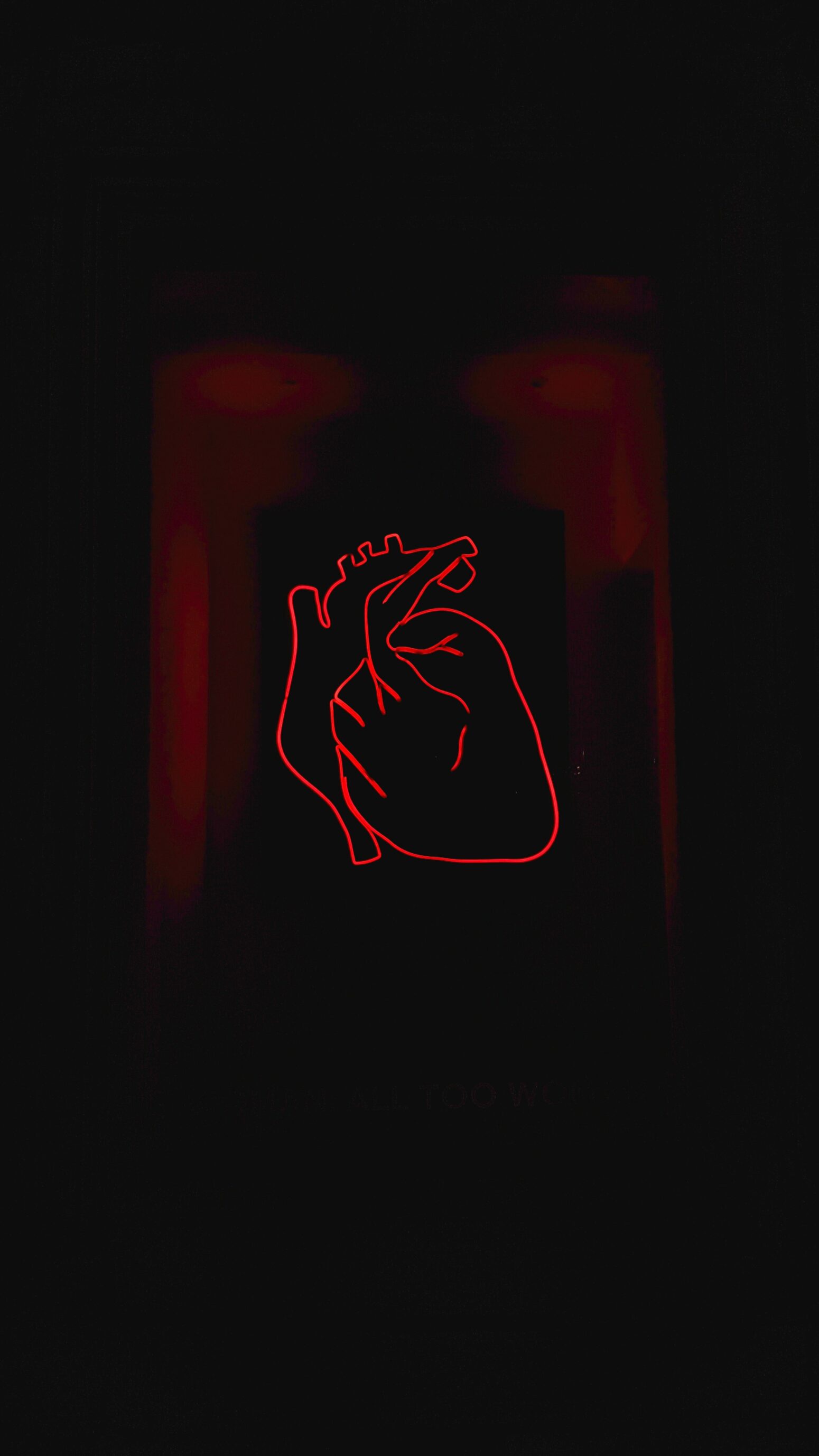
I want to talk about love because its force is supernatural here, all-consuming to the point of delusion: my family is suddenly perfect. I want the kids, with all their demands and deficits and sass, to come shove aside my food tray, the capped soup and ramekin of white lettuce, and validate the life I cobbled together before I was a heart patient. What if that’s all they remember about me? Their mother the heart: a pink fist of slightly grotesque, failing anatomy. Or best case, if I am a heart, then I am also love. How did the two get so convoluted, when love, the snap, crackle, pop of it, originates in the primitive midbrain, the same part responsible for signaling basic needs like thirst and hunger? Blame it on the ancient Greeks, namely Aristotle, who as a self-proclaimed cardiocentrist believed all thought, emotion, and sensation originated in the heart. When Aristotle studied chick embryos and watched the tiny blinking cardiac muscles appear first, his theory solidified: the heart is the center of the universe, the power source of all bodily functions. Organs surrounding the heart were merely backup singers, contributing their negligible harmony to the circulatory concerto.
Just in case I need a quick dose of lifesaving running, I guess I’m lucky that I can still recreate the sensations in my head: fire in my quads, pulse like a wild bird, the celebratory glug of water after miles of ecstatic deprivation. I’d look at my sweaty self in the mirror and think—no, believe—badass. I’ve never loved myself more than after a run.
That era is over; the era of astonishing myself. The era of: my heart, the stranger. Now, I know my heart like you know how to divest of it.
Aron’s experiment went beyond two strangers volleying questions. Participants were required, at the end, to hold eye contact for four minutes, essentially committing to a willingness to be known. Sustained eye contact triggers oxytocin, the feel-good “cuddle” hormone, also released during breastfeeding and sex. Even dogs who gaze at their owners experience elevated levels of oxytocin. When the nurse asked questions earlier, during the hookups, I tried to maintain eye contact, but she stared at her computer, keyed in my data.
The nurse asked:
Where were you when it happened?
At Starbucks. Researching Apollo Robbins, the greatest pickpocket of all time, for a story, maybe novel. Robbins does it solely for entertainment and returns everything he’s lifted. At a Caesars Palace show attended by President Jimmy Carter, Robbins dipped into a pocket of the head of the president’s security detail and stole the keys to the motorcade. Robbins says the most difficult feat is slipping eyeglasses off a person’s face without them knowing. He gave a lecture at MIT called “Illusion of Knowledge,” which might be more simply titled “On Being Human.”
She said:
Please explain “almost died”?
Any notes from my previous visits? I’ve been in and out of here, more times than most people my age.
I can’t tell you what happened—we know so little about what disrupts natural order and sends it fibrillating into mayhem. We can only forecast, not predict. Which explains why I couldn’t predict that my oldest son would know more about cannabis than world history, or that my daughter would stop asking me to fall asleep next to her. Or that Wyatt, a third grader, wouldn’t be reading at grade level.
I can, however, tell you how it felt. That’s my superpower: condensing seconds of anarchy into a tidy narrative that brilliantly sidesteps fear.
My heart lost its shit while I wrote and sipped a subpar matcha. The way I tell it to my oldest son, a skilled fisherman as well as movie-theater employee and weed expert, is that it was like he’d hooked one of those ornery, old catfish from Lake Poway and dropped it in my chest.
Quickly, so quickly, I begin to see black. Not sure “seeing” is the right way to describe it. I see nothing but can hear the clatter of coffee grinders and café chatter and my kids’ voices, or the ghosts of them, vanishing and reappearing in erratic cadences matched to my pulse. Several beats later my heart attempts to catch its breath, a spent little sprinter heaving at the finish line, calling forth muscle and will to keep me upright as the aftershocks begin. I call Paul. He answers on the second ring. People who love you—this might be a fact—answer by the third ring.
This might also be a fact: To commit forever to another person is to become the human equivalent of a run-flat tire; no matter how catastrophic your loss of air, you keep going.
Such a funny word, isn’t it, commit, when talking about love? We commit crimes. We commit to regular dental cleanings and eating more vegetables. But love? The agility and lightness of love is unmatched to the militant demands implied in commit. “Falling in love” suggests an absence of free will, the slow thrilling float and drift of a skydiver. Aristotle would suggest the only way to avoid falling in love would be to stop the heart. Maybe my heart has decided it’s done loving.
#12 If you could wake up tomorrow having gained any one quality or ability, what would it be?

Patience. Invisibility as instantaneous as blinking. I’d like to find a religion that makes sense. Do they all have to be predicated on believing in the absurdly supernatural: parting seas, loaves to fishes, virgin births? Can’t we bow down to women who love to fuck? At the moment, I’m feeling clinically asexual. I once was a woman. Now I’m a heart, a complex interior muscle that most know nothing about except that it’s roughly the size of a fist. I want to run again. Dreams are poor substitutes: a berries-for-dessert swap. I want my kids not to have this heart. I want them to trust that a heart throbbing for a lover is a heart in love, not in danger. I want them to run uphill and ride in pelotons, and exalt in oxygen deprivation with a pulse pounding for more, and feel a heart in glad agreement.
Before we discovered bike riding, Paul and I fell in love over running, where very few questions need to be asked since everything is answered in miles. It quickly became clear that I was faster and that if he wanted to keep up, he’d have to ease up on ramen and run harder. He’d have to chase me. By the time he caught me—a few years later—we’d amassed a small fortune of race medals and running shoe inserts. We’d lie on the couch after long runs, icing shin splits and plantar fasciitis, temporary maladies cured with the indulgences of massage and time.
If there were a skylight or even a window, I would know to shut my eyes or keep them open. Here’s a joke: What do hospitals and casinos have in common? Lots of rolling the dice and no sunlight. Am I stranded in the middle of the night, or is this the dusk hour when I lose my kids in the ocean? I’ve just woken, and it’s so strange how sleep can expand minutes to hours and compress hours to minutes. I imagine my family on the beach. I search the shoreline and the ocean for the kids’ shapes. That’s all I have: memory of their three fidgety figures set in relief against the vast brilliance. The problem is, they tend to disappear at the end of the day when blinding light bands the water’s drowsy surface. When SoCal warmth has sent every shape of body scampering for cool, buoyant relief. In this muddle of sun and skin, they’re gone.
I rise from my beach chair in a panic. My hope that I’ll find them right where I’ve last seen them suddenly feels arrogant. Kids can go missing at beaches. Rogue waves. Rip currents. Pedophiles. We live in San Diego, a border town with endless stories of kids abducted and sold into child prostitution. Why should I, a suburbanite mom with stacks of half-read parenting books, be immune? I wasn’t watching. I wasn’t taking care. I’ve been stuck in my head or scrolling the bloated dregs of other people’s more exciting lives. I deserve to be without what I love.
My heart beats frantically. I can’t catch my breath, nor do I want to breathe until I’ve found them. Which I will. Only the light’s angle has shifted, not my entire world, and soon their familiar silhouettes will pop back into view—so soothing, so clearly mine. In response to this singular horror, my beating heart is not an organ but a mother storm. It could take down entire civilizations in one fell swoop. It could pillage. It could murder.
This heart is not that heart anymore.
The morning nurse is not immediately friendly—I imagine that temporarily letting go of your own life and embracing strangers’ lives is no easy transition—but a few minutes into our conversation she’s warmed. She doesn’t use the whiteboard either. I usually hate protocol, but I need it here like I need the messes back at home: to know that the expectations for patient or mother haven’t disappeared. I can’t continue morphing into versions of myself I don’t recognize. Delusions run rampant lately. I thought I was going home last night. I thought we were going to Brian Head. I thought I’d be running into my sunsetting years, and like writer (and runner) Haruki Murakami says he wants to do, I would get to engrave my headstone with “At least she never walked.”
The day nurse tells me I can’t go home until a LifeVest is delivered. It’s an external cardiac defibrillator—a wearable version of the contraptions nailed on walls of gyms and airports. I’ve worn one before, and it’s as bulky and intimidating as police armor. We wait. I eat the apple and pistachios Paul dropped off last night. Hours pass; lunch trays smell deceptively edible. Apparently there’s one medical rep in San Diego County who can deliver LifeVests. With a fruit bouquet? A note of sympathy? Directions on how to tuck the wires into my pants as I walk Wyatt into school lest I be mistaken for a terrorist?
As she checks my vitals, the day nurse tells me medicine has changed too much. She was once a nurse and now she’s a drug pusher. I tell her I once was fast and now I’m slow. I once was a runner, now I’m a walker. Let me add the necessary defense: I have to walk. If I run, I risk further inflating the already supersized right side of my heart. If I run, I will run so far from myself, I’ll arrive some place in the past where I can toggle the levers of fate and rewire, scrub, therapize the demented heart cells responsible for all this mayhem.
#1: Given the choice of anyone in the world, whom would you want as a dinner guest?

This is going to be weird. My heart. I want to have dinner with my heart. I’d steal its plate of warm food, guzzle its water. I’d excuse myself to the bathroom and leave it sitting there alone. I would watch it from afar, gloat in its loneliness. Eventually I’d return and ask it how it feels to be left for empty. I would hear it again. This time it would be crying. And I would think, That’s the saddest sound on Earth. I would think, It’s your turn to hurt.
After a six-hour wait—the sun probably sinking, ready to glaze the ocean’s surface—I am discharged from the hospital without a LifeVest. Instead, the rep will drive to my house and uncoil a soft tape measure under my breasts and determine extra small. Do I even have that size? She fits mostly older men with longstanding scotch and pastry habits. Meantime, as Paul drives us home, I have thirty minutes to time-travel backward at the speed of traffic heading east on Route 56.
Look at me huffing up crowded Michigan Avenue—families waving “Go, Mom”—in the last stretch of the Chicago Marathon. I trot with warming pulse up the two-mile stretch of the Verrazzano-Narrows Bridge in the New York Marathon and am struck by dauntless Manhattan blushing in sunrise. I hit the midway point of stark desert at the Las Vegas Marathon and know that the same distance of more windswept solitude lies ahead and how to finish with this burst heel blister, yet my heart beats like a luxury Swiss timepiece and seems to also insist, Go Mom. Dawn’s mist lifts off Lake Superior in Duluth, Minnesota, and cools my quads along Route 61 at mile five in Grandma’s Marathon. I cycle north up the Pacific Coast Highway sucking on the steam of the endorphin train, all us riders in bed by 8 p.m. on Friday nights, alarms set to some god-awful hour. Training, we called it. Like race horses lathered in sweat, our ten-pound equine hearts thundering. This was when mind over matter was a meaningful mantra: Dig deep. Dig deep. Where exactly was I digging? Right here [See me pointing to my heart]. I went to the brain of the heart where physical endurance is powered, no longer by the mechanics of body but by sheer will. The same place—since we’re talking love—where limits imposed by science no longer hold. Where it’s possible to fall in love in a lab. Where the heart is no longer just a pump but a marvel, maybe even God-made. I don’t know that heart anymore.
I don’t know this new heart either. I certainly don’t love it, nor do I want to. Rekindle. Reframe. Stupid idea. Aron might suggest we meet face-to-face, hold eye contact, in a chilly hangar. I wouldn’t know where to start with the questioning. Was it something I did? I might ask it that. I think I want to know who wronged whom first.
Read more from Issue 22.1.