In the otherwise sedate painting of seventeenth-century flowers, a
hothouse number. An importation from the colonies, nurtured into
bloom and the representation of bloom. Unfurling white folds and
scalloped folds of folds unfolding, and ten children all taking their
turns at making it impossible for their mother to concentrate on
the light from within the heart of every flower. List the successful
number of paintings from Rachel Ruysch, and you will glean she
nurtured her vases and flowers alongside a garden of human souls
she either did, or did not, coax into similar bloom. History has not
asked much of her biography. Her husband painted human faces.
They made and made and made, together and separately. In the
quiet dark, which was almost never, their hands opened, clasped,
roamed. Their maker hands would not remain still.
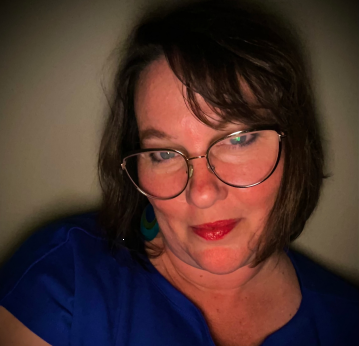
is a poet and scholar. She is the author of Pilgrimly(Parlor Press / Free Verse Editions, 2014). Her poems have appeared or are forthcoming in TheCincinnati Review,Colorado Review,jubilat, Mid-American Review, The Missouri Review,New Letters,Sentence: A Journal of Prose Poetics, Terrain.org, and elsewhere. She also publishes scholarly essays on 20th-21st century poetries. Her current manuscript “For the Green & Signifying Fields” was selected as a semifinalist for the 2023 Interim Test Site Poetry Prize and finalist for both the 2023 Tupelo Press Helena Whitehill Award and the Tupelo Press Dorset Prize.
She earned an M.F.A. in Creative Writing from the University of Montana and a Ph.D. in English from the Poetics program at SUNY Buffalo. She is currently professor of English at Bethel College in Kansas, where she teaches literature and creative writing, runs a visiting writers series, and serves as faculty mentor to the undergraduate literary magazine YAWP! She is the recipient of fellowships from the Djerassi Resident Artists Program and the Brown Foundation. She lives near Wichita, Kansas with her son.