Fog Studies
12 Minutes Read Time
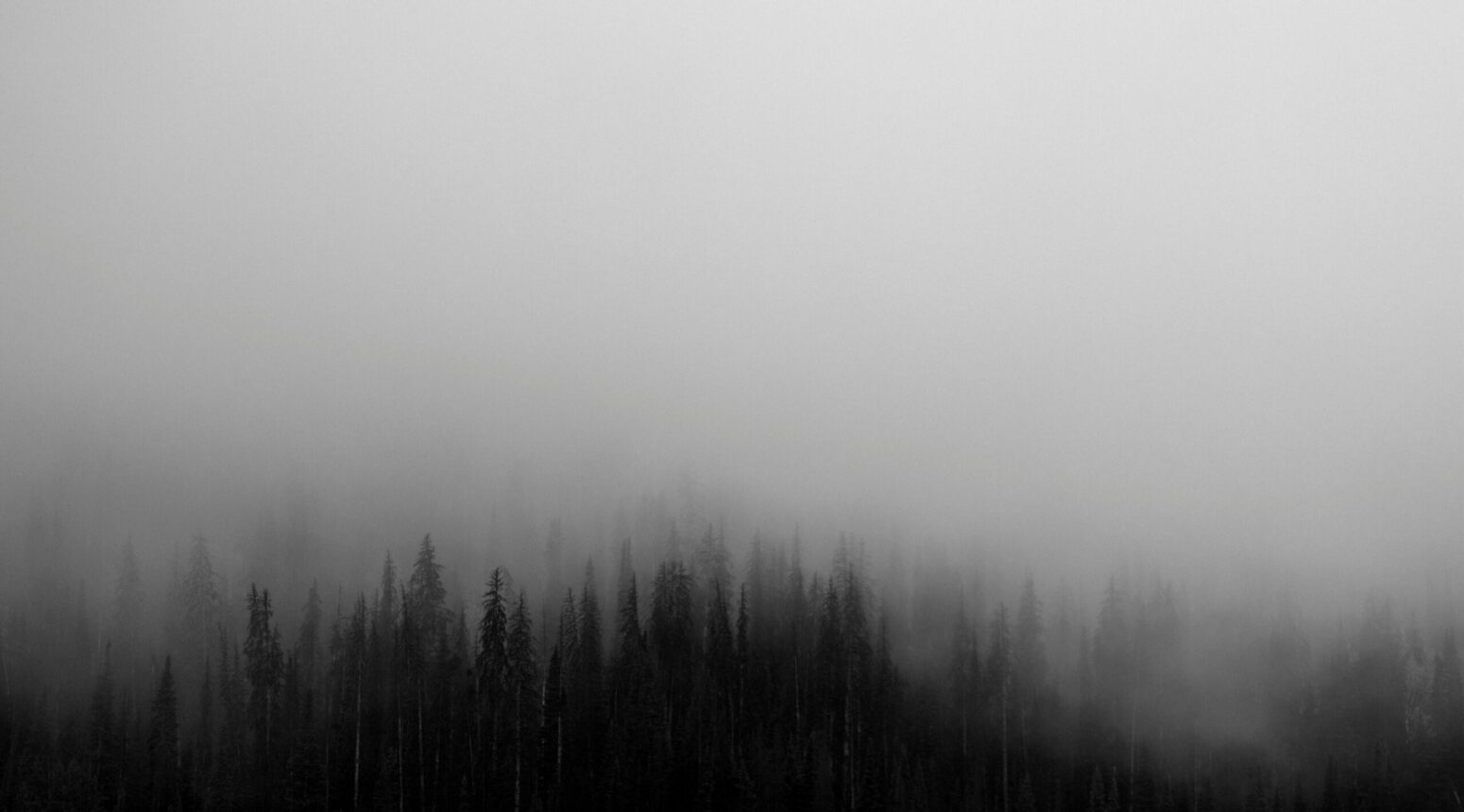
Little is known about the history of fog. But it is water—billions of microscopic droplets suspended above the earth—and it comes eight ways. Hovering close to the ground, it is the most common, radiation fog. Floating above the lowest points in Appalachia, it is valley fog. Fog drawn inland from the Pacific, or the San Francisco Bay, is advection fog. Fog rising from a warm lake is steam fog. In the darkest months in the deepest interiors of Alaska is the densest, coldest fog, made entirely of ice crystals. After a hot summer rain comes the less common frontal fog. Ascendant air in the High Plains breeds upslope fog. And the shallow, unimaginative fog that follows hail is hail fog. What separates fog from mist is the ability to render landscapes invisible. To be considered fog, mist must prevent you from detecting even the closest tower on a bridge, a minimum of one kilometer away. To be transformed to fog, mist must transform everything it touches.
Little is known about the history of fog. But it does have a history, a record of concealment and illumination. The record shows that William Elliot, captaining a sealing ship off Macquarie Island in 1821, discovered Emerald Island. The plain below it he called Emerald Plain. As it turned out, Emerald Island was not land but fog, and the plain took its name from a mirage. Steering an English whaler along the coast of Antarctica in 1841, Captain Dougherty discovered Dougherty Island. Covered in snow, it ran six miles long and could be identified by its tall escarpment. It was again identified by the Louise in 1860 and the Cingalese in 1886, though the ice melted and the fog dissipated, and there was no island there: The sailors had been mistaken. Two hundred years earlier, British explorers of the Wood expedition reported they’d found America’s West Coast, the boundary of what would become their progeny’s destiny: They mistook fog for Pacific Ocean inlets, in West Virginia. These discoveries—phenomena known as phantom islands, the phantom edge of our continent—exposed themselves over time. When fog clears, revealing once-hidden land or seascapes, it erases itself first at its outmost reaches and works inward. Its thinnest edges evaporate, as the vanishing effect passes through to the deeper, denser heart of the fog.
Little is known about the history of fog. In museums, fog does not fill the display cases. But you can jar fog, the way doctors preserve organs on ice. If you lift a jar into fog and seal it tightly, you can keep the fog for a few minutes. The container’s walls will turn opaque when the cap screws shut. Soon they will become transparent, save two or three shapes made by condensed water. Then the shapes will vanish, leaving droplets of water behind. Fog cannot be saved. You can only trust it is part of a cycle that is larger than you. You can leave your pot outside in the fog, as the ancients did when there was no rain. You can install a fogcatcher, which is a simple screen, as some Peruvians do in Bella Vista above Lima. You too can harness the fog, collecting water to irrigate your fields, to cleanse your body, and to drink.
Little is known about the history of fog. But in London in 1952, fog became infamous. A dense cloud of it, thirty miles wide, hovered over the British capital. It turned the air yellow. It smelled of sulfur. Of sulfuric acid, actually, created when sulfur dioxide mixed with nitrogen dioxide, chemicals released by London’s coal burning. For five days, the people of London could not see their feet. Their faces were covered in soot. Wood pigeons flew into walls. The buses shut down. Four thousand people died. Ten thousand people died. Twelve thousand people died. No one knows for sure. No one counted how many animals died, but they did, in droves. Everything was dying in London in December 1952. Everything was disappearing; even the fog disappeared, leaving a big black mark.
Little is known about the history of fog. But in the time it takes fog to travel from the horizon to land, a caribou can eat 1.6 pounds of chilled lichen. If it is summer, a caribou can eat 1.6 pounds of sedge leaves, willow leaves, and mushrooms. In the time it takes fog to reach land, the final nail can lodge into an armature. A foxglove can bloom. A starving animal can take a smaller animal apart. A rope can break. A robin’s egg can fall from a nest. A surgeon can transfer an organ from body to ice chest, from ice chest to body. A baby’s eyes can open. A beating heart can open. A sick person, a sobered person, can return. There is so much possibility in fog: Anything can emerge or disappear in it. Your friends can change. The ones you love can change. You can exchange your most cherished possessions for new things. You will. You will change your memories. You will change your mind and your heart and the wispy edges around it.
Little is known about the history of fog. But across time, humans have experienced fog less clearly than the owl. And the house cat. And the eagle. All of whose eyes function differently, better in predatory circumstances. What would eyeless shrimp make of fog, if they were exposed to it? Eyeless shrimp live in sulfide chimneys, near hydrothermal vents in the deep sea. Like gigantic tube worms, deep-sea mussels, and anemones, eyeless shrimp are one of the only complex species that survive without sunlight. Their ecosystem runs on sulfur compounds pluming from deep ruptures in the seafloor. Eyeless shrimp don’t see per se, but they sense low light with an organ on their backs. This allows them to navigate dark ocean waters and avoid capture. Their experience of light might resemble your experience of fog—your arm held out in the Grand Banks of Newfoundland, or in Tuscany’s Arno Valley, or on Namibia’s coast—total invisibility, and the abiding sense your body is whole. You cannot know for sure, but you do know.
Little is known about the history of fog. But when ice fog forms in Alaska this November, December, January, February, and March, another fog plagues the people. A fog of depression overtakes ten percent of the population, who live in constant darkness and constant fog. Like other animals, they feel strong urges to sleep. They crave chocolate bread and fried potatoes. They stop wanting sex. They enter a mental haze and suffer a mild form of aphasia. Their blood slows down. Some of them turn to bright-light therapy. Some of them do not make it, a number that grows as the winter solstice ends and the ice fog clears. Then sunlight returns. People emerge from their houses again. Imagine how it must feel to be one particle of that: a microminiature crystal floating beside a billion other crystals, undetectable to the human eye.
Little is known about the history of fog. But scientists have reconstructed a 3,500-year-long record of it in Chile’s Atacama Desert, where it seldom rains. Sometimes, it doesn’t rain for years on end. Imagine the length of a year without rain—that small duration on the geologic scale—and you’ll understand the impulse to store fog. Long records of it. Multiple millennia of logs. That is what tillandsia does. A rootless, gray plant, tillandsia resembles caribou horn. It whirls in turns and shoots. It twists and bends and juts out as it grows, increasing its surface area, exposing itself to as much fog as possible. It thrives in huge, thorny blocks in the Atacama Desert. Tillandsia, biologists say, is an opportunistic species. It seeks to live. So it has adapted to the desert clime, incorporating nitrogen gleaned from fog in its tissue. In oxygen-depleted zones in the Pacific, nitrogen-rich fog forms. It floats over the Atacama Desert in what locals call camanchaca, providing tillandsia with life-giving nutrients and water. Scientists suspect the amount of nitrogen-filled fog has increased over time. This fog sustains tillandsia, which feeds small herbivorous animals in the desert, which feed other animals, which feed other animals, and so on, all the way to the top of that improbable food chain.
Little is known about the history of fog. But the language of survival invokes it. You may emerge from the fog of grief, the fog of sickness, the fog of recovery or hope. You may rise above the fog that rises from the earth, from the ocean, from below. Remembering something you’ve lost, you can easily imagine how figurative fog became so common. How close it is to memories, at the same time present and past you. Whatever you had, just outside your reach. Like loss, fog remains impermanent in single instances and exists across time. Like loss, it won’t be contained, yet inside it a single tension fits neatly: The plain is mysterious, the mysterious is plain. The known and unknown merge. In the middle of loss, it’s known there are calls to make, people to apprise, black-and-white forms to sign. And somehow, in a fog, you make the beds that need to be made. You raise a tissue to the sick person’s mouth. You reach for his swollen hand. You shake a hundred hands. A thousand hands. A million hands extended through the fog. All of this, as if you were half-blind and half-business. As if you were lost, and the fog that moved in would not move on. It’s known that loss is vain, looking for its image everywhere and finding it, in what the eye can almost see. But it’s also fog’s nature to dissipate. It does; it will lift.
Little is known about the history of fog. But personal histories are even harder to lose. The brain and body remember so much: joy, pleasure, fear, pain. When soldiers emerge from the fog of war, for those having lost parts of their bodies, 60–80 percent report physical sensations in phantom limbs. Often the sensation is pain, although specialists confirm that any previously experienced feeling, recorded and stored in the brain, can reappear. Sometimes, still-sensitive nerve endings close to the point of amputation are to blame. Sometimes, it is only a memory of pain, replayed and decoded by the brain as a present threat to survival. This is called phantom pain. It may be treated with acetaminophen. It may be treated with antidepressants. It may be impervious to treatment of any kind. It may be called phantom pain when it is quite actual, alive in the body and mind. Plain as the sight of your own hand, cutting away from fog. Or plain, even, as a new land that you spot across the water, claim for your country, and name after a polished jewel. It’s hard to imagine the phantom pain of another, the soldier’s logic and sense at odds. A clarity (this can be imagined) more terrible than fog.
Little is known about the history of fog. But at the earliest point in unrecorded history, fog earned its reputation from the unseen. It isn’t fog until it obscures the image in front of you, presuming you have good vision, or glasses that make the fine print on the Snellen chart legible. If your visual acuity is 20/130, everything is shrouded in a fog. If you wear prescription glasses on a cold day and you walk into a heated café, your lenses fog up. If you wipe them with a cloth, the fog disappears. This is one method for controlling fog. Usually, you can control fog only over long periods of time, with the help of millions of other people. Usually, fog comes on unstoppably. Fog creeps up on you as blindness might, until it is both mysterious and clear. Sometimes, a person is a perfect fog-barometer one moment, raising his fist to test the boundary between mist and fog, and the next moment the fog clears, and the forms before him remain veiled. Eventually, for a person descending into blindness, it’s said the lines between one image and another blur, the forms fade, and his memories of the visible world darken.
Little is known about the history of fog. But theologian John Hull kept other records. He documented his meditations on blindness on cassette. Finally forgetting his own face, he felt like a ghost, he said. Though his auditory sensitivity heightened. Mainly, rain drew him out from the shadow world. Hull must have recalled the contours of his town by the sound those droplets made, colliding with longleaf pine, packed quartz sand, and the surface of the Mobile River basin. He said he wished it would rain inside, too, where the drops would fall on his children’s faces, and on his wife’s face, and on the edges of the bed for which he felt in the dark every night and every morning. Twice a day, he reached through the fog of his blindness for that familiar, assuring surface. Through the invisible world, these edges were his guide. Hull’s records of his routine, and the clues he used to preserve his visual memory, offer a glimpse into blindness—into a life that may have otherwise remained, in some ways, hard to imagine. Though the routine itself is not so: one hand squarely gripped around a walking stick; the other reaching through fog for an edge, a signpost, a hand, something explicable and known.
note: John Hull’s recordings are available in a short film from 2016 by Peter Middleton and James Spinney, Notes on Blindness.
Read more from Issue 16.1.