Fissures
34 Minutes Read Time
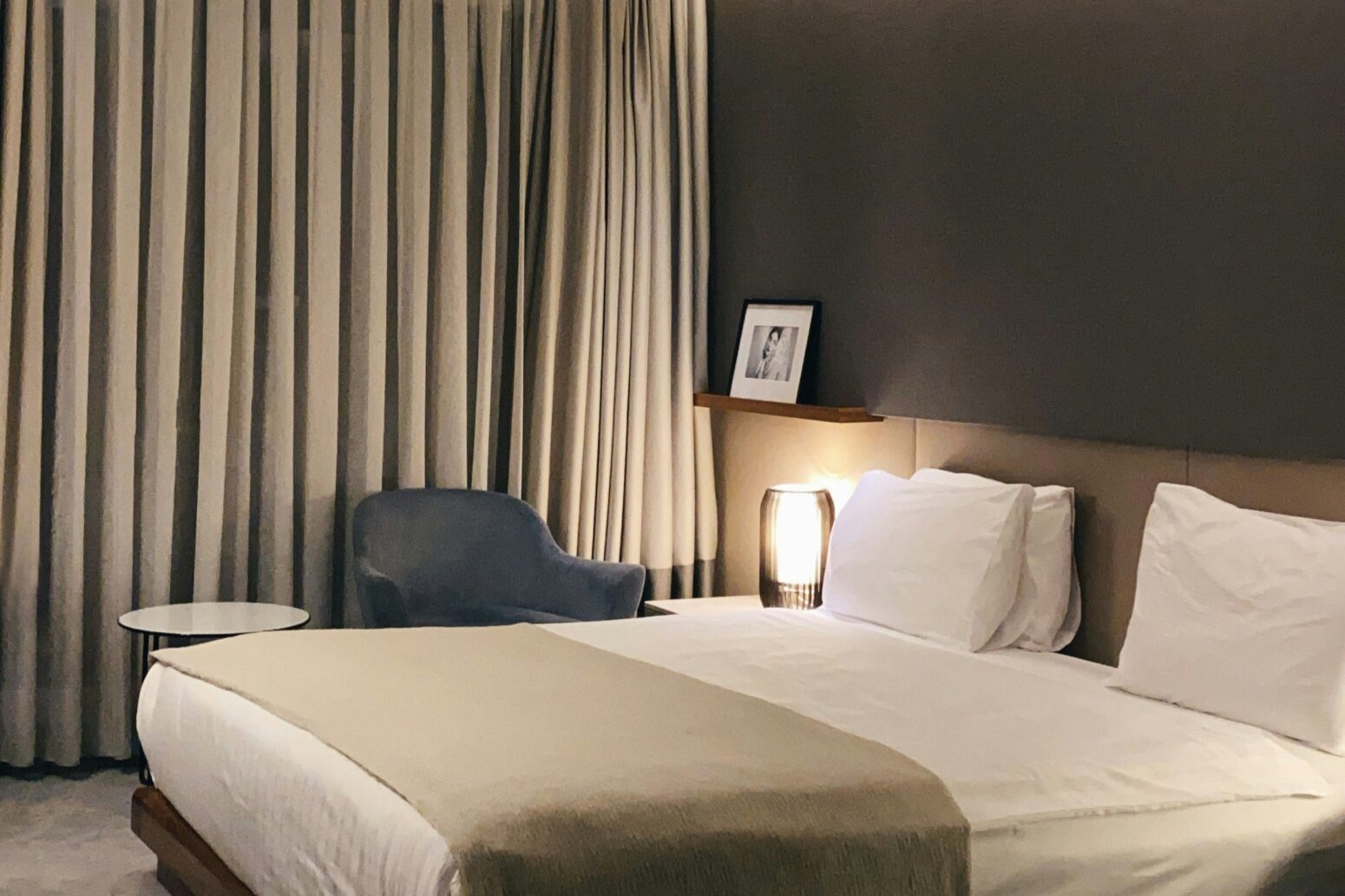
Piya has just turned thirty. She works in her family’s hotel. Tonight she will become pregnant. In twenty-some weeks, she will lose the baby, and the state of Indiana will sentence her to twenty years in prison for feticide. One year for every week.
But for now, it is early on Tuesday, and on Tuesdays Joseph comes to restock the soda machine, to bring her a can of 7 Up and chat with her, his arm propped on the counter. He always shares the can with her, reaches over the counter, plucks it from her hand while she pretends to resist. When he hands her the can back, it tastes sweeter, as if his lips have left a coating of sugar where they touched the aluminum. His orange-blond hair resembles pale flames; they burn in Piya’s mind, luminescent, every time she closes her eyes. His speech teeters between provincial Russian and skateboarding American teen. She has this over him—her English is unaccented; she enjoys correcting him, laughing into her hand: “When somebody asks how you’re doing, you don’t say ‘normal.’ You say ‘fine.’ ‘Normal’ sounds weird.”
“Fine,” he says, rubbing his cheek so it rasps. “I’m fine. Is that good, Ms. Piya?”
She likes the way he lifts his chin, says, “How do you call that?” when he wants to know the name of something. When he is not there, she looks around the hotel lobby, at the pamphlets fanned across the desk that nobody ever reads, the fake plants drooping in the corner, the rectangular rug that curls up at the ends, asks under her breath, How do you call that? How do you call that?
Joseph has been their handyman for half a year now, ever since his uncle bent his back wrestling a water heater and could not unbend it. He does it all: fixes the clogged bathtubs, repaints the stained walls, finds and installs new minifridges. Most importantly, he is cheap and resourceful, rewiring a broken coffee machine, unearthing mysterious stockpiles of cement to repair the cracks in the sidewalk, so Piya’s father is happy to let him continue in place of the uncle.
Joseph finds occasions to be near her: showing her pictures of his new car on his phone, each shot identical to the one before it; asking for her signature, standing close to her as she pretends to examine the piece of paper that she is pretty sure doesn’t actually need a signature; wandering into the breakroom when she is there, reaching over her for the sugar packets so she can catch a whiff of his sugary cologne.
She likes the way Joseph stares openly at her chest, one eyebrow raised, with such longing, as if he cannot help himself. She is rarely seen. The customers who check into the hotel are indifferent to her. The fact that they chose this hotel means that they cannot afford something better, but they want to be treated as if they could. They act like they are doing her a favor by staying there. The impatient businessmen scan their eyes over her, find little reason to pause; they fiddle with their phones to give the impression that something important is happening. The groups of college students jostle each other, slide their hands into each other’s pockets. The women shouldering too many bags and pulling on their children’s wrists address her without facing her. She could grow an antenna right before their eyes, and they’d still demand to know why there isn’t a free shuttle to the airport.
Tonight when Donna comes on for the six p.m. shift, instead of counting stacks of paper towels in the supply room and reviewing the housekeeping schedule, Piya will sneak into a room that she knows will be empty and text Joseph that the coast is clear.
As she watches the clock, waiting for Joseph and her morning soda, her phone buzzes in her back pocket; it is undoubtedly Anne, who has been her friend since high school. Anne has short black hair, wears a medallion of Saint Christopher, is a nurse at Lakeview Hospital. She times her smoke break so she and Piya can text each other. Piya unlocks the phone to a text from Anne:
omg kk is blond again
Piya types back:
lol she needs to stop, gurl can’t pull it off
Anne and Piya both love Kim Kardashian, the whole Kardashian clan, follow their exploits with the care of scholars documenting a lost civilization; they could tell you how much North West’s miniature Alexander Wang leather jacket cost or the recipe for Kourtney’s avocado pudding, can rank Khloe’s boyfriends in order of hotness.
Piya hadn’t expected to be working at her parents’ hotel at thirty, but she hadn’t really expected anything else either. She thinks vaguely about how her parents haven’t arranged a marriage for her, haven’t even hinted at it. She senses that they are cut off somehow; that it takes a whole interconnected system of gears and levers to start turning for such an enterprise to be set into motion, and they don’t really have any friends, any family she can think of. There is some unspoken rift, some fracture they don’t talk about. Her father sometimes stops and sighs as he straightens the fake flowers on the front desk or wipes the nonexistent grime from the glass door, announcing that he was Exchequer of Agriculture in Faisalabad; he had one hundred people reporting to him. She doubts this. If that’s true, then why did he come to America, to shiver in the mounds of snow, to serve red-faced men who puff their cheeks at his accent? She knew college wasn’t really a possibility for her; she had spent most of high school looking forward to lunches with Anne, where they’d take turns sharing the food their mothers had packed—Anne’s lumpia and Piya’s chicken and rice—and had graduated with middling grades. Her older brother, Ajeet, was an engineer who specialized in escalator design and installation. Her parents still talked about the time he had taken them to a parking garage that he’d been working on for months. They had taken turns riding up and down the escalators, their mother holding carefully to the handrail and looking down at her sandaled feet.
Ajeet had always been the smart one, collecting trophies and plaques to fill up the living-room mantel, each year nudging Piya’s mug for perfect attendance in the third grade closer to the edge. On the occasions that Ajeet talked to Piya, it was to hand her flash cards he had made. On the cards, in his spiky lettering, there would be a phrase—“Explain Aristotle’s theory on syllogisms”—and he would begin reciting the answer before she was done reading the card.
On other occasions, he explained to her: “You’re too fat, Piya. You could be kind of cute if you lost”—he squinted at her, framing her with his hands—“between 10 and 12.5 pounds. Twenty is ideal, but statistically, it is almost impossible to maintain.” He raised his hands in preemptive defense. “I’m not being mean. Appearances matter in society.” He gestured at his own inoffensive white button-down shirt, his neatly belted Old Navy khakis.
“You look like a confused Mormon,” she said and returned to her bowl of cereal. “Brown-ass Mormon.”
“Vulgarity is not becoming of women either,” he said, pushing up his glasses and scratching his forearm.
“Brown-ass fucking Mormon,” Piya said, letting the milk dribble out of her mouth, and the crunch of the cereal drown him out.
Joseph texts that his truck has broken down; he is running late and will miss the soda restocking. She texts him back three kissy faces. The first time they kissed, she did not see it coming. Joseph took her chin, did it hard and fast, his stubble turning her mouth, the skin around it, pink. The kiss sent her heart skittering down the hallway. Afterward, she sat in her car touching the pinkness. She stared at her half-closed eyes in the vanity mirror. This was what being drunk must feel like.
After that skittering heart went her imagination, rabbiting into the horizon. She imagined him asking her out on a date. Imagined being one of those couples walking through the mall together, him in baggy jeans and a cap with a flat brim, her in a Guess shirt, their hands clasped as if glued together. He would be holding the many shopping bags, would buy her a pretzel, a Godiva hot chocolate; they would browse the jewelry at the Zales and the Pandora. She would post a picture of the ring. He would win her a huge stuffed animal from one of the kiosks, carry it with the legs wrapped around his neck so people would turn and stare.
She skipped over the hard parts: how a non-Muslim was out of the question for her parents, how she wasn’t allowed to date, how she could not possibly compete with the twiggy Russian beauties she was sure Joseph hung out with in his free time. Instead, she imagined they would gather around a Christmas tree, her parents dressed in kitschy red holiday sweaters patterned with snowflakes and reindeer; they would all smile over steaming cups of cocoa. There would be grandchildren running around, a dog would bark at their feet—never mind that her parents despised dogs, that she herself went rigid with fear when they barked.
Piya stands as soon as she hears Donna’s clicking heels entering the hotel lobby. “Out so soon?” Donna asks, slipping off her purse. “You will not believe what they did today,” she says, putting her hand firmly on Piya’s arm. Piya nods while Donna recounts the latest dispute with her credit-card company. When two elderly couples shuffle to the counter and Donna reluctantly turns toward them, Piya sighs in relief. This should take a while. She slips away while one of the women painstakingly unfolds a coupon.
In the hotel room, Piya goes to the bathroom, wets her fingers, smooths the baby hairs off her forehead. She reapplies her eyeliner, reaches into her bra to hoist her breasts back into place. With shaking fingers, she texts Joseph.
He announces his arrival with a double knock, a pause, another knock: their code. They can’t use the bed this time—the room has already been cleaned and the bed made—so he presses her against the wall.
The first time they used a bed, Piya had been surprised by the magnitude of the pleasure that she did not feel. Somehow, she had always thought that the physical act would be so powerfully intense that she would explode with feeling. Instead, she felt a sharp pain and, when she thought she could bear it no longer, a dull pain, some wetness she feared might be blood, the beginnings of a rash on her chest where he had scraped his face against the soft skin. When she thought about it, she clung to the feel of him kissing her neck before he abruptly stopped and tugged at her pants. They were her tightest jeans; she had to do an embarrassing wiggle to get them down over her butt and thighs. She left three drops of blood on the sheets that she hoped the guests would not notice.
Now, he says, “I can’t wait, I can’t wait.” He gently cups her head in his hands so it won’t hit the wall behind her. He comes on her stomach, helps her wipe it off with a wad of toilet paper. She lets her hair fall over her face so he can’t see her smile.
The second time, they had gotten to a room before housekeeping had come, and they put a towel down in case there was any more blood. She had liked feeling his weight and warmth against her, but she couldn’t quite figure out what all the moaning was about in the movies. He called her “baby” and left a wet spot on her sweater sleeve.
The third, the fourth, the fifth? That last time, she had grown bold, put his hand where she wanted it, and it was better, for a little while, until the hand went limp.
This time, she puts her lips against the vein in his neck to feel him pulse madly against her, squeezes his delicate ribs in her arms. She feels protective and powerful at the same time. How strange that this pulsing keeps him alive, that he looks so big standing up, yet the movement of his blood is so tiny against her mouth.
A small part of her brain, an insect itch, worries about pregnancy, but she shoos the thought away. What are the chances? He always pulls out. And her periods are all over the place; gone for months at a time, then rushing back for weeks on end. For all she knows, she probably can’t have kids anyway. She’s only seriously considered going to a gynecologist once, out of desperation. It was years ago when globs of white fishy stuff came out onto her underwear, and she couldn’t stop reaching her hand down her pants to scratch. She had bought a hand mirror, locked her bedroom door, lain on the bed, parted her legs, and craned her neck. Everything was swollen and tight; tiny cracks had formed in the space between the outer and inner lips where there should only have been smooth, slippery skin. She had hidden the mirror under the bed and tried to forget about it, squeezed her legs tight when she remembered, when she felt something bubble out of her. It had finally gone away, died down on its own, after months. She couldn’t go to the doctor; she was still on her parents’ insurance. They would want to know why she’d been there. She was never sure when they would open a letter addressed to her, squint at her credit-card statement, or ask her why she had spent $55.23 at Bed Bath & Beyond.
And even if she could get around her parents, the thought of picking a doctor, explaining why she was calling to the flat-voiced receptionist, then to the doctor, was too much. She would’ve had to shed her clothes—would they let her keep her bra on?—and try to act normal while the doctor wrinkled her nose and poked at her with cold fingers. The doctor would be horrified at what she had allowed to happen, would ask her why she had waited so long, her voice laced with pity and disgust, and Piya would have no answer for her.
These hotel-room meetings, the hand over the mouth, the tongue in the ear, are only possible because a vessel burst in her mother’s brain, giving her an aneurysm. First, a red blossom in the eye, then a ballooning and popping deep in the gray matter, a slackening of the mouth, a drooping eyelid. Before her mother was stricken, she used to go with Piya to the grocery store. Piya would push the cart behind her mother, texting Anne, keeping an eye out for the hot guy in the vegetable section. Now, Piya must bring the grocery bags up to her mother’s stuffy room, watch her slowly roll the cauliflower heads in disgust, cluck at the scrawny potatoes. Her father has taken over the cooking. He turns the vegetables mushy and oil-slick, burns the cumin seeds. But he hums over the stove; he can’t eat American food, and to teach Piya would be too difficult. Once, he set her up to chop an onion, and she hacked at it like it was a stump of wood before turning away, tears streaming down her cheek. “Okay,” he said, rescuing the onion from her. “I have to take care of your mother. You’ll take over at the hotel. Report back to me. Write everything down in a notebook so you won’t forget. We’ll go buy a notebook today when the nurse comes.”
She misses the first month without realizing. The second comes and goes. In the third, it hits her with a start as she is driving. She slams on the brake,
ignores the angry honking behind her. Every night, the thought pounds in her head. Every morning, she beats it back. It’s nothing, it’s nothing, it’s nothing. She falls asleep with the laptop on her chest, wakens for a moment to find two women on the screen clutching wine glasses, smiling frozen, predatory smiles at each other. She forces herself back to sleep, to the drumbeat that says, It’s nothing, it’s nothing.
Sometime in the third month, she finds a streak of brown on her pajama bottom and sighs in relief. It is over. There is not a lot of blood, but it will come, she is sure. She probes with a wad of toilet paper and recovers only a few curled bits of brown, eraser ends. She flushes and stands to pull the pajamas up. This is also something that has been bothering her. She has blown up lately, gotten massively fat. The pajama is tight against her stomach, railroad tracking across her belly; these used to be her loose ones. She twists around and looks at her butt, which seems to have doubled in size. She knows she’s been snacking a lot, filling the spaces in between seeing Joseph with food, but this is totally unfair. She pokes at the pillows of flesh that have strapped themselves to her hips, her stomach.
The fifth month. She wears giant T-shirts or a sweatshirt over her uniform. Her mother tells her she’s gotten fat. “No, I haven’t,” she says. “You just can’t see very well.”
Her father doesn’t say anything about it directly, but he espouses the virtues of Pakistani cooking. “Look, look at me,” he says, and he rubs his own flat stomach. “Occasionally, the Krispy Kreme is okay too,” he says twisting his hand like he does when he is making a point, which is often.
“Wait? Are chips bad for you?” she asks, knowing he will miss the sarcasm. “Oh yes, chips, cookies, those sweety drinks, they are all bad, bad. Simple Pakistani food is best.”
“Wow, thanks for the nutrition lesson, Abu.”
He cocks his head. Piya smooths her face into an earnest look. “So . . . I should stop drinking so much soda? Okay, I understand.”
In the fifth month, she and Joseph have their one and only date, at the Red Lobster. The booths are not as plush as she had imagined. The waitress smirks at her. Piya thinks it is all exotic: the shrimp in a cocktail glass over ice, the lobster claw, fire-engine red, how expertly Joseph dismantles it, while Piya struggles with the spindly crab legs, the shell too strong, then too weak, embedding itself into the white flesh she is trying to unearth. She puts it in her mouth, full of shell. All that struggle for these tasteless morsels. The scallops resist her teeth, springing away from her bite. She spits a half-chewed thing out into her napkin, holds the hot mass in her hand, under the table. Joseph wipes the butter from his mouth, licks a salty finger, grins at her. She smiles back, wishes she had ordered pasta. A creamy pasta. She is already imagining the cheeseburgers she will order at the McDonald’s drive-through after this meal: the gray patties, the tang of pickle and ketchup, the finely chopped onion matter.
He takes the crab leg off her plate, twists at the joint, withdraws a long strand of meat. Seeing she is suitably impressed, he winks. She’s never known anyone who winks in real life. She doesn’t know whether to be charmed or to laugh.
The creepy-crawly food is not good, but she is delighted to be here with the other couples focused on their plates, the men raising their hands for another round of biscuits, the women looking at the dessert menus with pursed lips, asking if their husbands want to be bad, want to split something, the children missing their mouths, littering the space around them with bits of french fry, the ice water that keeps getting refilled, the lamplight at each booth creating an island of privacy.
It seems possible, with the two of them here, to imagine them as a family. She can see Joseph holding the baby against his chest, one of its arms around his neck, and though she can’t quite picture its face, she can see the curly hair on the back of its head. She can see Joseph’s smile over its small shoulder. With his skill for fixing things, she is sure Joseph won’t be a handyman for long. He has talked of opening a car dealership, and she could learn how to make Russian food, could fill the house with the smell of it, something with cabbage and potatoes.
She is away from her father and his smudged glasses, from her mother’s crooked face, from the low ceilings of the hotel, she is eating strange new food, she is almost breathless with possibility. She thinks how nice it is that Joseph waited for her to sit first, how he held the door open for her, so she just says it.
“What if—I had your baby?”
His face gets serious; it might be the first time she has seen him without a smile. “It is not possible,” he says gravely. “I”—he moves his fist back and forth, making a pulling-out motion. She thinks, Not always. She is surprised that he remembers the sex this poorly. Every moment of their time together is imprinted into her brain. All the times that she got close, closer, how the heat pooled but never seemed to ignite.
“Does it always work?” she asks, tilting her voice up.
He shrugs in a manner to indicate, yes, if it is him, it always works.
“It is no good. My girlfriend—wife—Katya, she is in Russia. She will be coming back. Few months, maybe? We can be friends, yes?” He gestures to their plates. “Share good food?”
She nods, blinks rapidly, shakes her water glass. She doesn’t want the eye-liner she so carefully applied in the car to run. She knows about Katya. He told her in the breakroom while holding her hand, between loud sips of coffee. Somehow, he had learned the word complicated, and he used it frequently.
She had taken her hand back, stacked the pink and blue packets of sugar like miniature sandbags. How do you call it? Packet. How do you call it? Microwave. How do you call it? Heart. She had taught him how to pronounce heart months ago. “It’s an ah sound, ah, ah,” she said, opening her mouth wide, “not hut.” Now she thinks, You’re breaking my hut.
In the sixth month, maybe, there were desperate texts with Anne:
so no period still. I’m freaking out
i’ve been telling you . . . you need a pregnany test!
!!!
how long again? i think 2 mons
ok, you still have time . . . get that test girl!
All-night searches on the laptop (“breasts hurt pregnant?”; “late abortion”; “abortion pills online”; “am i pregnant”; “how to tell if you are pregnant”; “dark nipples pregnancy”; “abortion pills legal”; “china abortion pills pharmacy”). One morning she snaps awake without warning, cannot fall back asleep.
She has been lying in bed for hours, watching the room lighten. At 7:45, when the light is bright and insistent through the gap in the curtains, when her father sees that her car is still parked outside, he pushes her door open.
“You’re late again?” he asks.
“I don’t feel good, Abu,” she says, resorting immediately to her stuffy-nose voice, as if she were trying to get a day off from school. Her voice is scratchy with lack of sleep, so this helps. Her father palms her forehead, says, “Acha, acha, sleep,” and moves to shut the door. He is wearing his lungi, and she is too miserable to even laugh about it, to call it a skirt behind his back. His nut-brown arms and shoulders are stark against the white of a tank top. She imagines him doing the morning tasks she usually does: bringing her mother her bowl of honey cereal, supporting her weight as he leads her to the bathroom, wiping her face down with a wet towel, combing and braiding her hair. He will do a clumsy job of the braiding. Her poor mother will look disheveled, will feel the places where the braid is slipping but will be unable to do anything about it. Sometime later Piya hears the clatter of cup against plate as she rolls over and clutches at sleep. She wakes to find a cooling mug of tea on her bedside table. She sits up in bed, licks the thin layer of skin that has formed on top, takes slow, fortifying sips. There is a cardamom pod, pastel green, floating in the milky brown, dented where her father must have crushed it between his teeth to release the tiny black specks. The dent, evidence of her father’s love, almost closes her throat, squeezes her temples, gives her a fighting-back-tears feeling. The tea tastes sweet even though there is nothing sweet in it, save for the pod.
Later when she is being shaken by the doctor, asked whether the baby took a breath or not, her mind keeps returning to the cup of tea, full and warm, the pod floating, bumping lazily against the walls of the cup.
At 11:37, the house is quiet. Her father must have gone into work for her, will be back around one to feed her mother her lunch. She finally leaves the bed when the urge to pee is overwhelming. In the bathroom she manages just to slam the door, not to work her pajama bottoms off, before it splits her open. Everything is sloshing; there are so many reds: pulpy-jelly-jam reds, dark-black-clot reds, Clifford-the-Big-Red-Dog reds in great streaks, crushed-pomegranate-seed reds, brown-shit reds. The red is all over her hands, in the creases of her fingers, stained into the cuticles of her nails, on the lumps of her thighs, the soles of her feet. She slips in the red, floats in the red. She is going to faint at any moment, can see her life draining out of her with every heartbeat. With each pump, another hot gush. Pump, and she can’t tell if she is peeing herself. Her back is breaking, the bones are grinding against each other, turning to powder. Her hip bones are gummy and flexible. Her breasts hang low and stick to her ribs, glued by sweat. Everything hurts. It slips out suddenly; squeeze a grape between your fingers, the pulp will separate from the flesh. She does not look directly at it. It doesn’t make a sound, lying on the braided rug. A direct look might be the end of her, she might collapse or scream or both. It hurts so bad she is hoping to pass out. The only thing stopping her from giving in is the thought of her father walking into the bathroom, the shame of him seeing her pantsless, like a child, seeing the evidence of her sin.
Even though it is still attached to her, she needs to work up her courage to approach it, gingerly, like she would a dead mouse.
She deadens her gaze, skims over the lump with unfocused eyes. She needs to detach it from herself. It is both bigger and smaller than she’d imagined. Its limbs are long and spindly, and she doesn’t like the weight of it in her hand. It spreads a little like a quartered fruit that is still attached at the base, each arm, each leg going its own way, but still tightly curled.
Clutching it to her midsection with one hand, she grabs at the toilet with the other, manages to heave herself into a crouch. She paws open the medicine cabinet. Her hand leaves a bloody imprint around the wooden knob. She fumbles around the small shelves for something sharp. Her eyebrow scissors. She knocks over a box of Band-Aids, a bottle of pills. She jams the minuscule scissor handles over her suddenly giant thumb and forefinger. She flails behind her to close the toilet lid, sits down on it heavily, grateful for the strong porcelain, that it’s not one of those flimsy plastic things. With the scissors on her hand, she feels for the slick cord, saws at it with the metal blades. It finally gives. The iron smell of the blood and sweat, of her insides having come out, is overpowering. She gags, willing herself not to throw up. The strain blackens her vision. Yellow dots crowd close. Things go black and white, and for a moment she is gone. She shakes off the scissors, lets them clang to the floor. She lays it gently down on the rug again. She is relieved to be free of its weight.
Moving faster now, she reaches for the trash can, shakes out the crumpled tissues. She extracts the plastic red-and-white bag from Target. She lets out something between a yelp and a sob. Why is this funny? Something about a target. She fights back a trembling giggle. A target. The baby with an apple on its head. Maybe another baby aiming a little bow and arrow at it. How funny. But this baby can’t sit up. Couldn’t possibly balance an apple on its head. She scoops it up under the butt, its head flops back, and as quickly as she can manage, she gets it into the bag. She knots the top once, twice.
The car ride in the dark night. How had it gotten dark already? How long had she been in the bathroom? Had her father come and gone? Her hands are frosty, her forehead hot. The pulsing warmth between her legs. The pad is overflowing, the towel darkening, she is sure. She squeezes her legs tight, but the liquid seeps out anyway. Her arms feel limp and boneless on the steering wheel. She doesn’t have the energy to hold up her arms, and her back is collapsing in on itself. She sees the familiar exit for the hotel, takes it instinctively. She parks half on the curb, stuffs a pad into the pouch of her hoodie, walks clutching at her crotch. She drops her hand as she enters. Donna looks up at her in surprise. She waves, motions to the back office.
“Forgot my wallet,” she says, praying Donna doesn’t see the stain on the back of her pants. She runs the last few steps into the bathroom. It feels good to sit. She presses her numb fingers against her heated forehead. It’s worse than she feared: the pad is swollen and crimson, the underwear is a dark brown. She presses some toilet paper half-heartedly onto the underwear to dab away the blood, changes the pad again.
In the hospital parking lot, trembling with fear. At the hospital door, leaning against the columns, trying to straighten herself, spot of blood on the thumb. In the hospital bed. The doctor leans in close, sets his jaw. “You were not two months pregnant. You did not pass just clots. There must have been a baby. Tell me where he is.”
Why does he keep calling it a he? It could have been a little girl. But it doesn’t matter, it is too late now.
“No.” She turns her head. “No baby.” Whispers into the pillow.
The doctor can tell she is lying. She is being canny, trying to cover her tracks; he can see it in her fat cheeks, the way her eyes raccoon to the side, the long pauses she takes before answering.
He turns her chin, like Joseph did. But he doesn’t kiss her. He digs his fingers into her shoulder, doctorly decorum forgotten.
She is hiding a baby, a poor defenseless baby. He remembers his own daughter, wrinkled and pink, impossibly small and perfect fingers clutching his own, his wife’s face blurry with tears. His daughter had yawned, had mewled like a kitten in his arms, and his heart was hers, he would have done anything to protect her then. How could anybody look at a baby and not feel something? “Look at me. Look at me. You won’t get into any trouble. Just tell me. I just want to help. Please tell me.” If he can just get her to talk, he could save the baby. He searches her face, the lank hair plastered to her forehead, her heavy breasts sloping down under the hospital gown. There must be something human in her, something that will respond to his pleas. “You won’t get into any trouble if you tell me. But if you don’t, there could be a lot of trouble. Look”—he softens his voice—“I know, I know your parents are probably religious. We won’t tell them anything. Nobody else has to know.”
Her eyes have stopped darting at least. He wipes her hair off her forehead. “It’s just me. You just have to tell me. Where is it?” And she seems to be loosening; her shoulders have fallen. She is on the verge of talking. “You want all this to just go away, right? I can help you.”
She looks away again. He lets a stream of air out through his nose. “If I suspect harm to somebody, I have to tell the police. But . . . if you just tell me, I’ll go, I’ll get the baby, and he’ll be safe and sound, and nobody else has to get involved, okay?”
“He’s not alive. He’s dead. He was dead.” She is crying. He can’t stand to look at her, but he stays put. He is so close. He just has to think of the baby, helpless, crying for him to come find it. Her upper lip is wet with mucus; even her tears look viscous and slimy. He puts a tissue under her nose. “Blow,” he orders. She looks up at him, does as she is told. He carefully wipes the edges of her nostrils.
“In the dumpster. Behind the Krispy Kreme,” she says.
He is sure she is not crying for that baby. She is crying for herself. Women like this shouldn’t be allowed to have babies. A simple tubal ligation could have saved so much pain. Local anesthesia, two incisions, thirty minutes, a quick cauterization, and all of this could have been avoided. If only these women would think, would do something before they had a chance to mess up anybody else’s life.
“Good, you did good,” he says, rubbing her hairy arm, leaving a trail of goose bumps in his wake. “Now you just relax. Everything’s going to be fine.”
He’ll be back, she knows. She couldn’t tell him. She doesn’t want him unwrapping the bag, looking at the thing she has covered, that should not be uncovered. The other doctor, the nice bald one, tells her they need to remove the placenta; it’s still stuck inside of her. The nurse will get her ready.
The room is quiet for a while, then filled with two large men in blue uniforms flanking the doctor. They bring the crisp night air in with them. The doctor looks in pain. “You need to talk to the doctor,” one of the men says. He is a symphony: his leather shoes creak against the floor, the handcuffs tinkle a merry tune, the radio crackles, and the gun creaks in its holster.
The other jabs a finger into her face. “This is serious. I hope you understand that. We’re going to need your full cooperation.” The doctor nods at them. The policemen step back. This is his domain. They hold their hats in front of them, bow their heads. Let the doctor work. Cold-blooded murder they can understand. But this. You see something new every day.
The doctor looks down at her to see what effect the police have had on her. She’s looking back at him with those watery brown eyes. Every minute he wastes here, the baby is suffering, is losing body heat. He just needs to find it.
“There’s still a chance,” he says. “It’s not too late.”
After she changed her pad at the hotel, she went back to the car for the bag. The bottom of the bag was completely red, the knot at the top gummed shut. She wrapped the towel around the bag, carried it to the dumpster behind the hotel, as close to the place it had started as she could get it.
On the bathroom floor, the baby’s ribs had been prominent through the delicate skin stretching across them. Her skin was like a boiled hot dog. Her face, turned to the side, was pink, and her cheek was fat like Piya’s own. Piya thought of the baby picture her mother had shown her one afternoon. There was only the one, a blurry photo from a disposable camera, in which Piya was lying flat on the table; the photographer must have been standing straight up, not bothering to get close, so her feet were closest to the camera, then her giant cloudy white diaper, and her tiny head in the distance. Her head was turned to the side; you could barely make out her scrunched brow.
“That is a terrible picture,” Piya told her mother. They were sitting on the couch, the cushions dipping them toward each other, so their arms squashed together.
“No,” her mother insisted, gazing at the photo. “Look, you were beautiful. So small. But you wouldn’t sleep unless I patted you.” And she patted Piya, a hard thump across the back.
Piya let out an exaggerated groan. “Oof, Ammi. Ow.” But her mother was oblivious, patting her, forcefully, rhythmically. Her mother had sung a song in Punjabi with many high notes—something about the darkness and the stars—and it came back to Piya in a sudden rush: she remembered the song, the nighttime comfort of being patted, each forceful thump a reminder that somebody was there.
In the hospital bed, after the doctor has gone again, Piya thinks about all the people who have ever cared for her: her mother, who sang to her and patted her until she slept; her father, who made tea for her when he thought she was sick; even her brother, who had once brought home a potted plant from school in an oatmeal container covered in construction paper and given it to her as a gift. Anne pushing her on the swings they were both too big for. Joseph cradling her head, drawing her close against his scratchy cheek.
Her mom would never sing to her again. Her father would never make tea for her again. She thinks about the cardamom pod bumping against the side of the cup, the baby weighing down the towel, swinging from her hand until she cradled it to her chest and rocked it. She hadn’t been able to remember the song then, the one about the darkness and the stars, but she still patted it through the towel, through the crinkly plastic bag. Now, in the hospital bed, with voices in the hallway, the IV dripping coldly into her arm, and the sharp squeak of shoes against the linoleum, she thinks about it all: the cardamom pod floating and releasing the small black seeds, the weight of the baby in her arms, her mother thumping her back.
Read more from Issue 20.1.