Death Rattles
14 Minutes Read Time
At dinner that night, Lo chops off her boyfriend’s head.
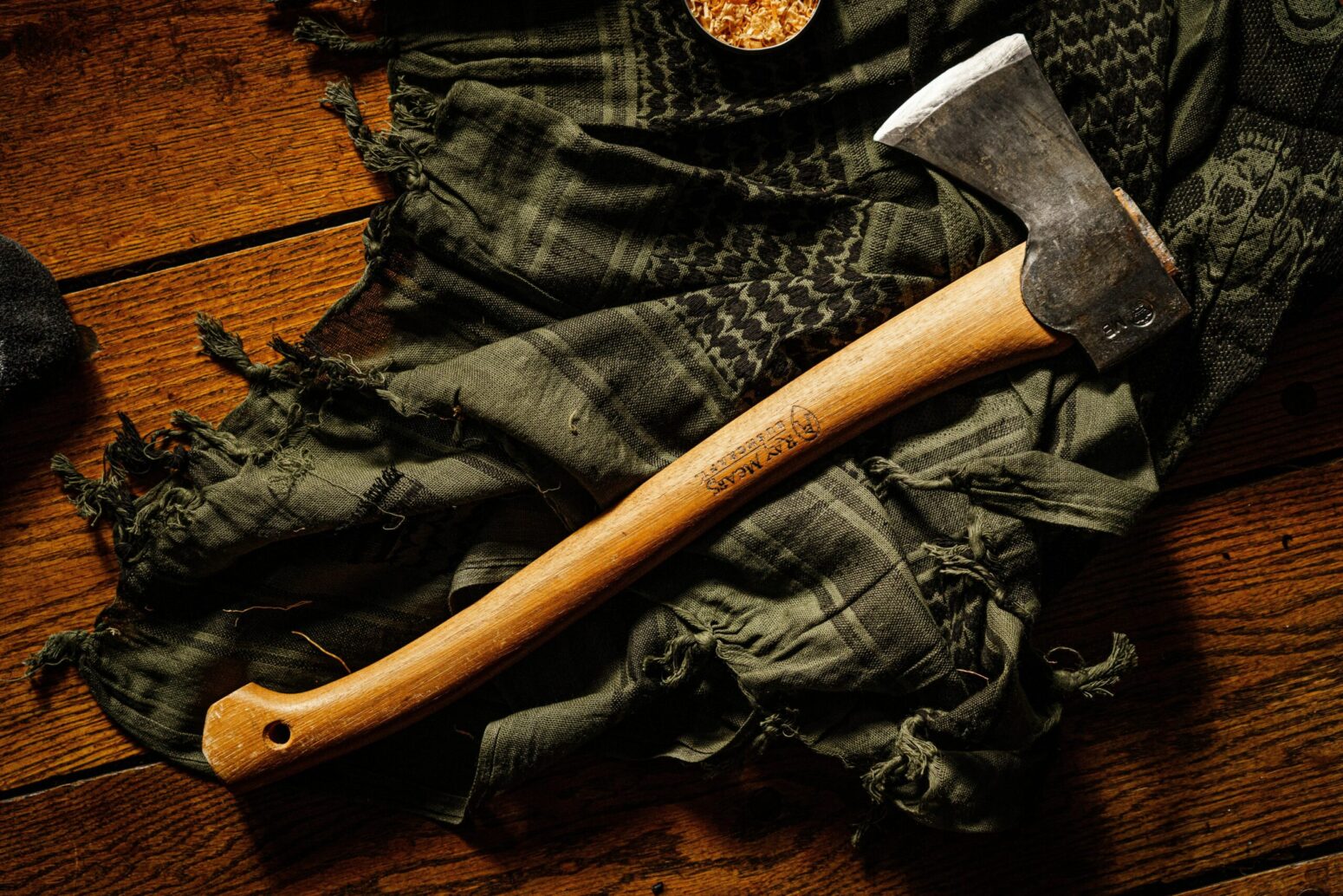
He’s explaining again, holding forth about how she just has a better eye for cleaning than he does, it’s a compliment to her that she even notices when something’s out of place, he wishes he could be as detail oriented as her—and she slinks into the kitchen with his voice droning, tests the heft of the camping hatchet he left on the counter three days ago.
She weighs its factual, easy lethality, and in her grows a gut-deep scooping sensation, as she remembers an image of her mother, ax raised over a snake. Her boyfriend is saying, I guess I just don’t see it, and his voice thrums, a constant generator hum. He doesn’t notice when she creeps behind him, lifts the weapon. He doesn’t notice when she pauses, sighs. He hasn’t fixed his hair since he changed shirts after work, leaving it fluffed in places, cowlicks sparking a deep warmth, an invasion of tenderness.
I just wish it wasn’t always so cluttered around here, he continues. Nothing is ever where I left it.
Lo swings the hatchet just right.
Her boyfriend’s head tumbles to the floor.
Lo’s breath stops. Her pulse jolts. The head seems like a mask wearing a mask, a mask of his face over a different mask of his face. The mouth hangs open, rubber-tire lips overinflated, bursting. Eyes wide, the blue of them like frostbitten bodies.
The body. What can she do? When she was a girl, she and her mother bleached a rattlesnake skeleton to display above the front door, first tucking it under a blanket of water to boil, and Lo will never forget the smell, retches at the thought—heavy, bloodless, yet full of blood’s weight and memory.
Instead, she wraps the head in blankets her boyfriend hated (too scratchy) and shoves it under the sink. She tosses another over his body, flops him onto the floor.
She drags the corpse out later in the dark, rolling him onto a camping tarp and panting so hard she’s almost whimpering. It takes her all night to bury him, and she doesn’t realize she’s forgotten the head until she’s drifting off. She sleeps better than she has in months, making herself queen-size.
The first time Lo saw her mother kill a rattler is all murk in her dreams, swirls of light and heat and tongues of motion. Lo is jumping into a box, maybe a refrigerator box, covered with tracings of their hands, doodles of stick figures, and the dust covers everything, the dry scent of it, swallowing all moisture, gulping at the air. There’s a rattle from inside the box, a hiss and jumble, and Lo freezes, leg on cardboard edge, and her mother scoops her up and tumbles her into the yard, snatches a shovel and slams it down over and over, strikes until the air rings with a golden bloody hum.
Dream Lo swims to the box, discovers she’s too tall, as tall as her mother. The snake hisses, reborn, the air swollen with poison, thick with it, humid. Lo’s mother hands her the shovel, dull with blood. She takes it, Dream Lo. I’ve always wanted to do this, she says.
Don’t forget her, her mother says.
Dream Lo picks up her child self, Girl Lo, and places her in the box. She swings the shovel.
Lo wakes refreshed, aching to stretch her sleep-stiff limbs. Her boyfriend’s side of the bed rumpled from her own body, she wonders if she really did what she did last night.
She creaks into the kitchen; maybe bacon for breakfast, now seems as good a time as any to quit the whole vegan thing, can murderers be vegan anyway?
Lo’s boyfriend is sitting at the table. New head on his dirt-covered body.
Good morning, Lo-Fi, he says. The meniscus of his smirk wobbly, watery.
Her answer a reflex: I hate that nickname. She circles him, moving her body like prey, something avoiding headlights of eyes, soft and deliberate and tense. The head doesn’t track her. She examines his neck, clear except for the curved horizon of a new scar.
He continues. I’m going out with the guys after work. What’s for dinner?
Lo yanks open the sink cupboard. The bundle unmoved, the blanketed ball. She peels it, layer by layer, cracks open the whole egg, and the first head, the one she cut off yesterday, it’s still there. It starts rambling, saying something he’s said before—women are just better organizers, he can never remember when his mom’s birthday is, it’s best Lo sends the card. And the new head, still on her boyfriend’s mud-frosted body, it’s talking too, asking whether she’s ever seen Pulp Fiction, what a masterpiece, even though they watched it together and she fell asleep halfway through, and my God, he doesn’t shut up, neither of the heads does, so Lo digs out a meat cleaver and hacks his new head off.
She crams the blanketed head back under the sink; the new head, meanwhile, spews bullshit about how he can’t drink rosé even though he loves the bubbles, what would the guys say. Never skipping one syllable, not even when she wraps it in a towel and throws it in the oven. A voice still leaps through the door, talking about how Quentin Tarantino is irreplaceable.
The third day, Lo is prepared. She stays awake in the kitchen, determined to figure out how it happens. She accidentally drinks a bottle of red wine.
It appears out of nowhere, the corpse—one minute, empty air; the next minute, him. Her boyfriend biting the ends off his words (But Woody Allen’s a genius, if we cancel everyone, who’ll be left to make art?) like a rattler snapping its jaws, a motion that hypnotized her as a child, one that forced her mother to act, to scold her repeatedly, to say, Lo, you can’t give them one second.
Watching his lips, mind spinning from merlot, Lo makes a mess of it, swinging the ax into the jiggly meat of his stomach before finding his neck. She stumbles to the linen closet, nesting the head between the fancy tablecloth-and-napkin set, mashing the cream-colored fabric into its mouth.
Lo passes out before she can bury the body. She thinks of fangs as she fades, diving deep into flesh.
Lo beheads her boyfriend every morning because he comes back every morning, a pristine head atop the moldering corpse, a patchwork of decay, skin quilted with ruptured flesh, stomach bloated like he’s eaten one of those puffy North Face vests, the ones that penguined out his chest. His voice is unrestrained, louder than in life.
On the fourth day: I don’t really read women writers, I can’t identify with their characters.
The fifth day: I worry women aren’t electable, I wish I could change how sexist this country is but I can’t.
The sixth day: You’re such a better cook than me, I don’t know how to do anything in the kitchen.
By the tenth day, Lo’s backyard is pockmarked with the acne of his burial. She doesn’t really see the point in fixing it—her boyfriend did all the gardening, and this fact hits her with a pang.
Lo’s world is silence. After the fourteenth day, she tries to cook pasta, but the clattering wakes the heads in various corners of the kitchen, which crack jokes through their various wrappings about women taking too long to get ready. Low-hanging fruit, easy to ignore.
On the fifteenth day, she tries chopping up the corpse, the way her mother taught her to do with rattlers—They’re more lethal when they’re dead, she said, they’ll snap on your hand and hold on—and burying the head under the bird fountain (I don’t understand why rape victims don’t come forward right away).
On the twentieth day, she leaves the head in the freezer, where she tamps a fortress of frozen veggies around it (I don’t know how to fix it, maybe women shouldn’t walk anywhere at night). Quietly, quietly, so she doesn’t wake the others.
On the twenty-second through twenty-fifth days, Lo jams the heads in boxes in the attic, hoping the raccoons living up there will eat them (I’m not sure he meant it that way; why not give him the benefit of the doubt; I’ve never heard him say anything like that).
Lo slinks through the house so quietly now that sometimes she fears she’s lost all substance, all form.
On the twenty-ninth day, Lo is tired in her bones. It takes her a dozen whacks of the camping hatchet, crusty with dried blood, to remove her boyfriend’s head (What happened to due process, to innocent until proven guilty?), the most so far. She has the sensation of dragging her body through waist-deep water, treading toward an ever-disappearing shore.
When he was alive and there was only one of him, he was not so monstrous, so all consuming, so like a single step from a boat into the middle of the ocean. The things he said sometimes dug under her skin, splinters, but it was easier to shut them out, to relax into the ease of being with him. Easier to ignore the frustration flaring in her, the alarm bells. Easier to give him the benefit of the doubt because he didn’t really understand, how could he, she wasn’t explaining it right, that was all.
She grand-slams his head off the knuckles of his vertebrae on days thirty-five through forty, and the bones shower the room like dice, objects tossed for luck.
She leaves the head where it falls each time, and crashes into bed, the downed tree of her body motionless. In these moments, she misses having someone to bring her a snack, a mug of tea, a margarita with the smallest sprig of cilantro spider-perched atop the ice.
Lo stares at nothing, stiff as a dead woman, while light chases from the room. She tells herself she’s hibernating, recharging, readying for the fight.
But she’s a mollusk on a beach, digging in and digging in. Burrowing into the emptiness, hoping the heads will not sense her, running over fears in her mind, worry burning a hole in her.
On the forty-first day, she smashes the head with a hammer. This is the first one she’s annihilated completely. It talks about how he’s sick of women crossing to the other side of the street when he’s behind them, does he really look like a murderer, until she bashes its face off.
Day fifty-five, Lo saws the head off with a serrated knife (Why are you so emotional right now?).
Day fifty-six, she uses a tire iron, the one her boyfriend never returned to his brother (Well, actually).
Day fifty-seven, the head says, No, I didn’t call him out on it because I didn’t want to make it awkward, and she swings the cleaver, and that’s the end of the sentence for two seconds until it picks back up with, I didn’t laugh, though, I think he got the message.
The heads pile up after day sixty, in the attic, the garage; sometimes, one or two will hear her and begin speaking, an orchestra tuning up. She can’t make out the words but recognizes the tone, the eons-long drone of worthiness, of deserving, of someone to whom it has never occurred to feel out of place. The exhaustion worms in, the way an octopus muscle-oozes into too-small holes.
The voices make Lo itch, somewhere vague, lining her bones, the latitude of the vibration wide and long and coarse, like running a hand over prairie grass. When she tries to use her own voice, she feels it crumbling in her mouth.
It is mountainous, this task. It drags her to the floor, millions of leaden pounds tied to each bone, each vein, each tendon, each follicle.
Day seventy, her boyfriend’s head is on a skeleton, talking about how he had no idea men groped women on public transit, he can’t even imagine why, he would never. The enormity of it, the fact of his continued existence, defeats her before she begins, paralyzing when she thinks about it too much. The anxiety squeezes her chest like a python, squeezing and squeezing, and it’s not stopping, what if it never stops, what if they keep coming forever. She’s sure this will never end, not until she’s dead.
Lo snatches her keys and wallet. Sprints to the garage door, slams it behind her.
Once in high school Lo found a rattler on the front porch, coiled, polished, tongue lapping the sun. In her head, her mother’s voice shouting to kill it, it’ll just come back if you set it free. The subterranean urge to show it that she was a creature to be feared, sixteen-year-old Lo with chipped paint on her toenails and whispers of hair falling out of her bun. To be fierce, a fighter. But she stepped back inside, locked the door, and crept around back instead.
In the car Lo doesn’t soften. If she can just turn the keys. If she can just leave.
But the heads, voices, taking the air, taking the silence for their own.
The snake on the porch was gone when she returned after school so long ago. She never told her mother why she entered through the back door for years—afraid to hear her own footstep, the solid chunk on wood, then that lethal splatter of rattling, that loaded sound of fear.
When Lo walks back into the kitchen, she lifts the ax. Her boyfriend turns to her.
His skeleton, the bones jaundiced and yellowing. He says, in the way he always tried to be sympathetic but wound up being condescending, I totally understand, you must be exhausted.
Of course she is. Yes, she started this and had no idea how long it would take to keep going, and if there could just be an end in sight where she could say, I am done now, I have finished, the problem is eradicated.
She wants to will herself to burn the house down. She wants to will herself to do a lot of things.
She screams instead. She screams wordlessly, endlessly, so long and loud she can’t feel anything but sound leaving her body.
The heads awaken.
Their voices are tornadic, are all the same, But boys just do that kind of thing, yeah, I heard him, he’s not going to change, and did you want me to make a scene in front of everyone, and the head on the skeleton is telling her to calm down, calm down, calm down, and she takes it in her hands, grips its fleshy jowls and she wants to be vicious and heartless but she is so exhausted so she begs it to please, please stop, please let her talk for once.
For a second, for one minuscule scraping of a half heartbeat, they’re quiet.
Dead silence.
Lo almost weeps.
The head in her hands blinks. The eyes crystalline, the ocean depths unfurling, the unmistakable humanness of him come back.
You know, life is hard for all of us these days, it says. We’ve all got to make sacrifices.
The heads start up again.
Louder than before, crashing in a wave of male voices, swirling, shrieking, furious they stopped for her, furious they gave her one second.
She twists the head. Rips it off the body, bones scattering.
Quiet passes. The mouth drooping. The other voices painting a mural, a backdrop.
Five minutes. Her stomach flutters.
Ten minutes. Fifteen. Twenty. Lo lets her body sink, unclenches.
She’s wiping her face when she hears it.
The head opens its eyes. It begins to speak.
Read more from Issue 18.1.