Capgras/Seagrass
2 Minutes Read Time
You sometimes think you suffer from Capgras.

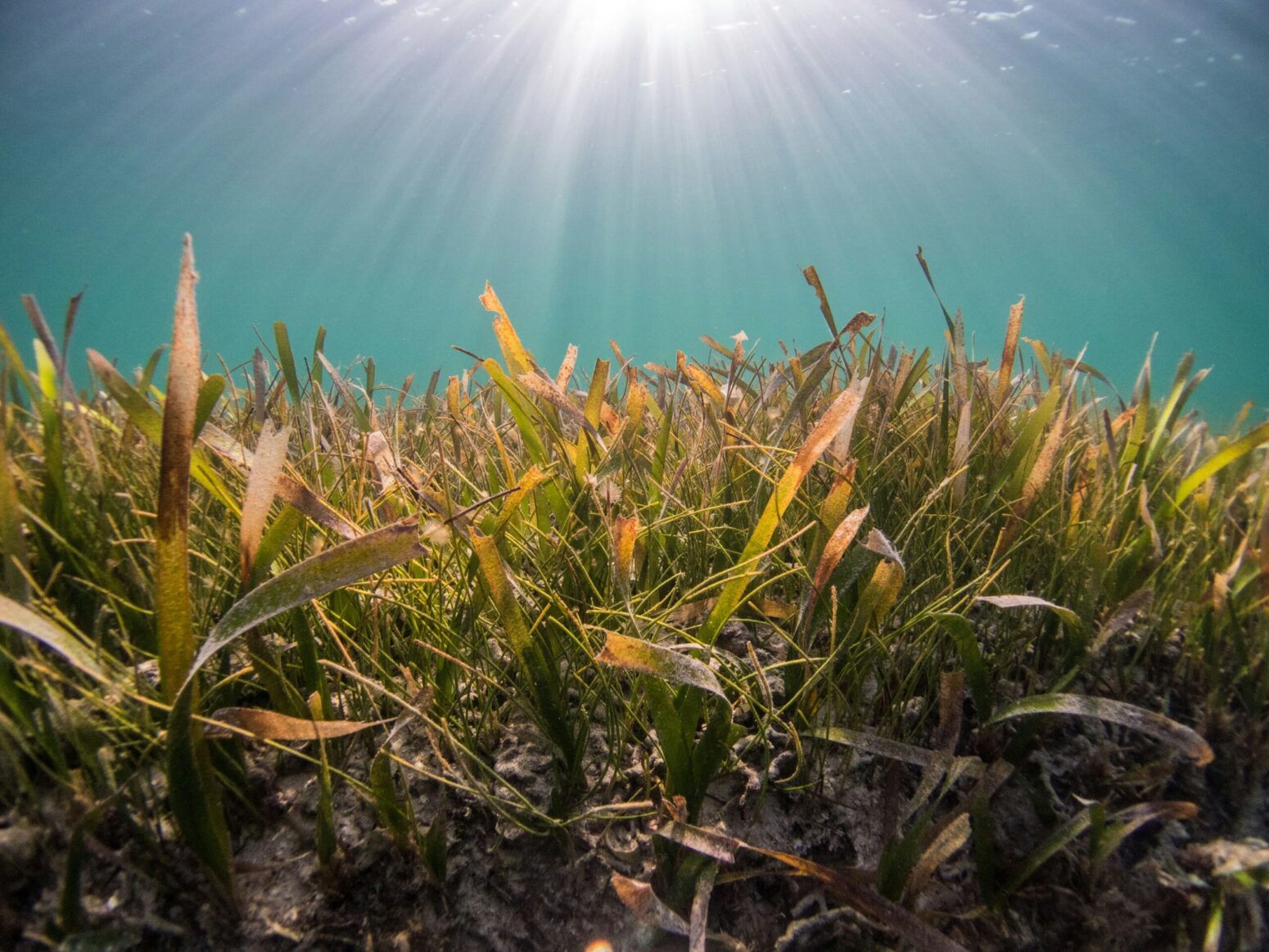
Sea turtles, without thinking too much about it, feed on seagrass.

Capgras syndrome is a psychiatric condition wherein the afflicted
cannot be dissuaded from the horror-inducing belief that her friends
and family are, in fact, impostors wearing close-fitting skin suits
and uncannily lifelike human masks.

Seagrass is a vegetation common to shore-adjacent marine environments,
the sustenance of not only sea turtles but also manatees and
even some fish such as mullet.

Whose eyes are those, looking out of your mother’s face? Whose
face is that, snugly encircling your mother’s eyes, like the setting
of two counterfeit gemstones?

As quantities of seagrass dwindle due to unchecked real-estate development,
pollution, and other human factors, ocean ecosystems
are being upturned, their centers ripped out, like a face without
eyes.

Still, the nature documentary ends on a note of cautious optimism:
if only we can motivate ourselves to enact sensible policies such
as turning one-third of the world’s oceans into protected reserves,
populations of threatened species such as sea turtles will bounce
back.

Tonight, in the effusively golden, deceptively warm light of your
TV-room lamp, you thought your boyfriend of six years looked not
at all like himself, but like his younger self gussied up to look like
his older self, and this made you feel not horror but tenderness.
Read more from Issue 17.1.