Where is Home & Who Can I Count On? An Interview with Maya Jewell Zeller
6 Minutes Read Time
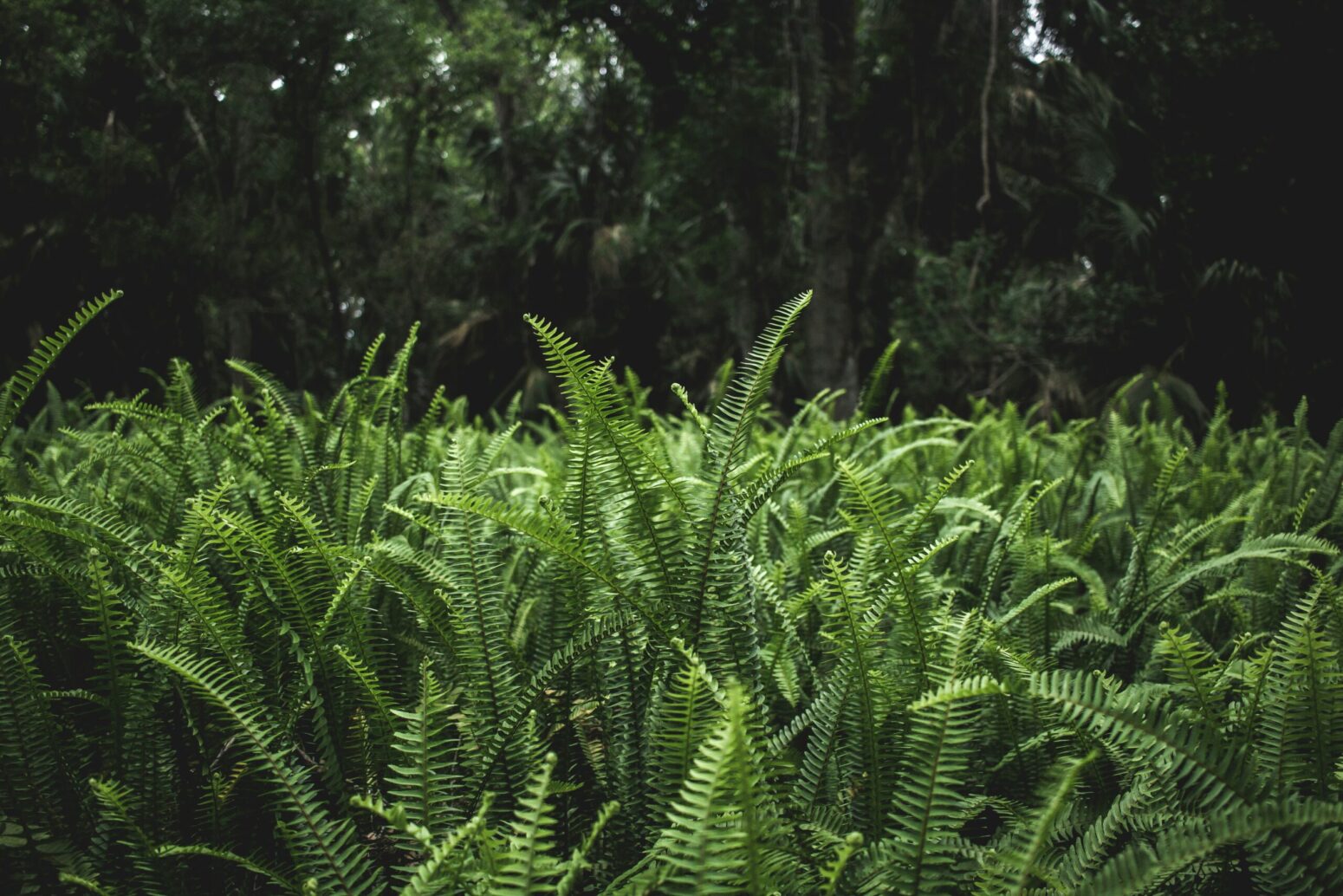
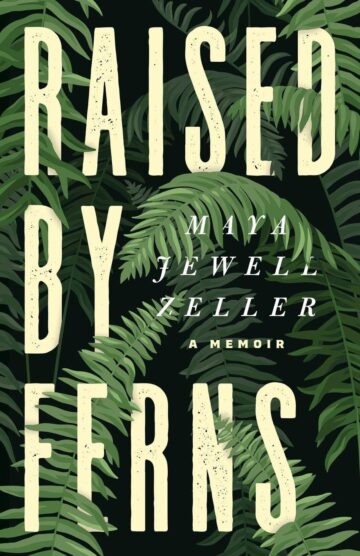
In her debut memoir-in-essays, Raised by Ferns, award-winning author Maya Jewell Zeller weaves rich stories of her nontraditional upbringing, the roots of her creativity, and the sources of her strength. The Cincinnati Review says Jewell Zeller’s voice, “both vulnerable and unflinching, carries a lyric precision attuned to the smallest details of time and place, yet she asks us to consider cultural patterns and our own personal response and (implicit) engagement with class, poverty, and patriarchy.” In the following interview, we discuss Jewell Zeller’s Raised by Ferns. This live interview has been edited for concision and clarity.
Erica Reid: Maya, thank you for speaking with me about your debut memoir. I’ve been a colleague and admirer of yours for some time — as somebody who thinks about writing as broadly as you do, was it a challenge for you to bring the essay collection Raised by Ferns together in such a cohesive way? Or did that come together organically for you?
Maya Jewell Zeller: Well, I wrote the book over the span of 10 years. [laughs] Like a lot of books, I didn’t know it was a book when I began the essays. I had about 120 pages of essays when I realized I was writing a memoir. Much like a poetry collection, I don’t write by project, I start by tiny. I am a sensory images person. Melissa Kwasny defines the sensory image as “anything you can perceive with the senses.” So an image is a sound, an image is a tactile feeling. It’s all of those ways that we perceive and intake the world.
And I would say putting together this book as a memoir felt organic to the material. The way that Denise Levertov’s organic form frames for us that any making that we do, any translating that we do is a translation of the inscape of the body — that Hopkins inscape — welling up and upwelling through us into shape, and the shape forms itself. And this material formed itself into essays quite distinctly.
ER: Yes!
MJZ: That was the required form material for this experience. And [Raised by Ferns] does function like poems, but it has more setting, it has more character, it has more story, it has more of the narrative peripety that was necessary to bring to the page than associative, imagistic leaping. So it leaned more into the prose camp, if also informed by poetry.
I would say it was a challenge when I was trying to figure out where the book began and ended. It was a challenge to figure out: where does the title essay go? The title essay is the penultimate work in the book. It’s the end of the book, before the epilogue. And I at one point had it in the first section. So that wrestle that we do with… how do we take this storyboard, and organize it?
And that was a struggle because I am not a chronological, linear person. I am interested in: where does the book begin in time and place? And then where does it go back, and where does it loop forward again?
The book does have an arc, and there is a slight chronology to it, but it moves in and out of the past and back to the present again, and not always to the same point in the present.
Memoir usually chooses a period of time in which the memoir takes place — chooses a character, chooses their conflict, chooses to follow that conflict, usually through some semblance of chronology to a revelation or growth or situation that the character overcomes, and then the memoir ends.
[Raised by Ferns] is also in a container of time, but I wasn’t interested in trying to cut it down to a formula. I was really resisting formula, and I was resisting what I knew a memoir “should do” because I’m less interested in that. I followed memoir the way that a poet would do it, which is to offer another lensing or another redefinition of what the genre is doing. And when I think about the memoirs that I really love, some of them follow some of the tropes and some of them don’t. And I think this one’s somewhere in the middle.
ER: With all that in mind, how did you ultimately decide where to begin this memoir?
MJZ: Origin stories are important to memoir, and so I get to my birth story fairly early in the book, but that piece is meant to teach you how to read the book. In that piece, I say:
“My life was never linear, never a narrative through-line. School was something we did when it was convenient, and learning a constant tangle of curiosity. In Briar, we learned blossom and library, seasons and fear, hunger and quiet, and hurry and pack. And that worry is inevitable and love is complicated. That comfort and lessons can both sting and sing.”
I have that essay second — not first, but second — because I want to give readers a little bit of advice, a little signposting. It can be nice as a reader to have a bit of “what can expect I expect in this book?”
And I want the book to reflect both the way that my brain works, and also the way that my family lived. And I think that the intentional — I don’t want to say chaos, but the intentional, disruptive or associative way that my family lived — it is the way that my brain works, but not the way that my life works. I currently live in a life in which I try to keep as many constants as possible. I need steady, clear expectations in my life, and I need to create those for my children, because I need a world in which I know “what does this day possibly look like?” and “what does this week possibly look like?” and “where is home?” and “who can I count on?” Those are things I didn’t know when I was a child.