Interview with Victoria Chang on the occasion of the publication of Tree of Knowledge
7 Minutes Read Time
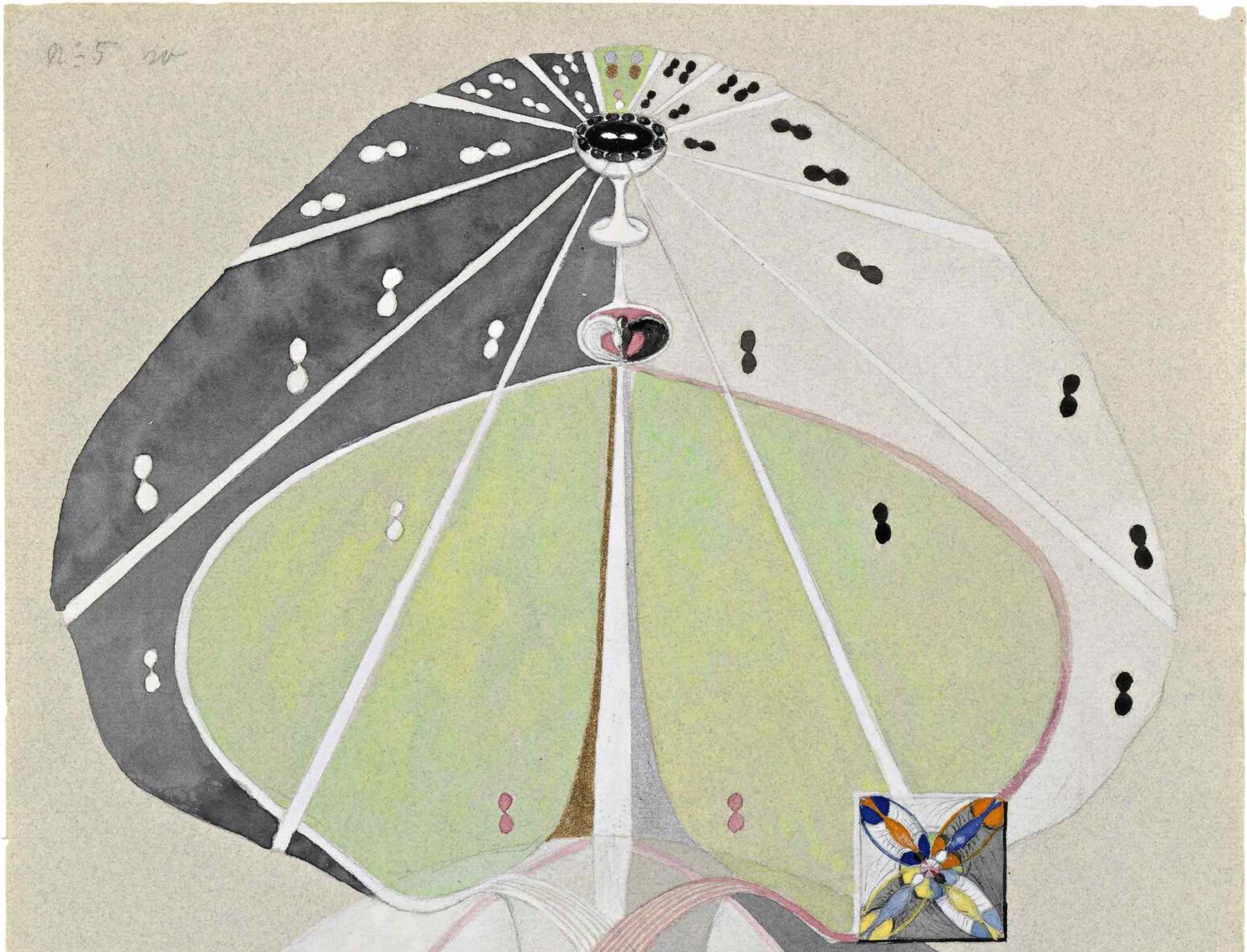
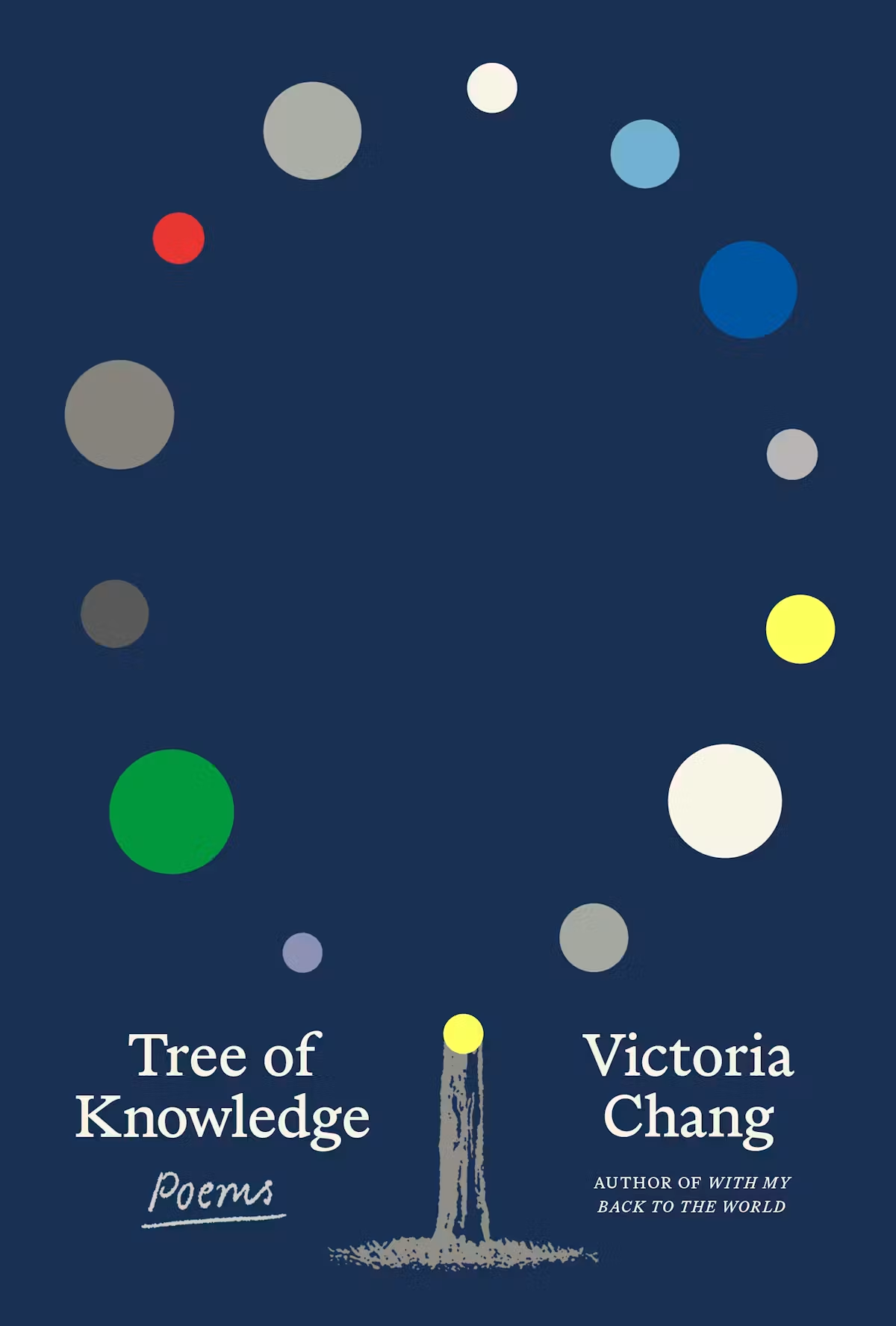
Victoria Chang’s new poetry collection, Tree of Knowledge, out this month from Farrar, Straus, & Giroux, takes its name from an enigmatic series of paintings by Hilma af Klint. Like af Klint’s artworks, Chang’s poems are vibrant and conceptually deep. This is her ninth book of verse, counting the hybrid memoir/collage/poetry book Dear Memory (2021). I caught up with the poet over email.
Eric Weiskott: Thank you for agreeing to speak with me. Your last two poetry books have both been collections of ekphrastic verse. I read in an interview you gave earlier this year that you find ekphrasis a freeing creative practice. Whereas With My Back to the World (2024) focuses on the work of Agnes Martin, an ensemble cast of painters is represented in Tree of Knowledge. In writing this book, did you say to yourself at a certain point, “OK, now I’ll write poems in response to Picasso, Joan Mitchell, and Hilma af Klint,” or were the artists you included part of the process of discovery?
Victoria Chang: I was/am always thinking a lot about trees, and this book in particular began with the cutting down of a massive eucalyptus tree across the street. I began to notice so much artwork related to trees. I think there are also feminist themes happening in the book, as I began to notice how many of Picasso’s paintings, for example, were about women’s body parts. I think for this book, like most of my books, I just start writing a poem, then another, then another, and things I’m thinking about or obsessing about gradually emerge, covering everything, like fog.
EW: Each of your books employs different signature forms, often of your own design: the unpunctuated, enjambed couplets, second line indented, in Barbie Chang (2017), prose poetry and epistolary address in Dear Memory, wakas for the body of the poems and W. S. Merwin quotations for the titles in The Trees Witness Everything (2022), and more. The form of most of the poems in Tree of Knowledge is unindented couplets with what I would describe as incredibly light, nearly evanescent enjambment, in contrast to the harsh enjambment of the couplets of Barbie Chang. Where in your creative process did the form of Tree of Knowledge originate? Was there one poem that became the template for others? Did some poems start out in a different form?
VC: I generally just write my poems by hand, in a notebook. At some point, I realize I have something that might be a manuscript of poems. I focus entirely on the language, usually, revising the poems again and again and again, almost obsessively every day or every minute I can catch. At some point, the shape of the poems reveals itself and sometimes that changes too, but I am patient. I just work on the poems and wait for them to speak to me. I think with Tree of Knowledge, the ekphrastic poems were prose blocks and I just made them couplets to give them more air to breathe. The longer poem in the middle, “Eureka,” was written in syllabics (10 per line) and was originally iambic pentameter, but I abandoned that along the way.
EW: One poem in Tree of Knowledge likens nationality to a birdcage. You write: “Some people have to // leave countries they were born in. Other people / have to leave countries they’ve never seen” (26). Country is a keyword of the book. Your poetry has been translated into many languages. Do you feel that you write for a global audience, a national one, a local one, or none of these?
VC: I’m not really writing for anyone but myself, to be honest. And that often shows, meaning that sometimes I can sense the reader or readers might feel that I have somehow turned my back on them. This is probably a true feeling. I am aware that I am not writing in a diary while I am writing my poems—I am making a piece of art. But there’s not a single moment in my process of making that I consider the reader(s) of my poems. My true north has nothing to do with audience, but is about my own vision for my art, myself, and my joyful process of making. I feel like I am really serious about being a serious artist. I’m not sure what this means, exactly, but this philosophy guides me invisibly, somehow.
EW: Do you ever reread your own past books? Do you view writing as a way of marking a juncture in time—once it’s done, it’s done—or more as an accumulation of perspective? I’m thinking of the lines in “My Landscape II, 1967” that say: “I’ve been so afraid of missing my life / that I haven’t used it at all” (73). Aging is a theme of Tree of Knowledge, but it has long been a theme in your work because of your decision to write about your aging parents.
VC: Once it’s done, it’s absolutely done, and “done” means this is the best I can do right now, at this time in my life. I am very forgiving of my own work, even if sometimes others are not. I am not going to apologize for trying my best. Sometimes I sense I have limits to my capabilities, but that’s totally fine as long as I try my best. I never go back and reread my poems unless I am literally reading in front of an audience. I actually forget most of the things I wrote because my brain is like a sieve. I’m just marking time, ticking off the thoughts in my brain at a certain time. I’ve said this before, but writing is like a companion to my life. I love doing it, so I spend every spare moment doing it; I live less in the world than in my brain. Sometimes I feel like I am missing my life, literally. But then I love making art so much that I suppose making art for me is being in the world; responding to the world is also a way of being in the world.
EW: I will be teaching Tree of Knowledge in two courses this fall, one an introduction to poetry and poetics for sophomores and the other a poetry writing workshop. What advice do you have for readers coming to your poetry for the first time? And what advice do you have for young poets?
VC: I would give these readers the same advice I would give to all readers, which is to have an open mind when you’re reading. As a reader, you want to widen your aperture, open your soul beyond your own experiences and enter the mind of another. Writing is an invitation to a reader and a reader is initially a guest, but then hopefully the reader’s life experiences enter into the writing so that there is some kind of alchemical interaction. Also, I can be abstract sometimes in my thinking and ideas, so if you don’t “understand” something then just try and go along with the tone of what I’ve written. Sometimes, I’m not even sure what I’m writing. I am working out my own thinking while writing.
On advice for young poets? Maybe Rilke had the best advice to young poets in Letters to a Young Poet, so go read that book. I might add that poetry is different for everyone, a life in poetry is different for everyone. For me, it is a way of living, a way of being, and a practice. I write poems because it gives me great pleasure to do so. If you’re in a writing trough, just read and live. All these life experiences and this reading will end up in your body and your poems. Perhaps the final piece of advice for young or emerging poets is not to compare yourself to others. Each of us has our own journey and relationship with the art.