Interview with Kathleen Spada
6 Minutes Read Time
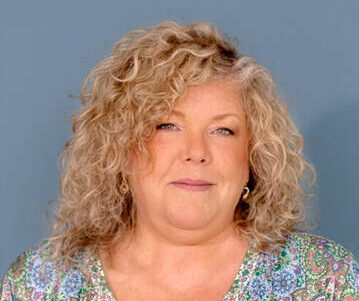
Managing Editor Lily Davenport: Earlier in the Fall 2026 semester, Kathleen Spada visited UC’s campus to participate in our annual alumni reading. We caught up with her to discuss archival research, Gothic memoir, and her recent book: WARD: A Memoir of Ghosts, Grandmothers, and Little Girls Who Disappear.
LD: As you mentioned at the recent alumni reading, your memoir, WARD, required intensive research, much of it archival. Could you tell us about that process? How did it evolve over the course of your work on the book?
KS: The unknown is what motivated the research that culminated in WARD, and that inevitably meant countless hours in various archives. In the beginning, those were regional archives like the Heritage Center in Springfield, Ohio, as well as the Clerk of Courts in Covington, Louisiana, which is included in the first interlude of the book. I found information, certainly, but not all of it was accurate or true. A record at the Heritage Center, for example, footnotes someone I’ve known all of my life, a woman who was born and raised in Springfield and was the woman who bought my mother, who took care of me for weeks at a time when I was a kid and whom I knew well into adulthood. A single sentence in the archive erases her entirely: “. . . and he brought his wife, Esther, with him from North Dakota.” When I told the archivist nothing about what they had documented was true, rather than investigating, they said I could show me their evidence, how they had come to this conclusion. I had many experiences like this one that revealed a simple truth about documentation—someone has put broken pieces together to tell a story. They are, too often, re-membering without memory (their own or anyone else’s). That’s not so much a criticism as a reality, and it changed my research process.
I continued the traditional archival practices, I let myself get productively lost. I talked to a lot of strangers who often led me to “old timers,” folks who had lived in the area all of their lives and loved telling stories. That’s when things really started to find me and I felt directed in some unknowable way. On several occasions, I wrote in my journal that it felt like I was living in a Gothic novel, as I seemed to be drawn by rather than stumbling upon the people and places and information I needed to fill a gap as I re-membered my own story. In a presentation at [the CCCCs conference] in 2020 I described the process as similar to labyrinth prayer and its Gothic sort of looping that always brings you back to center, to a beginning that is both past and present. Thus WARD became, in a very real sense, a Gothic memoir. The combination of traditional and not-so-traditional methods meant I did not ignore evidence but rather listened to everything.
LD: What advice would you give to those conducting research in support of a memoir project?
KS: I always recommend documenting everything, especially things that contradict, seem strange, feel significant. An Ed.D candidate I’ve worked with over the past few years quickly began to anticipate my response when he mentions such things: “Did you write that down?” I hadn’t realized how much I said that until he brought it to my attention and, in time, it is what inspired one of my Substack publications: “Write This Down.” Memoir is complicated because, much like autoethnography, it investigates the self—it quite literally means memory. But the past is always broken in pieces (dismembered) so in the writing we re-member, we put pieces together. Not the pieces. It’s not a Humpty Dumpty process because our pieces not only get jumbled over time but are affected by subsequent happenings so, in a sense, we tell a story, not the story. This can be discomfiting to anyone writing (or reading) nonfiction but, as I said in a recent interview, the non in nonfiction refers to what it is not, rather than prescribing what it is. The truthiness of nonfiction writing has been and will continue to be discussed because despite the line between fiction and nonfiction being blurry, nonfiction makes a promise to be true, to write true, to write everything down. And then, do the work. Do the research. Dig until the story tells you enough. It’s time to tell this story. Then continue, because the story continues.
LD: How did your time in UC’s PhD program shape your approach to writing WARD?
KS: I started in Rhetoric/Composition and the deep theoretical, rhetorical, pedagogical, and methodological training of that discipline was formative, but it also gave me the opportunity to take electives and supported my wanderings as I became interdisciplinary in both my scholarly and writing interests. Everything changed for me when I entered my first literary nonfiction workshop, led by Dr. Kristen Iversen. When I say first, I literally mean first. Though I had done creative writing on my own, this was the very first time I experienced workshop, where people with more experience and training read my work and gave me productive feedback. WARD began in that first workshop. I wrote the scene of my mother’s birth. The feedback was overwhelmingly positive, which gave me confidence, but Kristen gave me the constructive criticism I desperately needed. “This is beautiful work,” she told me, “but there is a lot of purple prose.” It was new terminology for me, but I quickly learned what she meant and my writing experienced its first transformation towards what it has become today. Dr. Chris Carter encouraged my research endeavors and the memoir itself by advising my critical and methodological work while Kristen advised the creative. The positive reviews of WARD are due to their continued support and mentorship. I am forever grateful for my time at UC.