Announcing Our 2026 Contest Winners
8 Minutes Read Time
Winners of the Eighteenth Annual Robert and Adele Schiff Awards
Anna Story for the story “Gelman, Dancing”
chosen by Michael Griffith
Alice Hatcher for the essay “Legacy Tree”
chosen by Michael Griffith
David Joez Villaverde for the poem “Pataphysics”
chosen by Rebecca Lindenberg
Thank you to everyone who entered the contest! We really enjoyed reading your work. Story, Hatcher, and Villaverde will each receive a $1,000 prize, and their pieces will appear in the Spring 2026 issue of The Cincinnati Review. Read more below about the story behind the winning story, essay, and poem.
We’d like to thank Blessing Christopher and Andy Sia for their assistance during this year’s contest period. We also want to recognize all the finalists:
Fiction: Marguerite Alley, Darius Atefat-Peckham, Mayuri Chandra, Roger Hart, Anna Farro Henderson, L.F. Khouri, Barry Kitterman, Danielle Monroe, Kasey Peters, Spencer Rieza-Morrison, Ronan Ryan, SK Stringer, Ben Van Voorhis
Literary nonfiction: Victoria Barret, David Callaway, Amy Clemons, Amy Cook, Barbara Felton, Anton H. Gill, Jared Green, Anne Kornblatt, Patricia Leitner, Sam Paul, Sara Z. Phelps, Rocio Reyes Mejia, Kurt von Trapp
Poetry: Morteza Dehghani, Kate DeLay, David Ehmcke, AT Hincapie, Maja Lukic, Yetvart S. Majian, Alison D. Moncrief Bromage, Oak Morse, Ruby Hansen Murray, C. Mikal Oness, Bret Shepard, Kim Welliver
“Gelman, Dancing” by Anna Story
Prose Editor Michael Griffith: Anna Story’s “Gelman, Dancing” explores social media click-chasing and the anxieties of the ultra-curated social media life in a fresh and wonderful way. We watch a young woman whose job is to make viral posts grow obsessed with a middle-aged coworker who accomplishes that feat without effort, without caring, out of simple paternal affection.
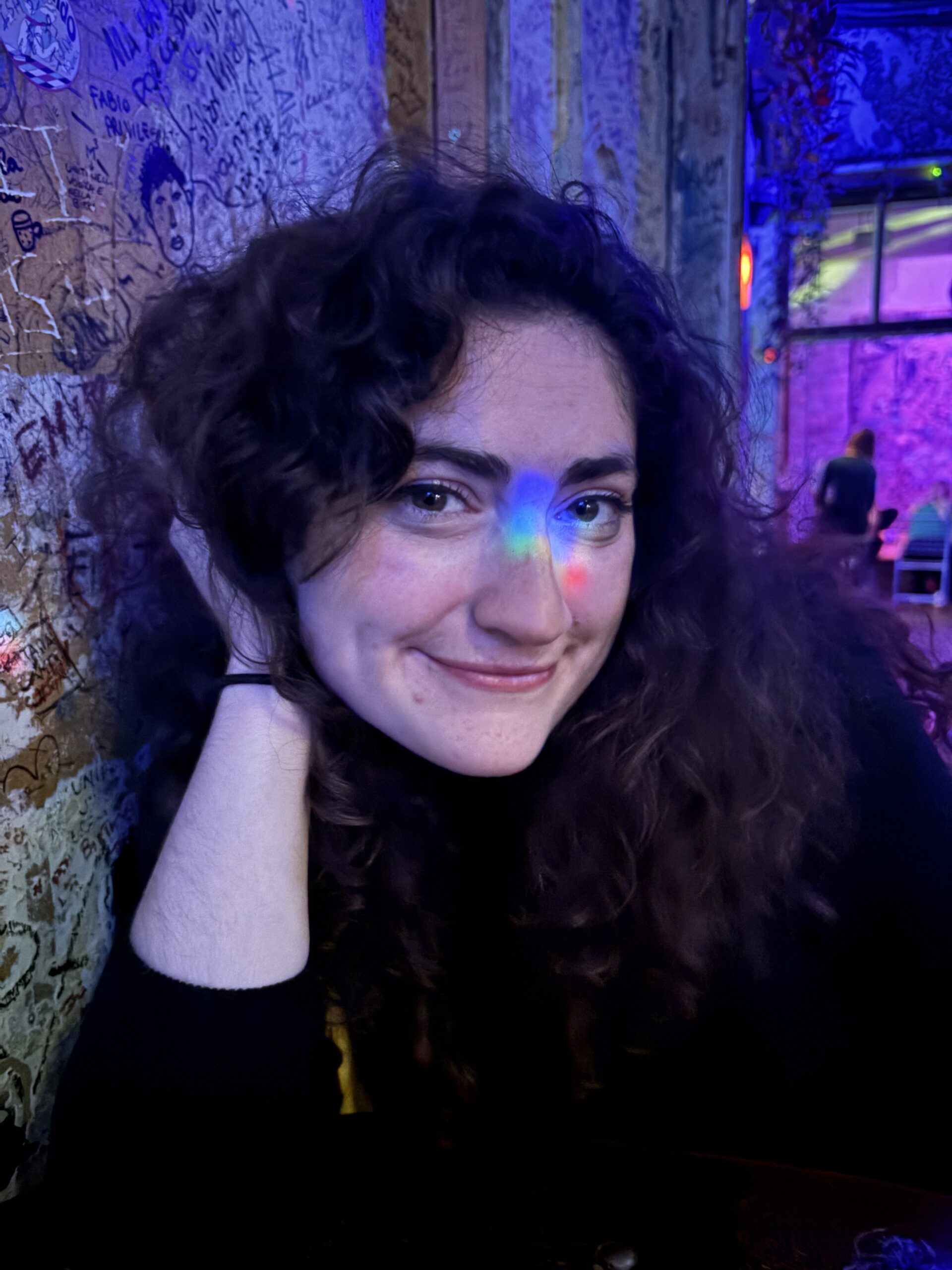
Story on the winning story: I’d set out to write a story about a young woman becoming obsessed with her mildly social media–famous middle-aged coworker as a way to interrogate how social media, the attention economy, and constant pressure toward commodification have alienated us from ourselves and the surrounding world. Sophie wants to be a brand so badly that she doesn’t know how she wants to be as a person, and her choices are always dictated through how she thinks others want her to be. She lies on dating apps, rattles off the industry jargon to sell herself as an employee, and chooses a hobby—meant to be an avenue for personal pleasure and self-fulfillment—based on what might garner a social media following. She’s coming at her life from the wrong direction.
But a couple drafts in, I recognized something else—something of myself—in Sophie. I wrote this piece during my MFA, where suddenly my art was the centerpiece of my life, and I was burning through story ideas quicker than I could generate new ones. I worried there was a bottom to my creative well, and that maybe, after all, I wasn’t cut out to be a writer. I wanted to write stories, sure, and I wanted to be a writer, but did I actually have anything to say? Was I, like Sophie, coming at life from the wrong direction? I like to think not, but it takes a lot to fully kill the capitalist in your head and make art (or, in Sophie’s case, dinner) for its own sake.
Anna Story is a writer from the Midwest living in Texas. Her work has received support from Inprint Houston and the Stephen and Tabitha King Foundation. She holds an MFA in fiction from the University of Houston.
“Legacy Tree” by Alice Hatcher
Prose Editor Michael Griffith: Alice Hatcher’s “Legacy Tree” is a moving excavation of and reflection on the legacy of a complicated father. Our readers loved both what father and daughter planted together decades ago and what Hatcher manages in the present to harvest.
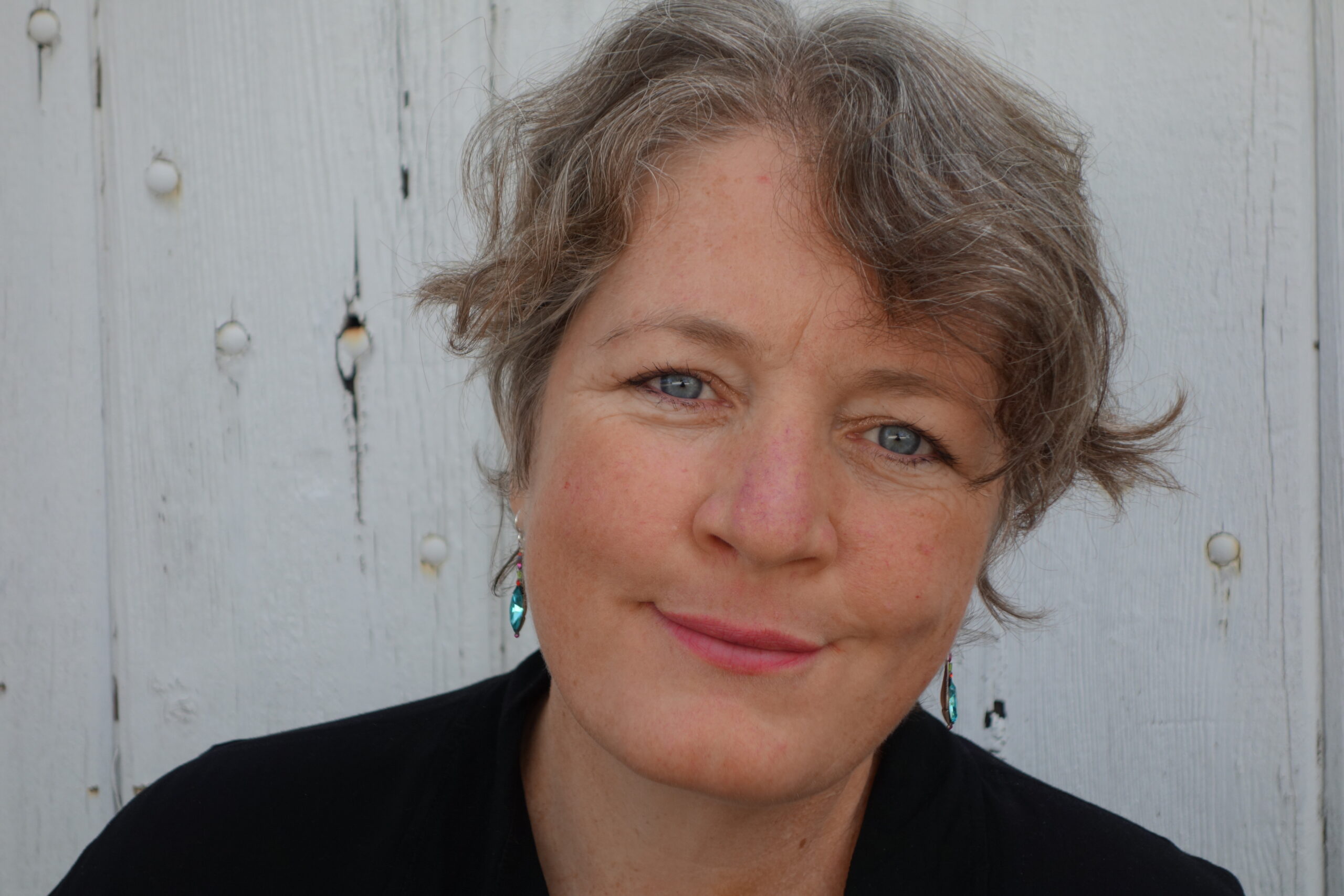
Hatcher on the winning essay: The essay was part of my ongoing attempt to make peace with the memory of my estranged father, a Vietnam veteran who died in 2020. My father struggled with many challenges in life, including severe PTSD resulting from his time as a battlefield surgeon at the height of the Tet Offensive. In Vietnam, he witnessed things too terrible to recount here. As a result of PTSD and many other things, my father was not an ideal parent, to put it mildly. I’ve spent much of my life—too much—haunted by memories of his unpredictable rage, violent outbursts, and manic fits, and feeling angry about the wreckage he left behind when he walked out of my life.
Since his death, I have been trying to make sense of my complicated love for him, consistently returning to his nonconformist bent, his love of nature, and outlandish humor. Whatever his faults, my father was a funny guy, and American suburbia was too small for his outsize personality. An orthopedic surgeon with access to all sorts of props from a teaching hospital, he used to drive around with a wired-together human skeleton, notably with a cigarette wedged between its molars, in the passenger seat of his car. He sometimes drove me to school with the skeleton in the front seat, while I shrank from embarrassment in the back seat. The skeleton wore a seat belt. I didn’t, but then it was the 70s. When I was seven, he refused to play Monopoly by the official (“boring”) rules, instead decreeing that players could murder or rob an opponent, or burn down a house or hotel with certain rolls of the dice. As recounted in “Legacy Tree,” he planted our entire yard in corn to “rattle the cage” of our weed-obsessed, herbicide-happy neighbor.
Maybe I’m grasping at straws (or corn stalks), but when I remember these things, I feel a deep love for him. To the best of his ability, and with a choir of demons howling in his head, he lived by his own terms. My father suffered immensely and passed on his suffering to those closest to him, and I’ll always carry the residual hurt. Still, he left me with an invaluable legacy: my memory of his love of nature, sense of humor, and staunchly nonconformist stance. I wrote “Legacy Tree” to honor him.
Alice Hatcher is the author of The Wonder That Was Ours (Dzanc, 2018), longlisted for the Center for Fiction’s First Novel Prize. Winner of Reed Magazine’s Steinbeck Award and Prime Number’s Award for Short Fiction, she has published essays in numerous journals, including Fourth Genre and The Bellevue Literary Review.
“Pataphysics” by David Joez Villaverde
Poetry Editor Rebecca Lindenberg: “Pataphysics” does something I thrill for poems to do: It teems with a wild variety of ideas, emotional registers, times, places, characters, and even selves in a single poem unified by its distinctive voice and point-of-view. The long sentence that unfolds over incrementally diminishing lines down the right-hand margin is full of personality, erudition, memory, humor, tenderness, longing, and pain. The last lines manage to be at once candid, vulnerable, surprising, and deeply moving. In its swift movements and deft turns, its unexpected language and mindfully-curated details, and its affecting originality, “Pataphysics” found its way into my imagination almost as a catchy song might do, or as a quote from a favorite book might do, or something a friend or family said, thinking nothing of it, that stops you in your proverbial tracks, and which you never really forget.
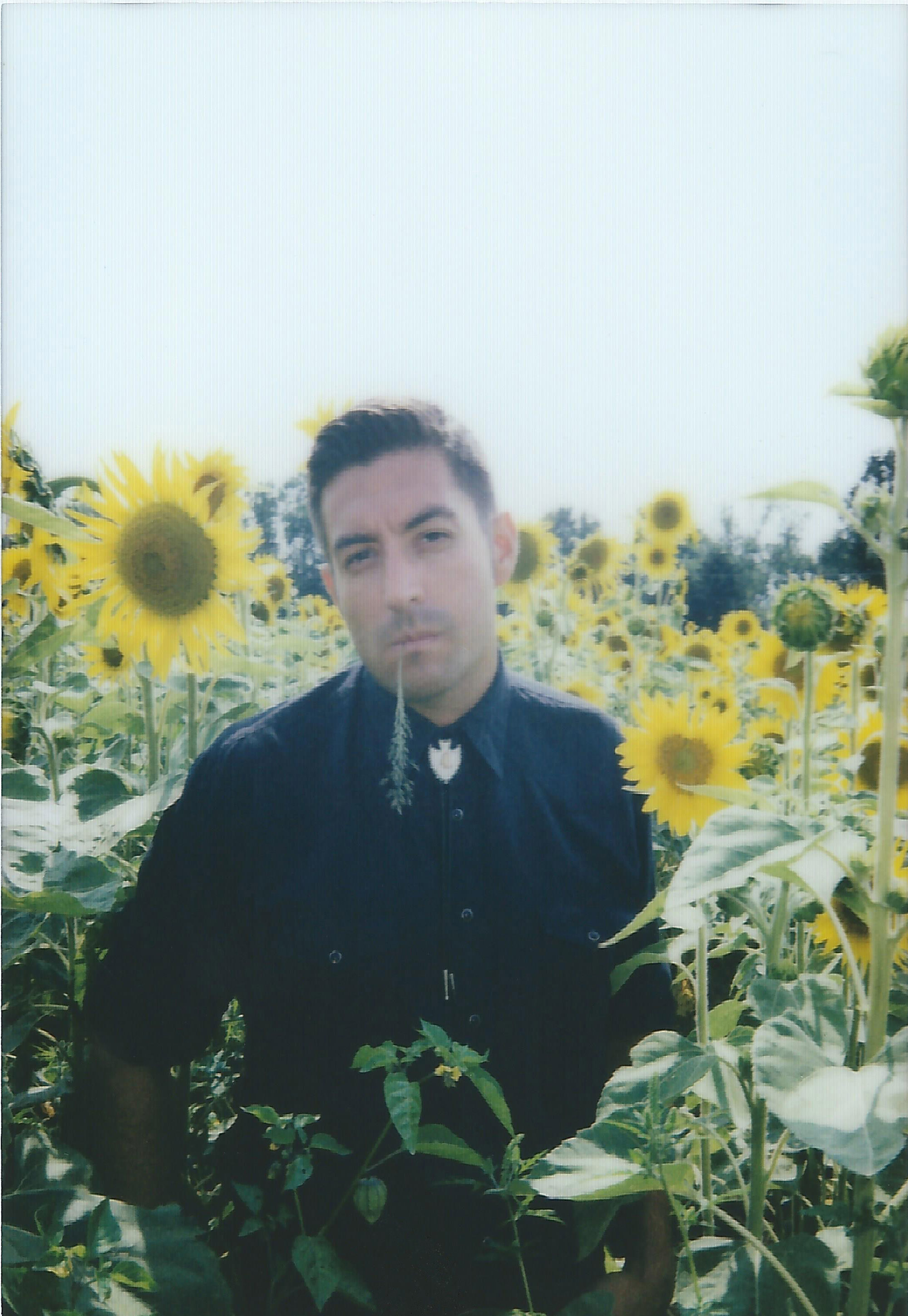
Villaverde on the winning poem: I have been thinking about the quote “One can show one’s contempt for the cruelty and stupidity of the world by making of one’s life a poem of incoherence and absurdity,” which is misattributed to Alfred Jarry. The world I inhabit feels increasingly cruel and stupid and yet I cannot help but move toward the entropy looming over tomorrow. This reality is accelerating. The people I love are leaving and entering this world simultaneously. Nothing seems discrete. Everything is connected, and the connections are often mundane, banal, and absurd. Like Gary David Goldberg naming his dog Ubu Roi, or people attributing a very logical quote from Gabriel Brunet to Alfred Jarry. What choice does one have under the weight of the present? I feel there is no alternative. I only continue to find truth in making my life a poem of incoherence and absurdity. There is a tyranny to reason that avails us nothing. In moments of profound crisis there is only poetry for me. Poetry, and this poem in particular, are the imaginary science through which I can allow love to be beauty and for that to be enough.
David Joez Villaverde received an MFA from the University of Michigan. His poems have been published in Best New Poets, The Kenyon Review, Adroit, New England Review, and AGNI. A CantoMundo Fellow, his poetry has been recognized by the Academy of American Poets, Hayden’s Ferry Review, and Black Warrior Review.
To order the prizewinning issue (due out in May), check out our subscription options.