Wires
49 Minutes Read Time
Dr. Gordon had ordered a CAT scan. MRI. Full panel of blood work. And now the wires on my head. All because I’d screwed Bethany Hollis in her stepfather’s bedroom. And then I’d done a real dumb thing afterward.
“Stop picking,” my mother said.
I kept itching around the electrodes.
We were sitting on the roof deck of the Liberty Hotel, across the street from Mass General Hospital, after my appointment with the nurse.
I was inching lower and lower in my seat. “You look fine,” Mom said.
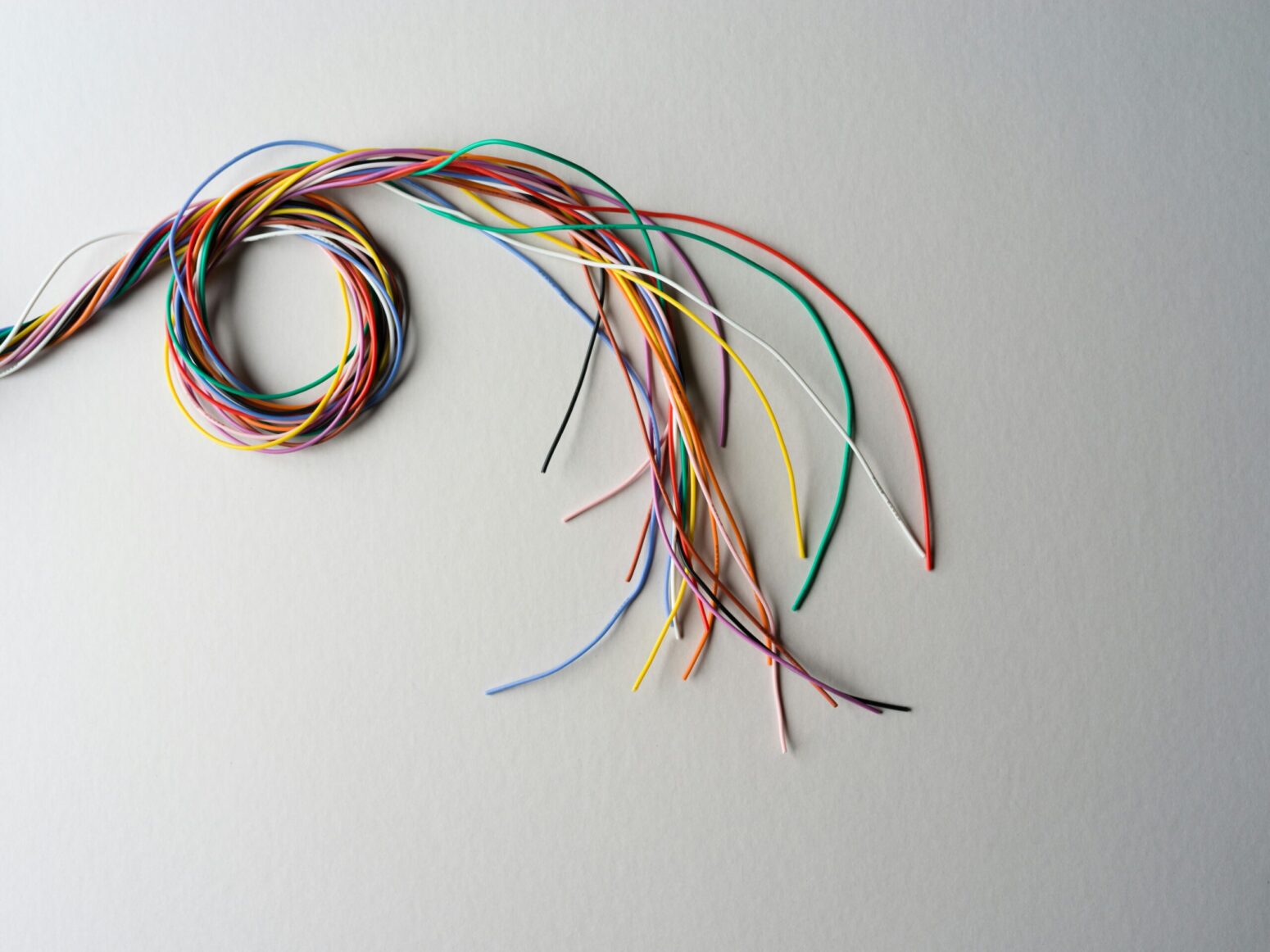
But I didn’t look fine. I looked like a robot-monster. I had all these goddamn wires sticking out of my head. My hair was shaved in patches, and I had these circular white nodes stuck to my scalp and then these thin blue and black and yellow wires squiggling down like Medusa snakes. The wires ran down into a portable box that recorded my brain waves. Electrical impulses. Brain noise. The fancy name is an ambulatory EEG.
The new shrink said I had to have one before she could medicate me. Dr. Barbara Gordon. She was trying to rule out the possibility of seizures. I’d never had one, but she said sometimes they are so slight as to be imperceptible.
I thought it was all crazy.
“She went to Columbia,” my mother said. “Wouldn’t mind seeing you there one day.” She actually said that to a boy with wires sticking out of his head, someone who’d just been tossed out of high school; she actually thought, Oh, this one’s got a real shot at Columbia. That’s the heart, I guess. The heart wants to hear the same old lullaby that always puts it to sleep.
A few hours earlier, right before the nurse shaved my head, my hair had been looking great. Once in a while it comes off the pillow looking perfect. And that morning I sort of looked like Rob Lowe back in the ’80s, when you wanted to look like him.
The nurse had asked if there was anything she needed to know. Then she pulled out the clippers, and I was thinking about the Holocaust. I was going to mention these two things—my great hair day and the Holocaust—as things she might need to know, but I decided to keep my mouth shut. I was sitting on a stool. She stood. Blonde. Round faced. A little peaked nurse cap on her head like it really was the ’40s. When she leaned in, I could smell the starch on her uniform. Tufts of my hair fell into my lap. Then she stuck the sensors on my head and hooked me up to the machine.
“I can’t understand why Beth still hasn’t called back,” I said to my mother on the roof deck.
“Maybe her mother died, you don’t know.”
Jews always say that whenever someone doesn’t return a call. Maybe their mother died.
In this case, though, Beth’s mother actually had died. Two years earlier when we were freshmen. Either my mother didn’t know, or—more likely—she chose to forget.
Then the machine beeped. It had this old LCD screen with green numbers flashing, and it beeped every now and again.
“See, that could be one,” Mom said. “A seizure. And you called her a crook.”
“It beeps all the goddamn time,” I said.
“Don’t get fresh when I’m trying to help. We need to get you shower caps, remember.”
That was the other crazy thing. I had to wear that contraption for seventy-two hours. While I slept. When I showered. And I had to carry the box with me wherever I went. It was a part of me. Like a limb.
“Dad called her a crook,” I said. “Not me. He said Gordon’s just milking us for money. All these tests are bunk.”
Mom had turned to the side, craning her neck to see the people around her, and I thought she didn’t hear me.
She said, “For such an elegant hotel, none of these people are dressed particularly well.”
Then she turned back around in her chair to face me, and from her scowl I could tell she’d heard me fine.
“He would say that,” she said. “He’s not the one taking time off from work.”
She air-quoted “work” with her fingers because part of Dad’s work was knocking boots with Phyllis, his accountant at the insurance office. They handled liability claims. But Phyllis was such an ugly name. That’s what bothered me most. Phyllis. You couldn’t moan it in bed. You couldn’t say, Phyllis, yes. Yes, Phyllis. Maybe he said P. or Philly. I probably thought about it too much. My dad screwing his accountant. She was a Wasp. I don’t know if you’re supposed to say that anymore, but I don’t really give a shit. She had a Vera Bradley handbag. My sister, Lily, said that was a thing. And Phyllis wore sunglasses on her head indoors. That sort of drove me nuts.
This business was a terribly kept secret.
Also, Mom wasn’t taking time off from work either. She didn’t work.
She worked out. But she often confused the two.
We had a view of the Charles River and the Salt-and-Pepper Bridge. It was spring and there was a Harvard crew boat out on the water. The coxswain was shouting into a bullhorn from the stern of the boat, but you couldn’t hear her over the traffic below us on Storrow Drive. I could see the oars looping in perfect sync and the boat gliding through glass. Everyone rowing together. One efficient machine.
“And she might never call,” Mom said. “Not after the stunt you pulled. Let it go. It’s a sickness.”
“Love?” I asked. “Your way, yes.” Then it was quiet.
She shivered and rubbed her arms. “They keep it an icebox in that hospital. At least give me a blanket. My friend Marcie got a free pink blanket.”
“Marcie has breast cancer.” “So?”
“You should get cancer then,” I said.
“You didn’t see this blanket. Nice, big, fluffy. Almost makes you wish for it—anyway, I don’t think it’s right to discriminate against those of us who don’t have cancer.”
She looked at me seriously for a moment.
“The woods are a disgusting place to die, Mark. It’s hot. There’s mosquitoes. Ants. No bathrooms. Can you promise me you won’t do something crazy like that again?”
“I promise to die someplace where they give out free blankets.” “Mark, honey, no more jokes. Promise me.”
“Okay,” I said. I wasn’t really worried about myself. I was worried about seeing Beth. I couldn’t go back home. To my father rattling his plate and saying, “These tomatoes are disgusting,” and my mother picking them up with her bare hands and throwing them in the trash, saying, “There, Bob, no more tomatoes. Happy?”
Sitting through that every night. Me and my sister Lily looking at each other across the table. Hoping he didn’t belt Mom. Sometimes he slapped her in the face. And then I’d get Mom an ice pack. More often I ran straight into my room and hid as they started yelling and throwing shit around. My sister ran into her room too and sat just on the other side of the wall from me, tapping Morse code. Even with the cheat sheet she’d given me, it was hard to follow along. Sometimes she said, “Dickweed,” which is what she liked to call me. Sometimes she said, “Stop crying, pussy.” That took awhile for me to translate. Or she said, “It’s okay.” It didn’t seem okay. But I believed her. She was older. When the fight ended, Dad went off to bang Phyllis at the Boulders Motel. People killed them- selves there. Seriously. Bang or hang. You were doing one of the two at Boulders.
Now Mom blew a wisp of hair out of her face, crossed her legs.
She had on a skirt and heels. Her legs were all sinewy and weird. You couldn’t tell what was muscle or bone. It all looked the same. She’d started speed walking around the time the Phyllis thing started. Add- ing wrist and ankle weights to up the resistance. She was a walking machine. A devout arm-pumper. Burning up the pavement.
With her pinkie finger she gestured a few tables over. “That’s a midget,” she said, pointing to a gentleman. “You’re not supposed to point them out.”
“What are you supposed to do with them?” “You’re not supposed to do anything.”
My EEG machine beeped again. She opened her mouth.
“Don’t,” I said.
“Well,” she said, and started spinning the diamond ring on her finger. “I pointed him out to make you feel better. You’re not the only freak here.”
“Nice,” I said.
“It’s not easy for me, you know,” she said. “To have a son kicked out of school. How am I supposed to explain it?”
“Tell them it was pot.”
“Drugs I’d prefer. I could live with drugs. I once attended a Rolling Stones concert with your father.”
“You’ve told me a thousand times.” “I was on drugs.”
“I’d imagine so.”
“But not you. You don’t even do drugs. This was all over a silly girl. What’s next?” “Art,” I said.
“You’re going to make art. You? This I want to see. I traced all your homework, every assignment.”
“But that was bad. You taught me to cheat in sixth-grade art class. Can’t you see that’s bad.”
“You couldn’t draw! It made you a nervous wreck. What did you want me to do? Leave you a nervous wreck? I couldn’t see you like that. So we traced a few Greek gods, a few superheroes. Who got hurt? We both knew you were never going to be Picasso. Now what about the Kitty Hawk?”
“You made that. I watched.”
She made the hell out of a Kitty Hawk. This was right when the Phyllis crap started. She took me into the basement to Dad’s work- bench and built this plane—no model kit either. From scratch. Sawed the dowels. Sanded the wings. Strung the baling wire. I sat on a stool watching. Her eyes dark, very dark, in the overhead yellow light of the desk lamp.
“Aerodynamics,” she’d said without looking up. “Thrust and weight, lift and drag.”
Maybe she was secretly in NASA or something. I don’t know how she knew any of that. But I brought this plane—twin prop, double- decker—to school like it were mine.
And now on the roof of the Liberty she smiled remembering it. “A good plane,” she said. “Our best work. But listen, Mark, you can’t be a wild Indian all your life. Promise you won’t be a wild Indian.”
I used to make up jobs for her because I was ashamed she was a housewife. “My job is you,” she always said. “So you make something of yourself. Don’t end up like your cousin Alex. A real shitbum. Radio host for some nonprofit bleeding heart left wing show. Who even listens to NPR?”
I loved everything about Beth almost instantly. The way her front tooth turned in bashfully. The way she stuck her neck out like a chicken when she walked. The little nubby bumps on the back of her arms. She had a Butthole Surfers T-shirt. She listened to all the same angry music as my sister. When I told her I might try out for the lacrosse team, she laughed. My sister would’ve done that too.
Beth’s mother had died in the kitchen a few months before I met her. They lived on the campus at Darien Academy, the Waspy prep school in Connecticut where we went. Her stepfather, Glenn, taught us French. Her mother worked there as a nurse. She died in the kitchen from an embolism. Coffeepot in her hand one moment and then dead. Glass all over the ground.
They lived right on campus in a little two-story faculty house annexed to the side of a girls’ dorm. When I sat in the living room with Beth, her long brown hair down her shoulders, she’d sometimes get this far-off look like she was tuned to some mother frequency, expecting a call from upstairs any moment to come fold the laundry or clean the bathroom. Beth would lift her chin and cock her head as if she were listening for it. I studied her.
The shrink called it an obsession. She said what about the other two hundred girls right on the other side of the wall? I couldn’t give a damn about them. Dr. Gordon said, “You never thought about drilling a hole and spying on them?” I said, “You mean like in Porky’s.” She said, “Yes. Like Porky’s.” Never. I felt nothing for them. I didn’t know they existed. They could’ve all been naked, dangling grapes, and I wouldn’t want to see them.
“The door leading from Beth’s house into the girls’ dorm: You never thought about opening it?”
“Never,” I said.
“Oh dear,” Dr. Gordon said, “that’s not normal.”
I’d given everything else up, so I wasn’t going to tell the shrink about what happened. Not that there was much to say. But they had a lot of questions. They thought I was going to hurt Beth. “That’s how these cases track,” the dean, Mr. Webb, had said to me. “You might hurt Beth,” he said. Then I cried. Which I wish I could take back.
He had a big shiny bald head, and his office smelled like corduroy.
I swiped at my nose and my eyes, and he said, “Well, are you?”
He took off his glasses and sighed. He handed me a Kleenex. He said, “It is my recommendation that you don’t return in the fall.”
I didn’t answer.
He said, “Do you understand, Mark? Do you understand what I’m saying? I’m worried you will hurt someone or yourself.”
Looking back, I’m glad I didn’t say anything. It was this beautiful spring afternoon outside and the light streaming through the window falling across his sport coat and I had my dad’s loafers on. You had to wear loafers. A tie. You had to check in at 9:00 p.m. with your dorm head. You had to go to chapel every week. I didn’t really mind any of that.
The shrink said, “Well, did you want to hurt her?” I still can’t believe anyone would ask me that.
I’ve punched a lot of air conditioners, a lot of trees. My hands are scarred, my knuckles. I’ve been hit by kids. Slapped by my dad. But I’ve never hit anyone.
At the Liberty Hotel, me and Mom were trying to get an early lunch. The waitress came over with menus. She had striking red hair and glasses. I bet she was an actress or something. She stared at me with her eyes pretty wide.
“I’m having a test done,” I said to her, pointing at the nest of wires on my head. “It’s not as bad as it looks.”
She smiled.
“It’s something with his brain,” my mother said. “Nobody can tell us what’s wrong.”
“I’m sorry,” the waitress said to me.
“He’s convinced he’s in love,” my mother yelled. “You can ignore her,” I said.
“Excuse me?” the waitress asked.
“You don’t even get a free blanket,” Mom said, flicking her wrist.
The waitress laughed. She had that fake laugh down perfect. The please-make-this-stop laugh that all women learn early on in life. Like the first time they meet a guy.
She handed us menus, and my mother handed hers right back, saying, “I like a light lunch. That’s how I stay thin. A good light lunch for me is prosciutto and melon. Light. Can’t get lighter than that. Do you have anything light?”
The waitress listed the salads, and my mother said, “Yuck.”
She wanted cottage cheese and lettuce. Dry. Dry, dry, dry, or she’d send it right back.
“I promise,” the waitress said and smiled. I couldn’t believe her patience.
I ordered a burger and handed the menu back.
My mother leaned forward and said, “Don’t you want a starter?
Something fun to start? Don’t you want a side?” “Sure,” I said, just to get her to stop. “Fries, please.” Then the waitress was gone.
Mother scanned the other tables on the deck. “Look at all these people staring at us,” she said. No one was looking at us.
“They must feel terrible for us. They should. Back in New Hampshire they’re impressed if you have all your fingers and toes. That’s a win. Here it’s a higher class, you can tell. It’s a higher class of people who really sympathize. I begged your father to buy an apartment in Boston twenty years ago.”
She smiled and waved to a woman in a summer dress.
The woman turned around to see who Mom was waving at. “God,” Mom said, “will you look at her. She feels awful for us.” Sometimes when she talked, I just heard quack, quack, quack. She sighed.
“I don’t understand. What happened? I did everything right. I put you in sports camp. I schlepped you to your friends’ houses. To the movies. You were such a sweet boy.”
“I’m still sweet.”
“No. Not really. Or maybe sweet’s changed.”
“I’m sorry I lost the money,” I said. “The tuition money.”
She leaned forward and covered my hand with hers. “All that matters is you’re safe. You’re home. That’s all I care about.”
“Thank you,” I said. I took a sip of ice water.
“But we can’t get the money back,” she said, sitting back in her chair.
“I know. That’s why I feel bad.”
She banged her fist against her open palm. “You won’t be a dropout. Not my son. Over my dead body will you be some flunky. You aren’t going to flush your life away. If I have to watch you 24/7, so be it. Next fall you’ll go to Keene High, and I’ll watch you like a hawk. You won’t be one of these lazy bums. Oh, your Clinton’s a piece of work. All these people on welfare and food stamps bleeding the system, and I’m paying for it.”
“Tragic.”
“It is a tragedy. We’re subsidizing laziness.” “I’m going to the bathroom,” I said.
“The food will come.” “I’ll be quick.”
“Not quick enough. The food comes the minute you leave. Take my word. Do you want cold, ruined food?”
I lifted the EEG box off the table and carried it with me under my arm. The wires sort of flowed in the breeze when I walked, and maybe that’s how Beth felt when her hair was down and blowing around. I don’t know.
In the bathroom I set the box down on top of the urinal and peed. “Life moves on,” the shrink had said.
“Not if you’re Jewish,” I said. “You might never get past sixth grade.”
At Darien, I had a friend named Mai Cao, a Vietnamese girl who’d been orphaned by the war and adopted by a family in Canada but whose plane headed to Canada with the nuns crashed. I think she was one of only three survivors. All the nuns died. She made a killing on a lawsuit against the airline and became rich, and then her new Canadian family sent her to Darien, where she snorted anything that wasn’t nailed down. Once, she asked me why white people were so awful, and I didn’t really have a good answer. One day she jumped out the third-story window of Perry Hall while listening to “Galileo” by the Indigo Girls and broke her back. It was late at night and everyone woke to her screaming. We heard it in the boys’ dorm next door. I ran outside. It was winter. Ground hard. Her legs were twisted behind her. I know she was listening to “Galileo” because I picked up her Walkman a few yards away from where she landed. I took the tape. I shouldn’t have done that, but I wanted to know what she heard. I took it back to my dorm and put it in my Walkman and pressed play. I listened to the song a thousand times, but I didn’t learn anything. I didn’t even like it. It’s terrible. She survived, Mai Cao did, but she got kicked out too. If you hurt yourself, you hurt everyone. That’s how Dean Webb saw it.
Beth had a half brother, James, and I really wanted to strangle that little boy. He was five? Eight? I don’t know ages. Kids all look the same to me. He kept peeing in his pants or crying outside Beth’s bedroom door while I was trying to get to second base. You can never just be alone and scromp. There’s always a kid wailing, reminding you of the past. Beth would push me off and run to change his dirty underwear. James played the trumpet, too. Not like black-marching-band trumpet but like the son of a French teacher. Whenever he wanted Beth’s attention, he struck up a goddamn orchestra just outside her bedroom door. Always when I was trying to get her bra off, and I wanted to yell, Give me some time, kid. I’m not magic fingers over here. I’m not fucking Houdini. I need time. But he gave me none. And when things went further, when they went to third base, when the pressure was on to know something, not just jam and prod, but to make love, as each moanless minute passed, I had James doing runs on his flute outside the door. And Beth suddenly sat up and said, “No, no, no,” and I said, “What’s wrong? Did I hurt you?” and she said, “I was just thinking maybe he’s a brass player.” Disney was the sole narcotic for James. If Beth sat with him, he could watch eight thousand hours of Disney. So I sat on the couch too. Next to her. He’d squeeze in between us. Inch me out of the way. She’d put her arm around him. Popcorn bowl in his lap. They giggled at the same stupid parts in the movie. Over his head she’d mouth to me, “I’m sorry,” and roll her eyes but go back to singing along.
They were basically orphans. Beth and James. So sometimes I sang the stupid songs. Mostly I sulked and dreamed.
There were really two things I dreamed about. Scromping was one. But I also wanted to take Beth back to that stupid old-timey ice cream place on Main Street we went to once. She wore a dress. Blue with ap- pliqué flowers. She ordered mint chocolate chip, and we sat at a high top, spinning the straws in our ice water and looking out the window at a pigeon that had landed on the neck of a gas streetlamp. She said,
“I can’t stop dreaming about her. Awful dreams. I’m holding her, and her head falls off.”
One miserable day in winter, Beth’s stepfather, Glenn, was lecturing me again not to go upstairs. “Bedrooms are off-limits,” he said. He always said that when he left, and we always ignored him. We were in the kitchen where Beth’s mother had dropped dead a few years earlier. I think if Beth were my daughter and that were my house, I would’ve knocked down the kitchen and built a new one so she didn’t have to think about it every time she got a glass of orange juice. Show a little respect. So I already hated him. Plus, he was my teacher. He taught us both French. Which is just silly.
“Stay down here,” Glenn said. “Four on the floor. At all times.” He wagged his theater tickets at me. “Comprenez-vous?”
“Yes,” I said.
“En Français,” he said. “Je comprends,” I said. “Bien,” he said.
What a clown.
James was his only biological kid. But he’d been saddled with Beth by this freak accident. And sometimes he’d be picking up her clothes off the floor and say something like, “Must’ve gotten that from your mother,” and she’d give him this look. That death stare you need to get by in life. Then she’d snatch up all the clothes and storm off, leaving me to finish coloring with James. “Want to play football?” I’d ask. He’d shake his head. He wasn’t too sturdy anyhow. He only nodded or shook his head with me. “How about you draw a great white shark eating an army helicopter out of midair?” I’d ask, and he’d puff out his bottom lip, shake his head, and keep drawing the house with a stick-figure family outside in a garden.
We all ate Chinese food together on Thursdays. They didn’t need to invite me for Chinese food. They could’ve made me eat nuggets with the other schmucks in the cafeteria, but Glenn was nice to me for Beth’s sake. Anyhow, that night Glenn left to pick up his new girlfriend, Kather- ine, for some awful student play. That was another problem. He found this new chick too soon in my opinion. She taught French at a different snobby school. Neither of them were French, of course. They just had a huge boner for France. I don’t know why. They talked about that paint- ing in the northwest wing of the Louvre. The one you couldn’t forget. So me and Beth managed to plug little James into another Disney brainwashing session with a pair of headphones, and by some miracle he didn’t cry when we snuck off, and we were tearing at each other by the kitchen and tumbling backward and kissing. We fell on the bot- tom step of the staircase and groped our way up, nearly biting off each other’s tongues, and she was doing this backward Exorcist crab-walk up the stairs so we didn’t have to stop kissing, and I felt the rug chafe my knees, and she said I smelled different, and I answered, breathless,
“Glade. Found it in the bathroom. I forgot deodorant.” “That’s a lot of citrus,” she said.
“Burns a little.” “I bet.”
And then more clawing and scratching and kissing until our lips hurt, and somehow in this human hump-snake we managed to turn the corner at the top of the staircase, and we reached the forbidden second floor.
In the past, we’d always made it to her bedroom at the far end of the hall, but I groped for the nearest doorjamb and pulled us inside. It was Glenn’s room. I’d never been in there before, but he had a Cape Cod king bed, a super-yacht of beds, and that’s where we fell, and the sheets smelled like night sweats, but it didn’t matter.
We pulled and kicked our clothes off. Threw them overboard. I kissed her neck. Her rising nipples.
She pushed my head down.
She pulled my face into her and I didn’t know what I was doing but everything was wet and dark. She squeezed. Her legs quaked. Her whole body shuddered and she groaned, “I love you,” and then we heard the crunch of tires on the gravel driveway. The Volvo. The vulva. Glenn was home.
The car door slammed.
Beth pulled me up by my ears and bit my neck. “We’re dead,” she whispered.
The screen door creaked.
The scrape of Glenn’s key in the door. “Hide!” she said.
I leaped off the bed, naked, and looked for my clothes.
“Well, it was a quick show,” Glenn shouted from downstairs. “Ha, ha. Just kidding. We had to cancel. Katherine’s feeling sick. Hello? Beth? James? Anyone?”
Beth grabbed her clothes, darted off to the bathroom across the hall, and turned on the shower.
I heard Glenn’s foot thud on the first stair.
I scooped up my shirt and boxers and pants, and heard three more steps. No time to get down the hall to Beth’s room.
“Kids?” Glenn said, and he took another step up the stairs.
Hide. Just fucking hide. Under the bed? It was a sleigh bed. There was no under. I turned around. My eyes landed on his closet. I ran to it, opened the door, spun my body around, and quickly closed the door behind me.
I drew back and tried to squeeze myself between his hanging cotton shirts. They caught on my sweaty back.
Then Glenn came into his room whistling. I could sort of see him through the wood slats in the closet door. I squinted through different slats trying to track him moving. A blur. I could only ever see him in fragments—a slice of his pants, his chest, his head.
“Anyone home?” he shouted. Finally he stood still.
And then he started to peel off his sport coat. I felt a little pee dribble out.
He was going to hang that fucking coat. I was dead. He was going to see my naked ass in his closet, and if he didn’t die on the spot of a heart attack, he was surely going to murder me.
My arms trembled. I bit down on my tongue to stop my teeth from chattering. I prayed to God: Please don’t let him hang it, I’ll be good forever, just don’t hang the sport coat. Then I saw his shoes pivot toward the closet. He took a step forward, and I clapped my hand over my mouth to stifle the squeal, but suddenly he turned sharply to his right and threw the sport coat over the back of his desk chair.
He called for James again and walked out of the room. I heard his footsteps heading back down the stairs.
I looked at my watch. Ten minutes until I was supposed to sign in. I had to scurry up the hill and back to my dorm, but there I was, huddled in the dark of my French teacher’s closet with his stepdaughter’s vagina all over my face, and my knees were shaking.
I opened the door and ran down the hall to Beth’s room. She was still in the shower. I heard the water running. I looked at her clock. 8:55. Almost late for check-in. I couldn’t go out the front, though. Glenn was down there. No way I could slip past him and out the door without him seeing me.
I went over to the window and looked down. A good jump. Fifteen feet, I’d say. Into the snow-covered bushes. Doable. I opened the window. A cold gust rippled over me. Right then I felt someone’s eyes on me. I turned slowly around, and there was little James in the doorway, his arms slack at his sides, this blank expression on his face. I still had all my clothes in my arms, cradled to my chest, and we stared at each other. He was balls high, and I didn’t know if he’d seen a naked guy before or wanted to, but I knew he didn’t want to see this naked guy. I lifted my index finger to my mouth. Shh. He didn’t move. I started to pull on my clothes when I realized my shoes were still downstairs by the couch. I looked at James’s feet. He had Dukes of Hazzard sneakers. Size 4 maybe. Wouldn’t work.
I crept over to the window and lifted one leg outside. Straddling the sill, I turned back to James and held my finger up again, and then I jumped into a juniper bush.
I scrambled to my feet and ran barefoot in the snow up the hill.
I cut through the woods to Merril Hall. Shin deep in snowdrifts. Jogging. Blowing hot gusts like a bull. Pumping my arms. My feet burn- ing, then numb. I ran past birches and pines, spiky rime ice coating the branches. I ran right past Sara Morton, smoking in the red wool coat she never took off, red as a cardinal against the white snow. She’d already checked in and snuck back out.
She yelled, “You’re late.”
“Screw you,” I yelled. She would grow up to be a famous war reporter. But at the moment she was a chick who smoked in the woods in a sweet red coat and Doc Martens and black bangs.
I kept running.
I wasn’t even worried. I should have been. But I wasn’t. I felt like never washing my face again. Like I finally understood the devotion of those good Christians bowing their heads in chapel every week and those saints weeping in stained glass—this odd, floating feeling that you finally had something to live for. A purpose. Something to place in the center of your life.
But the bad luck continued as soon as I broke out of the trees and approached my dorm. There was a floor-length window, and I could see every dipshit sitting in the first-floor common area, facing Coach Randall, our dorm head, as he talked to them from the front of the room. I came running up the sidewalk in the snow. In a T-shirt. Bare- foot. And his eyes went wide before I reached the door and every boy turned around and their mouths opened.
I walked in. Wet. Randall wore short shorts to show off his quads. He called himself Quadzilla. He was always kind of flexing and watching his reflection in the window. Even when he lectured us, you could tell he was checking himself out in the glass.
I told Quadzilla I’d been at the library and lost track of time and I was sorry, sir.
He said that was the worst lie he’d ever heard. I said, “It’s the truth, sir.”
He slapped me with a few weeks of detention. And that was the end of it.
But then I got a call that night. I thought maybe it was my mother trying to nag me. Whenever she got bored, she loved to hak me. There was a phone booth in the hallway you had to use, a pay phone. With this nice long cord ribbed for your pleasure. You played with the cord, or you wrote graffiti on the wall. Either one.
It wasn’t my mother hakking me.
It was Glenn. At 11:00 p.m. He said he didn’t have much to say to me. The dean would handle it.
“What’s wrong?” I asked.
“James told me everything,” Glenn said. “And your shoes are here. Which wasn’t bright. I really don’t want to talk to you anymore. Beth wants to say something.”
He passed the phone to her.
I heard her crying. She shooed Glenn away.
She said into the phone that she was sorry, but we needed to take time apart.
“Why?”
“My brother’s seen your dick,” she whispered. “So?”
“So? It’s too much. I’m sorry.” “Don’t be sorry. It’s James’s fault.” “Don’t say that.”
“It’s true. He’s a brat. A selfish little brat.”
“Really, Mark? Do you even know what you’re saying.”
Then Glenn pulled the phone away from her and hung up. I slumped down into the little seat. Everything throbbed.
Dean Webb slapped me with more detention. Months of it.
The rest of my life there was a blur. Over the next weeks, I just stopped talking. Or sleeping. Or working. Everything had this sepia tone to it, and it felt like I was underwater or there was music playing, and I would stop like a weirdo and forget where I was going or why, and I just walked sometimes for hours. I didn’t go to class. I was paranoid to see her anywhere on campus, but I kept walking, hoping to see her. I didn’t give a shit about detention. I called Beth a lot. Probably a dozen times. She never returned my calls. I heard she was dating someone else, and then it was only a rumor, but then it was true again, and so I had to escape, and that’s how I ended up in the woods.
I planned it out for days. It seemed like the only thing I could look forward to. And finally I just sat in the snow with my back against one of those beautiful old maple trees, against the thick callused ring grown around its tap wound, and I chugged the pills and let my head fall back against the tree and felt the rough bark against my scalp and knew I was okay. My legs sprawled, and my arms went loose and limp by my sides, any sense of them fading. The white snow flickered. My jeans were wet. I was sitting in snow, but I numbed over soon enough.
Everything got real blurry and sleepy, and it wasn’t so bad really, just wobbly, wavy, and then there was red, red filling my eyes, and this bitter smell, and I thought this is it, huh, but I was okay with it, I’d miss my sister, she’s the one I thought about, I felt bad for her, that she’d have to survive without me. She was the only good thing I had. And I thought to myself, I can probably still get up. Get on my feet. Here we go. But I couldn’t move my legs. I got real tired from trying. I heard Lily say, “Dickweed, get lost,” and felt her push me out of her room back home because she was on the phone with a boy. And I smiled at that. I’m getting lost, Lily. I’m going. Rocking back and forth. Going now. I’ll be seeing you. And then, like it was coming from deep down a tunnel, I heard a voice, a woman calling me, and I felt arms shaking me, and it was Sara Morton. She was yelling my name.
A nurse slithered a tube like a plumbing snake down my throat. I don’t remember much of that. I woke up to her slipping the IV needle under my skin into a blue vein. I was alone in the school infirmary in a bed with clean white sheets.
She kept checking on me through the night. I wasn’t sleeping. She poked her head in and saw I was watching Cool Runnings on the TV.
She pointed to the chair beside my cot. “You mind?” she said. “No,” I said, “please.”
She moved my sweatshirt off the chair and sat down with a loud groan.
At every punch line, she cracked up. She had the most beautiful laugh I’d ever heard. It was huge and from her belly.
I was sort of surprised to be alive, but happy too. Relieved.
“Wait a second,” she said. She got up, I assumed to check on other patients, but she came back with two Fla-Vor-Ices with the plastic tops snipped off.
“You a lime or orange man?” she asked. “I’m a lime man, myself.”
“You sure now?” she said. “Fight you for it.” “You go ahead,” I said. “Orange is good too.” “Deal,” she said.
It was 4:00 a.m. The cold ice felt good on the back of my throat.
We watched the movie, and every now and then she’d turn to me and nod her head, like, Are you getting this? You seeing this? This is incredible stuff. Which it was. It’s a good movie for a young Jew and an older heavy-set black woman to watch together in an infirmary when you both need company and one of you just almost died.
She stood up after some time.
“You going to be okay,” she said, or maybe she asked, I couldn’t tell. But then she pressed the back of her hand against my cheek and held it there warm and soft, smelling like lavender.
“I’ll pause,” I said, lifting my chin to the movie.
It seemed to confuse her.
“The movie,” I said, pointing to the television. “Until you get back.” She cocked her head to the side. “Okay,” she said. “Deal.”
She stuck out her hand. “Beatrice.”
“Mark,” I said. We shook.
She walked out of the room. She was big. Her hair was pulled so tight into a bun it seemed to stretch the skin around her eyes and forehead. She wore purple lipstick. I can see her like it was yesterday. I thought about how Beth’s mother had worked at the same infir- mary. Had Beatrice’s job. Could’ve been Beth’s mother taking care of me. I mean it wasn’t, of course, but it could’ve been.
Man, it was cozy in that little room. A low night-light threw a warm yellow cone up the wall opposite me.
I would’ve stayed there forever with her. I watched the clock so hard that I could see the minute hand move. I knew they’d called my parents and it would be a flurry of shit in the morning. Packing my room, cursing, crying.
When my parents got there, they kept asking questions I couldn’t answer. What could I say? Jamaica has a bobsled team. That’s all I was thinking. We threw my belongings into boxes while the boys stood in the hall whispering. I referenced Beatrice like four times until my mother finally snapped: “Shut up about Beatrice until we get out of here.”
We pulled out from the dorm and drove past the quad, with the chapel in the distance and the white snow and the furrows of student tracks and the crows roosting in the bare branches of the birch trees and the stocky colonnades of the dining hall and the brick dorms—the beautiful emptiness of it all. And my father, looking out the window at all that glittering snow in front of the dorms, said to me, “Aren’t you going to miss this?” but he was probably thinking about himself and the golden, unattainable girls of his youth and all his earliest dreams.
“Watch the road, Bob,” my mother said.
“I am, Susan. Jesus Christ. Give me a break.”
I was home all spring. At her wits’ end, my mother made me write a thousand-word essay on what I’d learned from all this. After the first draft, Mom called me a smartass and made me rewrite it. The second time I wrote what she wanted. I said how a young man could make something out of his life if he applied himself. If he used the 4 Ds— drive, discipline, determination, dedication—that carried us all the way from Izzie’s shtetl in Kiev to the suburbs of Keene, New Hampshire.
I actually managed to make it sound halfway sincere.
But then they wanted to know what caused the problem. The dean, Mom, Dr. Gordon, everyone. That’s what they were always asking. Was it the divorce? Was it the fighting? Was it Mai Cao with the broken back? Was it eating pussy at such a young, formative age? Was it Beth in particular?
It was none of those things.
They kept asking because it had to be something. Something to analyze, to assert control over, something to explain what’s at the center of our lives. But the answers answer nothing, offer no comfort really, and especially no lessons. Mom knew that already, and maybe she was hoping I had one. A lesson. I didn’t. Each morning is relentless, each minute hungers for answers, each hour brings another cord of mys- teries that you could spend fifty years chopping and still get fucking nowhere.
Maybe this is what Mom wanted to hear: Everyone deserves a free pink blanket. That’s the only lesson.
So that’s how, months later, in the spring, I wound up on the rooftop of the Liberty Hotel in Boston, across the street from MGH, with wires sticking out of my head.
“Why couldn’t you get into tennis?” Mom asked, as she tried folding a huge leaf of lettuce into her mouth. She tried sideways. Diagonal. She frowned. “Ugh, who eats lettuce this big? I’m not a brontosaurus.”
I said I was going to the bathroom. “Again?” she squeaked.
“Again.”
I scooped up my brain-wave recorder, tucked it under my arm, and stood up. It was a bright, sunny day. The river. The bridge. A flock of geese wheeling across the sky in a wide V settled on the dark water, but as soon as they landed they must’ve thought, this river’s no good, this river sucks, and they took right off again, maybe back out to the ocean or who knows where, maybe up to Canada. Anyplace but here. My legs carried me to the bathroom. I didn’t stop, though. I walked right past the bathroom to the elevator and pressed the down button. The T station was around the corner. I jogged down the steps and swiped my card and rode the red line to South Station and stood under the giant billboard listing the Amtrak schedule, and then I went up to the lady in the ticket booth.
“One single ticket to Darien, Connecticut, please,” I said. “How old are you?” she asked.
“Twelve, assuming you don’t count the last four years.”
She frowned and started punching numbers into the computer.
She slid the ticket through the hole in the window and took a look at me. “What’s with the wires. You a robot or something?”
“No,” I said. “It’s a test.”
“Oh,” she said. She thought for a second. “I’m failing,” I said. “Badly.”
So I waited for the train and drank coffee out of a Styrofoam cup. I had time to kill, so I bought a hot dog from a street vendor, chucked the meat in the trash, and walked to the end of the platform, where I threw bread to the pigeons. They came fluttering down from the linden trees beyond the fence, dozens of them in a frenzy. There was a spot of sun, warm on my right shoulder through my T-shirt, and it was Beth’s soft hand, and in my head I said, I’m coming.
We tore down the track, following I-95, doing eighty, the windows shimmering with rain, past tagged-up water tanks, past abandoned factories with green vegetation climbing up the brick walls, lush and thick, like it was going to drag the buildings back into the ground.
The machine beeped on my lap. I thought of my mother.
I bet she had lost her mind by then. This is before cell phones, so you couldn’t call someone. You just had to hope they turned up or the police found them. It must have been awful.
I don’t have an excuse. I’m ashamed of it all. But I was on a mission. I needed to see Beth again. I needed to see if she wanted to run away with me. I didn’t know where. Canada, maybe. Montreal. Where we’d order gelato using all the French we’d learned, and we’d talk all night and laugh ourselves to sleep over nothing funny. I needed to ask her this before they doped me up and I really became a robot. I needed to tell Glenn, Je suis désolé. I needed to tell Sara Morton thank you. And Beatrice, shit, there were other John Candy movies for us to watch. Cool Runnings wasn’t his only hit. We’d only scratched the surface.
The train rumbled over the drawbridge crossing the Thames in New London, and I saw the sailboats out in the cove, zipping by, and then a set of small crosses on a little hill.
I got off the train in Darien and caught a local bus. I let this tired woman sitting next to me drool on my shoulder, and when the bus stopped, she lifted her head and asked, “Where the hell are we?”
I walked from the bus stop to school. I carried my machine like a baby, cradled under my arm, and people stared. Sometimes I had both hands on it.
I didn’t know how many hours had passed since I ditched the hotel in Boston. Six, maybe. It was early evening. I stopped at the ice cream shop, the old-timey one, and I had a mint chocolate chip, and I sat where we’d sat months ago and watched the cars and the storefronts, and there was an old guy next to me, and I wanted to tell him that New England had the highest rates of ice cream consumption and suicide. We led the nation in those categories. Ice cream and suicide. Dr. Barbara Gordon told me that. I’d been repeating it ever since, but it freaked some people out. I didn’t tell old folks because I hated the ugly face they made when they got scared. Plus, this guy looked pissy already and I didn’t want him ruining my ice cream.
Everything was looking up.
Sometimes I wondered if my parents were looking for me, but I didn’t really care.
I felt bad that they might drag my sister into it. She was off at college in Vermont. I bet they’d called her. Maybe they thought I went to visit her. I could hear Lily saying, “Dickweed, you did it again. Why do you want to break all our hearts? Why can’t you be good? Haven’t we suffered enough.”
I wished I had an answer for her too. People were always asking me questions I couldn’t answer for the life of me.
When my ice cream was finished, I started up the road to campus. I should have mentioned that the Ole Deaner told me I wasn’t welcome back on campus. Meaning I would be arrested. So I didn’t go in through the front, where they have that nice big plaque with the school’s name and the yellow daffodils.
I walked up through the back. The apple trees blossomed white and pink, and the lilacs, purple. Everything smelled good.
Glenn’s Volvo wasn’t in the driveway.
I went up to the front door. I didn’t think I was trespassing or any- thing like that because I knew she’d be excited and surprised to see me. She’d said I love you. That meant something.
My palms were sweating when I knocked. No one answered.
So I sat on one of the stone walls outside, watching some old profes- sor walk her border collie, and I waited another hour or so and tried again.
This time I heard footsteps.
The latch turned. The door opened. Beth screamed.
“What happened?” she asked. “Are you okay?”
“It’s a stupid test. They think I have seizures. I’m fine.”
She placed her hand on her chest. “I’ve been sleeping. I look like shit.”
“You look amazing,” I said.
I opened the screen door and hugged her.
“What are you doing here?” she asked. Her eyes were wide. I could hear Belle singing one of those stupid songs on the TV in the other room.
“I came to see you,” I said. “Who knows you’re here?” “No one.”
“You ran away.” “Technically.”
She took my hand and pulled me up the stairs to her room and slammed the door.
“Mark,” she said.
“Why don’t you ever call back?” I asked. “What’s a lousy phone call.” “I’m not allowed to use the phone. I can’t call. I’m not supposed to talk to you again.”
“Do you miss me?”
She straightened up. She put her hands on her hips. “I do, yes, I miss you. But, Mark, you can’t be here.”
“I know,” I said. “Just give me a minute and then I’ll leave. I just wanted to see you. Your face. And I’ll go.”
It was quiet for a second. I pointed to her bed. “I’m going to sit.” I sat on the corner of the bed.
“Glenn could be back any minute,” she said. “He’ll have a conniption.”
I didn’t say anything. I just stared at her. I was trying to memorize her face.
She was quiet for a moment.
“We had a chapel meeting about it,” she said. “You’re a cautionary tale.”
I reached out and held her hands.
“You look crazy with that shit on your head,” she said. “Are you crazy?”
“I promise I’m not. I just couldn’t stay home. I want to be with you. Let’s leave together.”
“Oh God, you are nuts. I can’t do that. I have James. School. I can’t. You really can’t be here, Mark. You have to go. I’m sorry. I’ll use a pay phone in town and call you from there. Tomorrow. I’ll try. But you can’t stay here.”
“I’ll go.”
The machine beeped. “Is that bad?” she asked.
“No, it does that all the time.”
I reached up to my head and pulled the first node off. One by one I pulled them off. It hurt a little. Took some hair out.
Beth was standing over me. “Should you be doing that?”
“It’s fine,” I said. I peeled them all off. God, it felt good. I itched my scalp.
“Mark,” she said. “Just a second.”
I took some deep breaths because I wanted to remember everything. She said, “Please.”
We heard the screen door creak again. It was too late. She said, “Goddamn it, Mark. Now what?”
“He doesn’t know,” I whispered. “Go down. Play it cool. I’ll be here.” “He might come up!” she said. She slapped her thigh, but there was nothing else to do.
“Okay,” I said. “I’ll hide.”
I stood up, crossed the room, and opened her closet. There was a mountain of laundry. I climbed inside and sat right on top of all her dirty clothes and closed the door behind me.
“Mark,” she whispered, but I didn’t answer. I didn’t know what the hell I was doing or why I was always hiding in this poor family’s closets. I listened to her footsteps down the stairs, and it was warm and quiet in the closet, but down there Glenn was talking loud and fast. I knew Beth wouldn’t rat me out. That wasn’t her. She’d never do that. But then I heard a voice that made the hair on my neck stand up.
It was low. Smoky. I would have known it anywhere. My mother can’t whisper. She tried to, but I heard her say, “Is he up there?” Then she shouted, “Come down, Mark, so we can help you.”
I started covering myself in Beth’s clothes. Bras and T-shirts and jeans and button-downs and underwear and socks.
I buried myself.
Then I heard my mother say, “Mark, I brought Dr. Gordon. She can help you.”
Dr. Gordon said, “It’s time to come down, Mark.”
I groaned. All the way from Boston. I knew she was wearing her signature fanny pack full of pills. And that green muumuu.
“Come down, Mark,” Beth said.
“I can help you if you come down, Mark,” Dr. Gordon said calmly. Glenn said, “This has to stop, Mark. It’s enough already.”
“I’m going up,” my mother said.
Dr. Gordon said, “That’s what he wants. Attention.” “I’m going.”
“It’s all he wants,” Gordon said louder. “Don’t give in.”
Then the stomp of feet, and the closet creaked open. I shielded my eyes from the light. I lowered my palm.
“Jesus,” Mom said.
She held her hands to her cheeks when she saw me down on the floor under all the clothes.
“How did you know?” I asked.
“Where the hell else would you go? Where’s the machine?” “On the bed.”
“Dr. Gordon is downstairs. She came all the way from Boston with me. I’m paying by the hour. It’s costing me a fortune. She can help. She wants to help. Let us help you.”
I didn’t say anything.
She squatted in front of me. “Listen to me, Mark.”
She got on her knees.
“Scoot over,” she said. She flicked her wrist at me. “Scooch.” She crawled into Beth’s closet beside me.
She said, “Jesus, it’s tight in here. I guess you can’t afford a walk-in on a teacher’s salary. Listen, Mark, I love you.”
No, she didn’t say that. Are you fucking crazy?
She said, “I’m Orville, you’re Wilbur. Aeronauts. Me and you. Let’s fly. Tonight. Together we’re outta here.”
No, here’s what really happened. She wrapped her arms around me. I had Beth’s underwear on my head and her jeans on my shoulders, and my mother sighed.
“Your grandmother always said if you’re not starving or suicidal, you’re doing okay.”
She closed the closet door. “Are you hungry?”
“No,” I said.
“Neither am I,” she said. “So that’s a start.”
She rested her head against mine. The two of us sat there breathing in Beth’s sour laundry, and I couldn’t even see my own damn hand in front of my face. It was that dark. Too dark. The kind your eyes never really get used to.
Read more from Issue 15.2.