Twist & Shout
23 Minutes Read Time
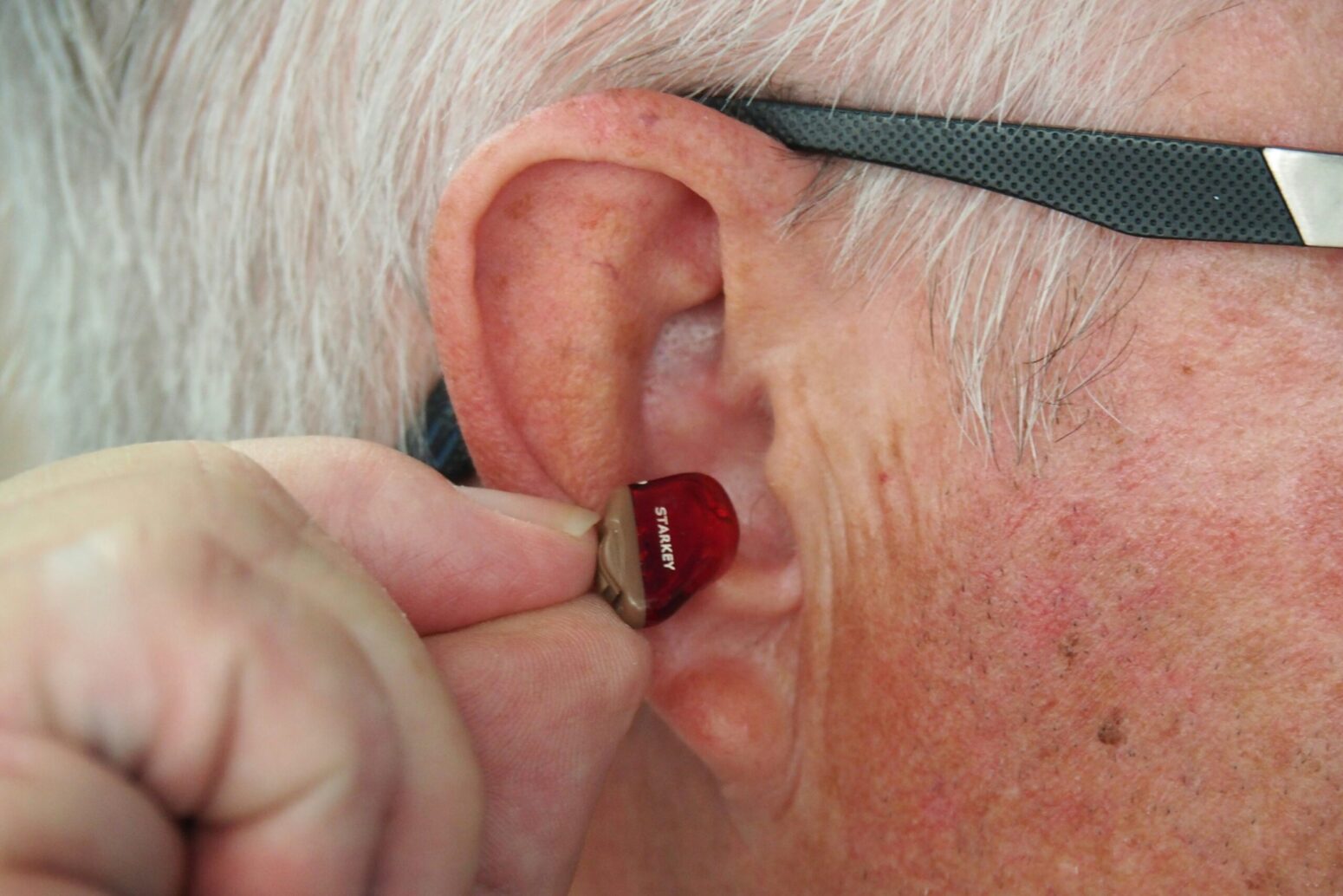
Your elderly father has mistaken his $4,000 hearing aid for a cashew and eaten it.
This simple event contains multitudes: sorrow and entitlement and love and annoyance. It also contains the four separate appointments—assessment, hearing test, fitting, programming—you made and took him to in order to get the hearing aid in the first place.
He’s not even supposed to be eating cashews! He has high blood pressure!
You call him, dutiful daughter that you are, and say, Don’t worry.
(Although, honestly, he doesn’t seem all that worried.)
You say, I’ll come take care of it.
What? your father says.
I’ll come take care of it.
What? your father says.
I’LL COME TAKE CARE OF YOUR FUCKING MISTAKE.
He can’t hear you anyway.
You drive the six hours to your father’s house. He still lives in the brick colonial house you grew up in, only now his bedroom is on the main floor because he can no longer climb the stairs. He’s standing on the front porch when you drive up, leaning on his two canes. It’s only been four months since you’ve seen him, but he’s lost weight—his head looks like a downy skull, his arms and legs like pieces of kindling.
You feel a rush of tenderness. He is so frail, so fragile, so diminished—COVID has spared him, but for what?
You get out of the car and say, Hi, Dad.
What? he says. Also: You took forever to get here.
Luckily, Araminta is there to smooth things over. Araminta is your father’s house-keeper. She’s in her sixties now but much the same as always: cheerful, freckled, short curly copper-colored hair (now threaded with white), muscles like tennis balls, her voice a baritone your father can actually hear.
She says, Edgar, you just hush.
She says, Ericka, come give me a hug.
Your father fired Araminta once for voting for Hillary.
And once for shopping at a food co-op.
Once for banking at a credit union.
Once for attending a Planned Parenthood march.
Once for wearing an “End Gun Violence” T-shirt.
Once for using nontoxic oven cleaner.
Twice for buying organic milk.
Once for buying Ben & Jerry’s ice cream.
Once (a separate incident) for buying Ben & Jerry’s Cherry Garcia ice cream.
Once for making him watch a movie with Jane Fonda in it.
By now, Araminta knows to just go home when your father fires her and come back the next day. But your father won’t go anywhere in her car (foreign made with a “Polar Bears Against Trump” bumper sticker), so she can’t take him to the audiologist.
We have an appointment with the audiologist tomorrow, you tell your father.
What?
WE HAVE AN APPOINTMENT WITH THE AUDIOLOGIST TOMORROW.
Okay. He shrugs as though this doesn’t concern him. If you want.
Night falls. Well, night falls in the sense that Araminta has gone home for the day. As soon as she’s gone, your father takes a package of cashews, a bottle of scotch, a family-size bag of potato chips, and a sleeve of Oreos out of his big wooden poker box. Apparently, Araminta has not thought to look for them there. It’s very clear that your father does this pretty much every night. It solves the mystery of why his low-sodium diet isn’t working but creates a new mystery: who buys this stuff for him?
Neighbor kid, your father says. Goes to McCormick’s Party Store for me on weekends.
You worked at McCormick’s Party Store when you were a senior in high school and Mr. McCormick was forty but still sexy in a dissolute sort of way, and sometimes you gave him a blow job in the back room. The older you get, the more shocking that seems. You let the owner of McCormick’s Party Store come in your mouth, and all you got out of it were stale pretzels! You didn’t even get the coveted afternoon shift! Imagine if one of your own daughters had done that. You might never recover.
And just imagine if your father knew. This news would probably kill him now in his weakened state.
Still, your father’s deviousness makes you feel better. There’s still life in the old dog, at least where salty, artery-clogging snacks are concerned. You should take them all away and buy a relish tray, but instead you open the Oreo sleeve with a flourish.
Your father turns on Fox News, with the volume way up.
Your pour yourself a scotch. A big one.
By the time you go to bed that night, you have acquired an unexpected companion: your teenage self. She has a tendency to show up around your father. She’s the one who argues with him about immigration. She’s the one who gets back out of bed to finish the Oreos. She’s the one who says under her breath, I can’t take so much fucking Fox News.
In the audiologist’s waiting room the next morning, your father becomes suddenly—disconcertingly—interested in your life and starts asking questions. It’s like he’s (somewhat benignly) possessed, and now you have to shout all your answers in front of the staff and other patients.
How’s Jeremy?
Good.
What?
GOOD. BUSY.
Banking’s such an interesting business.
Yes, it is.
How’s work going for you? What’s your title now?
Library—LIBRARY DIRECTOR.
Is that full-time?
YES, DAD. I’VE ALWAYS WORKED FULL-TIME.
How’re the girls?
THEY’RE GOOD.
What’s Jordan studying?
CRIMINAL JUSTICE.
Is that a real major?
OF COURSE IT’S A REAL MAJOR.
What’s she going to do with it?
SHE WANTS TO GO TO LAW SCHOOL.
I guess she doesn’t want be an engineer.
NOT EVERYONE WANTS TO BE AN ENGINEER.
Not everyone is smart enough to be an engineer, I can tell you.
DAD—
Is Sydney still dyslexic?
YES. IF YOU HAVE DYSLEXIA, YOU ALWAYS HAVE IT.
I guess she won’t be going to law school.
SYD CAN GO TO LAW SCHOOL IF SHE WANTS.
Don’t you have to go to college for that?
SHE’S GOING TO GO TO COLLEGE!
Even with dyslexia?
PEOPLE WITH DYSLEXIA GO TO COLLEGE!
Regular college?
DAD! YES!
Well, good for her. Maybe she can be a nurse. I’m sure she can’t be an engineer.
OH MY GOD! THAT’S SO SEXIST! SO PATRONIZING! GIRLS DON’T HAVE TO BE NURSES! NURSES DON’T HAVE TO BE GIRLS! SYDNEY CAN BE ANYTHING! SHE’S PLENTY SMART ENOUGH TO BE AN ENGINEER! BEING AN ENGINEER WOULD PROBABLY BE TOO EASY FOR HER! THAT’S HOW SMART SHE IS!
Everyone is staring at you.
No need to shout, says your father.
The audiologist says the hearing aid was still under warranty. That’s the good news. The bad news is that the replacement will require a further four visits. Time spins out in front of you endlessly.
You’re walking back to the car when your father suddenly stops and says, They won’t go.
What won’t?
My legs. They just won’t go another step. I need to sit down.
Dad, lean on me. Put your arm around my shoulder.
No, I really need to sit down.
You step close to him and put your arm around his waist—how insubstantial he is, how skinny! You try to take one of his canes away so that you can loop his arm around your shoulders.
What are you doing? Don’t take my cane! I need to sit down.
DAD, THERE’S NOWHERE TO SIT. WE’RE IN THE MIDDLE OF THE PARKING LOT. THE CAR IS RIGHT OVER THERE.
What if he sits down? How will you ever get him up?
When you’re with your father, it always seems like the world shrinks down to a tiny bubble and you and he are the only ones in it, but you’re not. Two people appear next to you—a UPS guy and a woman wearing a white coat with “DDS” embroidered above the breast pocket. They must have seen you from the dental practice next to the audiologist’s office.
Can I help you, sir? the dentist asks.
It’s my legs, your father tells her. They’ve stopped working. I just don’t understand it.
Happens to the best of us, fella, the UPS guy says. Give your walking sticks to this lady—she your daughter?—and we’ll get you out of here in a flash.
Oddly, your father seems able to hear them. He hands his canes to you without complaint.
The dentist says, Now, sir, you just lean on us.
The dentist and the UPS guy bracket your father and haul him forward gently, like two movers shifting a fragile statue. His shoes barely brush along the asphalt. In moments, they’ve tucked him into the passenger seat of your minivan.
I just don’t understand it, he says to them. My legs stopped working. Why do you think that is?
I think you’re just tired, sir, the dentist says.
Will they work again? your father asks her. Or is this it? Is this the end? Can you tell me?
His face is so pale, so bewildered—so lacking in dignity. You think that, really, telling him about Mr. McCormick might not be such a bad way for him to go.
You hug the UPS guy (who’s kind of hot, your teenage self notices) and thank him profusely.
Girl, we gotta help each other, he says.
You hug the dentist too and ask her what to do. Should you take your father to the ER? To his regular doctor? He has high blood pressure and he eats Doritos. Could he be having a stroke? The dentist is at least ten years younger than you, but your gaze clings to her hopefully.
He’s probably just worn out, the dentist says. He looks exhausted. If you have someone to help you at home, just get him to bed and let him sleep.
At home, Araminta comes out to the car to help unload your father, but his legs are working just fine. Well, sort of fine. Fine enough. Fine enough that you can try to forget what happened in the parking lot.
If there’s anything you hate more than gardening, it’s gardening with your father. Rested from his nap, he sits in a deck chair and supervises while you labor in the heat with the pruning shears and a mustache of sweat.
Your father has a landscape service, but he says they’re lax. Cutting corners, is how he puts it.
Pruning’s essential with heather plants, he says. You need to round and shape the plant.
I KNOW, you say.
Your shirt is stuck to your back. Your underpants feel like a large piece of hot wet spinach wrapped around your hips.
You’re making it lopsided, your father says.
The pruning shears are old, older than you, and very rusted. Probably too dull to kill him with.
HOW’S THIS?
Make it rounder.
Sweet baby Jesus.
What?
NOTHING.
I’ve always been partial to heathers, your father says. I named my daughter Ericka, like the flower.
You sit back on your heels. Dad, I’m Ericka.
What?
DAD, I’M ERICKA. I AM YOUR DAUGHTER.
He squints at you. Yes, of course you are, he says. He shifts in his chair and leans his head back, eyes closed. Your mother wanted to name you Heather, but I said, No, let’s go with Ericka. More distinctive.
The next day, Mrs. Lightfoot, your father’s friend for fifty years, stops over to see you. Mrs. Lightfoot is well over eighty, but she walks without a cane and drives herself, so when you open the door and see her standing on the porch, she seems to be bursting with youth and vitality.
This is how Mrs. Lightfoot talks: Hello, Ericka, a little bird told me you were in town. I said to my husband, I hear Ericka’s in town. I said, You know she doesn’t visit much, being so busy, but I sure would like to see her. My husband said, You should go see her then. So I thought, he’s right, I should go see her. I got in my car and came on over to see you and on the way I passed Grant’s bakery and I thought to myself, I ought to stop and buy a lemon-meringue pie. I said to myself, lemon-meringue pie is Edgar’s absolute favorite and I ought to stop and buy one. I told myself, maybe Ericka will like it too. I told the lady behind the counter, I said, I’m just on my way—oh, hello, Araminta! Where are you off to?
I got errands to run, Araminta says gruffly, pulling her purse strap higher on her shoulder. Araminta dislikes Mrs. Lightfoot because Mrs. Lightfoot offered to take her to a “Color Me Beautiful” session free of charge in 1997. She stomps off toward her car.
Come on in, you say to Mrs. Lightfoot, who is still on the porch, holding the cardboard pie box in front of her as though it contains a sacrificial lamb.
Mrs. Lightfoot walks through the house ahead of you, calling to your father. Yoo-hoo! Edgar! You won’t believe what I brought you! It’s a lemon-meringue pie from Grant’s bakery. I was driving by on my way here and I thought to myself—
Is that a pie? your father asks.
—I’ll just stop in all quick-like and see if they have lemon-meringue because I know that’s your favorite and I told the lady behind the counter—
Is it lemon-meringue?
It seems that Mrs. Lightfoot and your father are a perfect conversational match: he can’t hear and she doesn’t listen. You take the pie from Mrs. Light-foot and carry it into the kitchen. You make coffee and cut pie wedges (taking as long as humanly possible to do so) and carry a tray into the family room where Mrs. Lightfoot and your father are sitting.
Now, there is one thing I promised myself I’d ask you, Mrs. Lightfoot is saying to your father. I said to myself, You must ask Edgar about his hearing aid. I told myself, Don’t forget to ask about his hearing aid because my husband is in the market for one. I said to my husband, I’ll find out what Edgar uses. So I want to ask, what brand is your hearing aid? The very expensive one?
My what? your father asks.
YOUR HEARING AID, you say.
Well, funny you should ask about that—
I told my husband, We’ll just find out what kind Edgar has and get the same one. I said to my husband, Never mind the expense and don’t worry about how it looks. I said, Edgar has one and it’s hardly noticeable, looks just like a pencil eraser.
Actually, it looks just like a cashew, you say and hide your smile behind your coffee cup.
Honestly, how can one man in a ratty brown cardigan be so maddening? It’s really sort of impressive.
You get home from the supermarket and find that Araminta has gone home. Your father has fired her yet again, this time for the double whammy of reading Michelle Obama’s autobiography and carrying that autobiography in an NPR tote bag. You love Araminta—you love Michelle Obama! you love NPR!—but you do wonder sometimes if she might be provoking him.
I was glad to see the last of her, your father says.
Dad, she’s worked for you for almost forty years.
What?
SHE’S WONDERFUL.
She’s an extreme liberal is what she is.
You sigh. It’s four o’clock, the time Araminta reads the afternoon news-paper aloud to your father, whose eyes are apparently only sharp enough for T-shirts and tote bags and book titles. You were looking forward to having this hour to yourself. You could have called your husband and daughters. Or practiced some self-care: light an aromatherapy candle, drink mint tea, do some yoga, and maybe meditate. (It’s also possible you might have rested idly on your bed and stared at a blank wall.)
You sit down and open the paper. Your throat is beginning to feel like it’s lined with a rough woolen sock.
Wildfires Rage out of Control, you read.
What?
WILDFIRES RAGE OUT OF CONTROL. FIRE OFFICIALS ARE ISSUING MANDATORY EVACUATIONS.
Forty minutes later, your throat-sock has holes worn in it. You refold the paper and set it aside.
That’s odd, your father says. Not one single article about politics.
The next morning, Araminta comes in as usual at nine o’clock while you and your father are finishing breakfast on the back deck.
Who are you? your father asks.
Don’t you give me that, Edgar, Araminta says and bats him lightly on the arm. You know perfectly well who I am.
Who is that? your father asks you.
ARAMINTA. SHE’S HERE TO HELP.
Well, I hope she’s better than the one who was here yesterday, your father says.
Araminta shakes her head, smiling, as though your father were joking. Look here, she says, setting a donut in a white waxed-paper bag in front of him. I got you a Bavarian cream long john from Dunkin’ Donuts.
Your father beams at Araminta like a lighthouse.
You bought this for me? Is it Bavarian cream?
Yes, of course, Araminta says. And I got plain glazed for me and Miss Ericka.
She sits at the wrought-iron table and hands you your donut.
I bought Dunkin’ Donuts stock in 1979, your father says to her.
Araminta puts her feet up on the spare chair and says, I get the lattes there, mostly.
Bought two thousand shares for three-oh-nine.
Pumpkin spice latte with whole milk, Araminta says. Getting so I can’t start the day without it.
Sold it in 1989. Or maybe it was 1990. Price was then six-sixteen.
Girl knows me so well that I just walk in and she starts making it.
More than doubled my investment.
Me, I just like their coffee, Araminta says and slaps at a mosquito on her neck.
Odd, how everyone can talk to your father but you.
Fox News is driving you insane. You unplug the television just the tiniest bit, not enough to make the plug fall out of the outlet but enough to make the screen go dark.
TV’s up and stopped working, your father tells you after his nap. I fell asleep in my recliner and now there’s nothing.
Yes, I know, you say, I’ve already called the cable company. They say it should be back up on Friday.
What?
FRIDAY.
(Friday is the day you leave.)
Since he can’t watch television, your father agrees (grudgingly) to go to the park with you. You and Araminta load him into the car, and you drive to the parking lot closest to the playground. You help your father stand up and walk slowly to a bench. (Your teenage self is quite excited about this bench. You and Tommy Hammond used to come here late at night. Tommy would drop his jeans and underpants to his ankles and sit on the bench, and you’d take off your tights and underpants and sit on his lap. Your knees remember the feel of every slat.)
From here, you and your father can see the green grass of the park rolling away from you, and closer up, the playground full of children, shouting and laughing.
Your father inhales deeply. Beautiful afternoon, he says. Awfully hot even for August.
THANK YOU, GLOBAL WARMING!
(You don’t really say that.)
Yes, it is beautiful, you say. YES, IT IS BEAUTIFUL.
Look, your father says, there’s a princess right here at the park.
For a moment, you think he’s straight-out hallucinating, but then he points with one of his canes: a little girl in a blue Cinderella costume (complete with elbow-length gloves and crooked tiara) is struggling to open the playground gate.
You and your father laugh together. And yet, it’s a little depressing.
This moment seems so sappy, like a moment from an overly sentimental movie or, even worse, a TV show. Like suddenly it will be over and one of you will turn off the TV and you and your father will go out for a beer and talk about how hackneyed the episode was. If only.
You won’t believe this, Araminta says when you get back home, but the TV wasn’t plugged in all the way. It’s working just fine now.
Caffeine and sugar, sugar and caffeine. It’s all you seem to ingest when you visit your father. Well, alcohol and salt too. Perhaps if you ate more sensibly, you would not be so wildly irritable all the time.
Still, when Araminta offers to teach you how to make her extra-sweet brown-butter chocolate-chip cookies, you jump at the chance.
I love those cookies, you say. I always tell my husband they’re the best cookies in the world—
You stop, realizing you have turned into Mrs. Lightfoot.
When your father told you a neighbor kid went to McCormick’s Party Store for him, you figured he was talking about some stoned-looking guy in a hoodie. You’re totally unprepared when the doorbell rings and a sweet-faced girl with short blond hair and the determined air of a minimogul is standing on the porch.
The girl is obviously surprised to see you too. She says (very unconvincingly) that she’s just there to see if your father has any books he needs returned to the library.
Don’t give me that nonsense, you say.
You give the girl sixty dollars and tell her to get a bottle of whiskey, a six-pack of Guinness, two cans of ravioli, and a package of Chips Ahoy. (You are too tired to go out again.)
I can’t buy alcohol, the girl says. If you want that, I have to get my cousin.
Then go get your cousin, you say. You peel off another twenty and hand it to her. But remember, no more cashews.
Okay.
And stay away from Mr. McCormick.
Mr. McCormick died a long time ago, she says.
Of course he did. Time hasn’t stopped. You’re not really a teenager. Soon you’ll be old.
It’s not even eight in the morning, and you and your father are having a fight—not a debate, an argument, or a heated discussion—but an actual fight about recycling. Because who in God’s name is antirecycling? Your father, that’s who.
It just makes no sense, your father says.
WHAT ABOUT SAVING THE PLANET DOESN’T MAKE SENSE?
No economic sense.
OH MY GOD.
If recycling was a good idea, it’d be on the free market. It’d be like eggs.
EGGS?
Some company would make a killing. But you know why that doesn’t happen?
SO, YOU DON’T RECYCLE BECAUSE SOME CORPORATE OVERLORD HASN’T TOLD YOU TO?
BECAUSE IT DOESN’T MAKES ECONOMIC SENSE.
IT MAKES ENVIRONMENTAL SENSE! THINK ABOUT SOMEONE OTHER THAN YOURSELF FOR TWO SECONDS.
You’re both shouting and not just because he can’t hear.
You grab your car keys and storm out of the house, but once you get in your car, you’re at a loss for where to go. You’re still wearing your pajamas, so your options are pretty limited. In the end, you just sit steaming with anger in your car, the radio turned all the way up. This is exactly what you did after fighting with your father when you were in high school. Apparently, you have not matured at all. But honestly, recycling?
Then, like a ray of liberal sunshine, Araminta’s hatchback pulls up next to you, the polar bear on her bumper sticker gazing at you wisely.
She gets out of her car and comes around to the driver’s side of yours. You turn off the radio and roll down the window.
What are you doing out here in your PJs? Araminta asks.
You sigh and shake your head.
What was it? Araminta asks. Climate change?
No, recycling.
Anyway, she says, look here, I brought you a pumpkin spice latte.
You take the cup from her and say, Oh, Araminta, you are a good person.
She pats your arm. She says, You just sit out here and listen to something soothing. You got any audio books? Relax and have your latte and come on in when you feel better. I’ll give your dad his donut and get him started on animal rights. He’s not too bad on that.
Araminta goes into the house, and you turn the radio back up and sip your coffee.
You think of other times you sat in other cars, after teenage battles: missed curfews, torn jeans, the shameful D in algebra, the truly awful time you and Tommy Hammond rented a porn film and it got stuck in the VCR. But sitting out here was always voluntary, always your choice—you always knew you could go back inside. Your father was always there, waiting.
And then the front door bursts open and Araminta staggers out. She leans against the porch railing, panting. Her round face is pulled oblong by her open mouth, her eyes wide and frightened. Araminta was never meant to look like this. You can read her lips through the windshield: It’s your father! Come quickly!
Adrenaline makes your body respond like an actual teenager’s, faster than you’ve moved in years—in seconds you push open the car door, toss your coffee cup aside, and race up the driveway, your slippered feet driving you forward like a tiger’s huge paws.
The teenage part of you still believes your father is immortal, but the adult part of you already knows the truth: the climate has truly changed, the atmosphere is heavier, the air is harsher. You understand. Already you’re struggling to breathe. It will be so much harder to move through the world, now that you move through it alone.
Read more from Issue 20.1.