Three Dreams
17 Minutes Read Time
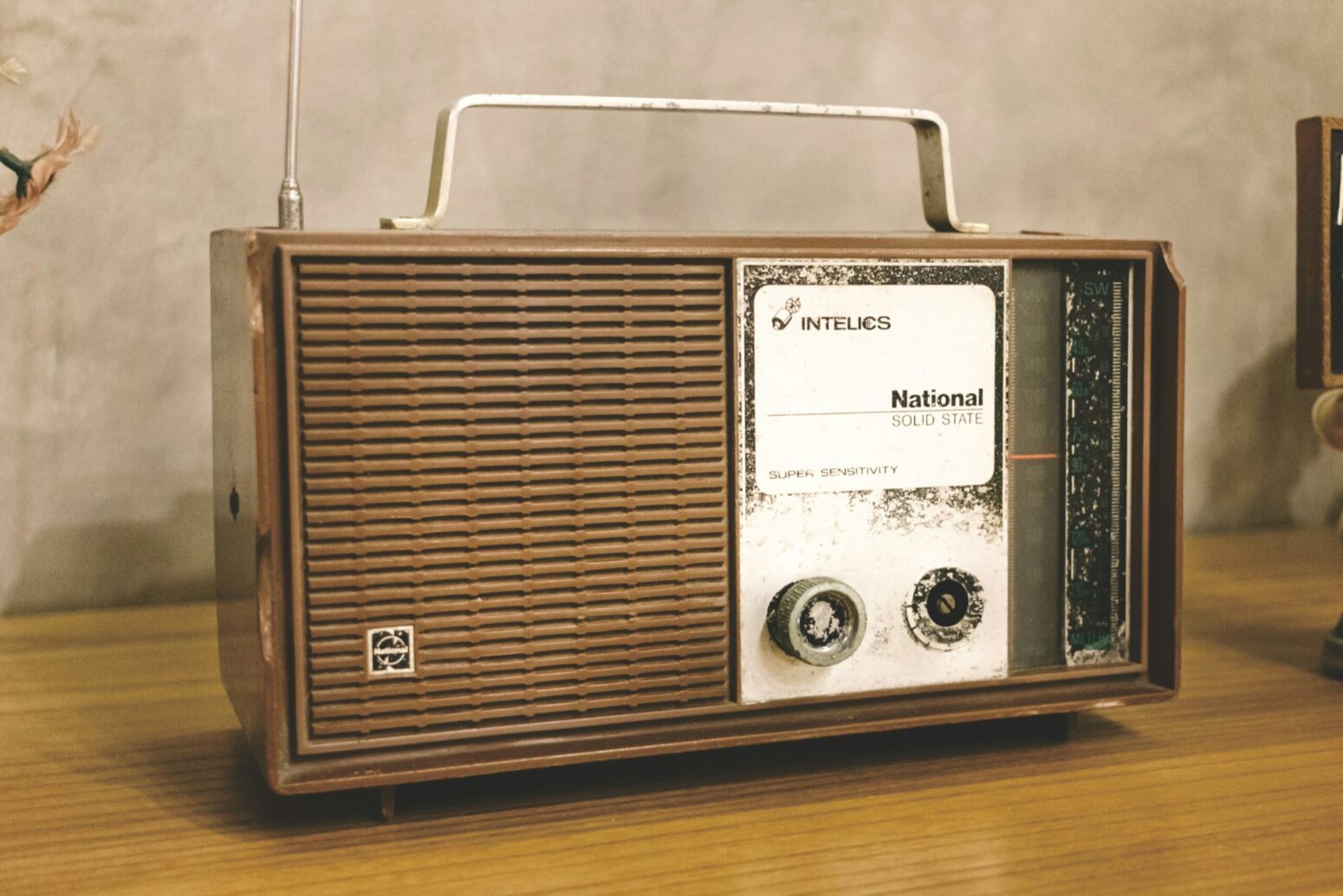
They had been building a small radio at home, a very simple circuit that would draw the AM band into it and play voices and music through a pair of Bake-lite headphones—like those used in foxholes during World War I. The boy’s father had been taking vocational classes at the factory where he worked, to become an electrical engineer. Later, the boy would recall this radio, working on it with his father, as the first time the father had brought him this close to his own mind, his own life. And though the circuit was simple, it would later seem to him to mirror so much of the larger world: a lesson in how certain causes had effects, and certain effects seemed to draw causality out of thin air. He’d been promised a dog, the boy had, but the plans had changed when his mother discovered she was pregnant. He didn’t understand why one should exclude the other.
The boy was seven now. He was staying at his aunt and uncle’s house while his mother was in the hospital where she had given birth to the baby brother overnight. But the boy didn’t know this yet.
The father had stood inside the warm room where his wife lay on the bed. The shift nurse had been keeping a chart of the contractions. Noting when they pulsed, then grabbed, then relaxed, then began again. Each time his wife’s body tensed, the father felt the atmosphere of the room constricting too, like a breath held for so long that he felt death pushing back, pressing as if against this enormous lung. He knew this was nothing, this pressure, compared to what his wife was going through. But the room’s anxiety seemed to mirror some uncanny last gasp in his own body. The thought wasn’t helpful. How tired she must be, when he was so tired.
Later, after the baby was born, he forgot all of this. As the doctor lifted the infant from the mother’s body, there was this single sharp breath of silence before the first startled cry, like time halting just before some great violence. And then, as the infant screamed, the father’s fears of risk and consequence scattered from the room.
The father was due at his factory job that morning if the delivery went as hoped. And though delivery went longer than the doctors had thought, the father remained for a time at the hospital. He held the newborn. They were safe now, all complications exiled. He kissed his wife. He’d come back after his shift.
It was morning. The father pulled into the driveway of his brother and sister-in-law’s house, where the boy had slept through the night in their guest room. The father stood outside lighting a cigarette as the boy ran out. The father folded his tired arms around this child’s body. The boy smelled the cigarettes. They reminded him of his father. This reminded him of warmth and safety.
“You’re a big brother,” the father said. “Get in.”
They were driving home. “Still working on a name,” the father said. He glanced over at the boy, who was still half-asleep. “Oh, listen, also,” the father said: “the crystal came in from Edmund Scientific. So did the copper coil. We can throw the rest of the radio together. This week. When we get settled back home. Would you like that?”
“Okay,” the boy said. Inside the boy there was a circuit pulsing, a suffusing warm light. He was still sleepy, waking. He had come up with a name for the dog they didn’t have. He’d read some training tips, about the psychology of animals. He wanted to use the name and to understand the psychology so the dog could know trust. The boy listened to the road humming beneath them for a while.
The father turned on the dash radio—a song about a lost horse that had already played too many times. He turned it off and said, “You can teach him everything you know, someday. Older brothers do that. It’s part of their job description.”
“Who will we hear?” the boy said.
The father glanced at his son. The turn signal clicked, and they rode up the exit.
“On the radio,” the boy said.
“Ah. Well, your guess is as good as mine,” the father said. “The strongest signals, the voices clearest in the radio frequencies. The more wire around the coil,” he said, “the better we can tune them in.”
They turned at the top of the exit. “Did you get any sleep?” the father asked.
“He’s a boy?” the boy asked.
“Yeah, he is.”
“What’s his name?”
“Working on it.”
“How about Bud?” the boy said. “I’ve been thinking Bud would be a good name.”
The father smiled. “That is a good name. We’ll consult Mom. She might go for Bud.” The father opened his window, and cold rushed in. He lit another cigarette, and there was this moment between the cold and the smell of smoke when the car was timeless. Like a snapshot, time halted: the boy and his father as still and perfect among the curling smoke as the motion that continued around them.
The snow on the front yard glittered. The morning sun shot through icicles along the gutters of the front of the house, and water dripped from them like a song. The hemlocks slumped under the weight of the thick snow glazed with ice on their boughs. The father and the little boy stepped out and punched their feet in the thick snowfall—the father’s larger footprints and the boy’s small as animal tracks. They crunched a path to the porch. The father unlocked the door and they went inside. The house was warm and dry. The boy could smell their absence like the smell of newsprint, the smell of the coal heat in the basement, the dry margin of emptiness of human presence. His father went upstairs and changed into his work clothes, came down. On the way out, the boy took care, for some reason that perhaps only made sense later in his life, to step in each of his father’s footprints back to the car. “We’ll go see him now,” the father said.
“Bud,” the boy said.
The father laughed. “We’ll see,” he said.
At the hospital the infant was wrapped in a striped receiving blanket. The father lifted him and pressed his enormous face into the child’s beetroot squint. At this moment, this tiny creature, too young to even inscribe the moment into consciousness, would only store some limbic impulse, some dim glint of guilt and desire.
The boy watched his father’s eyes close. He imagined his father’s voice coming from the radio they would finish in the next few days.
That night at his aunt and uncle’s house the boy dreamed he was in their spare bedroom, which he was, in fact, but outside the window his father was shoveling red-orange heat into the factory’s smelter, which may well have been what was happening at that moment, because the boy never quite understood what his father did when he went to work. He dreamed that a long furnace, a heavy asbestos sealed door, opened, blasting a glowing orange square. There, the boy appeared, climbing out from inside this square, and dusted fire off his unharmed body. His father lifted him and dipped him into a long trough. “Good night, David,” the father said, and even in the dream the boy felt his breath and smelled the cigarettes.
The boy woke, waiting for the unfamiliar room to gather its few small known habits in the dark around him. A Bible’s shadow upright on a shelf beside a glass lamb that looked like a haunted little creature in the dark; a vase with a plastic bouquet caught in the moon in the window, its elongated sprites thrown on the wall. Night clouds crossed out the moon, reflections accumulated, rippling beneath a current. Now the room was an aquarium seen from underwater, but the boy was still dreaming.
That night, the father drove to the factory, pulled into the lot, and parked. The car’s interior smelled of motor oil and cigarette smoke. A lemon wax candy wrapper was twisted into a bent twig of some minor idle frustration; there was a dented RC Cola can, a tiny plastic toy pig missing one arm. The silent moon outside the car, breathing clouds behind the enormous brick tower of the factory. The air opened as he stepped out of the car and crossed the lot. At the front entrance he punched in. A familiar orange glow passed in and out of darkness. The other workers shouted out and congratulated the father as he moved through the floor and ascended a staircase into the concrete hallway of a vast, bright space where machinery spun and stamped and chattered. He passed workers standing over sparking seams shot into metal joints that flashed in a coaxed pulsing like heat lightning. And these coworkers, too, congratulated him.
He worked his shift, but before the shift ended, the machines suddenly shuddered and went silent. A muted thump and grind continued to throb through the walls from the other floors.
The shift manager appeared from his office doorway. He had a cooler, and the men around the father pulled their hoods and gloves off. There were cigars and beer. The father joined them, but he was exhausted; now he hadn’t slept in days. He had a couple of beers. He blew out the single candle of the birthday cake and had a small piece. They drank and smoked and ate cake. And as tired as he was, he knew how good it was to be alive. He would soon migrate to Engineering. The night classes were done; he’d passed his certification. It was a few minutes before five on this winter morning, and even here, now, he sensed this was the most important morning of his new life.
Where the boy’s dream ended and memory began would be, someday, entirely and confoundingly unclear. After cake and beer and a Dominican cigar the father said good night to his coworkers. The father’s exhaustion now felt as if he were himself in an aquarium sort of dream, or coming out of such a dream. He crossed the lot to the car. The sun was rising in front of him now, cold and bruised, a blush above the dim scrabble of the town skyline.
Coldwater Road rumbled beneath the tires. The road’s black-ice surfaces hadn’t been salted yet. The Mercy Memorial Bridge approached, the lake beneath it so close to home—you could walk home from here, really. The father’s waking eyes for a moment closed. And in this moment’s dark peace he saw a park. He and his family were camping there—as if witnessed from above a bridge. They were below; he was plugging in a propane tank, and a fire blazed inside a glowing orange cube. His wife was holding a swaddled infant. His sleep broke some membrane between the sound of the drive and this dream’s silence. The car lifted from gravity, pulled into space. The car woke, is how it felt, as it slammed through the road’s corrugated barrier and stumbled down the sharp slope. The bridge above rose away. The rough fall kicked the car into momentary flight, then snapped it down. The front windshield shattered like frozen milk. And then the lake reached out and punched the father unconscious. The lake drew the car and his body down, beneath its broken ice surface.
They found the car a few dozen feet from the steep eastern shore, a thick black snag, a welted seam, a broken zipper of brush and stone and dirt running down from the opened break in the road above. The enamel white of the car’s roof fused to the lake’s surrounding plates, which had healed around it, the roof a scar bare above the surface. A burial mound, the father inside, perfectly preserved and peaceful in his black-and-blue bruise of a park, a camping trip, a propane tank, a glowing orange cube.
The boy’s sleep had gone blind and dreamless. He slept, and then he woke. That day, the phone rang a lot. He heard his aunt and uncle sobbing behind walls. They would leave the house in turns throughout the day. Once when his uncle went out, he heard his aunt praying. He walked into the room, and she was already staring at him, her hands still folded, as if the prayer had spoken and told her he would be there at the door.
Later in the day, his uncle drove him to a small airport where the uncle kept a small single-engine plane. The uncle taught flying lessons, and in fact the boy’s father—though he’d never been licensed—would sometimes take the boy up in this plane and they would fly around the farms out beyond the city. His uncle parked in the lot behind the hangars, and they walked through the small terminal—really just a hallway, a back office behind a counter—then out onto the tarmac, where his small Cessna was parked among a dozen other small planes.
The uncle opened the pilot-side door, and the boy climbed up, crossed the pilot’s seat, and strapped himself into the copilot’s seat. The uncle climbed in now, shut the door, then sat. He turned the small key, and the engine coughed into the propeller. They taxied the open labyrinth of asphalt and broken concrete where veins of weeded cracks in the ice smoothed out, salted and black with the half-frozen snowfall. Then the plane straightened, and the uncle throttled it. The plane bumped and swayed slightly now, until this eased away and the sway intensified in smoother sweeps. Gravity pressed the earth’s surface away from the small tires, and the boy felt the wings tugging at his stomach and then didn’t anymore. They were floating upward now, the sky opened, the city falling away beneath them. The boy saw the tower of the International Harvester factory where he assumed, somehow, his father must be; where only a day before the father had eaten cake. The tower listed and swayed, and perhaps instinctively the boy knew he’d never see it again as he just had, though instinct couldn’t explain why. And then the land flattened and smoothed and white farms below appeared sideward in the window as the plane tilted and leveled. He saw the highway cutting through the land, cutting over the bodies of water, the various lakes and tributaries. The cockpit’s chill felt like small sharp teeth now, and the boy’s uncle turned the cabin heater up. Some static on the radio spoke, and a voice burst through that the boy mistook for a moment to be his father’s voice. But his uncle was concentrating on the plane’s ascent. The plane climbed a little more, and now all the boy saw from the window was white sky, a darker gray vapor trail from another plane now closer, a streak transecting the space that looked like you could reach out and touch it; mist threaded from the pressure slapping against the aluminum walls of the plane.
“Listen,” his uncle said.
The boy’s eyes were closed now. He could feel gravity tilt, and when he opened his eyes, the flat white sky had turned into snow and farmland, red, brown, and yellowed patchwork below gone white and gray and flecked, grooved with carbon black. Smoke poured from stacks in the city farther off. “I was thinking we could go camping this week, sometime,” his uncle said. “You and me.”
The boy nodded, and the uncle said: “Ice fishing.” The plane hit a hard curtain of air, and the uncle pulled it down into a different ledge of sky.
“Look how it bends,” the uncle said, but the boy didn’t know what he meant. The windows of the Cessna were darted with frost at the edges. Beyond, the distant lines of the horizon graduated as if toward some lid, the sloped edge of the world, the flat Northern Indiana land. Another burst came from the radio.
“When people leave us,” the uncle said, “sometimes they don’t leave so much as make a trade with the people they really loved. The outside part of them leaves, maybe. But the parts we loved. They just move inside us.”
Below the land shot from white to brown and ridged in hundreds of parallel ribs. The boy thought of frosting at the edges where the thawed earth froze into snow again. He remembered once in this plane, but with his father flying it, landing in these fields on a late autumn day. His dad taxied the plane a little while on the ribbed shallow rows of dead corn, and suddenly hundreds of locusts flicked against the windows. Then they took off again. All the living and dead below, the fertilized insects and bones of grouse and rats and moles and dogs, the dead ghosts of beasts of burden and their burden alike—in the soil, seeds, bacteria, mineral deposited. All dead prehistory atomized and reborn in perpetual millennia.
“Everything we knew about them,” the uncle said, “just comes inside with us.”
The engine hummed in the cabin. Something ticked at the window.
The uncle said no more than this. It was too abstract for the boy. He didn’t understand it really. And because what his uncle said wasn’t much different from what the boy often heard from his aunt and uncle—their religion came with this urgency the boy associated, generally, with the state of their mind—his uncle might have once again been talking about Jesus or God or the Holy Ghost or even Satan. And these people meant very little to the boy. His uncle was weeping now. But the boy had seen his uncle weeping, too, at church over Jesus or sin or a lake of fire. The boy watched the frost grow like ferns around the rim of the window, watched the sky like frozen milk all around him as the plane’s cabin quietly shook and rattled. And they were descending. He saw the small airport below.
The boy waited for his father. He anticipated building the radio they’d started, finishing it, listening to the voices in the ether. He anticipated learning more about this, so that he could then teach his little brother. His father had said this was his new responsibility.
Later still, when more clarity came, though not ever enough, he returned home with his mother and a baby brother. The box of parts from the mail-order electronics store waited out front. He opened the box and, following the memory of his father’s instruction, finished building the radio they’d nearly finished together. When he had soldered the last part, the coil, he sat and stared at it. He let the quiet of the room surround him, surround the radio, and time halted. The radio was cold and still, just a bunch of parts made of different metals and composites. The headphones were made of Bakelite and looked inadequate, like plastic earmuffs, like ears that could not ever hear. Then the boy heard something pulse and grab; it was his heart.
Grief, still, would come, but later: like the second threat of a dog. That is: a dog will breathe one short breath into the face it is about to maul. That short breath, a kind of split-second signal in the silence, it’s easy to miss.
The boy turned the radio on.
The boy felt the first breath.
Read more from Issue 20.1.