The Bald Part
9 Minutes Read Time
Amelia did not like to return to a dark house. She did not like the blank windows, or how the empty hall amplified her key fitting the lock, the turn and then fall of the tumbler, or how loudly the light thrummed in the fixture above after she found the switch.
She did not like moving from dark room to dark room, turning each light on. Their familiar furniture was reborn in its entirety with each flick of her finger; the eyes in the photographed faces seemed dazzled open by the sudden glare after hours of staring into the unlit room. Everything was always as she or Thomas had left it: cups rested on the bookshelves, coffee grounds minute as ants scattered across the counter, and a plate still held the rinds of toast reddened with raspberry jam and impressed with her teeth.
Spring had broken the week before, but today the cold had returned, and she heard the radiators gurgling as she stared down the dark at the mouth of the stairs. Her scalp was still tender, and she touched the button-size bald part where her hair had been ripped out to swing, a foxtail, from Thomas’s fist. That was after she had thrown the antique teapot at the wall, a foot to the left of the window, where it smashed and left a sienna palm; he had clutched her upper arm and grabbed a handful of hair instead of the plate she held, still littered with scribbles of arugula and golden pooling grease. Then the length of hair in his fist. The blood welling, dripping slowly down her scalp. Near her temple now, a perfectly smooth small white moon. She had shed the last of the dark pin-size scabs that morning. The skin left was the skin of an infant. For days after, she wore her hair loose over the exposed scalp, scolded the hand that tried to pull strands behind her ear, again and again.
After, whole days narrowed into a wood-paneled hall where she followed the patterns in the grain. She was supposed to be deciding; she knew that. She knew she should be making lists, talking to her friends and her sister for hours on the telephone, reading about abuse and cycles and enabling and other words that felt strange as coins in her mouth. Instead she drew intricate figures in the dust furring the bureau and stared at strange angles of the familiar rooms until a floorboard she stepped on groaned her back into the present. Thomas was in a motel room miles away, waiting for her call, her decision. She imagined him lying in the blue of the television screen, hand curled around a plastic cup of whiskey with dissolving machine-made ice. He had told her he would do whatever she told him to do.
The power was paralyzing. The house was a tangle of snappings and hisses. The neighbor’s screen door with the broken latch began to hit the side of the house in the wind. She wanted to go over, to interrupt his bright kitchen with insistent knocking, tell him it was like a ghost clapping in the kitchen, but she just hung her dark work clothing from the dresser knobs and left her hose on the ground, legs splayed open, crotch inside out, the patch between the legs an obscenely white lozenge. Thomas’s scent leaked out of each shirt in his half of the closet. Black bits of stubble still peppered the bathroom sink.
She washed the dishes left in the kitchen and tried not to watch her own blurred reflection in the window between the cream-colored curtains. The kitchen light overhead gave her head a crown; forks and knives flashed; her face was a patch of the city night, hips cradling an alien dark. She thought she should be able to feel something but did not know what the something should be.
She left a bowl to collect the dripping tap and entered the living room. There was nothing inside that she wanted, so she wandered the first floor until she found herself in the front hall, staring at her boots. She took her gloves from the foyer table and threaded each finger into its place, fastened her coat, and plucked a loose button. It was strange between her fingers. No matter. She slipped her hand into the coat pocket and held the small disk of it for the eight-block walk to the Chinese restaurant, a favorite from before they were married, when they still lived in the one-bedroom by the highway. They ate the dishes of sticky rice and sweet sauce-coated meat in bed, where she would find grains of rice scattered in the sheets the next day, as if a wedding had taken place while they slept.
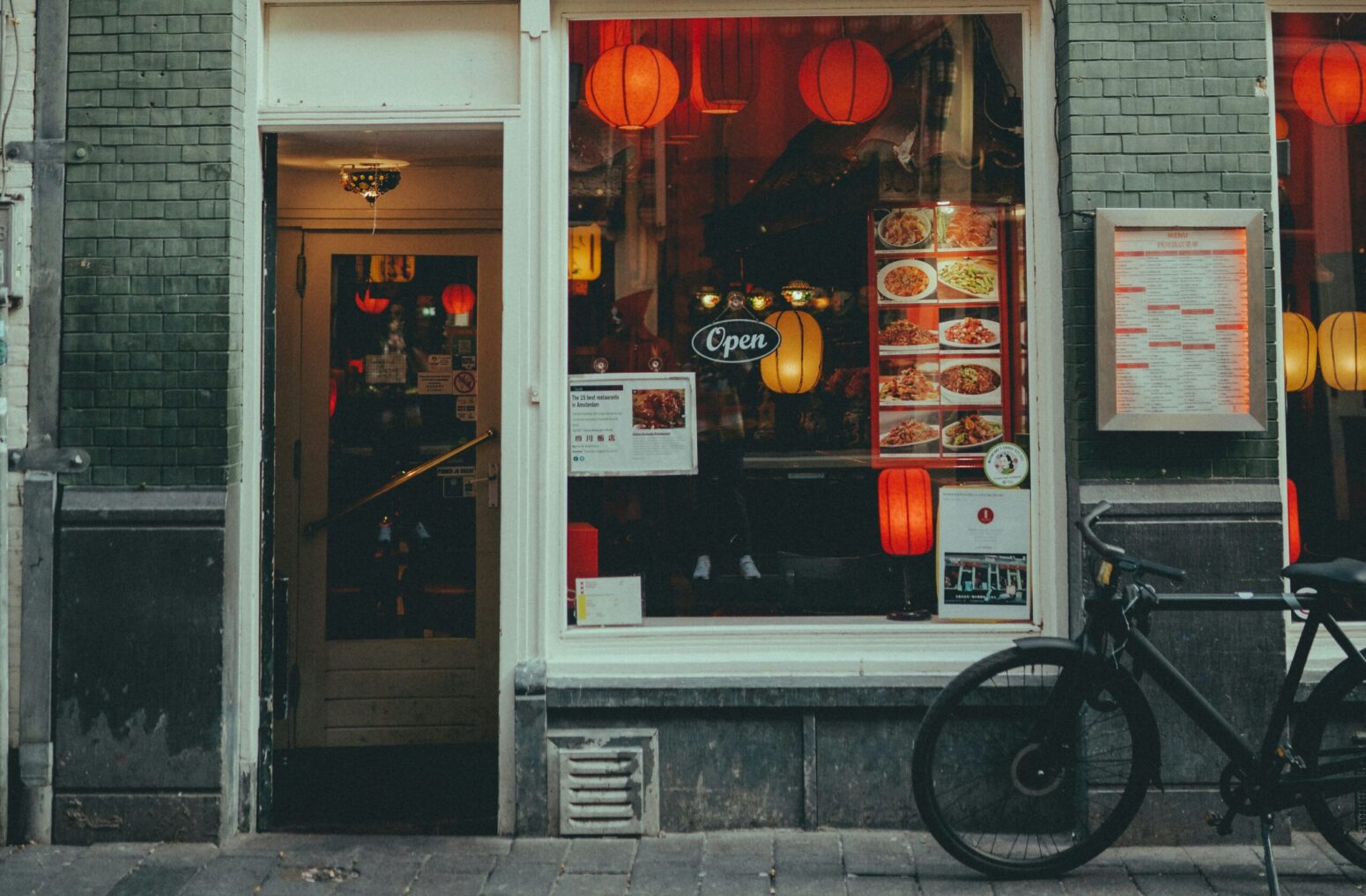
In the yard the cold grass and leaves creaked, and she felt the heat of the house steam off her coat-muffled body. After the peeled grayscale blocks and the bladed wind, the restaurant was tropical: a blast of jasmine-scented air; red velveteen upholstery; the black lacquered figurines; bamboo stalks trained into spirals; gleaming brass fittings. She placed an order for a large hot-and-sour soup and egg rolls to go and sat opposite a five-foot tropical fish tank with candy-colored plastic pebbles, replicas of ancient wrecks, face-like rock formations, and a miniature waving diver. Aquatic plants laced their glassy, fleshy roots through the rocks and rose like dark streamers to the surface of the water, where their leaves rippled in the wake of the aeration pump.
Amelia followed the path of a canary-yellow fish the size and shape of an arrowhead as it weaved in and out of the plants in a series of lazy figure eights. A translucent crab waved its claws, a small flounder-y fish shifted a pebble as it slid inside a fabricated cave, and something turned deep inside the bowl of her hips. Other small bodies flitted by as fast as pine needles falling. She thought back to her legless ancestors wriggling their bare and burning bodies up a sharp shore, gills swelling with the strange language of air. She thought of an embryo glowing in a shelled dark. Of brains and livers and lungs suspended in jars of brine. Of all the blood in her own body. All the rooms in the apartment they lived in. The many, many liquids inside that she could not name or even recognize.
A singe of smoke edged into the room, swelled, and the two feet of kitchen visible behind the order window darkened. A man ran across before disappearing behind the wall, the tips of flames rising above the bottom of the window. Another cook stopped for a moment and turned to the invisible fire, driving the smoke like flies from his eyes.
The haze seeped into the dining room, empty at this late hour, and hung whitely blue. Amelia’s eyes smarted; a silver fish darted left to right in a series of evasive maneuvers that looked unnecessary to her. The young woman at the register held up her order, and Amelia imagined the rolls staining the paper wrapping translucent, the cataract-cloudy broth sloshing like a snow globe under the blank brown paper bag. She stood and reentered the cold. By the time she reached home, she knew, the fried dough would already be cool, the soup separated by weight or fat, and she would abandon most of the meal, arranged carefully on a plate, on the counter overnight. Still, it felt warm. She reminded herself it was good to move. To do something.
The familiar architecture of branches guided her gaze along the street so fully that she did not see the boy—and he was still a boy—half-hidden in the carved-stone apartment entrance she and Thomas had often admired for its workmanship, until he was nearly through asking her for money. He was barely a teenager, so young that he looked raw leaning into the ribs of the doorframe, out of the wind, where his eyes caught the tangerine of a distant streetlamp. He leaned forward, and the glare slid down both cheeks. A colorless coat left only three inches of throat exposed, white with cold. Above the collar was a beet-colored bruise the circumference of a mouth.
He told her he was hungry. He told her that he was stranded after his bag and wallet and ticket had been stolen while he slept on a Greyhound bus from Seattle, where he had met his father for the first time. He needed eleven dollars and eighty cents to buy a ticket home to Gary, where his mother lived and where he would be okay. She knew she should be on guard, but the specificity of the amount he recited was like a talisman against her disbelief. He asked her, “Can you help me?” The wind pulled her hair across her mouth. She saw his eyes flick to the bald part at her temple.
His skin was seamless, like water. In another century he could have been her son. She wanted to tell him it was okay. To explain, as she had to her sister, that this had never happened before. It had been, in fact, almost an accident. Thomas didn’t do things like that. He didn’t yell or throw things into the wall. She offered him the curled singles and change she had been clutching in her pocket since the restaurant. Her leather-bound fingers touched his bare skin. “I know what you are going to do,” she said, her voice strange and flat.
He recoiled. His fingers closed trap-like around the money, and before he hurried his hands back into his pocket, she saw the dark disk of her coat button disappear into his fist. He turned and walked away rapidly, receding from her, becoming more and more part of the street with each step. His back could have belonged to any man and in any case had never belonged to her. She watched as he moved north, as the lights changed and his gray-brown figure patched into the larger quilt of the night, indistinguishable from the cars and trees and other figures walking together, alone, to places and from places, and then she turned to where the house waited two blocks down, every room lit and shining and empty.
Read more from Issue 18.1.