Rabbit, Rabbit
34 Minutes Read Time
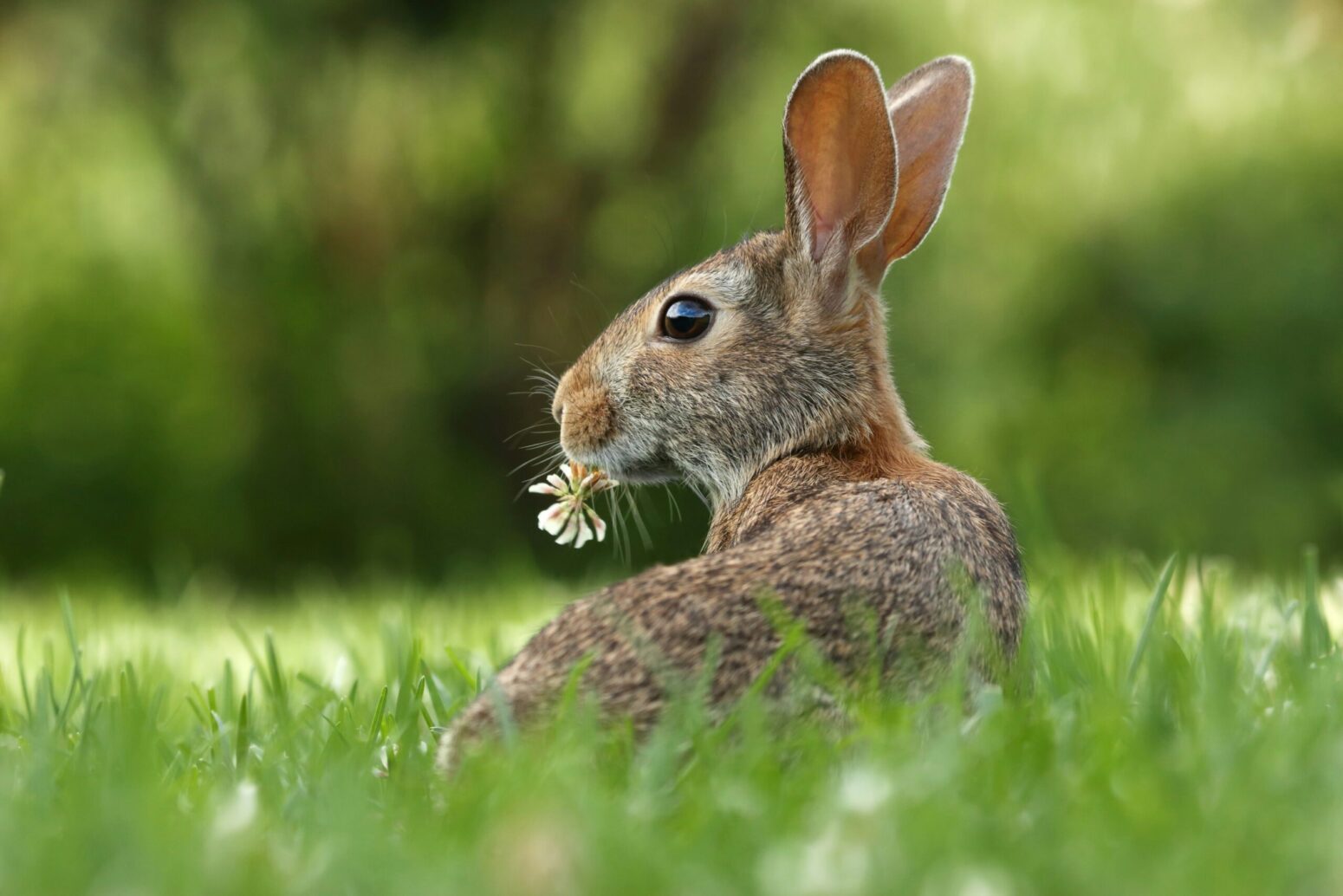
On the first of the month, she miscarried in the shower. At her last checkup the ultrasound tech on duty had told her that her baby was about the size of a baby rabbit. It felt strange to hear that, because they usually compared the size to some kind of fruit or another type of produce. At first, she thought it probably had something to do with not wanting to use something else alive—in case the worst happened. In case what happened to her happened. Later, she read that it had something to do with what they called the human scale principle: not everyone was familiar with the size of a baby rabbit, but most everyone could conceptualize the size of a bell pepper or grapefruit. However, she had grown up in the country, as she suspected the tech had too, where rabbits were abundant, constant. They appeared in her backyard at dawn and dusk, dashing away if she got too close, like visions in those murkiest times of day. Looking at the mess on her shower floor, she remembered how she had once witnessed a mother rabbit defend her litter from a garter snake, pouncing on it, grabbing it in her teeth, chasing it even, once it had released her children. Now she wished there was a snake she could blame, could strangle to death, but the snake was her body and she was defenseless against it.
Her college biology professor had been prone to tangents, but those things beyond the textbook were what had stuck with her. The rabbit test was one such thing. She remembered learning that in a not-all-too-distant scientific period, a woman’s urine would be inserted into a rabbit, and a few days later, that rabbit would be dissected to examine the size of its ovaries: if they had enlarged, it was an indication that the woman was pregnant. With an error rate of 2 percent, the rabbit test was considered reliable. The rabbit died became deceptive slang for a positive pregnancy test, based on a popular misconception: all tested rabbits died, whether or not the woman was pregnant. All of them, sacrifices.
After what happened in the shower, that seemed to be that with the man she had been seeing. They hadn’t planned a child, hadn’t planned a wedding either, but they both figured at their age . . . if not now, when. Or with whom. All that kind of talk. Not the way she had planned it, not the way anyone did, but somehow she woke up one day and found herself living it. Even without planning it, they could still picture it, that very specific kind of life. Moving to a bigger apartment, a townhouse maybe, in Brooklyn, of course, God no, not the city—even though Brooklyn was still the city, geographically and compared to most other places in the world. She never understood why people said that, but then she started saying it too. According to the man, they could have the nice things other people had, baby showers and birthday parties and family portraits lining the walls. A namesake. They had just as much right to all of it, he insisted. She thought he took a strangely defensive position to the whole thing. Now it seemed his rights—once their rights collectively—to the good life had been revoked, and once more, according to him, she had been the one to unwittingly take them away. To try again never seemed to occur to either of them.
But now she could finally leave the city, all parts of it—nothing was keeping her there. She was tired of explaining what an actuary was, what she did, anyway. She would rather never do it again, the job or the explaining. Attempting to calculate risk as a profession had not particularly helped her avoid it in her personal life, as she thought it might at one point, had likely been what attracted her to the field in the first place. She knew math and magic were usually dichotomously opposed, but she had once believed there might be a connection.
She was finally free to move back home, but home had its caveats too. Or just a single one that floated above all else: it was empty. Or hollow was a better word for it. Her parents had died a year before, one after the other, the way old couples were rumored and fabled and cursed to do, and left their home to her, their only child. Her erstwhile boyfriend had not been interested in the country house much past an occasional weekend escape, a week or so in the summer. What is there to do out there, he would say, raising a reasonable point. There wasn’t much of anything to do, but that was also a formidable counterpoint.
She had been named after a spring month, or a late winter one, depending on where you sliced it. She had been born on the spring side of things, according to the calendar, and her mother wanted to honor that, because they were from a place of long, dark winters and hard-won, glorious springs, even though it usually still felt like winter by the time her birthday came, and for a while after that too. Her name was more of a symbol, her mother said, that the worst was over. That the best was coming, her father would interject.
Her father liked to tease her, call her by the name of other months when she was in different moods. April, he would call her sometimes, May or June at others. Yes, December, he would admonish her when she was at her chilliest. Whatever you say, October, he’d say whenever she couldn’t make up her mind. Look at you, August, when she was at her most golden. In this way, she became much more than just herself. You’re not just one month, he would tell her. They hadn’t meant that when they named her, he told her, they hadn’t meant to impose such limits on what she could be. You’re all of them, he said.
She thought about this when she arrived back at home—for good this time, she knew. Leaving it once had been hard enough. It was the beginning of summer, her favorite season, in the world and in herself. The seasons inside and outside of her were aligned but also distinct, as her father used to tell her. She didn’t know if it was still summer within her, but she did feel like now that she was back where she began, some cycle could restart inside her.
It was dusk, and the world was green, as she made her way to the end of the country lane that prefaced her home. When she saw the house peer out from the clearing that framed it, where the road went from pavement to dirt, her heart leapt. When she was young, her mother had told her that falling in love would feel like coming home, that the feeling would be familiar—that growing up was just a search for that same feeling in a body and not a place. But she had not found her mother’s words to be true.
The house was once white, but her family had painted it green, to blend into the woods surrounding it—with the exception of the front door, which they kept red, because it was supposed to deter evil from seeping inside. The house was what was called a saltbox, its sloping roof called a catslide: words she had loved as a child because they felt strange and magical—othertimely, otherworldly. Like she was living inside of a fairy tale.
Her mother had loved birds, so her father had built her birdhouses—a dozen of them still stood in a scattered row in front of the house, a bevy of jagged heights and a cluster of colors, like a line of soldiers standing at attention, the first line of defense before evil could even reach the red door. She could see no birds inside them as she parked under the oak that was older than anyone she had ever known, but from the corner of her eye, she saw the rabbits scurry out from the overgrown back garden and dart into the dark of the woods.
The house was very old—centuries. It had uneven floors and low ceilings and tiny little doors that opened to nowhere. The house had not been passed down in her family’s heritage as other such old houses in the community. Rather, her mother had grown up on the neighboring land, in a smaller, newer home—newer being a relative term around these parts. Her mother used to come over to the old house and pick berries from the bushes, feed the chickens birdseed. The house’s family was whittled down to a widow with no children of her own, despite her best efforts, so it was said. In the widow’s will, it was found that she’d left the house to the little girl next door.
She had not moved anything since her parents had died: her father’s paperback still split open on the nightstand, her mother’s hand lotion uncapped next to it. The calendar remained unchanged, the world pared down to one single day that stretched and stretched. Since she had last been there, the clocks had all become unwound, and she was stilled by the strange silence that filled the house.
While she was growing up, the house had felt ruled by time—the Swiss cuckoo clock in the dining room her parents had brought back from their honeymoon, the grandfather clock in the living room. The chicken-shaped egg timer in the kitchen, the little sand hourglass to know that she had brushed her teeth long enough. The tear-a-day calendar in the kitchen, the sundial in the garden. These items had felt almost like the siblings she didn’t have—older, wiser ones, each diligently attended to, their counsel constantly sought, highly regarded. I would lose myself if it weren’t for you! her mother would call to the cuckoo as it struck a new hour, reminding her to feed the chickens and check the mail and take her medications. Imagine, keeping track of every moment and never asking for anything in return! her father would marvel to the grandfather clock, watching its pendulum swing back and forth. But the clock did ask for something in return, she thought, it needed to be wound and rewound—it demanded to be taken care of too.
Her body itself was also used to record time’s passing. Her father would keep track of her growth with little tick marks on the doorjamb of her bedroom closet. With every line, he would write her height and the date, and all those lines and digits and days came to make up her life, her past selves succeeded by newer, bigger selves, like she was a Russian nesting doll. She thinks that’s how she fell in love with numbers, seeing herself divided into them. History, her father would say, was just things someone remembered to write down. She understood her existence by its archive of little marks on the wall for years and years, until the day she did not grow anymore.
Now she opened the closet and looked at the marks, faithfully climbing over each other until they ended abruptly, like a final chapter that concluded nothing about what came before—a last line hovering at five foot three, some day twenty years ago. She stood up against the wall and stretched tall and straight, the way her father had taught her to. She felt her body cover the last known trace of herself becoming, and not just being. Maybe that’s where she had ended, even if she had kept existing.
In the living room, next to the grandfather clock, there was a painting of a rabbit. It was very simple but also very lifelike. And very famous, as her mother told her when she was a child. Her mother showed her that in the rabbit’s eyes, you could see the reflection of the windowpanes of the artist’s studio, the escape to the outside world the rabbit would never make it to. Instead, it remained locked forever inside the painting. Her mother always seemed very sad about this, and as she grew up she finally began to understand why.
At the beginning of every new month her first words had been rabbit, rabbit. It was something her mother had taught her to do when she was very young. Say the words first thing when you wake up, her mother said, and you’ll have good luck all month. Luck was something she didn’t think she needed back then—Young and lucky are the same thing, as her father used to say—but she knew she wanted it nonetheless. Luck was icing on the cake, as her mother would say, and what good was a cake without its icing? Sometimes she would stay up all night on the eve of a new month with her mother, who liked to spend late nights baking, and they would together tear off the calendar at the stroke of midnight—yesterdays littering the floor like fresh snow. Rabbit, rabbit, they would chant, and then she would get to taste whatever came out of the oven while it was still warm. Rabbit, rabbit, she and her mother would say together again, for good measure, as they cut into an apple cake or blueberry pie, the grandfather clock’s solemn chime ringing against the bleat of the cuckoo.
Other times, she would wake alone in the dark haze of her room, curtains pulled tight to seal against drafts, and say it out loud to herself: rabbit, rabbit. Nothing would happen right away—they weren’t those kind of magic words—nothing but the feeling of the silence around her cracking like ice beneath the sound of her own voice. But then it would all freeze over again just as quickly, like she hadn’t said anything at all.
She had been faithful to rabbit, rabbit throughout her whole childhood—she never greeted a new month without the words her mother taught her. But then once, sometime after she had left home, she had forgotten, and then she kept forgetting. Time kept passing her by, whether or not she remembered to mark it, whether or not she remembered to ask it for luck.
Like the exit in the rabbit’s eyes, time passing had not seemed sad until she was thirteen or so, the year her period came for the first time. It seemed impossible to fathom that one day she could be a mother and no longer a child. Until then, it had seemed like growing up was a myth, that really children would always be children, and grown-ups had always been and would always be grown-ups—that everyone’s roles were fixed and they all had their entire lives to master them. After that, time was tinged melancholy, all those days on the kitchen floor. The ceremony of another tick mark in the closet was dampened whenever she remembered that the day would come when there would be no more.
Someday you might shrink, her father said, and then we can document that. He said that sometimes people got smaller as they got older. We can make another column in reverse, he told her.
How big will you be then? she asked him.
I’ll be an ant on the floor, he said. To me, you’ll be a giant.
Her father liked to say that there was a fine line between knowing and believing. She knew that her parents would someday die, but she chose not to believe that fact for as long as she could. She preferred the idea of them just growing smaller, becoming infinite and infinitesimal like so many other things in the world that she could not see or perceive but were nonetheless utterly, joyously alive.
She hadn’t brought much back home with her. What was everything she had accumulated since she’d left to start her own life? It was all nothing much, nothing really—just junk, just jetsam. Everything she really needed was already there, at home, a museum of her life where her former self was always on view. Her childhood bed, big enough for just her, no extra space lying empty and gaping. Clothes waiting patiently in her closet, Easter dresses and wool cardigans handmade by her mother—they smelled like the past, but they still fit her perfectly, as if her mother knew not only her childhood shape but all her future shapes too, what she would and would not transform into.
Her first morning back home, waking up in her old bed, she said the words for the first time in a long time: rabbit, rabbit. It wasn’t a new month, but the morning felt the way new months did when she was growing up, rising in that same bed. It felt like the time lying before her finally had something new to offer, had the chance to be lucky. Who said she could not make her own months, make her own time? She knew months just mimicked the cycles of the moon, and that women’s bodies were said to follow those cycles too. Right now, her body was thrown out of whack, out of orbit, her seasons and cycles all misaligned. But in that way, she felt liberated, like her body was freeing her from having to align to the rest of the Earth and space. She could restart her own sense of time. And in the country it was easy to feel outside of time entirely.
The night before, she had turned off her phone so she could sleep soundly, and she sat at the breakfast table for hours, long past morning. She drank mugs of tea made from the dried mint leaves still packed away in the cupboard by her mother’s careful hands. She sat and watched the patterns of the sun shapeshift through the windows and across the jagged topography of the plank wood floors. Sometime when the shapes read afternoon, she considered for a moment turning her phone back on, but who would be trying to reach her; who did she want to reach that would be worth sacrificing the quiet around her? There was no one alive she wanted to hear from.
She spent the rest of the day weeding and watering and tending to the garden in the backyard, her mother’s old pride and joy, at its peak a bounty bursting with vegetables and herbs of all sorts. Tomato vines and berry bushes grew on the side of the house; apple trees lined the perimeter of the property. It was all still salvageable, but the rabbits had gotten to everything in the time the house had been left empty.
As the light faded she saw them beginning to encroach from the edge of the woods. But as soon as they saw her, a foreigner suddenly in what they now understood as their territory, they jolted away. It’s okay, she said. Her voice sounded strange. It had been a while since she’d spoken out loud. We can coexist, she said. Even though the rabbits had already disappeared back where they came from, she hoped they could somehow understand her.
It wouldn’t be terribly hard, she figured, to live without ever leaving, without doing anything for the rest of her life than just living through it. She had everything her parents had left her; she had her own savings. She would get the garden back into shape, she would get chickens back for fresh eggs each morning. But above all, she had a house, a home—what else did she ever need?
She ordered chicks in the mail, and later that week they came, in a box that announced insistently, urgently, LIVE LIVE LIVE! She kept them in the downstairs bathroom with a heat lamp and a towel-lined cardboard box to let them grow. Their cheeps reminded her of the now-silent cuckoo clock, which sat frozen like all the other clocks in the house. They were just sculptures now, retired from their timekeeping duties. They could lead a simple existence as the objects of beauty they were, and she admired them as such. Who, really, needed clocks? Just the sun through the windows was invasive enough. Even the sundial she deemed unnecessary—one day while pruning the garden, she unearthed it from its stance in the ground and dragged it all the way to the woods so it was safely hidden from her view. Like the clocks, in the dark of the woods it was freed from keeping time; it was now just another strange sculpture, blighting the otherwise unblemished land.
Her father had been the editor of the local paper for over a quarter of a century, and in the basement he kept an archive of every issue he’d worked on. Between this and her mother’s tailoring, plus her weekend farmer’s market booth where she sold all sorts of her best baked things, their family had made a modest living.
Her father’s papers were all categorized inside of neatly organized cabinets, divided by years, then months, weeks, and days. One morning she went into the basement and found that day’s date in the first year of her father’s collection and took the paper upstairs with her to have with her tea. She read every inch of every page like it was today’s news. Even though she had been there when the paper was first printed, its words still felt all new to her: the fireman’s carnival, the PTA fundraiser, the Little League stats. That started her routine of waking each morning, chanting rabbit, rabbit, then going down to the basement as if it were a newsstand, plucking the next issue from her father’s cabinets, and reading it at breakfast. It was in this pattern that her days found a shape. She had two and a half decades of issues to go through, and then she figured she would start over, until she didn’t need to anymore. The papers were full of so many tiny things, things that had once been considered important and now were not, just because they were over. She didn’t want to miss any of the tiny things, she didn’t want them to be forgotten: you can go over a day with a fine-tooth comb and still miss little bits. She found it nothing short of tragic, memory’s hierarchy.
She read about things she’d lived through, things she half remembered and things she had all but forgotten. She found herself featured in some issues: Her first-grade class’s field trip to the local historical society, her and all her classmates dressed in costumed colonial garb by a spinning wheel. A column in which she and other children were asked what their favorite animals were. Rabbits, she had reportedly answered, her eyes nearly taking over her eight-year-old face. She stared hard into that face and tried thinking of it as herself, and then she tried thinking of it as a stranger. Neither felt completely correct.
Most every night, she took a bath in the claw-foot tub. When she was a child, she used to pretend the bathtub was alive—she pretended that it could jump up on its claw feet and run away, bringing her with it to fantastical places. Now she lit the candles she had found in her mother’s cabinets and lay inside the belly of the beast for hours, until her skin crinkled like the pages of an old book. She would stay so long that the candles would burn out, and she would submerge herself into the darkness. There were windows all around the bathtub, looking out to the woods. The views were beautiful, but her parents had shielded the windows with curtains. She always thought that was a shame, and overly cautious for no good reason—who was there in the woods to see inside? Other than animals, the rabbits among them, moving through the darkness. Now she opened the curtains wide and let the night seep into the house.
One night in the tub she heard a rustling, a digging. It seemed to be coming from the walls. Rabbits, was her first thought. They’ve gotten caught inside. She pictured them scurrying inside the innards of the house, trying to find a way out. She pulled her waterlogged body from the tub, draped a towel around her, and listened. She heard the rustling again, coming from her parents’ bedroom, over their four-poster bed that lay empty. She heard it again coming from inside the closet, and she pushed away her mother’s dresses and her father’s shirts to get closer to the sound. As she dug inside the closet, she was reminded of another time she made these same desperate motions searching in this very place, long ago.
When she was not older than four or five, she had heard her mother’s voice inside her parents’ bedroom. She could tell by the lilt and rhythm that she was talking to someone else, by the pauses, the gaps in her speech waiting to be filled with answers. But her father was gone at work; it was only the two of them in the house. She became convinced that her mother was hiding a secret sibling from her, and this filled her with intrigue and also joy, for she’d never asked to be the only one. A sibling! Now her family could be even, four of them like the four legs of the kitchen table, standing sturdy. She went searching for her secret sibling in the days that followed, in her parents’ closet and under the bed, in the depths of the basement, in all the cabinets and the nooks in the hallway. Where were they hiding? How had they kept themselves unseen for so long? But her searches turned up nothing, despite her best efforts, and finally she asked her father.
Where are you hiding them? she asked him.
Who? He furrowed his brow.
My sibling! she said.
Who told you about that? he asked.
No one told me, she said. I heard Mother talking to someone.
Then her father sat her down. She was half-right. There had been a baby before she was born. But that baby hadn’t made it, he said.
What happened? she asked. Did someone hurt the baby? She thought of how her parents always had to make sure to lock up the chickens so that the foxes wouldn’t come and steal them in the night. She wondered if something like that had happened to the baby. Did you make sure to lock her up at night? Her father nodded, solemn. He told her that they always made sure to keep the baby safe. That no one hurt her. But sometimes, babies die suddenly. And that no one really knows why.
But she’s still with us, her father told her. She’s there as long as we remember her. That was why, he said, her mother still talked to her sometimes. She’s just remembering, he said.
What’s the difference, she asked, between remembering and pretending? She recalled now her father saying that sometimes there wasn’t a difference, that remembering was pretending. But it was so long ago—she didn’t know if her own memory had become a sort of pretend.
She was getting along just fine. The garden was flourishing; the chicks had grown up and were happily rehomed in the coop outside, granting her eggs each morning. She had decades of papers to read; she had tea, and eggs, and enough vegetables for a salad each evening. She was shrinking a little, as her father said she would, but not in height. Her period had not come back, which she considered a great favor. It was like she was a child again, rid of all the messiness of adulthood. She had smashed all the mirrors in the house too, so her body was free of recordkeeping, or at least she was free of the evidence of it. She didn’t worry about the bad luck she might have conjured; she figured the rabbit, rabbits she faithfully chanted each morning, each month of her own making, would balance it out.
Sometimes, while taking her evening baths, she thought she still heard the rustling in the walls, and she would search for the rabbits, always to no avail. Maybe it wasn’t rabbits at all, she wondered. Maybe it was the ghost of the sibling she never had a chance to meet just letting her know she wasn’t alone. She wondered if her own unborn child had a ghost—if somehow they could unite here in this intersection between her past and present. She had found herself thinking every now and then about what had happened, despite how much she was trying not to—the life she could have given her child inside her old home, breaking free of the man, she and the child hiding away alone where she could protect them from—what? The world, maybe even time. At these moments, she wondered if she would have ever felt she’d grown into the grown-up role. Or would she have forever only looked at her child in jealousy, at them upstaging her in the role she was born to play?
She checked the mail sporadically, her only contact with the outside world. One morning she found a single letter in the mailbox, addressed to her parents. Her heart leapt in the same way it did when she’d first arrived back home; seeing her parents’ names together made them feel, for a moment, alive—someone, somewhere, did not know they were gone, and maybe, somehow, they were right, in the way that people say you only really die the last time someone says your name. She did not recognize the return address on the letter, from a state where her family had known no one, but still she ripped it open, a single sheet of humidity-warped lined paper. The letter read, in tentative penciled cursive, I am writing to ask if you know about the Lord and what He can offer you. She skimmed the rest of it, and it went on like that, imploring her parents to get in touch with the Lord and His message if they were not already, signed by a name in very small letters she could not decipher.
Her hands shook as she stood there alone by the mailbox. For a moment she considered ripping up the paper and its envelope and letting the pieces blow away in the wind. But she couldn’t do it, not with her parents’ names so carefully, intentionally written on the envelope. Besides, it wasn’t hers to destroy anyway. Instead, she tucked the letter carefully in the mail organizer on the inside of the door. Her family used to keep all their mail there, and it had always been bursting with envelopes, of people thinking of them. Now, it held only the one letter.
Her parents had not been particularly familiar with the Lord and they were fine with that; they raised her to understand that some people needed religion because they needed the illusion of external consequences and rewards. Their lord, their religion, was time—it held consequence enough.
Her daily rereadings of the newspaper led her, eventually, to the tercentennial, which the paper had commemorated with a special issue. It was the rare edition with a full-color insert, featuring photographs from the town’s celebration: the fireworks at the high school, the parade on Main Street, portraits of various residents waving tiny flags. Many of the townspeople had created time capsules to mark the event, and there was a collage dedicated to their tributes. She found herself featured in it, smiling on her knees in the dirt of their yard with her mother standing next to her, holding a shovel.
The picture sparked her memory. To her, it had felt like a day like any other—not like Christmas, not like a birthday, but her parents had told her it was special. She remembered them saying that their town was three hundred years old that day. Is there any person that old? She remembered them laughing and saying certainly not. What if they’re just very small? What if they just shrunk? she remembered asking her father. He said that if that were so, then they had done a great job hiding.
She found that her father had written an editorial column alongside the collage of the town’s time capsules, featuring their family, featuring herself. “When weput together our own time capsule, my daughter asked who it was for. My wife explained that it was for others to find, maybe in another three hundred years, maybe more than that, maybe less, for them to understand what life was like for us. ‘Like aliens?’ my daughter asked. ‘No,’ we said, ‘people like you. People like us.’
‘What would you say to the people of the future?’ we asked her. She wanted to write her own letter to them to include in the capsule, for it to be separate from ours. But then, after we buried it, she told us she hadn’t known what to write—she couldn’t picture the future. So she had written the letter to us, to me, her mother, and herself. ‘What if we already are the future people?’ she asked us. ‘What if we last forever?’ We told her that the time capsules ensured that in some way, we would—or at least last past our deaths, past our due dates. That living forever is just being remembered.”
She remembered that sometime before the tercentennial, or maybe some time after it, they were driving home from a rare dinner at the inn in town, celebrating something she couldn’t recall. It was early spring, and they were driving home in her father’s car, and she was twisted in the back seat so she could see the road behind them. The moment felt so perfect: the late-afternoon light, her parents’ hands clasped together loosely, it felt like how all the movies and books she knew faded out to their close. The moment felt like an ending, as she understood them to feel, and she felt like she was ready. Are we going to end? she asked her parents, still twisted away from them, watching the view from the back window.
Do you want to end? her mother asked her back. She could hear the smile in her voice. She didn’t know what was so funny.
I mean, don’t we have to? she asked.
Someday, her father said, but not yet, if you don’t mind.
She tried to remember what she had written in her letter, what they had put in the time capsule. She could picture the paper she wrote on; she could picture the box they placed things in, but when she tried to remember exactly what the letter said, what the box contained, the film of her mind shorted out.
After that, she became consumed with trying to find the time capsule. She needed to read what she had written—what her parents had written even more. Suddenly there was nothing more urgent.
She took a shovel and started digging that same afternoon. As a child, she liked to dig; she had heard that myth about digging all the way to China, and she had thought she could get there or somewhere else equally as distant if she kept at it. Then in school she learned about the crazy man who believed that the Earth was hollow and that inside there was a whole other world, a rich, warm land, habitable beneath. She liked thinking about this, a world inside the world, where things would be kept tender and protected from time. Maybe the man wasn’t crazy; no one had ever let him check to find out for sure, so maybe she would, maybe she would dig to the center of the world. Her parents had always stopped her before she got too deep, but now they weren’t there to hold her back.
She didn’t remember exactly where they buried it, but she thought she had an idea. After trying a few different holes several feet down in one corner of the yard that first day, she wondered if the time capsule had maybe slid deeper into the earth over time. She couldn’t imagine her parents burying it deeper than a few feet; how would anyone ever find it? The light was fading; she would keep trying tomorrow. She would dig even deeper.
That night, she heard the sounds in the wall again. This time she knew they were not from a ghost; they were from something alive, something that did not belong there, something that wanted to get out.
The sounds were coming from the hallway. She went outside and grabbed the shovel she had been using to dig, which was lying face down in the dirt where she had left it, and brought it in. With it, she attacked the wall where she thought she heard them, slamming into the centuries-old wood with all her force, as she heard rustling, a begging for escape. The sounds were gone by the time she broke through, but then she heard them again in a different spot. The rabbits, they were trying to get out, and she needed to rescue them.
By the end of the night, there were holes all over the house. She would patch them up another time. When she felt like it. Right now she was too tired. Right now she had to focus on digging.
Every day, she tried to find the time capsule. She couldn’t believe she had misplaced time like that—what could be more irresponsible, more irreverent?
She had never seen the letter her parents had written; she wondered if they, like her, had written it to her instead of the future-people. Maybe she was the future person who was supposed to find it. Maybe they had left her instructions; maybe they had known how she was supposed to keep on living.
She dug and dug. She dug until she was sure that she belonged inside the Earth. She dug until she believed that inside the holes, there was a way out. If she dug deep enough, she would finally get to China, or the inside of the Earth, or the faraway places she used to dream the claw-foot tub could take her to, or the exit in the rabbit’s eyes in the painting in the living room, the place it longed forever to go to.
She kept digging, until she dug all night. At some point she fell asleep there in the dirt. She must have, because she saw her father appear before her, his figure wavering. He called her by her name, waving his arms. March! March! he cried. He told her to stop. He told her she didn’t need to dig anymore; he told her that she could rest. How happy she was to finally see him again; she felt sure her body would implode from her joy, that she surely could not contain it.
She woke at dawn, looked up to see the rabbits surrounding her.
Read more from Issue 21.1.