Probate
24 Minutes Read Time
We didn’t care, really, about the traveling euthanasia veterinarian’s failed marriage. We didn’t care about why this woman showed up nine hours later than she said she’d arrive. I don’t know all of this for certain. I’ll admit that I’m making some suppositions. I’d like to say that I could call Miranda and fact-check the whole night, but she took off two days later without leaving much of a note and certainly not a new address. Her voice mail’s full, so I can’t leave a message saying, “Call me back so I make sure I don’t go around telling this story wrong.” I can’t even remember the vet’s last name, though I remember her showing up, trailing along a rolling hard-shell case of dog biscuits, sedatives, and animal heart-stoppers. She came in, didn’t make eye contact, and said her name was Dr. Nancy. She was one of those kinds of vets—like a pediatric oncologist who took one too many courses in the humanities, or a fearful dentist specializing in adolescent pulpectomies, or a questionably intelligent recent seminary graduate intent on leading a youth group through the ins and outs of why evil, famine, early death, spina bifida, multiple sclerosis, tainted water supplies, dwarfism, cystic fibrosis, asthma, and muscular dystrophy exist in the world—who think it necessary to go by their first name only. Dr. Nancy. Like Cher or Madonna. Oprah or LeBron. Jesus.
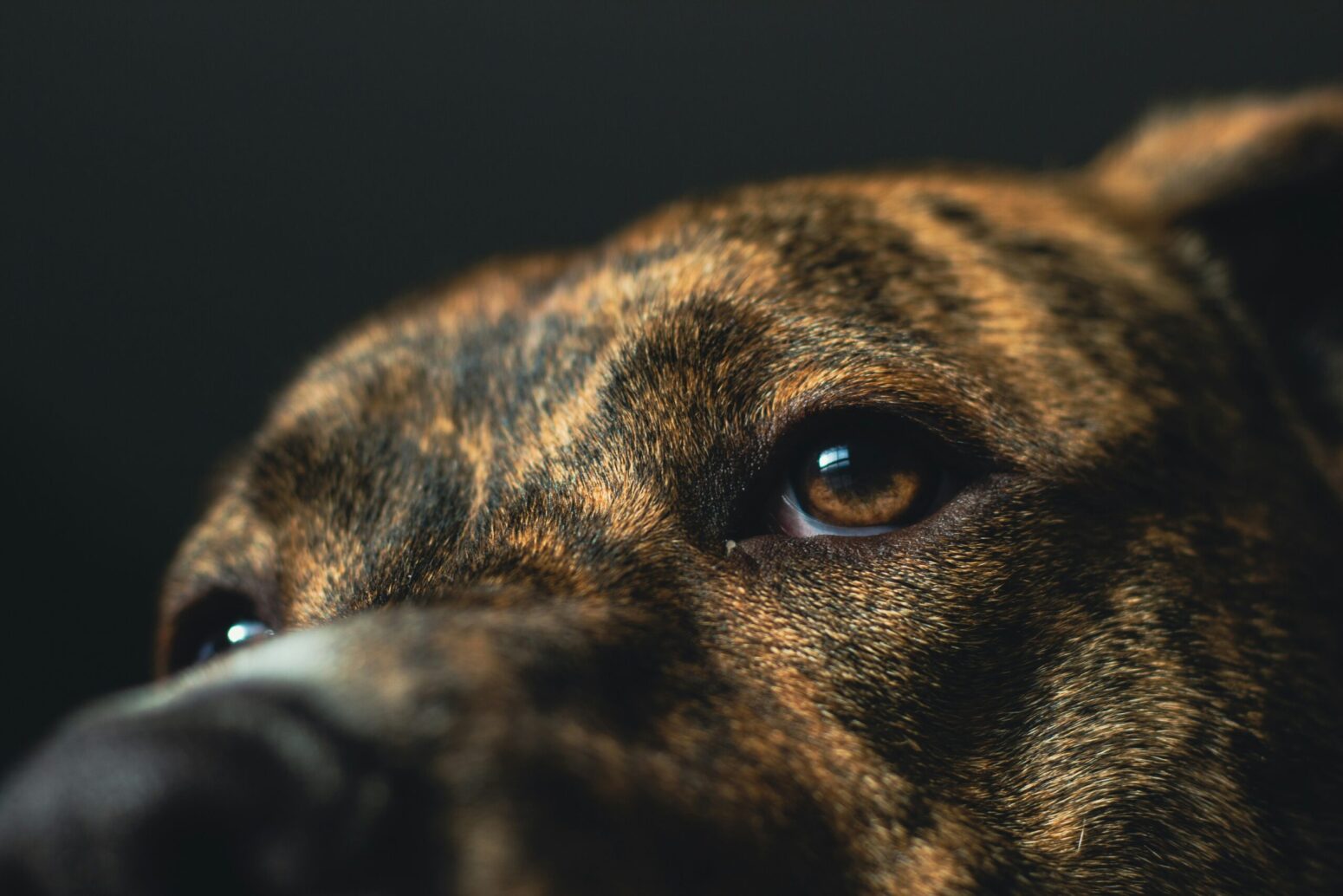
“Hey, I’m sorry I’m so late, but I got stuck on the phone with my therapist,” the vet said. Miranda and I stood in our kitchen, where our dog Probate panted, squealed, yelped, and practically pleaded, “Put me down now,” lying there on the floor. Probate’s real name happened to be Max, but we’d inherited him when Miranda’s mother died seven years earlier. Probate seemed to be a mix of chow and pit bull, was at least fifteen years old, had hips that didn’t respond daily, and was so black that no one would adopt him other than us, we knew, given that fact about black dogs left forever at the pound. He had three tumors on his belly, which meant that when I tried to lift him, he bit me. “I’d do the same thing,” I said to Miranda.
Probate had responded to his new name right away. You could say, “Come here, Max,” or “Come here, Probate,” and he’d do so. That fucker would stare at me nonstop until I’d finally say, “You want to go to the recycling center?” I’d say, “You want to go see Robin at the liquor store?” I’d say, “You want to drive over to Señor El Perro Caliente and get a wiener?” He loved me, and I him.
A good dog, is what I’m saying.
If Miranda were here, she’d admit that the dog had quit eating a week before. Anyone with a rational side, or a heart, would understand that it was Probate’s time.
My dog Probate!
Miranda’s momma died at HospiceCare of the Lakelands, which meant she got sick, didn’t want to leave her own house, never let any- one know that she had lung cancer, didn’t tell Miranda or me about all the bins of What Doctors Don’t Tell You and Miracle Cure newsletters, pamphlets, and books she kept shoved beneath beds. She never let on that she possessed hoarding tendencies. It’s not like Miranda and I found it necessary to go open the closet doors, which hid stacks and stacks of Bradford Exchange “limited edition” collector plates; Donruss, Topps, Upper Deck, and Leaf baseball cards from when the market got flooded after 1992; Beanie Babies; electroplated “coins” produced by the British Royal Mint in conjunction with the Columbia Mint in Washington, DC; every canceled check since 1965; and so on.
We visited often. And Miranda’s mom—her name was Evelyn— came to live with us on a number of occasions. We lived only ninety miles away. She showed up after that time she needed hip surgery, and after that time she needed reverse shoulder surgery when she fell down and dislocated her shoulder, and then the ER doctor said, “I can pop this back in,” and then he sheared the ball right in half. She came to live with us that time when she thought she might want to hurt herself with her leftover drugs. She always brought poor old Probate with her. He lifted his leg on the dining-room table, on end tables, on both couches. He walked right up to the front door and lifted his leg, then trotted over to the back door and did the same. He went up the stairs, jumped on the guest mattress, and licked himself in ways that ruined the queen-size bedspread.
Probate!
“He’s the only thing my mom had to love,” Miranda said more than once. Personally, I think it was a slightly passive-aggressive thing for her to announce. I mean, I guess I should’ve gone ahead and blurted out, “No, she had you, Miranda,” but I rarely followed through. Sometimes I got out, “She had the entire Atlanta Braves lineup, in order, stacked tightly in those little boxes, or in plastic-sheeted notebooks, from about 1990 until her death.”
Her momma sank and fizzled and occupied our time; then she died, and then we went through probate. And we got good Probate, who put up with us until we needed to call the traveling euthanasia woman.
An aside: Miranda hired an auctioneer. Me, I didn’t care about the estate’s final worth, but my then-wife seemed upset that her mother’s collections didn’t bring in more than $2,000, after the 25 percent, after the $1,000 charged for sending out postcards to a mailing list of people who, obviously, didn’t care to clog their homes with Beanie Babies, baseball cards, collector plates, or fake coins. Even the hospice thrift store people didn’t seem all that excited about garnering the remainders that no one bid on: A console stereo, circa 1968, that weighed about four hundred pounds, for example. That Hammond organ with the special piccolo/flute/timpani keys. Maybe thirty stuffed vipers, all coiled in a lifelike setting, that Evelyn kept when her husband—an amateur her- petologist—took off for one of the southwestern states after Miranda went to college.
As it ended up, we filled most of our attic with useless “collectibles.”
Besides not making eye contact, Dr. Nancy showed up dressed in what appeared to be some kind of damsel-in-distress costume. I’d never met a traveling euthanasia veterinarian, so it didn’t occur to me that, perhaps, he or she should wear scrubs, or at least blue jeans if the euthanasia involved a horse or goat. I’d left the lights on and had told her—some eleven hours earlier, when she said she’d show up at noon—that the driveway led to the back porch. I heard her big Suburban growling onto our property, spitting pea gravel, and I went to the door.
I should mention that Probate had been howling, probably in pain, for the entire eleven hours. Miranda spent most of that time petting the dog’s head, or crying, or finding ways to go outside and perform tasks that could’ve been accomplished later: raking pine needles, filling the Yankee feeders with sunflower seeds, cleaning the gutters, checking the tread on both cars’ tires with a Roosevelt dime.
She also started digging a grave that might’ve measured six inches deep in the red clay. Later I went out there with a real spade and an ax to cut through roots and tendrils. I rifled through every drawer we had, but could find only aspirin, Benadryl, and what I figured might be half a Lortab from Miranda’s last bout of kidney stones. I discovered a sliver of what might’ve been oxycodone and residue from about six separate one- hitters I’d stashed behind The Confessions of Jean-Jacques Rousseau on the bookshelf. When the veterinarian hadn’t shown up by two o’clock, I placed a speculative concoction on a glob of peanut butter, lifted Probate’s flews, and scraped the homemade sedative behind his upper back teeth. He bit at me, sure, and then continued his horrific howl-whine. It just occurred to me that “howl-whine” sounds like “Halloween.” Maybe there’s a reason. Add that to Dr. Nancy in her costume, at our door. She wore a corset, a floor-length dress made of velour-like mate- rial, lace sleeves, the whole getup. Dr. Nancy sported a Robin Hood hat with a feather sprouting out the side, which I thought, in retrospect, de- parted from the rest of her attire. I don’t know what kind of brassiere she sported beneath the outfit, but it influenced her décolletage mightily.
She dragged that suitcase and said to me, “Please tell me that you’re the Stinsons.”
I nodded. I said, “Does your therapist have a dog that needs putting down?” Of course I knew the answer. Dr. Nancy harbored unrelenting neuroses and spiteful daydreams and more issues than the Library of Congress’s newspaper and magazine stash.
“No,” she said. “No. I just need to talk to her when I’m spiraling. My husband left me after nineteen years. You ever have any foot problems, Mr. Stinson?”
I said, “Call me Charlie.” I almost said, “Call me Mr. Charlie.” I said, “I’m Charlie and this is Miranda.” Probate lay on the kitchen floor pant- ing, whining, yelping in pain. I said, “I’ve never had any foot problems.” “My ex was a podiatrist. You probably know him—Walker Posey. I think he’s been named Best Podiatrist in the County going on about ten years now, according to the weekend Spinning Around Readers’ Poll.” That was the local newspaper’s weekend supplement that came out on Fridays so folks would know all about the crummy things people like Miranda and me wouldn’t be doing on Saturday night. Spinning Around’s readers named Olive Garden as Best Italian Restaurant, Walmart as Best Sporting Goods, Subway as Best Ethnic Food, because it o≠ered ciabatta bread.
Miranda said, “Probate’s got all his shots. Our regular vet’s Dr. Ga- gliardi. We couldn’t get Probate into the car, so we called you.”
“I know Dr. Stefanie,” Dr. Nancy said. “I think I used to work there, maybe about ten or twelve years ago.” She pushed up her boobs with both hands. She pulled back some kind of near-floor-length cape that accented the costume.
Who doesn’t remember where he or she used to work? Me, before I started up Consumer Pulse of the Carolinas—which hadn’t gotten voted Best Marketing Firm in the County—I had a number of full- and part- time jobs throughout high school and college and afterward. I worked at a pharmacy (mistake on their part), drove a water truck, washed dishes as part of work-study, spent six days as a roofer, worked at a Budweiser warehouse (another mistake on their part), waited tables during that one semester of law school, delivered newspapers in the middle of the night, cut and delivered firewood from my daddy’s tree farm, sold Christmas trees from my daddy’s tree farm, married Miranda, worked for her father’s Consumer Pulse of the Southeast, then went out on my own. Who doesn’t remember jobs?
Probate let out a noise that almost sounded like “Help,” I swear to God.
Miranda said, “You can just call up your therapist like that? Does she charge you by the hour even over the phone?”
I wanted to know the answer too. Dr. Nancy said, “It’s okay. It’s okay, buddy. It’s just your soul trying to leave your body.”
It took me a second to realize that she was talking to Probate, not me. Miranda said, “Probate’s real name is Max. Charlie renamed him Probate.”
Dr. Nancy had been stooped down in her damsel-in-distress costume up until this point. I’m not proud, but I could look down and see her boobs easily from where I stood. I’m not proud, but I kind of wanted Probate to stop his whining and erratic breathing, just so Dr. Nancy could remain crouched, considering her options.
“Oh,” Dr. Nancy said. She stood up. “How old did you say Max is?”
“Fifteen,” Miranda said. Maybe I should mention that Miranda was wearing those Spandex things I see more and more women wear while running, plus a T-shirt that didn’t quite reach past her navel. She said, “Well, we don’t know. Probate came from the Humane Society, and then my mother had him for about eight years, and we’ve had him for six or seven. I’d say he’s between fifteen and seventeen, really.”
“There’s no telling,” I said, because I couldn’t think of anything else to offer. “We never fed him onions or chocolate! I pride myself on knowing what dogs can and cannot consume. We made sure he never ate pork or any of those other things that make dogs sick or poisoned!” Dr. Nancy said, “Renaming animals can be very confusing for them and make them feel worthless. Some scientists speculate that that’s what happened to the dinosaurs.”
So the vet shot my dog up with a sedative, Probate went to sleep, she shaved a spot on his left foreleg, and then she swabbed it down with alcohol. I didn’t say, “Why did you sterilize my dog’s leg? It’s not like an infection’s going to bother him later.”
Miranda shook her head sideways as if having a petit mal seizure, held her mouth wide in a stifled cry, and excused herself to the bedroom. The vet injected my dog with pentobarbital, I stroked down Probate’s spine, and his pains—the cancer, the failed hips, the probable long-term mourning for my mother-in-law—vanished within a minute. Dr. Nancy got up and, without asking if I had any allergies, pulled a stick of incense from her bag, lit the end, and waved the smoldering thing over my dog. She held a stethoscope to Probate’s chest, then pulled back and said, “Okay. His spirit has lifted. This is just your dog’s body. His spirit has risen.” She spoke calmer than a golf announcer on CBS or someone trying to coax fish toward the shoreline.
I feel bad, but I started laughing. I mean, I bent over and slapped my knee. I said, “Is that sage? What’s that scent?” But I tell you, I couldn’t stop laughing. I said, “Oh my god. Oh, Jesus, you’re something. Hey, do you go to Burning Man every year? Oh man oh man oh man. Hey, what’s with the getup? Spirit has risen. Goddamn.”
Dr. Nancy saw no reason for my humor. She said, “Do you have any other animals living in the house who need to say farewell to their friend?”
That made me laugh even more. I yelled out, “Miranda! Miranda, get in here!” I looked down at Probate, whose eyes were open, star- ing at that little vent at the bottom of our refrigerator. I said, “Myrrh? Sandalwood? Frankincense?”
Miranda yelled back, “I can’t.”
I said, “No, we don’t have any official pets who need to offer their bon voyages.” Then that made me laugh. I said, “‘Bon voyages’! Like we have a cadre of French pets upstairs. Miranda!” I screamed out too loudly. I said to the vet, “No, no pets. Probate had a special relationship with some squirrels and chipmunks out in the yard, but I don’t think that they held the same feeling of camaraderie.”
“Will you be wanting me to take the body to get cremated? Do you want a paw-print cast? Now would be a good time for me—or you, if you feel strong enough—to cut some of Probate’s fur off, for a keepsake. You can put it in a jar. I’ve had clients frame their dog’s fur.”
The vet’s eyes went all cockeyed. She looked all over the house. I thought maybe she’d made up the story about an ex-husband and would come back later with her spouse and rob us. “You could put Probate’s hair in a little amulet and wear it around your neck.”
Like I said, Probate was part chow and part pit bull. He shed. I looked over at the corner and saw a swirl of his hair gathered there. I said, “No, that’s okay.”
“It’s okay not to get him cremated?”
I said, “How much do I owe you?” and pulled a checkbook out of my back pocket. “I already dug a grave, right outside beneath a tulip poplar. It was Probate’s favorite place to sit and listen to the songbirds on crisp spring mornings.”
And then I bent over and started slapping my knee again. I knelt down and pet my dog over and over. I got out, “Songbirds!” I got out, “Your spirit has lifted!”
I got out, “Goddamn it, Miranda, grow up and get out here.”
“Some of my clients have been fiber artists. They’ve incorporated their pets’ fur into works of art,” the vet said. She stared at the ceiling and the floor simultaneously.
I glanced down at her boobs, one of which had sort of fallen out of the weird, encumbering costume. I caught myself thinking of moats and flaming arrows, of Trojan horses and Trojans. I said, “It’s weird that your ex-husband is a podiatrist and his name is Walker. Did he always know that he was going to be a podiatrist?” Maybe it was the marketing side of me, but I thought it necessary to say, “Did your ex-husband ever think he might want to go into physical therapy?”
“I’ll help you carry Probate to the grave,” the veterinarian said. “Let me help you. Probate’s going to be heavy and cumbersome.”
“No. I need to do this myself,” I said.
Miranda opened the bedroom door a crack and said, “Is it over?” I’d been caught looking away from the dog, at the vet. I turned to my wife. For some reason Dr. Nancy thought it necessary, at that moment, still holding on to the incense, to hug me hard and stuff her face into the nape of my neck. She wailed a little too. She made a noise that didn’t sound unlike a dry heave. I didn’t think Miranda could hear it, but I’m pretty sure the traveling euthanasia vet said, “I wanted to meet a knight at some point tonight.”
I waited about two seconds before saying, “That rhymed.” She said, “It has come to this.”
Miranda came through the doorway and strode toward us. I held my arms out in that way that people do to prove that they’re not hugging back. I held my arms out in the international sign for “Hey This Isn’t Me Doing This.” My dog Probate lay dead—or at least his body was there, seeing as his spirit had scrammed the entire scene. Dr. Nancy said, “It is all for the best,” and “He is in a better place now,” and “We are not sup- posed to understand the meaning of Death, or of Life, for that matter.” I thought about how I’d been hired by a little café called Po’ Boy Boyd’s to screw over a place called Po’ Boy Floyd’s. Easy: Hold a taste- testing. O≠er free lunch and ten dollars per taste-tester. Close down Po’ Boy Boyd’s for the day so their “chef” can take his time, cram more oysters and/or shrimp onto each bun, et cetera. Meanwhile, order in fifty hoagies an hour, for four hours, from Po’ Boy Floyd’s, which is inundated with their daily customers but also has to slap together two
hundred extra, half-assed footlongs. Final outcome: 90 percent of tast- ers love Po’ Boy Boyd’s better. Billboards to be erected later.
My wife—now ex-wife—said, “Do you have more of that drug by any chance?”
The eleven o’clock news came on. Dr. Nancy stubbed out her incense in the sink, then put what was left over into a special pocket of her suitcase. She took out a spray bottle of Clorox, got down on her hands and knees, and encircled Probate’s body with disinfectant. I handed her a roll of paper towels from the counter. She said, “Probate might’ve emitted invisible microbes, and I don’t want y’all breathing them in.” I shrugged. Miranda started crying again, covered her face, and went out on the back porch. I said, “Do you have a regular clinic, Dr. Nancy? I mean, in case we get another dog, can we bring it to you for rabies shots?”
She shook her head. She said, “I couldn’t take it anymore. Too sad.” Too sad? I thought. Sadder than traveling to strangers’ houses and putting their pets down daily? Or nightly? I said, “Huh.” I said, “Look.
I’m not going to let you leave here without telling me why you’re dressed up in such Renaissance Festival attire.”
“Corpse-dew. I believe that I have eradicated any possible corpse- dew.”
I said, “Good. Maybe I’m wrong. Do you dress like this every day?” I could hear my wife sobbing uncontrollably on the porch. I heard her call out for her mother. In retrospect, maybe I should’ve left the scene and gone out to comfort her.
Dr. Nancy said, “It’s my therapist’s idea, really. She says one of my problems is that I wish, too often, to conform. She says that my ex- husband drilled it into me that I should conform, and before that my own parents wanted me to be a debutante, and before that I needed to be a cheerleader, and before that I had to win the spelling bee. Spelling- bee champion, cheerleader, debutante, wife who acted stupid in front of her husband’s friends.” She let out a heh-heh-heh. “Do you know how much harder it is to graduate from vet school than med school, or at least med school for foot doctors?”
Again, we stood there right beside my dead dog. I didn’t think it was right. I said, “I have to work in the morning. I better get Probate in the ground, then cover the grave with a big piece of roofing tin I got out earlier. And some cement blocks.”
Miranda’s cries outside sounded like she was calling a flock of far- away geese. She hadn’t heard the vet, I didn’t think, but I remembered her showing me photos of herself winning a spelling bee, cheerlead- ing, being presented to society the summer after she finished her first year of college. Did she think that I made her act stupid in front of my friends? Did I, unintentionally?
I said, “Have you ever eaten at either Po’ Boy Floyd’s or Po’ Boy Boyd’s?”
The vet placed both her hands on Probate’s chest, held them there ten seconds, stood up, and said, “The spirit has definitely lifted.” She said, “On my way out I’ll talk Miranda into coming back inside while we bury your friend.”
I said, “No. I mean, yes, talk her into coming back. But like I said, I want to bury him by myself.”
“He’s heavy,” the vet said. “You’re going to need my help.” I said, “I can handle it.” I still held the checkbook.
She said, “It’s $500, made out to Dr. Nancy Posey, DVM.”
I stood above my dead mother-in-law’s dead dog for five minutes before Miranda opened the door. She walked straight to the bedroom and, without turning her head, told me to get the sheet she’d set aside earlier to wrap Probate’s body. In another five minutes I heard Dr. Nancy’s big Suburban crank up, and she backed out of the driveway at about forty miles an hour.
I don’t want to admit that the traveling euthanasia vet was right, but Probate’s corpse didn’t feel like any fifty-pound bag of dog food I’d ever hefted over my shoulder. It felt like what some of those He-Man competitors endure.
I could’ve plain dragged my dog out the door, down the couple steps to the pea gravel, then toward the tree where I’d fashioned his deep red-clay-walled grave. Or I could’ve gotten a flashlight, roamed around the backyard, found the wheelbarrow that I never kept in the same place for more than two days in a row, returned, and so on. But in the end I bent down, remembered to use my thighs instead of my lower back, and cradled my now-ex-wife’s still-dead ex-mother-in-law’s mixed breed after wrapping him tighter than a burrito in the little-used bedsheet Miranda retrieved only when my friends from college showed up needing to spend the night.
Anyway, I got the dog out there. I set Probate on the edge of his final resting place. Hours earlier I’d had the foresight to leave my spade leaning against the tulip poplar—I’ll go ahead and say that the tree died within a year, maybe from my having cut half its roots. I picked up Probate’s body in two clenched fists of percale, leaned over slowly, and eased him into the ground. I’m not one to be religious or spiritual, seeing as I’ll go to hell for misleading people by means of marketing and advertising, but I thought it necessary to say aloud, “You were a good dog, Probate. You were good as Max, and you were good as Probate. I hope we meet in the afterlife, buddy.”
I performed what rites I could—shoveled hard clay on top of his body, then shu±e-stepped a few times over the grave to tamp it down, then placed that piece of roofing tin over the bruised and tender earth- breach, as well as six cement blocks I’d sequestered over the years for such a moment.
At this time I cried.
Maybe I stood out there and looked through the tree branches to- ward the sky for thirty minutes. Maybe I wondered if it was too early to consider driving down to the Humane Society at some point within the month, picking out a young stray dog, and naming it for the first time. I can’t remember. I sat down on a compromised wood-slatted bench nearby and tried to imagine a traveling euthanasia veterinarian’s night- time dreams. I thought of Miranda inside and envisioned her opening and closing drawers, in search of pain medication. Somehow this would all be my fault: Probate’s demise, the vet’s tardiness, the inappropriate cleavage. The long-buried filmstrip of Miranda’s own life: spelling-bee champion, cheerleader, debutante, unhappy spouse. I saw my wife pulling open our filing cabinet upstairs, finding our wills, making a note about how she needed to change hers. Or was she ricocheting around our house, gathering useless mementos, readying them for one of the local thrift stores so that, later, we wouldn’t encumber each other with needless keep-or-trash decisions?
I returned the shovel. On the back porch, after standing there too long trying to compose myself, I turned the knob and tried to remember if I had locked the door behind me, out of habit.
Read more from Issue 15.1.