
Pretend There’s a Tornado
14 Minutes Read Time
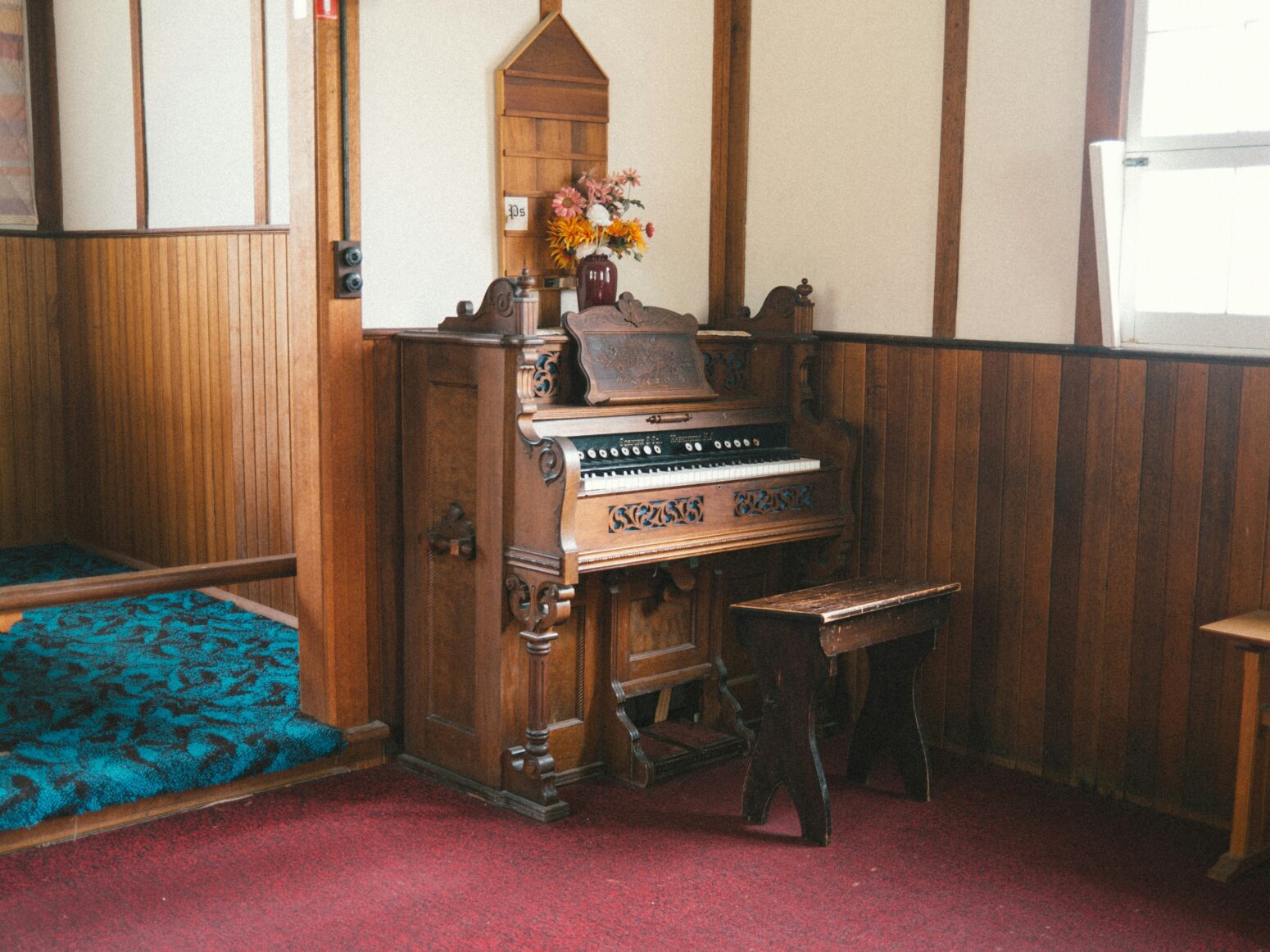
The windows in the choir room were welded shut. It was just as well; the view was all feet and dirt. Absent natural lighting, the dozen or so of us huddled under an antique fan, broken, with three flickering yellow light bulbs to read our sheet music. I was still new enough in my position to harbor thoughts of change, so I bought new light bulbs from my own pocket—my first major purchase since landing the job. The box promised a soft, bright light, easy on the eyes, but caused a fluorescent nightmare. Everyone in the choir, a usually mild-mannered group, complained right away.
I would’ve changed the bulbs back, but I had already released the old ones to the wild, that is, thrown them at the side of the building in the back alley in a fit of rage between piano lessons. I left the discarded shards there as a warning to someone, though I wasn’t sure who. I hung a sign up on the door—“hazardous,” because I thought “private” or “dangerous” would sound intriguing to the kids who sometimes sneaked down, citing ghosts in the basement. I understood their point; the door to the outdoor patio was thin and rusted red, with a creaking handle. The only other things in the basement were a spare kitchen; a bathroom for men; and me, often alone, in the dark, cavernous choir room.
Mona, the pastor’s wife, interrupted our first well-lit rehearsal to suggest I buy new bulbs to replace the new bulbs. I suggested the church could pay for it. We compromised, rehearsing backlit from the hall, awash in the glow of a dozen phone flashlights.
I turned the bathroom for men into a bathroom for me. I hung another sign—“Miss Weaver’s,” then “Deirdre’s” underneath. I crossed that out and wrote “Dede’s,” because that’s what the kids called me. I decided it all looked wrong, tore it down, and put up a fresh one labeled “private.” It didn’t matter what I wrote, really. I had the only key.
We held an emergency drill in the basement my first week. Mona said, “Pretend there’s a tornado,” so I poured whiskey into my eight-dollar latte, told everyone about that time I saw a celebrity eating lunch—but he’s a sex predator now—and held hands with a ten-year-old wetting her pants.
When it was over, Mona said, “You should decorate down here. Make it your own.” I covered the halls in drawings by my Sunday school students—What does a tornado mean to you? My favorite was from Bobby, the shy kid who picked something from his nose to mark C-sharp on the piano. He drew the church surrounded by red demons, Pillsbury Doughboy–shaped with horns, and himself impaled on the cross.
“Great job, Bobby,” I told him.
“Take this down,” Mona told me.
I was a new member, a mandated role model, and therefore encouraged to worship. The emails in my inbox arrived once a week, every Monday, reminding me that connection to the congregation was inherent to my position. I broke my resolve once the emails came every other day. I stood up and sat down at all the right times, signaling Yes, now, to the nodded-off teenagers behind me. I sang “A Mighty Fortress” even though my left ear never cooperated. It popped, clogged up, during the sermon every time, reluctant in the face of conversion. I snapped my jaw up and down, the old remedy a friend once recommended. I forced yawn after yawn, which did little to bolster my reputation with the gaggle of white-hairs who sat in the pew to my right.
My pew was third row from the back, on purpose inconspicuous. I sat between the widow and the man with the oxygen tank. There aren’t any real features to identify a widow from anyone else, which is what I learned standing in line for the bathrooms for women.
“Tom died.”
“No.”
The man with the oxygen tank ate with me after the services. He called me “new girl” and asked me to sing for him.
“I cost three fifty an hour.”
“Three fifty or three hundred and fifty?”
“How much do you think I’m worth?”
It was raunchy talk for church. But people on oxygen can laugh just as well as the rest of us. I brought him over seconds, cold casserole and warm strawberries. He asked me about my people, as he called them.
I started having sex again the year I worked at the church, a little because I felt Mona wouldn’t approve and a lot because I could afford to get drunk in bars again. I took the job because I could sing, play piano, and do little else. I begged for the job, actually. And for the paltry paycheck that screamed “One day at a time.”
Wanted—Music Director—Wanted
It read like they were searching for a criminal. I passed the background check, which meant I could teach kids from the congregation how to play scales while their parents went upstairs to the carpeted rooms and studied the Bible.
I celebrated. “Any job is a good job,” I droned to a young bar patron I cornered that night.
I asked him what he thought about the Bible, and he said some things. I asked him to take me home and he must have, because that’s where I ended up.
He grabbed my hair and asked, “What do you like to be called?”
I gave it some thought and said, “Vivian.”
Only after the sun hit my eyes the next morning did I realize what he meant. I yelled, “Whore!” at the windows of his third-story walk-up. Families pushing strollers stopped to gawk at my lipstick-smeared face.
Who takes their children out at this hour? I thought.
I kept Kevin in the back of the choir room, to Mona’s dismay. I brought his cage to church preassembled and strapped down in the trunk of my car, even though it was too big to fit. Kevin rode most of the way in the open-air cage until it occurred to me to move him up front. I never saw a chinchilla look exhilarated before.
His cage was three stories, with an exercise wheel and pumice block. We shared salads. One of my younger students, Penny, liked to imitate Kevin. She’d yell, “Look, I’m Kevin!” and chatter at his cage to avoid practicing her scales. I always kept the lights on for Penny’s lessons. One day her mother caught my eye and arm after the service. Penny was getting headaches from the basement.
“Maybe from the fumes,” she said.
“Too bad,” I said.
I lifted Kevin’s cage on a pedestal so he could see out the window by the street. He liked the dirt and feet, and we played a game to see if we could recognize shoes coming and going. I did most of the guessing.
The dry cleaner was across the street, and I guessed most of the shoes were coming and going from there. I talked out loud about my aunt Heather, who used to rank a job’s importance by whether she understood how it worked. Bartender, make drink, unimportant. Postal worker, deliver mail, unimportant. I thought she would feel the same about dry cleaner, clean clothes, but she wagged a finger in my face at the suggestion. “I can’t get out those stains. They’re doing the Lord’s work.”
The lord’s work, I thought. Right there across from the church.
I wanted more light. The novelty wore off the phone-lit rehearsals, and I was warned more than once about my candlelit piano lessons. I called the pastor’s office to ask for different bulbs, but they never answered. I walked up the two flights and across the hall to his office.
Mona worked as her husband’s assistant. That’s how she referred to him.
“Are you here to see my husband?”
“I’m here to see the pastor.”
“My husband’s not here right now.”
I coveted the lamp on Mona’s desk. It gave off the soft, bright light I was promised by the bulbs I purchased. It was easy on the eyes and a marbled red.
I often stayed late at the church to practice my own music and play with Kevin. He was nocturnal and liked to run around the room smelling everyone’s steps.
He said nothing when I told him I wanted the lamp. He chattered and sniffed, a true henchman, so I stole the lamp. I unplugged it and carried it across the hall and down the two flights of stairs to my basement cave. Stealing didn’t turn out to be at all as bad as everyone said. The church didn’t have security cameras or anything.
I went to the thin door, the one marked “hazardous.” The patio was dark. I used my phone flashlight to collect bulb fragments, all the time wishing I had more bulbs to smash.
Mona and I caught each other in the basement hallway.
“What are you doing here?”
I denied stealing the lamp. Mona sent me an email three days later: You are a liar and a thief. I printed it out and hung it on the wall next to Bobby’s drawing—What does a tornado mean to you?
The church announcements always felt the same: Someone died, someone’s going on a service trip.
Peace be with you.
There was a lot the people there never learned about me. I shook their hands every week with the same grip that unbuckled my ex-boyfriend’s younger brother’s belt, sometimes squeezing Mona into a tight hug, rubbing the back of her half-cashmere sweater.
Glory to antibacterial soap.
I watched Bobby use something from his nose as a bookmark, keeping place in the hymnal. The white-hairs to my right whispered when I forced a yawn and popped my left eardrum. The widow sat closer and closer to me until one week she told me I reminded her of her daughter.
“Do you like your daughter?” I asked.
She laughed and said, “Yes, just like my daughter.”
She had gray hair, which I started to understand felt different from the other hairs on my own head. I borrowed a Sharpie from one of the administrative assistants and touched up my roots.
“You keep that,” he said afterward.
I asked him if he liked vegetarian food, and he asked me if I meant pasta. I told him I was trying to ask him on a date, and he told me that was not the right way to do it.
The spare kitchen went unused. The fridge wasn’t plugged in unless there was an overflow of casseroles, like on Easter or Christmas. I used the sink basin to wash Kevin, lifting him down into Tupperware filled with overpriced chinchilla dust. I sang and he rolled around, creating little whirlwinds under the faucet.
The man with the oxygen tank asked me to sing for him before a service.
He said, “Can I sit a little closer so I can hear you sing?”
He wore a tweed jacket with patches, and his hair was slicked back. I liked his mustache and I thought he smelled better than the other old men, who wore too much Old Spice.
“Sure.”
He gave me the money he said he was planning to put in the offering that week—$3.50.
“What a coincidence.”
We stayed in the sanctuary and looked at the stained glass. My flask, his oxygen. I pointed out all the birds, everything I thought was beautiful, and he nodded and said, “Yes, I know. I know.”
He wanted to meet Kevin. He said he thought he could make it down the stairs. I told him I could play the piano instead. I played “Amazing Grace.”
“Yes, yes,” he said. He asked if I knew any Shirelles.
I was a foot shorter than everyone in choir and twenty years younger on average. “You’re too young to know about those,” Mona said, snatching my metronome off the piano stand. She explained the concept of metronomes to me two times before she was satisfied.
I imitated the conductors I’d seen at the symphony, waving my arms with authority, trying to regain any lost respect in the ranks. I started getting migraines and thought, Maybe Penny’s mom was right about the fumes.But the new lamplight cheered us all up, except Mona. Every week when choir left, I lifted the blanket off Kevin’s cage.
A couple of the sopranos asked to meet Kevin. They said they’d never seen a chinchilla before. I told them he was mostly nocturnal, but Kevin chattered from behind his toy pile.
“Why is he so scared?”
“He’s good at accurately understanding his world.”
One of the sopranos tipped her head and let her purse slide to her elbow. The other smiled flat.
Kevin hated choir. I used to let him run wild through the bathroom-for-men turned bathroom-for-me, but once I found him floating in the middle stall toilet, I couldn’t chance it. He huddled in the back of his cage and looked at me dramatically, wide-eyed with gaped mouth, like he had things to say. He stopped breathing and I took him to the vet.
“This just happens,” they said.
“Oh.”
He started breathing again, but it didn’t make me feel better.
The administrative assistant agreed to go out with me if we didn’t eat pasta, or vegetarian. I asked, “Anything vegetarian?”
I talked about how fragile everything is, the world, our lives, everything we touch.
“Is this still about your chinchilla?”
He ordered wine by the year and unbuttoned his top button. He told me who cut his hair, and when he found religion. He was desperate, like me, and broke, like me, and we wondered if the church was anyone’s first choice.
He asked questions, but never the right ones: “What’s your deal with Mona?”
“What’s her deal with me?”
I drank some of his wine as a test, thinking he’d want to share. He didn’t. He bought me my own glass.
I took off my clothes in his car and he asked why I wasn’t wearing any underwear. I told him I wasn’t allowed.
“What does that mean?”
I put my clothes back on and we ate cold broccoli rabe in silence.
I found out about the pastor the same way everyone else did: the white-haired gossips in the back of the church.
“Pastor got caught with another woman.”
“No.”
“Caught him at a steakhouse of all places.”
“Anybody seen Mona?”
Mona was behind the thin door in the basement, the one marked “hazardous.” I found her crunching old bulbs under her feet. I tried to close the door before she would notice.
“Deirdre,” she called after me.
I opened the door.
“Are these the old bulbs from the choir room?”
I nodded.
“Did you break them?”
“Yeah.”
“Why?”
“Just something to do.”
After what felt like hours, Mona looked at me and said, “Clean this shit up.”
“Clean it up yourself—I’m not your goddamn maid.”
I slammed the door behind me. Pasted across the hall was a drawing by one of my students, Becky. Everyone in her class flattened on the ground, a giant funnel cloud above. A classmate she disagreed with sucked up into the void, labeled “Claire.”
I found Kevin in the corner of his cage, huddled in a pile of paper. I knelt to wipe down the mat. He crawled out and nibbled at my finger. I picked him up out of the cage and into my lap, looking around at all to which we had become accustomed—the folding chairs with three good legs, the rough rock walls on either side of the door, and the door itself, handle still dangling after being pulled too hard by an overzealous tenor.
“Time to go,” I whispered to Kevin. And he burrowed deeper into my arms, cowering away from the light of the windows. I packed up the cage and filled it with hand-drawn tornadoes that crinkled under Kevin’s feet. I carried Mona’s lamp, the one I would never return, in one arm and Kevin’s cage in the other. My feet walked out of the church and past the basement choir windows with no one there to see.
Read more from Issue 22.1.